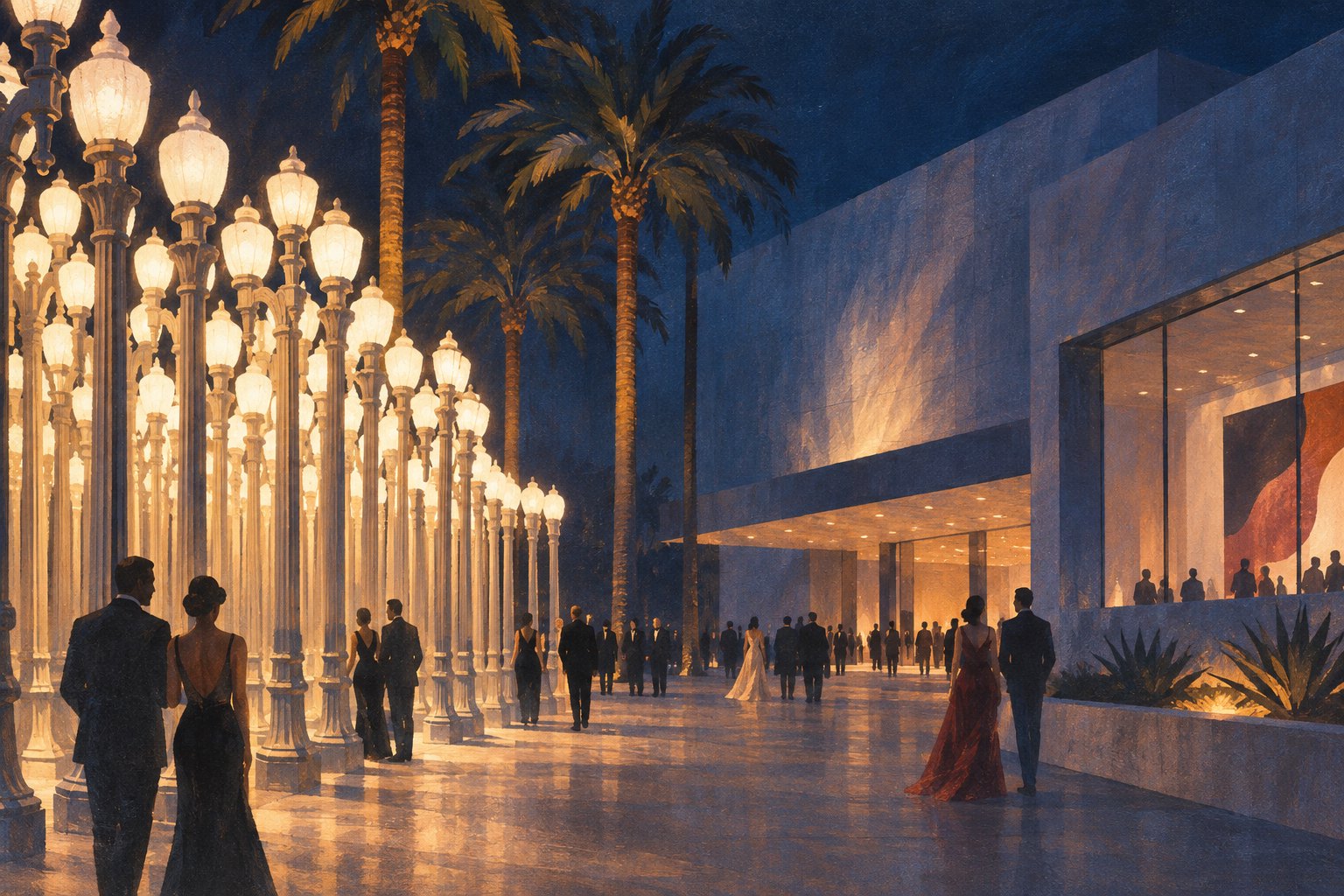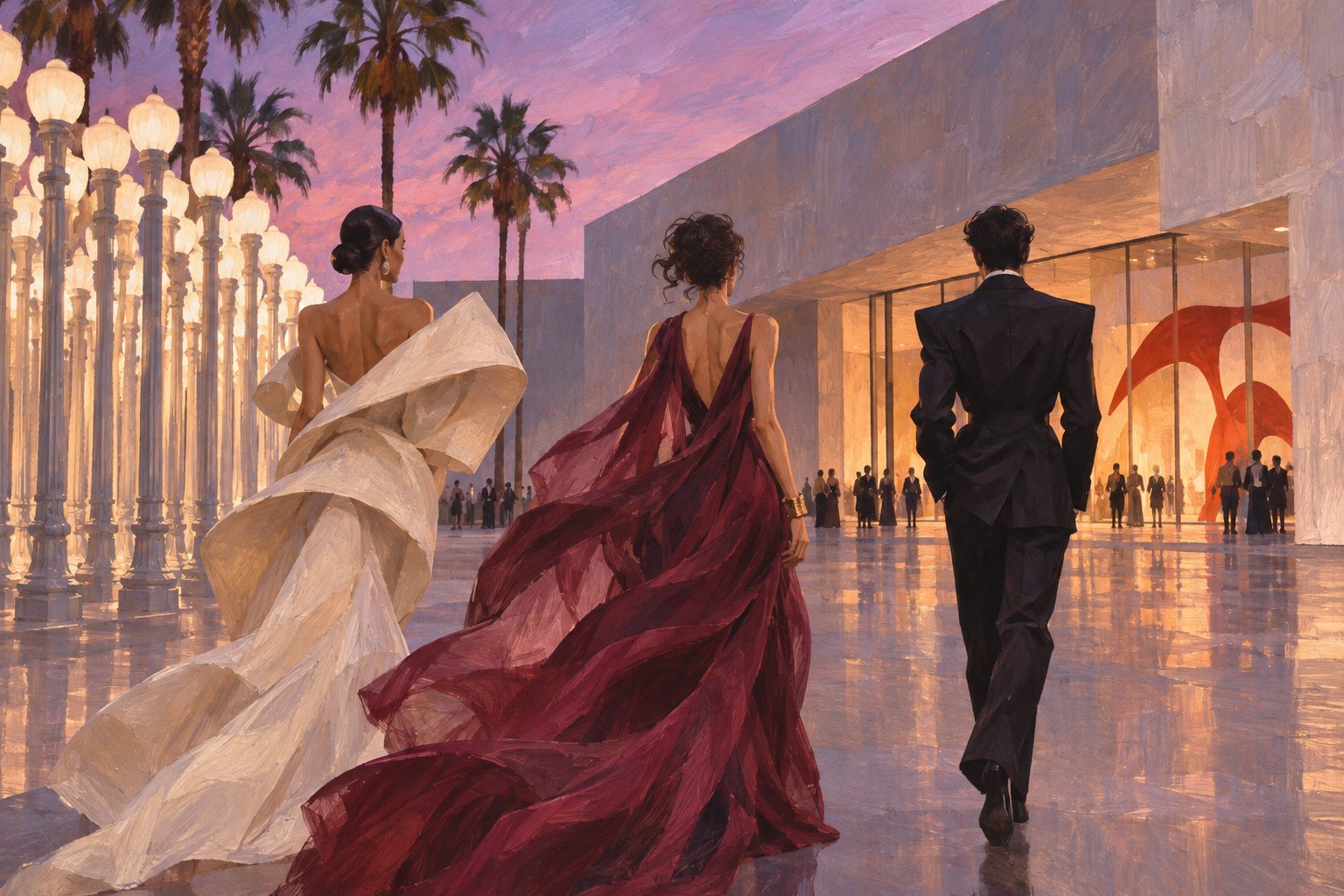
The LACMA Art+Film Gala makes a particularly interesting setting for the best-dressed debate: what should distinguish a memorable outfit at an occasion that brings art and cinema into the same frame? My answer starts with the relationship between the clothes and the person wearing them. A striking silhouette attracts attention; a convincing overall look gives that attention somewhere to go.
The New York Times’ feature titled 10 Best Looks From the LACMA Art+Film Gala puts that question in focus. This article offers a critical framework for the best-looks conversation, rather than reproducing its selections or assigning unverified outfits to individual guests. The illustrations are conceptual studies, not records of clothing worn at the event.
For movie lovers, the useful connection is visual storytelling. Clothing can establish distance, invite intimacy, suggest ceremony, or introduce a playful contradiction before anyone speaks. But a gala guest remains a person, not a fictional character whose motives we can read from a neckline.
Start with silhouette before looking for a designer name
My first test for a strong gala look is whether its shape holds my attention before I recognize the wearer. Look at the relationship between shoulders, waist, sleeves, and hem. Does one feature lead the composition? Do the other elements support it? A large skirt can make a narrow upper half feel more deliberate; an extended shoulder can give otherwise restrained tailoring a dramatic outline.
This is not a prescription for conventional proportions. An awkward-looking proportion may be the point. The useful distinction is between a shape that creates productive tension and one whose competing elements seem unresolved. Both can provoke a reaction, but only one may reward a second look.
A simple viewing exercise helps: briefly reduce a full-length photograph to its broad areas of light and dark. If the outfit loses its appeal without its celebrity association or jewelry, ask what was doing the work. Recognition can be pleasurable, but it is a different pleasure from appreciating construction.
Judge the whole composition, including the quiet parts
A successful outfit needs somewhere for the eye to rest. When a neckline, necklace, hairstyle, belt, and shoe all demand equal attention, the result can feel visually crowded. Yet abundance can also work when the elements establish a rhythm through repeated curves, related colors, or contrasting scales.
My preference is for a clear visual hierarchy rather than minimalism itself. A lavish look can be beautifully organized. A plain one can feel indecisive. The important question is what you notice first, what you notice next, and whether those discoveries strengthen each other.
The same habit of attention informs our discussion of LACMA, portraiture, and watching a screen performance. In fashion criticism, however, the focus belongs on how the styling frames the wearer. An outfit need not disappear to let a person remain visually present.
Texture deserves more attention than sparkle alone
Formalwear becomes more interesting when you consider how its surfaces behave. Matte fabric can give a shape visual weight. A reflective surface can break that shape into highlights. Sheer layers can make an outline feel less definite. These are different design tools, and none is inherently more sophisticated than another.
Consider a hypothetical dark jacket with a satin lapel. Its appeal might come from a small change in reflected light rather than an unusual color or elaborate decoration. An airy skirt might instead depend on overlapping layers that become legible only at close range. Both deserve a more precise response than simply calling them glamorous.
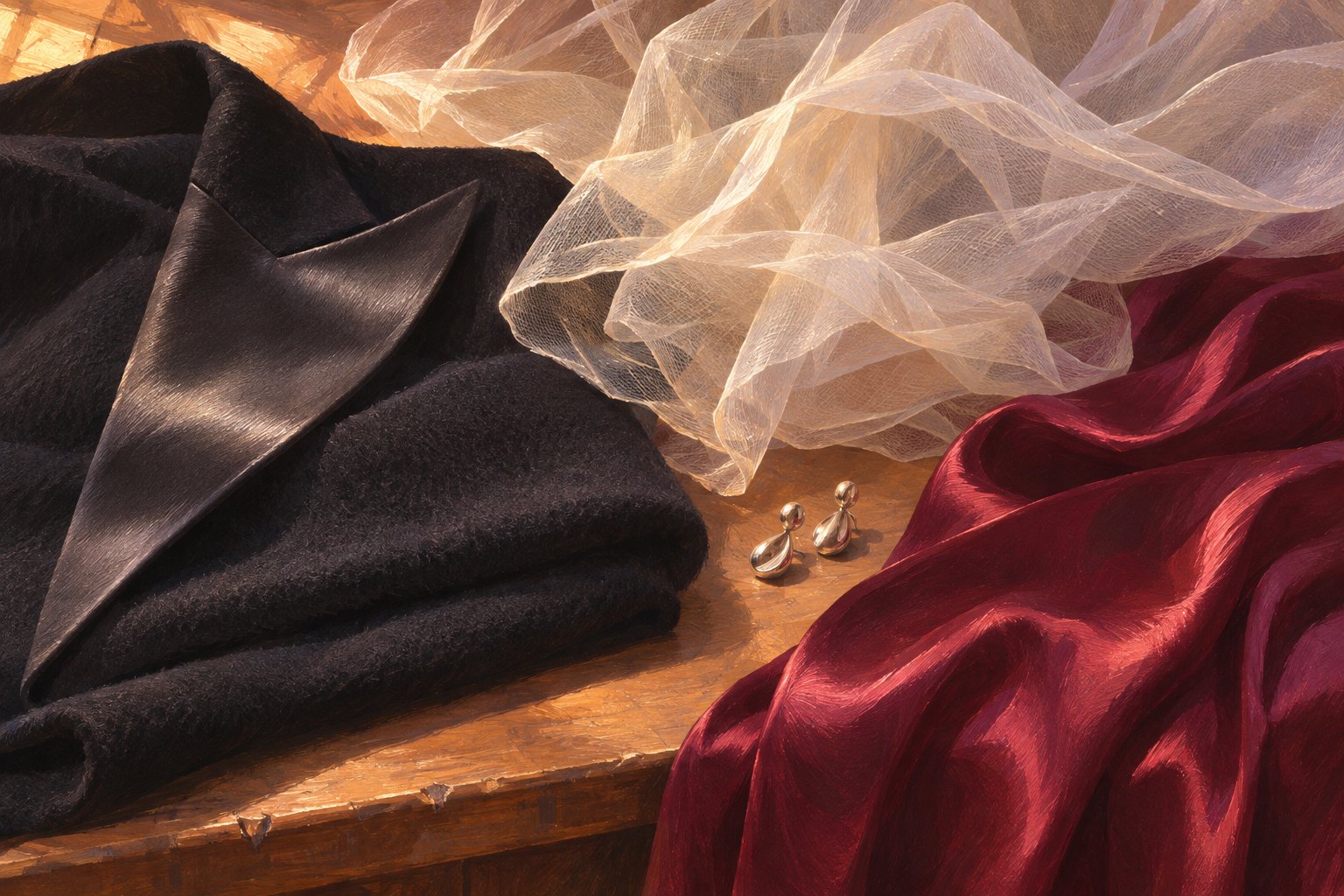
Photographs also impose limits. A bright reflection may obscure workmanship, while a deep shadow can conceal folds or seams. Describe what the image shows before making claims about the garment. Appearance alone does not establish a fabric’s composition, weight, or quality.
Movement can change the verdict
A formal portrait shows an outfit under a particular set of conditions. Walking, turning, and sitting introduce different demands. A train changes its relationship to the body as it follows a step. A sleeve may open into a shape that was invisible in a stationary pose. An outfit’s most compelling quality may exist between photographs.
When footage is available, watch how the garment responds to ordinary movement. Does its shape develop? Does an apparent imbalance resolve? If only a still image is available, keep the judgment proportionate: it is possible to admire the photograph without claiming to know how the outfit behaved throughout the evening.
This connects to the distinction explored in our commentary on cameras, choreography, and concert cinema. Framing selects an experience for the viewer. Fashion photographs do the same, making camera position part of what we respond to.
Separate visual drama from assumptions about personality
Clothes can suggest severity, softness, extravagance, or restraint. Those impressions are fair subjects for criticism when they are grounded in visible choices. A rigid geometric outline might feel formal; loose draping might feel relaxed. The language should describe the effect, not pretend to establish the wearer’s inner life.
Calling someone insecure because a look is elaborate, or confident because it reveals skin, crosses that boundary. A photograph cannot tell us why a person selected an outfit, how comfortable they felt, or which decisions belonged to a stylist. Criticism becomes stronger when it stays specific about what it can see.
The same restraint applies to cinematic comparisons. An outfit may evoke a genre through shape or mood, but resemblance alone does not prove a deliberate reference. Without a documented connection, describe the association as your interpretation. There is no need to invent a costume tribute or hidden Easter egg to make a look interesting.
A better way to choose your own favorites
Before settling on your favorite LACMA gala looks, try three passes through the images. First, notice your immediate response. Second, identify the visible decision behind it: perhaps an unusual proportion, a disciplined palette, or a surprising relationship between textures. Third, look for something that complicates your first impression.
- Check the full silhouette: Does the outfit work beyond the cropped portrait?
- Follow the details: Do accessories develop the central idea or distract from it?
- Consider the photograph: How much of the effect comes from pose, lighting, and angle?
- Name your criterion: Are you rewarding elegance, invention, theatricality, or coherence?
Different criteria can produce different favorites without making either judgment careless. A restrained outfit might offer exceptional proportion; a more theatrical one might create an unforgettable shape. The useful debate explains those pleasures rather than treating taste as a verdict that requires no evidence.
The lasting image is a collaboration
For me, the most rewarding way to approach the LACMA Art+Film Gala’s fashion is to consider how a public image is assembled. Garment, styling, posture, setting, and camera each contribute. The wearer brings something none of those elements can supply independently: a particular way of occupying the clothes.
That is where the connection to cinema becomes meaningful. A memorable image gives several choices a coherent relationship. The best gala look, by this standard, is one you can remember and describe after the name and label have slipped from view—and still find something new in when you return.
Original content by this site's editorial team. Published: November 8, 2026 at 21:42:10 PST (Los Angeles time)