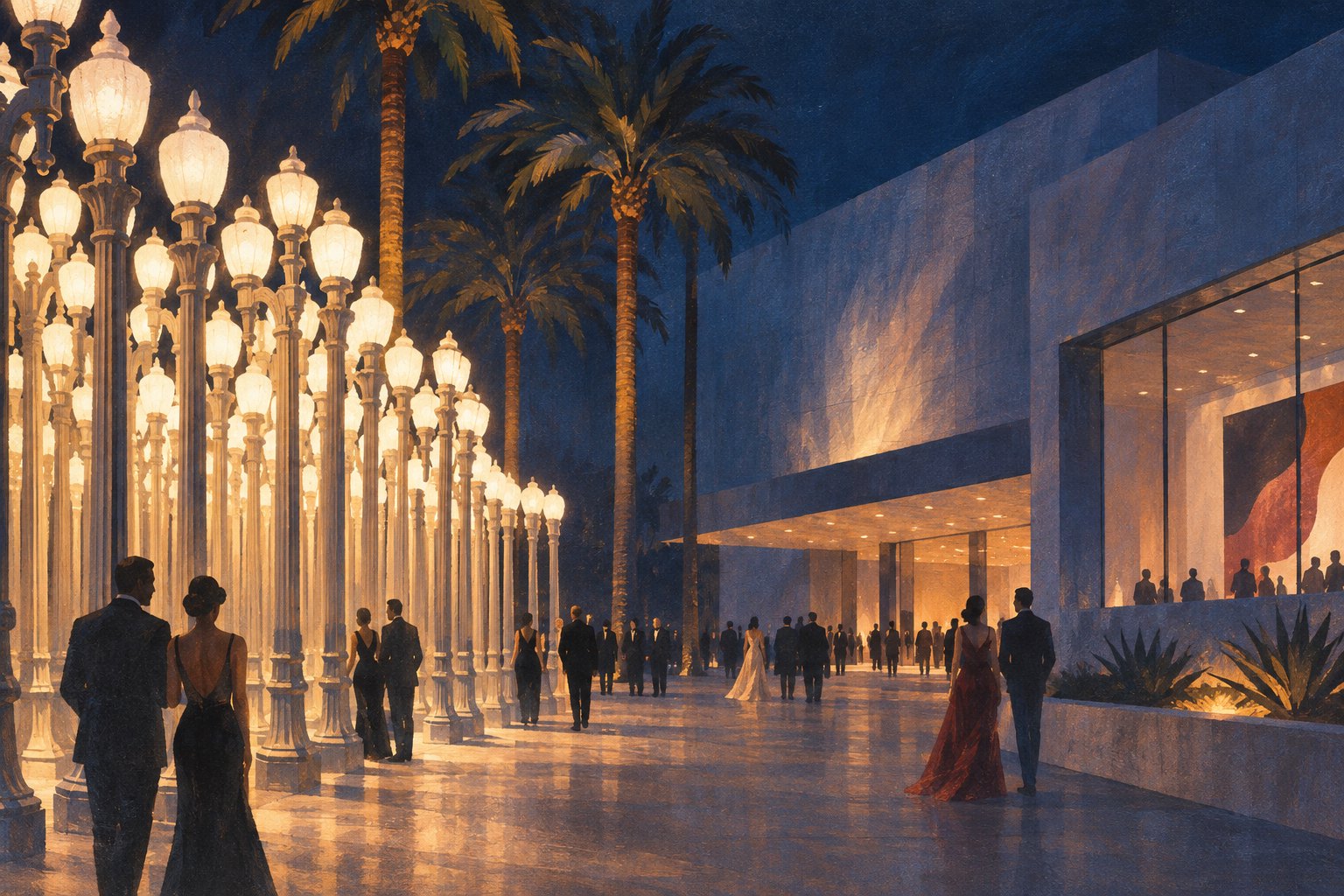
The LACMA Art + Film Gala makes an appealing proposition to movie lovers: cinema deserves a place in the same conversation as the art we enter a museum to contemplate. The urban lights, evening glamour, and Gucci association give that proposition a seductive public image. But the most interesting question beneath the spectacle is what happens when we treat movies as objects of sustained attention rather than occasions for a photograph.
For readers drawn to an inside look at the gala, access is part of the appeal. There is pleasure in seeing a cultural institution become a social setting. Yet proximity to a celebration and understanding the art being celebrated are different achievements. The gala offers a useful opportunity to think about that distance—and about how film coverage might close it.
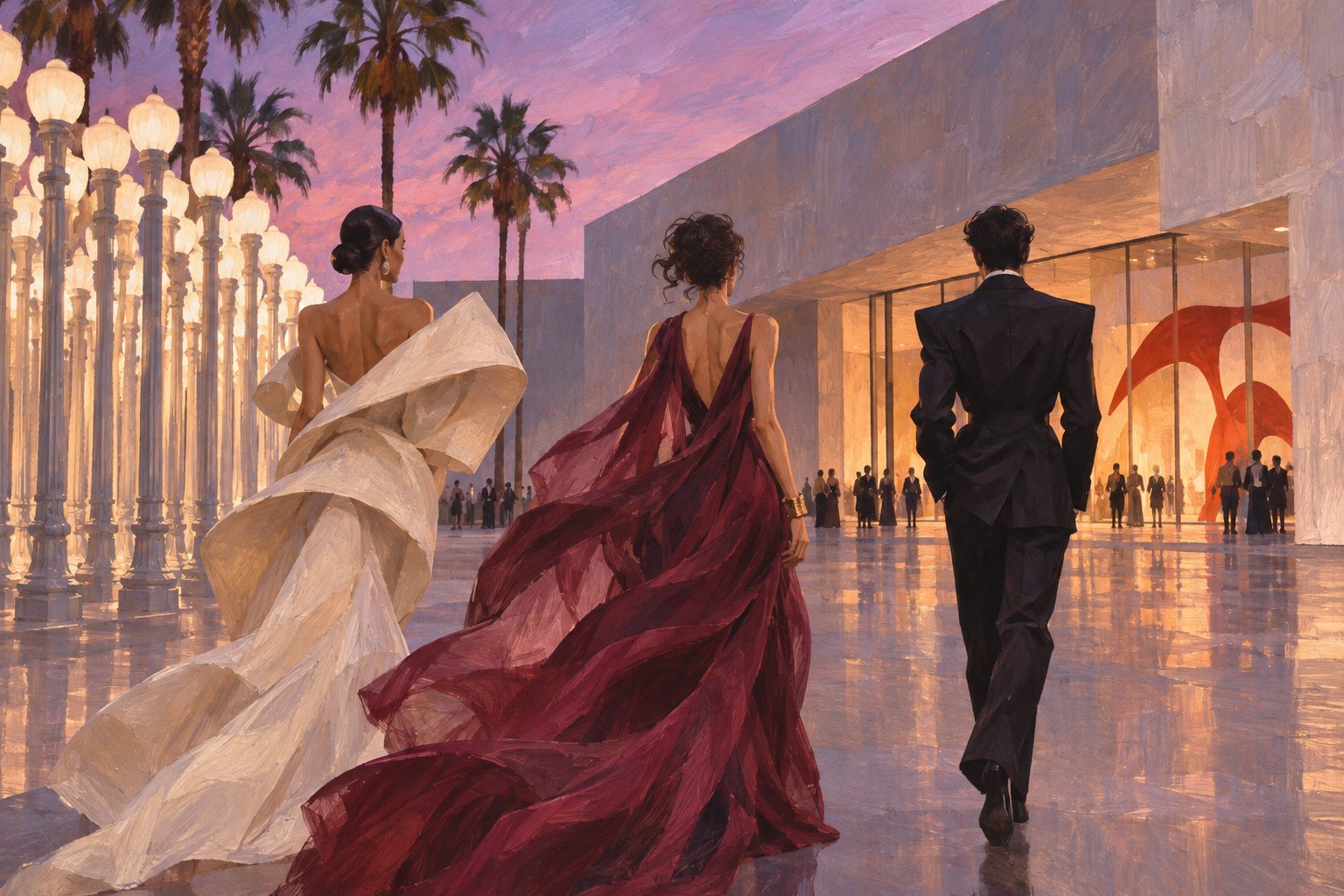
This is cultural commentary on the gala’s framing and significance, rather than an eyewitness account or a review of a particular film. The illustrations are conceptual scenes.
The Museum Changes the Frame Around Hollywood
A museum setting supplies a particular expectation: something here merits another look. That expectation is valuable for cinema, especially when conversations about movies become compressed into opening-weekend verdicts, awards predictions, and whether an ending delivered the desired surprise.
Consider the difference between asking whether a movie entertained you and asking how it organized your attention. The first question invites a verdict. The second sends you back to the relationship between a figure and a doorway, a voice and an offscreen space, or a cut and the silence that follows it. Both questions matter, but only one necessarily asks you to examine the filmmaking.
My view is that the strongest idea embedded in the LACMA Art + Film Gala is this invitation to look again. Placing art and film together can encourage viewers to give a movie the patience they might grant a difficult painting. A first encounter need not settle its meaning.
There is also a limit to that borrowed prestige. A museum association cannot establish that a film is accomplished, any more than a luxurious frame can rescue an indifferent picture. The institution can direct attention; the work still has to reward it.
Urban Lights and the Power of a Setting
The pairing of urban light and evening fashion is effective because it gives glamour somewhere to live. Isolated luxury can feel abstract. Place introduces scale, atmosphere, and the suggestion of a world extending beyond the person being photographed.
For a film critic, that is a productive way into the gala’s imagery. A setting does more than decorate an appearance. It establishes relationships: between a body and an architectural space, between a private occasion and a recognizable city, between the person attracting attention and everything the image asks us to overlook.
This is also a practical distinction between an attractive composition and an expressive one. A beautiful background may simply flatter its subject. An expressive background complicates the subject, introducing tension, distance, vulnerability, or belonging. The difference is especially useful when looking at publicity imagery, where visual polish can make every choice seem meaningful.
Our discussion of what makes a LACMA gala look memorable considers the outfit itself. Here, the wider frame matters: what does the setting contribute that the clothing and familiar face cannot supply alone?
What Gucci Adds to the Cultural Picture
Gucci’s presence in the framing of this gala introduces another language of value. A museum suggests preservation and interpretation. Cinema brings narrative, performance, and collective spectatorship. A luxury brand brings associations with design, desirability, and distinction. Putting those languages together produces an image that can feel coherent even when the underlying priorities differ.
That combination deserves neither automatic admiration nor automatic dismissal. Fashion can be an expressive practice, and visual pleasure is a legitimate part of cultural experience. At the same time, the attractiveness of an association does not tell us what it accomplishes for audiences.
The useful critical move is to keep separate questions separate. Does an image succeed aesthetically? Does it communicate something about cinema? Does the surrounding coverage help a reader discover or understand a work? A photograph might answer the first question beautifully while leaving the other two untouched.
For Fun Movie Reviews, the third question should carry particular weight. The best bridge from a gala to a film audience gives readers something to watch, notice, or reconsider. A designer name can establish context, but it cannot do the interpretive work of film analysis.
Being Inside Is Not the Same as Seeing Deeply
An exclusive view promises to move the audience past a boundary. That promise can be enjoyable without being confused with revelation. A room full of recognizable people may tell us a great deal about the evening’s social atmosphere and very little about how any of them approaches a creative problem.
The distinction becomes clearer if we borrow a question from character analysis: what does a person want, and what makes that desire difficult? In a movie, the answer emerges through choices and consequences. At a gala, an appearance supplies much less evidence. A pose, smile, or seating arrangement cannot responsibly establish private motives or artistic convictions.
Good commentary respects that limit. It can analyze how an image presents belonging or authority without pretending to know what its subjects are thinking. It can enjoy the scene without turning real people into fictional characters whose inner lives are conveniently available to the writer.
That restraint also makes room for more worthwhile curiosity. Instead of treating attendance as an explanation of talent, readers can ask what decisions in the work made the artist interesting in the first place.
The Best Journey Leads From the Gallery to the Screen
The relationship between museum viewing and moviegoing becomes most useful when it changes a viewing habit. In a gallery, you can often choose how long to stay with an image. In a conventional film screening, the work controls when the image disappears. Cinema makes duration part of the encounter.
That difference offers a simple exercise for your next movie: choose one scene and notice when your attention shifts. Did a movement redirect it? Did a sound make the edge of the frame suddenly important? Did the editor cut before you were ready, or hold long enough for your interpretation to change?
Then connect the formal choice to a character’s experience. A room can appear welcoming until the film reveals its exit is blocked. A wide composition can grant freedom or make someone seem abandoned. Meaning comes from the specific dramatic situation, not from a rule that a particular shot always produces a particular emotion.
Our essay on looking closely at faces and screen acting develops a related approach. Together, these habits move attention from recognizing a performer to understanding a performance within a constructed world.
What Should Remain After the Gala Image Fades?
The LACMA Art + Film Gala’s most compelling cultural promise is that a glamorous encounter can become a more demanding one. Someone arrives for the spectacle and leaves curious about an artist’s decisions. Someone recognizes a filmmaker’s name and becomes willing to sit with a work that resists easy consumption.
That is the standard I would apply to its wider significance: whether the celebration makes room for deeper engagement. The museum, the fashion, and the evening atmosphere can open the door. The lasting encounter happens when a viewer gives the art their time.
Original content by this site's editorial team. Published: November 8, 2026 at 22:17:25 PST (Los Angeles time)