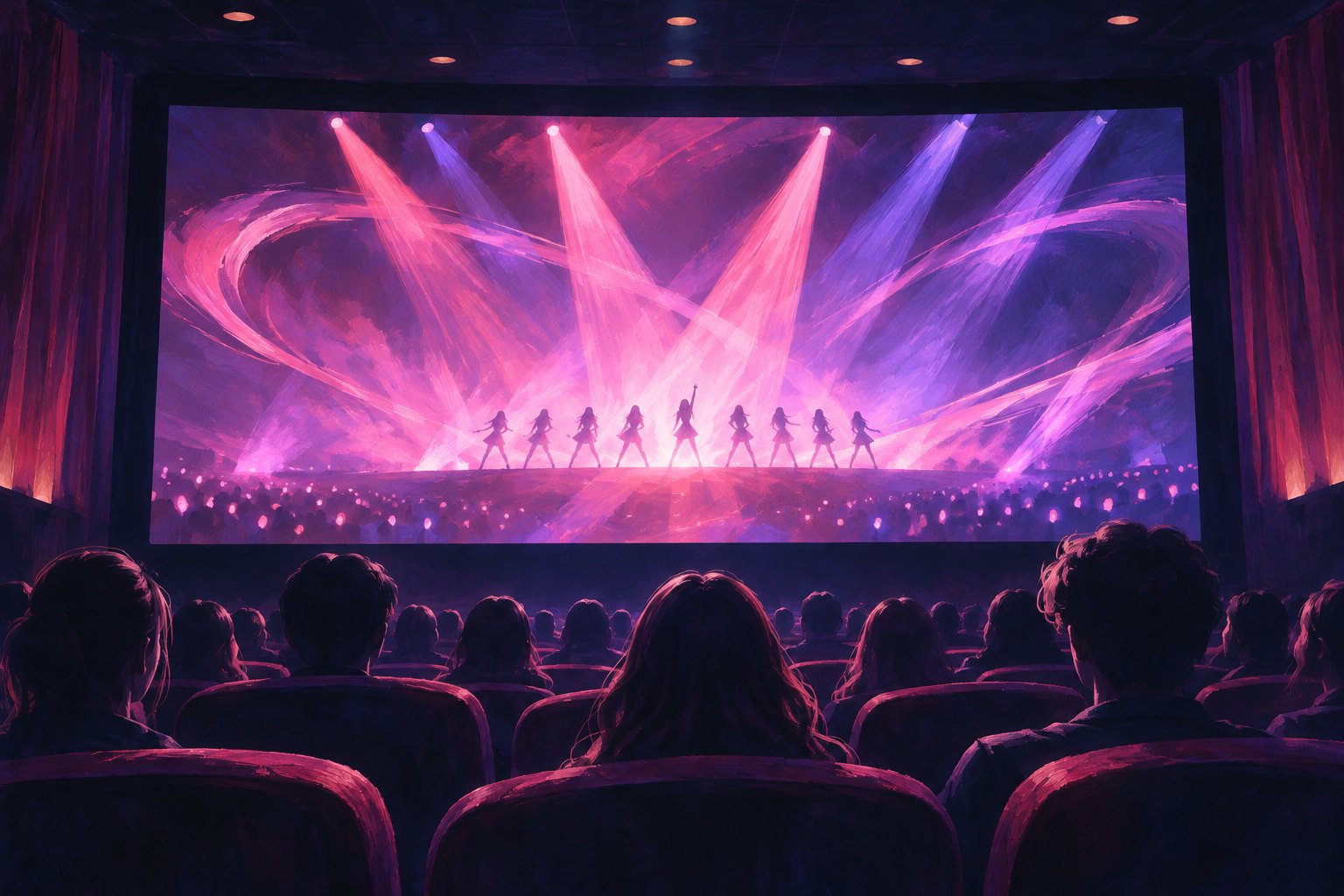
Twice: This Is For... You has been acquired by Crosswalk and UPCG, according to Variety. For viewers following the concert film, that is the central development: a business announcement about the movie’s path toward audiences. The more interesting critical question is what that journey will preserve about performance—and what the camera might help us see differently.
A concert film offers something deceptively complicated. It promises access to an event while replacing the spectator’s freedom to look around with a filmmaker’s decisions. Every close-up selects someone; every cut leaves something behind. For a film centered on TWICE, the relationship between individual presence and collective performance makes those choices especially worth examining.
This is a spoiler-free critical preview, not a review of the finished film. The acquisition does not provide a basis for judging individual sequences, quoting dialogue, or identifying hidden references. What it does offer is a timely reason to consider the standards by which this particular kind of movie should be judged.
What the acquisition tells prospective viewers
The reported involvement of Crosswalk and UPCG establishes a concrete commercial development around Twice: This Is For... You. It should not be mistaken for an artistic verdict. An acquisition cannot tell us whether a musical sequence breathes, whether the sound mix feels spacious, or whether the editing gives performers room to develop a screen presence.
For anyone planning a viewing, the useful distinction is between news about the film and practical information about a screening. A local date, participating theater, presentation format, and ticket availability each need their own confirmation. None should be inferred simply from the acquisition headline.
The announcement also creates an opportunity to ask a better question than whether fans will be excited. What will the movie offer someone who already knows the performances? Recognition can make an entrance thrilling. Cinema can go further by revealing timing, coordination, and expression that are difficult to appreciate from a single seat.
The performers deserve attention as people, not assigned story roles
A character-focused approach needs adjustment when the people on screen are real performers. In a fictional drama, a critic can trace a character’s stated goals against the consequences of their actions. In a concert film, an expression or gesture does not automatically disclose an inner life. A serious reading should respect that difference.
For TWICE, the productive starting point would be observable performance: how attention passes between members, how someone addresses the room, and how an individual gesture changes within a group formation. Those details can support interpretation without turning a brief look into an invented account of rivalry, anxiety, or friendship.
Editing carries particular responsibility here. A reaction shot placed after another performer’s moment can suggest a connection, but that connection may be a construction of the sequence. The finished movie should be assessed for how clearly it presents relationships, rather than how easily a viewer can impose a familiar backstage narrative.
Our commentary on what looking closely at a face can teach us about screen performance offers a related way of watching. A close-up becomes valuable when it gives attention somewhere meaningful to settle. Proximity alone does not guarantee insight.
Choreography needs enough space to become legible
One of the most revealing tests for Twice: This Is For... You will be the relationship between the camera and the ensemble. A wide shot can show how bodies organize a stage. A closer view can reveal the effort and precision inside a movement. Neither is inherently superior; their value depends on what the performance is doing.
My preference is for editing that lets a movement reach its destination before redirecting attention. When a formation changes, viewers need enough spatial information to understand the change. Cutting rapidly among attractive details can generate excitement while making the underlying choreography harder to appreciate.
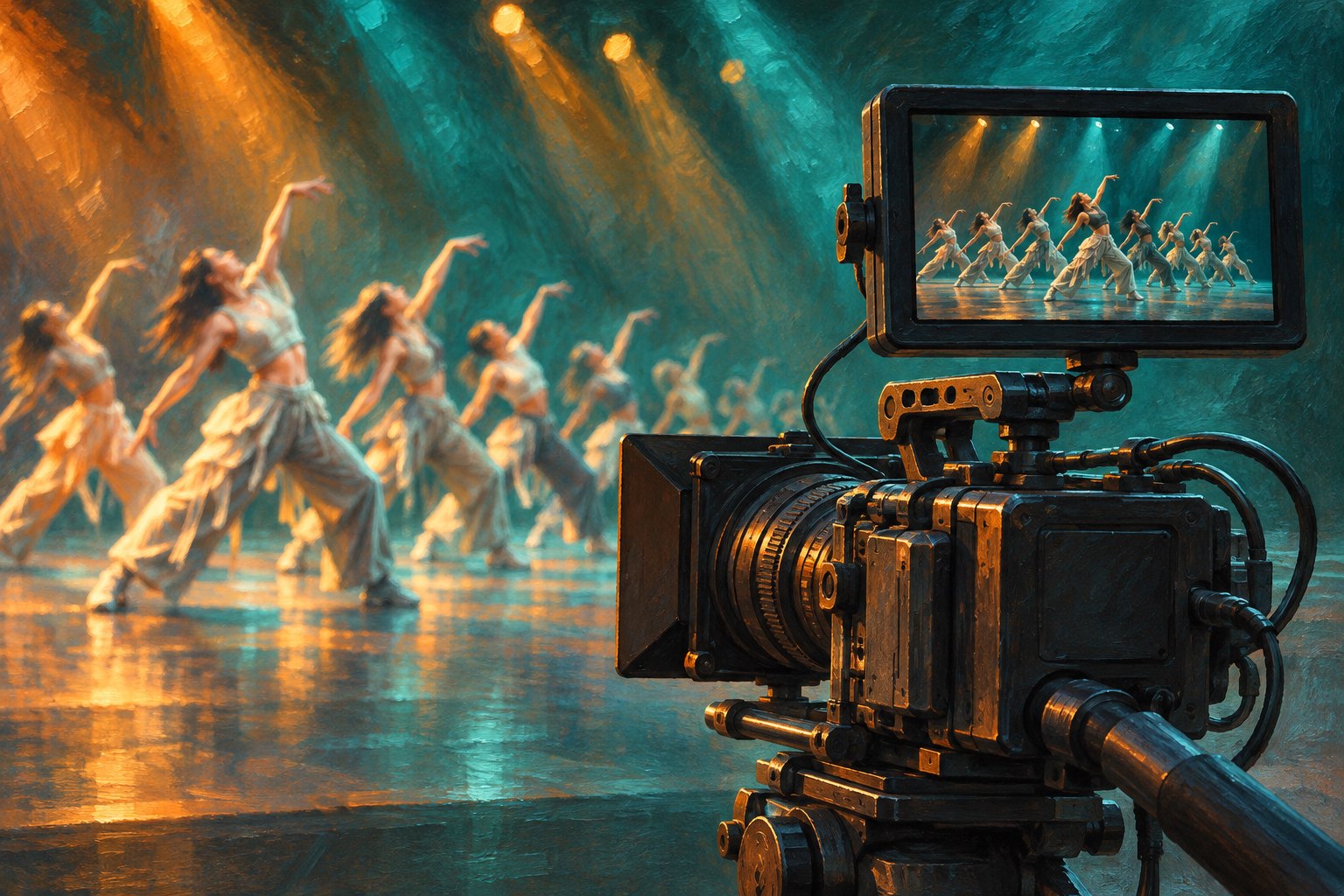
There is also a distinction between following the music and merely cutting on its beat. A sequence can honor a musical phrase by holding a shot, allowing anticipation to build, and changing perspective when the performance changes emphasis. The camera becomes expressive when it responds to structure rather than treating every instant as equally urgent.
These are criteria for watching the film, not claims about its actual construction. A useful eventual review should point to specific passages and explain how their framing works. Calling a concert movie energetic tells readers very little unless the criticism identifies where that energy comes from.
Sound should preserve a relationship between stage and room
The sonic challenge is equally important. A concert film has to negotiate between the clarity of the music and the presence of the audience. Crowd sound can communicate scale and response, but constant emphasis on cheering may flatten the differences between an intimate passage and a climactic one.
I would listen for contrast. Does a quieter moment feel different in texture, or merely lower in volume? Can the audience’s response register without overwhelming the performance? Does the soundtrack leave an impression of physical space? These questions concern the experience a film creates, rather than assumptions about how its audio was recorded or assembled.
That distinction matters because polish is not itself evidence of dishonesty, and roughness is not automatic proof of authenticity. The stronger critical question is whether the sound supports an intelligible encounter between the performers and the room.
What would make a second viewing worthwhile?
For an established fan, a first viewing may be organized around anticipation: a favorite performer, a familiar musical turn, or the pleasure of shared recognition. A second viewing creates room to notice relationships between shots and performances. The film earns that return if additional attention reveals something more.
Our discussion of how repeat viewing can deepen attention to performance considers that broader distinction between returning for a feeling and returning to discover details. Applied here, the question is whether the movie rewards looking beyond the moment that first drew someone in.
Newcomers have a different need: orientation. They should be able to understand where attention belongs without having to recognize every reference. A concert film can welcome them through clear staging and patient observation while preserving the pleasures that existing fans bring to it.
The title’s invitation is the most promising critical starting point
This Is For... You frames the project as an address. Read as a title, its pause makes the recipient feel important: performance travels outward toward someone. That is an interpretation of the wording, not evidence of a particular scene or spoken line.
The deeper possibility is a film that makes that address tangible through form. A sustained shot can let us witness someone holding an audience’s attention. A carefully chosen reverse angle can show that attention being returned. A change in scale can connect an individual gesture to the larger collective that gives it meaning.
The Crosswalk and UPCG acquisition brings the movie into clearer commercial focus. Its artistic value will depend on something more exacting: whether Twice: This Is For... You helps viewers perceive the people, decisions, and coordinated work within the spectacle. That is the promise worth watching for when the film itself can be assessed.
Original content by this site's editorial team. Published: November 8, 2026 at 21:03:46 PST (Los Angeles time)