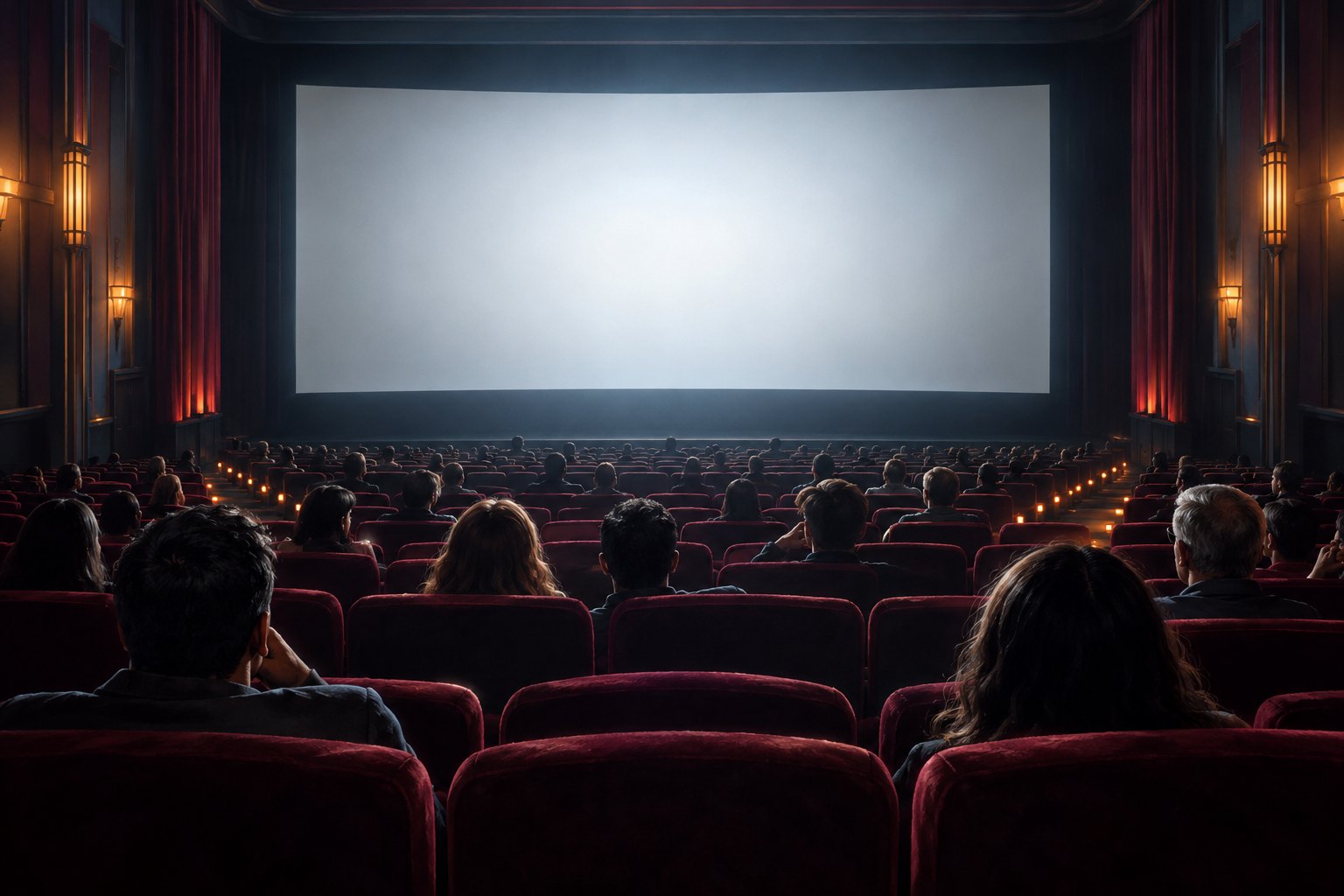
The battle over moviegoing in Kips Bay poses an uncomfortable question: how should a neighborhood weigh the value of a cinema against the demands of medical space? Framing the issue as movie fans versus big medicine gives it an immediately recognizable conflict. Understanding it requires something more demanding than choosing the more sympathetic side.
From a film lover’s perspective, the strongest defense of a neighborhood theater begins with access: the ability to make movies part of ordinary life. From a patient’s perspective, access may mean something much more urgent. A serious argument needs room for both experiences.
This is film-culture commentary on the Kips Bay issue, rather than a review of a motion picture. Its judgments concern the value of moviegoing and the questions competing uses of neighborhood space should face.
Why a Familiar Theater Can Matter So Much
A neighborhood cinema can become part of a person’s internal map. It is where an evening starts, where friends meet without hosting one another, or where someone goes alone without needing to explain why. Its importance can accumulate through repetition rather than architectural distinction.
That matters because preservation arguments often lean heavily on exceptional buildings and exceptional memories. A theater should not need a legendary premiere or an ornate ceiling before its cultural function becomes worth discussing. An ordinary auditorium can support an extraordinary relationship with movies.
Consider the difference between planning a special trip and deciding, after dinner, to catch something nearby. The first rewards commitment. The second leaves room for curiosity. A convenient theater can make an unfamiliar director or an unpromising trailer worth taking a chance on. When the practical effort increases, the temptation is to save that effort for a safer bet.
This is an argument about how film culture works, not a claim about any particular Kips Bay resident’s habits. The cultural value of a screen includes the encounters it makes easy, especially those nobody would have organized their week around.
The Audience Is Part of the Movie Experience
Film reviews usually discuss what happens within the frame: a performance, an edit, a camera movement. Yet the room around that frame also shapes the experience. A joke can feel different when laughter arrives in waves. A sustained silence can become more uncomfortable when everyone seems reluctant to break it.
Other viewers do not always improve a screening. Talking, bright phones, and restless movement can wreck concentration. The case for theatrical moviegoing does not require pretending every audience is considerate. Its distinctive quality is that attention becomes a shared, imperfect activity.

Watching at home offers real advantages: control, comfort, and the ability to pause. A theater offers a different arrangement. The film keeps moving, and viewers negotiate its rhythm together. Neither experience makes the other worthless. They create different conditions for encountering the same work.
For a site devoted to film analysis, that distinction is fundamental. We can ask what makes spectacle meaningful, as in our commentary on spectacle and storytelling in a potential Medieval Times movie. The Kips Bay debate adds another question: what places allow spectacle to become a shared experience?
Take the Medical Side Seriously
The phrase “big medicine” directs attention toward institutional size and power. It can also encourage an easy dramatic shortcut: casting a medical institution as the antagonist before examining what a proposed use would accomplish.
That shortcut weakens the cultural argument. Patient care is not an abstract rival to entertainment. A person defending a cinema may also need treatment, accompany a relative to an appointment, or work in health care. These identities can belong to the same neighbor.
At the same time, invoking medicine should begin a discussion of public benefit rather than end it. The relevant questions concern the particular services, the people they would serve, the accessibility of those services, and the alternatives available. An institution’s broad mission cannot answer every question about a specific location.
My judgment is that both sides deserve this level of specificity. Movie fans should explain the access and cultural opportunities they want to preserve. Medical interests should explain the needs a particular use would meet. Comparing concrete functions is more useful than comparing affection with urgency.
What a Persuasive Case for the Cinema Would Include
Love for a place is a legitimate starting point. Turning that attachment into a convincing public argument requires showing what would be lost and whether it could realistically be replaced. For the Kips Bay discussion, four questions offer a useful framework:
- How usable are the alternatives? Distance alone is insufficient. Travel time, physical accessibility, ticket costs, and screening schedules affect whether another theater is a practical substitute.
- What viewing opportunities need protecting? The strongest argument identifies actual programming and audience needs rather than assuming every cinema serves every kind of film.
- What would continued operation require? A preservation proposal needs a credible operator, workable space, and an explanation of how ongoing costs would be covered.
- Which alternatives have been examined? Shared space, relocation, or other arrangements deserve evaluation where feasible. None should be presented as an available solution without evidence.
These are criteria for assessing proposals, not assertions that a particular compromise is on offer. Their purpose is to make disagreement more productive. A campaign becomes harder to dismiss when it can describe a workable future as clearly as it describes a cherished past.
Our commentary on what makes an explanation of institutional power convincing asks a related critical question: what evidence turns a compelling story into an adequate explanation? That distinction matters here, too. Strong feelings reveal stakes; they do not establish every practical conclusion.
A Neighborhood Needs More Than One Kind of Value
The deepest issue in the Kips Bay debate is how different forms of value become visible. Medical services have a readily understandable purpose. A cinema’s contribution is more scattered: an evening of company, an unexpected discovery, a reason to leave the apartment, a conversation that continues on the walk home.
Those experiences resist simple accounting. That does not make them unlimited claims on space, but it does make them easy to undervalue when decisions recognize only the benefits that can be neatly specified.
My view is that the best defense of moviegoing is a forward-looking one. It asks whether future residents will have convenient opportunities to encounter films together, including films they do not already know they want to see. Nostalgia explains why a familiar room hurts to lose. Cultural access explains why its future deserves serious consideration.
Kips Bay does not need to become a morality play with movie lovers as heroes and health care as the villain. It presents a harder editorial challenge: recognizing that a useful neighborhood supports people in more than one way. A place to receive care and a place to share an evening both deserve to be discussed in terms of the people who depend on them.
Original content by this site's editorial team. Published: October 10, 2026 at 11:21:31 PDT (Los Angeles time)