
The Mochi Movie, the subject of Densho’s “Lunch and Learn” announcement, approaches Japanese American experience through a tradition that requires people to gather and work together. Its subject is mochitsuki, the pounding of rice to make mochi, associated with the New Year. The documentary connects that practice with personal memories, cultural inheritance, and the history of Japanese American incarceration during World War II.
For readers wondering whether this is simply a movie about food, its announced scope offers a clear answer: the people carrying the tradition matter as much as what they make. This is a critical preview based on verified film materials, rather than a review of a complete screening. It examines the documentary’s premise and participants without assigning it unverified scenes, dialogue, or a verdict on its filmmaking.
What Densho’s Lunch and Learn Announcement Establishes
Densho identifies The Mochi Movie as the subject of its Lunch and Learn item. That announcement should be distinguished from a general theatrical release or an invitation to stream the complete film. Event timing, access arrangements, and the precise program format require confirmation before readers make plans.
The documentary’s own materials identify Sky Bergman as its filmmaker and describe contributions from George Takei and Japanese American National Museum curator Kristen Hayashi, alongside the story of photographer Toyo Miyatake. These are real people whose experiences and knowledge give the project its human perspective. Approaching them as conventional fictional characters would misrepresent the kind of film being discussed.
The useful starting question is therefore about perspective: whose understanding of tradition guides the audience, and what does each person enable us to recognize?
George Takei: Community Within a Painful Memory
In a statement published with the film’s official materials, Takei recalls mochi-making during his incarcerated childhood. One phrase gives the recollection particular force: “we were still a community.” This is a verified promotional statement; it should not be presented as confirmed dialogue from a particular scene.
The word “still” carries the emotional weight. It suggests belonging that persists under conditions intended to restrict people’s lives. Read that way, the pleasure of making food together becomes inseparable from the circumstances surrounding it. A happy memory can exist within an unjust experience without making that experience less unjust.
That distinction is essential to interpreting the film’s premise. A sentimental reading might seize on communal happiness and hurry toward reassurance. A more attentive reading asks what the happiness protected: relationships, dignity, familiar practices, and the ability to recognize oneself among other people.
Takei’s perspective also invites viewers to listen beyond his celebrity. The critical value of a recognizable participant lies in the specificity of what he remembers. Recognition may bring an audience to a film; an individual recollection can change what that audience understands.
The People Doing the Work Deserve Our Attention
Mochi offers an immediately appealing visual subject, but an attractive finished object tells only part of the story. The deeper interest of this documentary’s premise lies in the people who possess practical knowledge and the people learning to use it.
Consider the difference between observing a result and understanding a relationship. A plate of rice cakes can communicate abundance or hospitality. Teaching someone a practiced movement can reveal patience, uncertainty, authority, and trust. Those meanings depend on actual interactions, so they remain questions to bring to the film rather than descriptions of scenes presumed to exist.
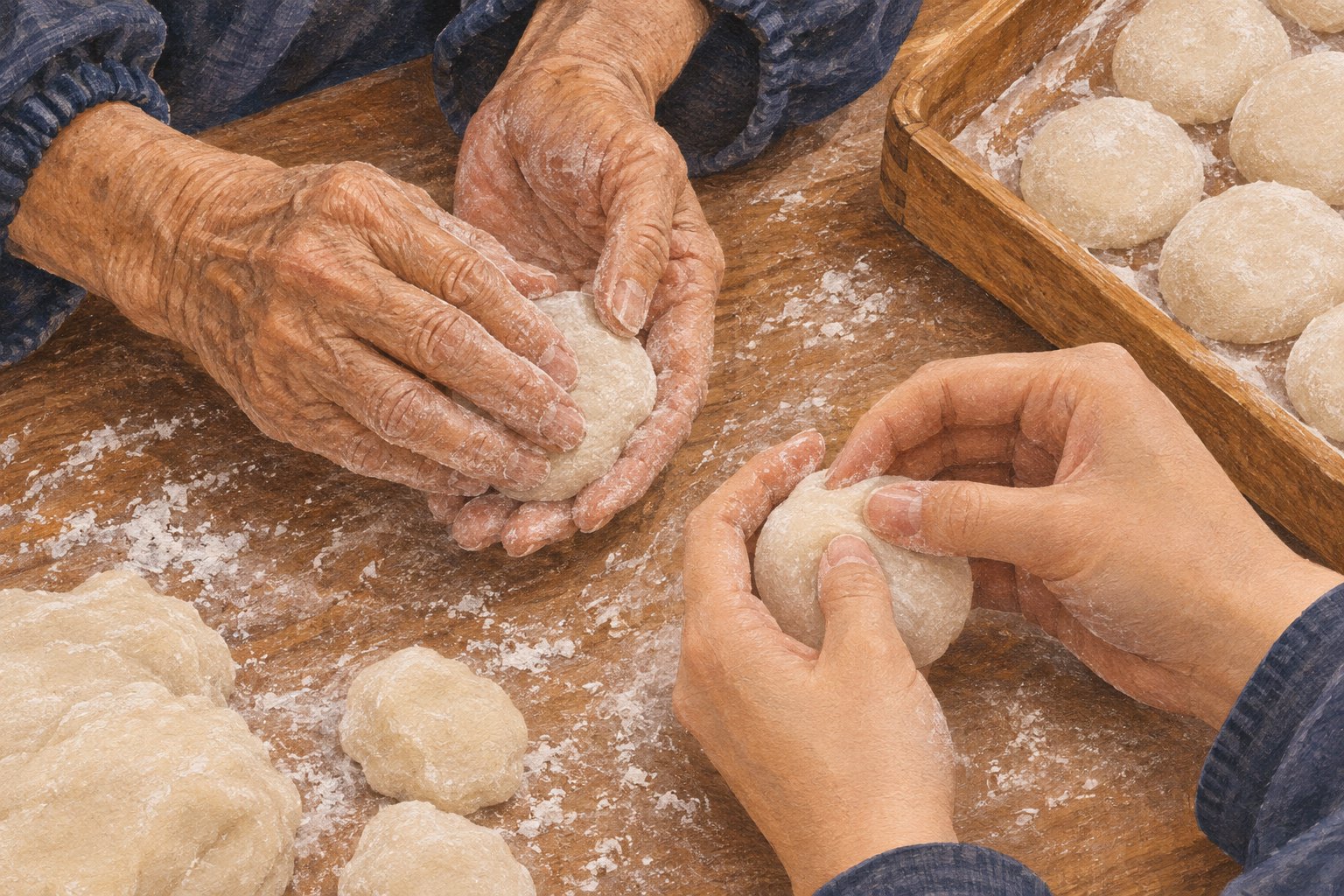
For a participant who has repeated a tradition for decades, an ordinary task may need little explanation. For someone encountering it for the first time, the same task may raise basic questions. A compelling documentary can let both perspectives retain their dignity. Familiarity should not make an elder merely an instructor; inexperience should not make a younger participant merely a symbol of cultural loss.
This is also why attention to individual behavior matters more than broad declarations about togetherness. Our discussion of watching emerging filmmakers through performance and visual choices explores a related principle: a film earns its emotional claims through particulars that viewers can see and hear.
Historical Knowledge and Personal Experience Have Different Roles
Hayashi’s participation and the inclusion of Miyatake’s story suggest an opportunity to consider how personal accounts meet historical interpretation. The film’s announced roster establishes their relevance; it does not establish how much screen time either receives or how their contributions are edited.
As a critical principle, historical context should deepen an individual account without making the person disappear into an explanation. Likewise, an affecting memory should not have to carry the entire burden of explaining an era. These forms of understanding can support each other while answering different questions.
The distinction matters especially when discussing resilience. The term can recognize effort, but it becomes vague when detached from what people endured and what they actually did. A useful conversation after this film would identify concrete choices and practices before reaching for a sweeping description of a community.
There is a related concern in our examination of what cultural faithfulness owes individual characters: respectful intentions alone do not establish a convincing portrayal. Specificity allows people to remain more complicated than the ideas they represent.
Questions Worth Bringing to the Discussion
A Lunch and Learn can give viewers room to compare interpretations after watching. These questions would keep that conversation grounded in the documentary itself:
- Whose account changes your understanding of why the tradition matters, and which detail produces that change?
- How does the film distinguish a person’s childhood memory from broader historical explanation?
- Do younger participants explain their own relationship to the practice?
- When does the camera emphasize the food, and when does it emphasize the people making it?
- Which spoken words remain memorable because of their context, rather than because they sound like a general lesson?
Answers should return to identifiable moments. That approach makes room for disagreement about the film’s effectiveness while preserving a shared basis for discussion. It also prevents admiration for the subject from automatically becoming praise for every filmmaking choice.
A Deeper Reading: Continuity Requires Participation
The most promising interpretation of The Mochi Movie begins with the difference between possessing a tradition and practicing one. Something can be remembered, described, or displayed without being continued. A shared practice asks people to give it time and attention again.
From that perspective, inheritance is an active relationship. The person teaching must make space for someone else; the person learning must decide how to participate. Neither role is automatic, and neither can be reduced to a reassuring image of generations standing together.
That is the substantial question behind this film’s inviting subject: how does a community make belonging available to the people who come next? The documentary’s premise makes that question worth exploring. Its ultimate achievement must be judged by how fully the people on screen are allowed to answer it.
Original content by this site's editorial team. Published: November 24, 2026 at 13:35:11 PST (Los Angeles time)