Crunchyroll has acquired the first feature film in The Apothecary Diaries franchise, according to Animation Magazine. For viewers following its move into feature-length storytelling, that is the essential news. The more interesting creative question is what the film will do with that opportunity: how can it make a sustained act of observation compelling enough to carry a movie?
This is a spoiler-free editorial preview, not a review of the finished film. The acquisition report establishes the business development. It does not, by itself, establish the movie’s quality, its narrative choices, or the experience audiences will have watching it. The judgments below concern what would make this first feature rewarding, rather than claiming those qualities are already present.
What the Crunchyroll acquisition tells viewers
The announcement connects Crunchyroll with the franchise’s first feature. Readers should keep that fact separate from several practical questions: when the movie will become available locally, how it will be released, and which language versions will accompany that release. An acquisition headline alone does not answer all three.
In particular, readers should not treat Crunchyroll’s involvement as confirmation that the film is immediately available through a subscription. Distribution rights, theatrical bookings, and streaming availability are different matters. Before making viewing plans, look for an explicit release announcement covering your location and preferred format.
That distinction also shapes reasonable expectations. As discussed in our editorial preview of Gundam SEED FREEDOM ZERO, release information and artistic assessment answer different questions. One helps audiences plan; the other requires evidence from the work itself.
A feature should give character perspective room to develop
My strongest hope for The Apothecary Diaries as a feature is that its storytelling will make the audience experience the difference between seeing something and understanding it. For a story framed around an apothecary, specialized knowledge offers an especially interesting dramatic possibility: an ordinary object can acquire significance because of who is looking at it.
That possibility depends on perspective. A film can announce that its central character is exceptionally perceptive, or it can let us follow the process by which an observation becomes a suspicion and then a decision. The second approach is more satisfying to me because it makes intelligence an activity. We have something to watch beyond the eventual explanation.
Character-centered filmmaking also needs limits. Someone who knows an answer may lack permission to act, may misunderstand another person’s motives, or may hesitate over the consequences of speaking. These are possibilities for analysis, not claims about this movie’s plot. They illustrate the standard I would bring to a later review: does knowledge change the character’s choices, or merely move the story to its next revelation?
Small details can justify a large screen
A feature adaptation need not prove its ambition through constant visual escalation. My preference would be for scale to sharpen attention. A carefully composed close-up, a pause before a response, or a change in the relationship between foreground and background can make an apparently modest moment command an entire theater.
For The Apothecary Diaries, that is an appealing direction because the title itself invites associations with materials, preparation, and scrutiny. The cinematic opportunity lies in making those acts readable and absorbing. Texture can carry information; duration can register uncertainty. An image becomes dramatically useful when it changes what the audience thinks it knows.

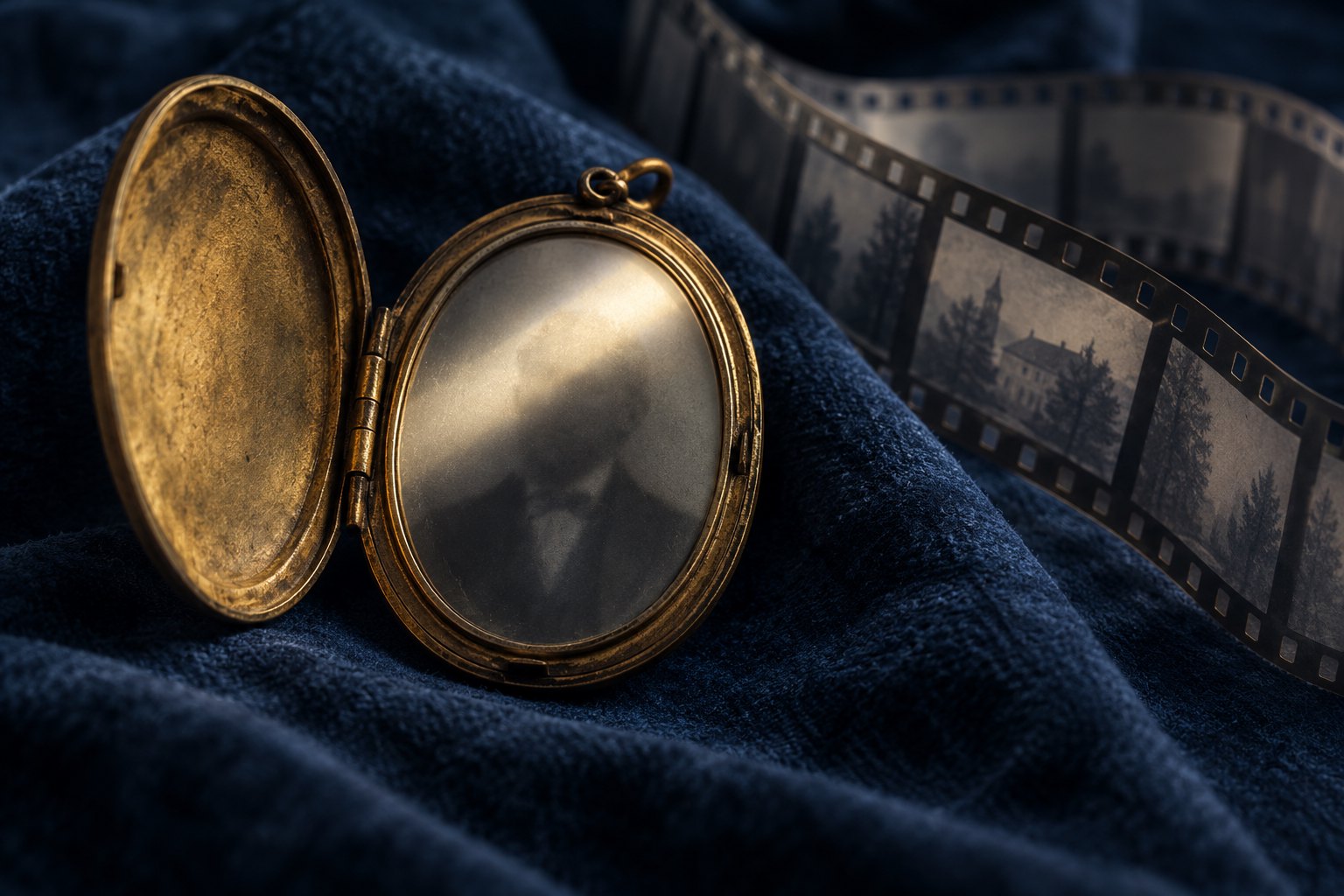
The illustration above represents that idea rather than depicting a scene from the film. Its focus is the act of examining something closely. That is also a useful critical test: would removing a beautiful image cost the story any meaning? If the answer is yes, the visual design is participating in the drama. If not, it may be attractive decoration.
The first film needs its own emotional shape
A franchise’s first feature carries two reasonable audience expectations. Returning viewers want their investment to matter. Newcomers want enough orientation to understand the immediate conflict. Those needs can coexist if the film establishes what its characters want, what stands in their way, and why the outcome matters within this particular story.
That does not require explaining every relationship or resolving every continuing thread. It requires a complete dramatic movement. By the end, an important choice should have produced a consequence, and that consequence should alter how we understand someone. Recognition alone cannot supply that feeling.
Our discussion of the Zelda movie’s challenge beyond brand recognition considers a related adaptation problem. Familiarity can bring viewers through the door, but the film still has to establish its own reasons for their attention. For The Apothecary Diaries, I would judge accessibility by the clarity of the immediate human stakes, rather than by the amount of background information included.
What a meaningful review will need to examine
A finished-film assessment should connect its conclusions to specific scenes. Does the central character’s reasoning remain understandable? Do supporting characters have motives that withstand scrutiny? Does the ending emerge from earlier decisions? Those questions would tell readers more than a general declaration that the adaptation feels cinematic.
Dialogue deserves the same care. A memorable line matters because of who says it, what they understand at that moment, and how another person receives it. Without authenticated dialogue from the feature, quoting supposed signature lines would misrepresent the movie. The same standard applies to Easter eggs: a resemblance or fan theory should not become a declared connection without evidence.
The deeper promise: knowledge with consequences
The most compelling possibility raised by this first film is a story in which understanding creates responsibility. Discovering something can be thrilling; deciding what to do with that discovery is where character emerges. A feature has room to hold those two moments apart and let the tension between them grow.
That is the promise I would want The Apothecary Diaries to pursue. Crunchyroll’s acquisition is a concrete development worth following. The artistic question remains open: whether the movie can turn close attention into an emotional experience, making what a character notices inseparable from what that character ultimately chooses.
Original content by this site's editorial team. Published: October 10, 2026 at 07:43:59 PDT (Los Angeles time)