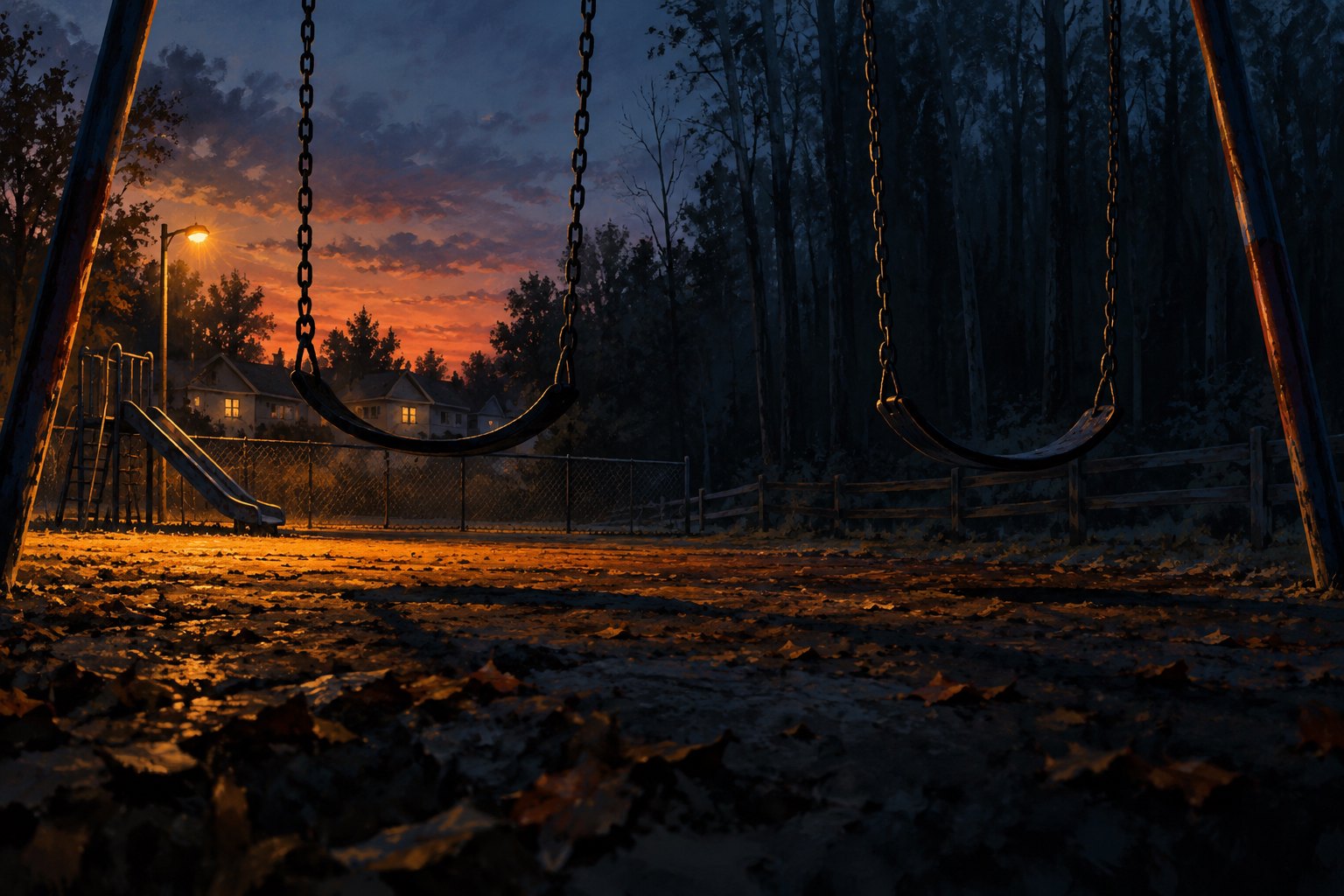
Craig Zobel and Blumhouse are teaming on Something Is Killing the Children, according to Deadline. That collaboration is the news; the creative question is how the project will make the danger in its title matter beyond an immediate jolt. A title this blunt promises vulnerability, uncertainty, and violence. Turning those promises into compelling drama requires people whose lives feel larger than the threat surrounding them.
This is a spoiler-free editorial preview, not a review of a finished film. The reported partnership does not establish how particular scenes, performances, or character arcs will work. What it does offer is an opportunity to consider the standard this project should meet: horror that makes us understand someone’s fear before asking us to enjoy the machinery of a scare.
What the Zobel and Blumhouse news establishes
The essential reported development is the association of Craig Zobel and Blumhouse with Something Is Killing the Children. A collaboration announcement is meaningful, but it cannot serve as evidence of the eventual film’s quality. Nor should readers mistake an editorial discussion of its possibilities for a verified account of its screenplay.
Specific casting choices, release timing, dialogue, and the treatment of individual story events require their own confirmation. There is no responsible shortcut from the names attached to a project to a verdict on its execution. For viewers deciding whether to follow this one, the useful distinction is between interest in the team and confidence in a finished work.
My interest lies in the title’s emotional demand. It makes children the people at risk while leaving the source of danger unnamed. That imbalance creates a powerful expectation: the audience should feel the urgency of protecting someone even before it understands what protection will require.
The children must register as people
The most consequential creative choice may be how much ordinary life the storytelling allows around its danger. A child’s humor, impatience, loyalty, or private embarrassment can carry more emotional weight than another ominous image. Such details give a threatened person an identity that survives outside the needs of a suspense sequence.
This is a criterion for the adaptation, not a description of scenes it contains. If children exist primarily to establish that the threat is serious, the film risks making them interchangeable. When they have distinct desires and relationships, danger interrupts something the audience has begun to understand. The difference is between acknowledging a terrible situation and feeling its impact on a particular life.
Agency matters here, too. Vulnerability does not have to mean narrative passivity. A frightened character can make a consequential decision with incomplete information, misread another person, or choose whom to trust. The decision need not succeed to reveal character. It needs to emerge from an understandable desire.
That distinction also changes how adult characters should be assessed. Protective intentions are a beginning. The richer dramatic test is whether adults pay attention to what the people they want to protect actually perceive and need. Any eventual character analysis should examine that relationship through specific actions rather than assigning virtue on the basis of a role.
Suspense depends on what a character can know
The word something is doing substantial work in the title. It leaves a gap where an explanation would normally sit. My reading is that this uncertainty creates the project’s most interesting formal challenge: how to keep viewers unsettled without making the storytelling feel arbitrarily obscure.
Restricted perspective can accomplish that. A camera held near a character can make the edge of a room feel significant. A sound without a visible source can force a choice between investigating and staying still. The audience then experiences uncertainty as a practical problem faced by someone, rather than as information a filmmaker is simply refusing to provide.
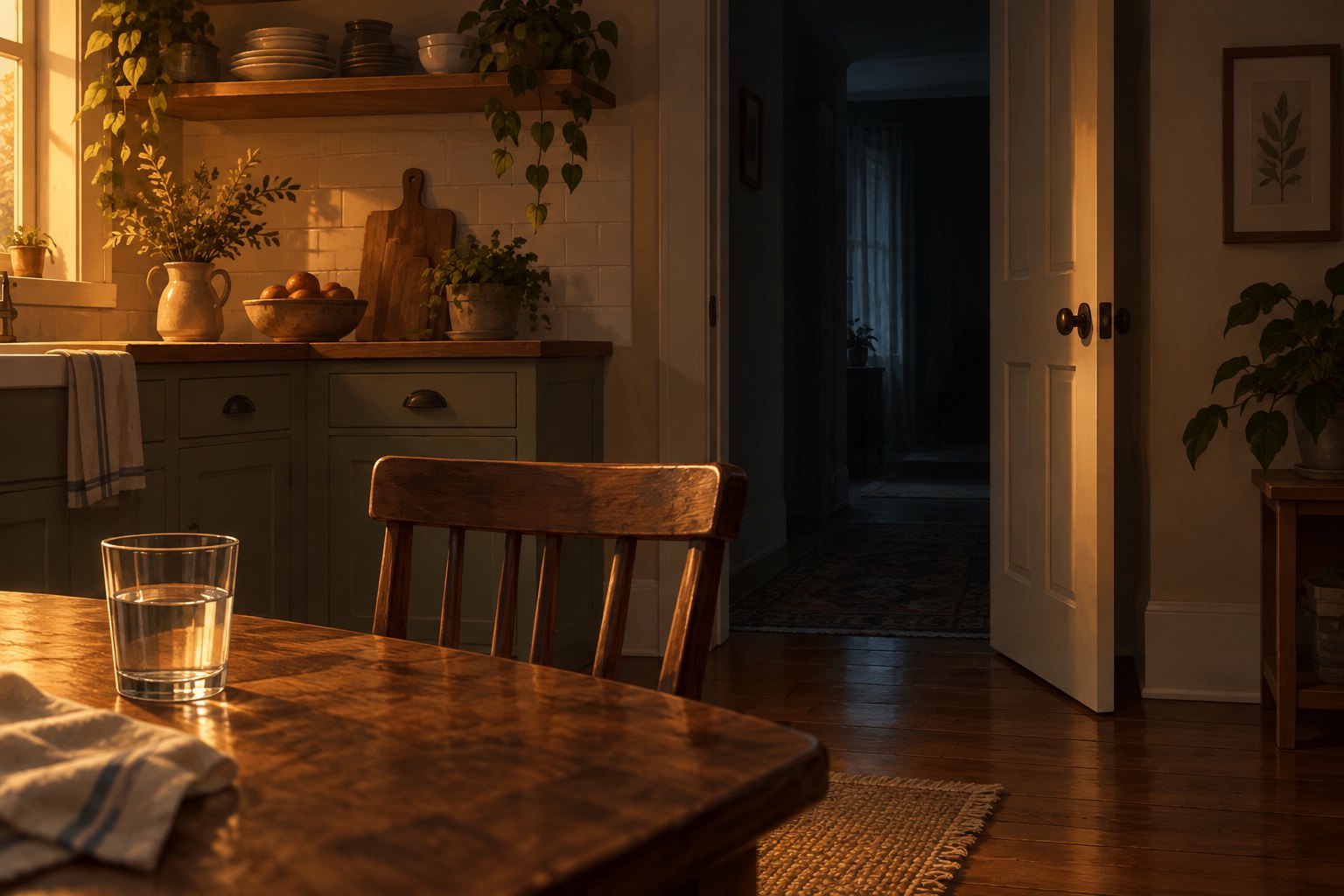
These are possible cinematic approaches, not claims about footage. Their value would depend on consistency. If the audience is encouraged to inhabit one person’s limited awareness, a sudden shift to an all-knowing viewpoint should have a dramatic purpose. Otherwise, the film may dissolve precisely the uncertainty it has worked to build.
A related question runs through our Molepeople preview about whose experience anchors the horror. Here, perspective would determine more than atmosphere: it would shape whose fear receives attention, whose account carries weight, and whose decisions move the story forward.
Showing violence and giving it consequences
The title’s directness invites an expectation of severity. Yet severity alone cannot tell us whether a horror film is emotionally serious. The stronger measure is what happens around a disturbing event: how relationships change, what choices become harder, and whether the story remembers the people affected once the immediate sequence ends.
There is no universal equation in which showing less automatically means greater taste or showing more automatically means greater honesty. An explicit image can expose the cost of violence; it can also become a spectacle detached from that cost. Restraint can respect a character’s experience; it can also make suffering feel conveniently abstract.
For this project, I would judge those choices by their relationship to character. Does a disturbing moment alter someone’s understanding or behavior? Does its aftermath occupy meaningful screen time? A film earns its intensity when the consequences continue after the audience’s physical startle has passed.
What future material should help viewers assess
A trailer or scene could begin to answer several useful questions without revealing major turns. These are more informative than counting shocks or treating familiar imagery as proof of quality:
- Character distinction: Can we recognize different wants and temperaments beyond fear?
- Spatial clarity: Can we understand a threatening environment well enough to anticipate a difficult choice?
- Tonal range: Is there room for ordinary behavior that makes the danger disruptive?
- Consequences: Do scenes suggest that frightening events affect relationships as well as the plot?
The challenge of making an adaptation work for viewers also connects to our discussion of character choices in the Zelda movie. Recognition can draw an audience toward a project. The film still has to establish its own emotional reasons for that audience to stay invested.
The deeper promise in the title
Read closely, Something Is Killing the Children places uncertainty beside an urgent statement of harm. The cause is unresolved; the need to respond is not. That is an interpretation of the title, not a claim about the adaptation’s eventual themes or ending.
It suggests a compelling possibility for Zobel and Blumhouse: a horror story in which understanding the threat and caring about its victims develop together. My strongest hope is that the project makes attention itself dramatic—who notices, who listens, and who acts before certainty arrives. If the finished film makes those choices feel personal, its fear could endure well beyond the reveal of whatever waits in the dark.
Original content by this site's editorial team. Published: October 10, 2026 at 04:37:39 PDT (Los Angeles time)