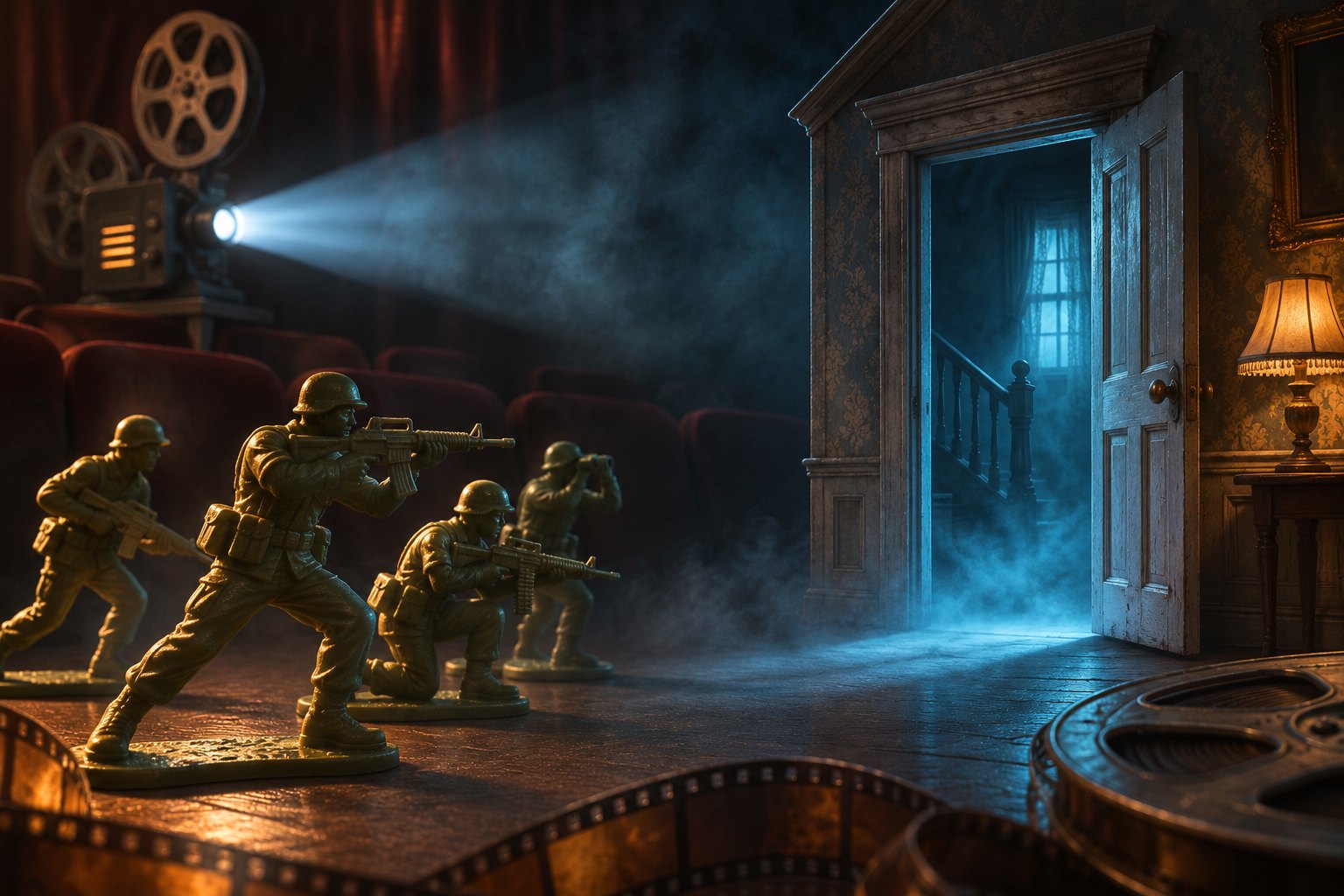
Bradley Cooper’s G.I. Joe project and a new Paranormal Activity have release-date news, according to Deadline. Beyond the scheduling announcement, the pairing raises an interesting creative question: how much franchise knowledge should someone need before walking into either movie?
For a returning fan, a familiar name can carry years of associations. For a newcomer, it carries almost nothing. A successful franchise film has to accommodate both people without making one sit through a lecture or making the other feel locked outside the story.
This is spoiler-free critical commentary on the announcement, not a review of either finished film. The scheduling news alone does not establish their plots, dialogue, continuity, or Easter eggs. What it does offer is an occasion to examine a specific standard these movies should meet: making prior knowledge rewarding without making it compulsory.
A release date invites more than established fans
A date gives an audience something concrete to anticipate. But anticipation works differently for different viewers. One person may arrive because of Cooper, another because of the G.I. Joe name, and another because a friend chose the movie. With Paranormal Activity, some viewers may bring detailed memories of earlier installments; others may simply want an unsettling night at the theater.
Those are all legitimate ways into a film. My preference is for storytelling that respects them equally. A movie can have a dense fictional history while keeping its immediate dramatic situation easy to grasp: someone wants something, something obstructs them, and a decision will carry a cost.
Our earlier commentary on the two franchise announcements considered their contrasting creative demands. Here, the issue is the audience’s entry point: what the film itself must communicate before familiarity can become a pleasure.
G.I. Joe needs introductions that reveal people
For G.I. Joe, the danger of relying on recognition is particularly easy to imagine. A name, uniform, or piece of equipment can announce that someone matters without showing a new viewer why. An entrance can produce applause while leaving the character dramatically undefined.
The stronger introduction would establish a way of thinking. How does a person assess danger? What information do they notice first? Whose judgment do they trust? These are questions a film can answer through behavior, often faster than through biography.
Consider the difference between learning that someone is experienced and watching that person recognize a mistake before anyone else does. The first supplies a label. The second gives the audience evidence. Crucially, that evidence remains available to a viewer who has never encountered the character before.
This is a standard for the prospective film, not a description of an announced scene. Cooper’s association with the project makes characterization a natural point of interest, but an actor’s name cannot establish what the screenplay will do. The useful question is how much personality emerges from choices once the story begins.
Our discussion of making the G.I. Joe team matter examines relationships within the group. Accessibility adds another requirement: viewers must understand those relationships through the movie, even when they arrive without a favorite character.
Paranormal Activity faces the opposite information problem
For Paranormal Activity, explaining too much could become its own obstacle. Horror depends partly on the distance between what a character experiences and what that character can explain. Closing that distance too quickly can turn an encounter with something frightening into a demonstration of familiar rules.
That does not mean a new installment should disregard continuity. It means continuity should serve the immediate experience. Background information earns its place when it changes what someone believes, what they attempt, or whom they trust. Information that merely identifies an older reference can interrupt tension without deepening it.
From a character’s perspective, uncertainty is not an empty space waiting for exposition. It can be the central conflict. A person who cannot explain an event still has to decide whether to dismiss it, investigate it, tell someone, or alter their behavior. The audience can understand that pressure without possessing a complete supernatural history.
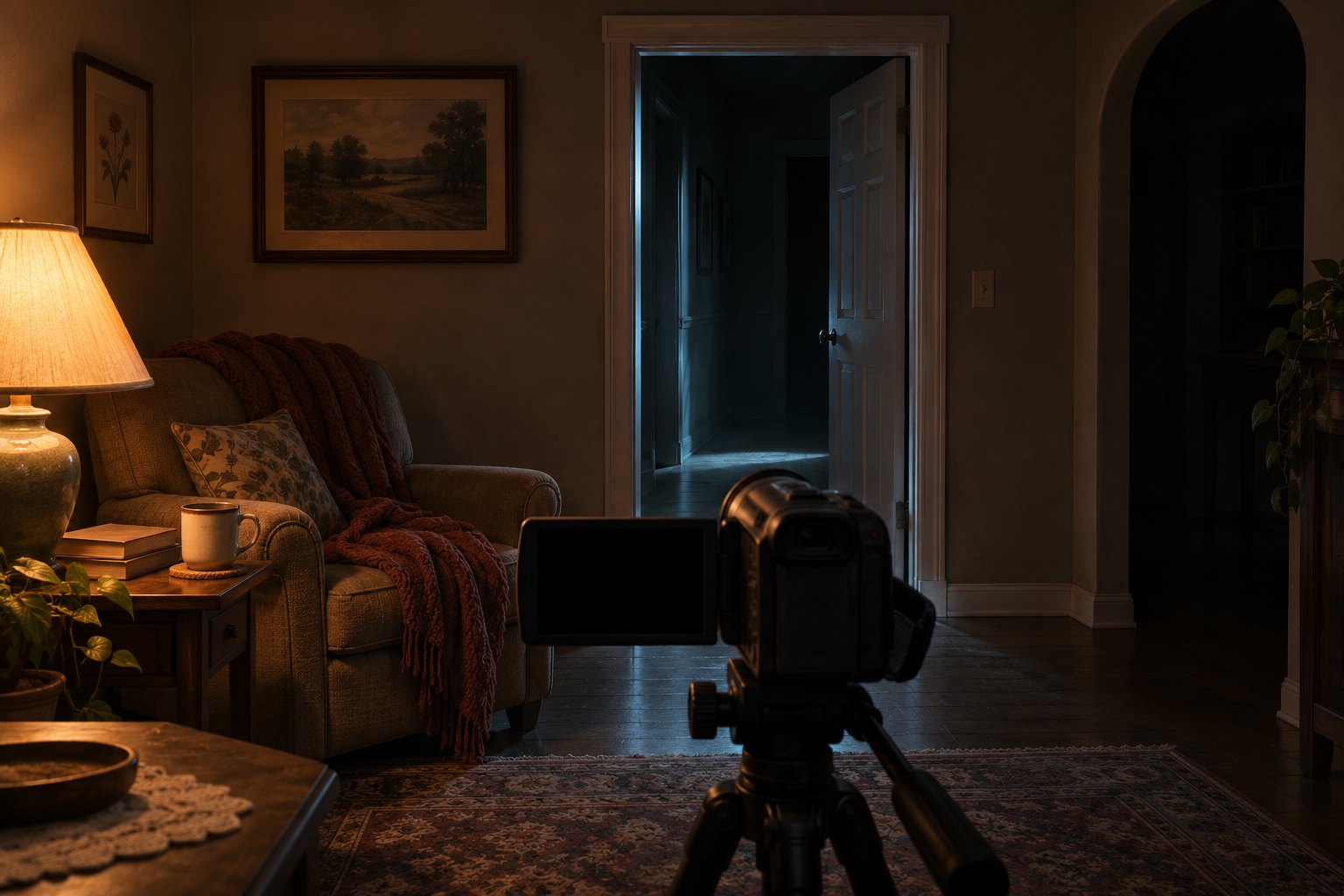
The accompanying illustration suggests that problem of limited perspective; it does not depict a confirmed scene. A camera can show a doorway while leaving another part of the room unseen. More recorded information does not necessarily produce greater understanding. That distinction offers richer possibilities for horror than simply adding another explanation.
Fans and newcomers can experience suspense together
A knowledgeable viewer does not have to be surprised by precisely the same thing as a newcomer. One may recognize a warning sign earlier. The other may discover its significance alongside a character. Both can remain invested if the person facing the danger has a meaningful decision to make.
This is where character perspective becomes essential. Even when viewers suspect what will happen, they may not know how someone will respond. Familiarity with a fictional world cannot settle questions of loyalty, denial, pride, or responsibility in advance.
For the prospective G.I. Joe film, that suggests giving recognizable elements immediate dramatic consequences. For Paranormal Activity, it suggests preserving the gap between recognizing a threat and knowing how to live through it. These are different routes toward the same goal: keeping the current story active for everyone watching.
References should add meaning, not supply missing meaning
There is nothing inherently shallow about an Easter egg. A visual echo or returning detail can acquire emotional force when its meaning changes. The problem begins when recognition substitutes for development, or when understanding a basic motivation requires remembering something the current film never explains.
A useful test is to imagine removing the reference. Would the scene still communicate a desire, conflict, or consequence? If it would, the reference may provide an additional pleasure. If it would become incomprehensible, the film may be asking outside knowledge to do essential storytelling work.
No specific Easter eggs can responsibly be identified from a scheduling announcement. Likewise, quoting supposed dialogue would create a false impression of access to the films. Those details belong in criticism grounded in the finished work.
The deeper promise of a franchise return
The most inviting franchise film allows viewers to discover why its world matters, even if other people discovered that years earlier. That requires confidence: enough to introduce characters through action, enough to leave some mysteries unresolved, and enough to let a scene work without a recognition cue.
For Bradley Cooper’s G.I. Joe and the next Paranormal Activity, my central criterion is therefore straightforward. Each should give a first-time viewer a complete emotional experience while offering returning fans something worth reconsidering. A release date can bring an audience to the door. The storytelling has to welcome them inside.
Original content by this site's editorial team. Published: November 7, 2026 at 07:57:10 PST (Los Angeles time)