We Can’t Not makes an appealing promise: to explain the human need behind the skiing. Its central figure, skier and filmmaker Paddy Graham, faces a challenge that athletic ability cannot solve on its own. How do you make the people closest to you understand a life organized around something they do not experience in the same way?
That question gives the film an accessible point of entry. You do not need to recognize a difficult maneuver to understand the discomfort of explaining why your work matters. Graham’s premise connects an unusual profession to an ordinary desire: being understood without having to become someone else.
Scope: This is spoiler-light criticism of the film’s documented premise and reported creative approach, rather than a review based on a firsthand screening. Discussion includes its family framing and production methods; it does not assess unverified sequences, individual performances, or the ending.
Paddy Graham’s Most Relatable Challenge
The Inertia describes an early reenacted dinner-table situation in which Graham fields questions about his livelihood. Its account identifies the film as an attempt to explain ski filmmaking to those closest to him. That domestic setup is the most revealing reported detail: the person accustomed to expressing himself through action must find another language. [The Inertia’s account of the film](https://www.theinertia.com/mountain/we-cant-not-is-a-ski-film-that-explains-why-skiers-do-what-they-do/)
Read as a dramatic premise, the dinner table changes the meaning of expertise. In the mountains, Graham’s experience establishes his authority. At home, familiarity with his profession cannot be assumed. He has to describe the value of the activity before the conversation can reach the question of whether its demands make sense.
My interpretation is that this places recognition, rather than achievement, at the center of his story. A spectacular image can demonstrate that he is good at his job. It cannot automatically explain why the job deserves such a large place in his life. Those are separate arguments, and the distance between them is fertile ground for a film.
The family perspective deserves equal consideration. Questions about an unconventional career need not signal hostility or a failure of imagination. They can express affection, concern, or simple curiosity. A meaningful explanation would allow that uncertainty to remain legitimate instead of treating understanding as something the skier is owed.
Making the Work Visible
The production announcement describes a project spanning two years, with Graham joined by Markus Eder, Kye Petersen, Finn Bilous, and Tom Ritsch. Written and directed by Adam Gendle, the film combines skiing, production footage, and constructed family sequences. Sean Bean provides narration. These are reported production details, not evidence by themselves of how successfully the finished film works. [The production announcement](https://www.snowsportsnews.com/newsrepository/2026/november/we-cant-not-paddy-grahams-ski-film-about-making-a-ski-film-is-out-now/)
The distinction between skiing and making a ski film matters. One activity produces an experience; the other tries to communicate it. Once a camera becomes part of the undertaking, the skier is participating in something that must make sense to an absent viewer. The mountain experience acquires a second purpose.
For Graham’s central question, showing the work offers a more substantial answer than simply displaying the result. A finished image conceals the choices that made it possible. Production footage can restore a sense of deliberation: someone imagined a shot, other people helped realize it, and the final moment belongs to a collaborative process.
This also changes how an audience might approach the supporting skiers. Their importance need not depend solely on which athlete delivers the most impressive passage. The useful character question is what their involvement reveals about Graham’s relationship to his work. Does his explanation become clearer through other people, or does their shared enthusiasm leave the outsider’s question unresolved? That is a question for viewing, not a conclusion that promotional material can settle.
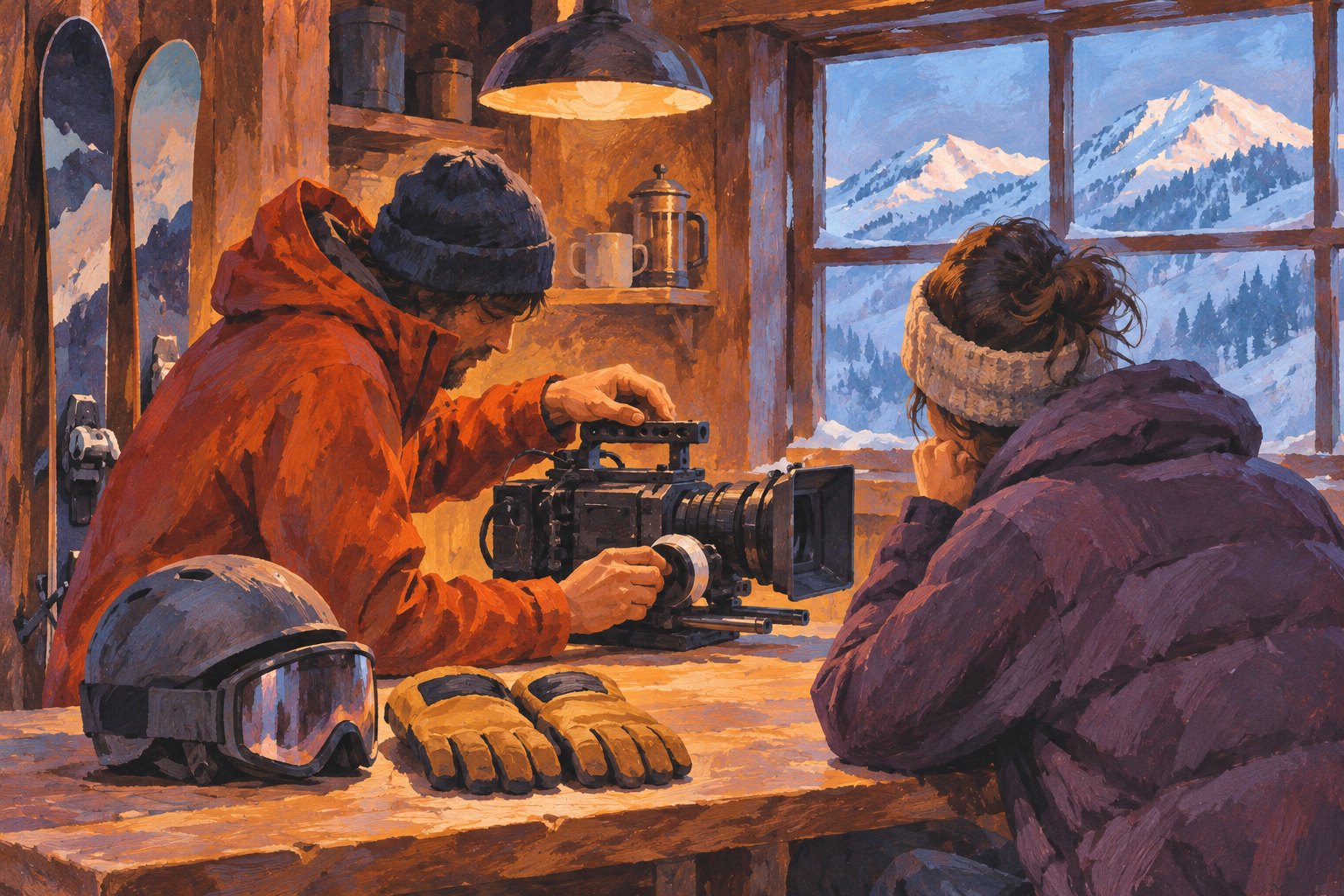
This interest in the people surrounding athletic images connects with our discussion of looking beyond the big descent in ski cinema. Here, however, the particular appeal is Graham’s effort to translate a profession for a personal audience.
Why the Constructed Scenes Matter
According to the production announcement, the filmmakers used Germany’s Hyperbowl LED studio to place mountain imagery around scenes involving Graham’s family. That reported method establishes an important distinction: the film’s visual world includes deliberately constructed material alongside location footage.
As a storytelling idea, this is more interesting than a straightforward illustration of someone talking about work. Bringing mountain imagery into a family setting can make the act of explanation visible. The two environments that define Graham’s problem—professional experience and domestic understanding—can occupy the same frame.
My reading of that approach is that literal realism need not be its only measure of honesty. A staged situation may communicate how a conversation feels, provided viewers can recognize the construction. What matters critically is whether the device clarifies Graham’s predicament or merely decorates it. Without directly examining the sequences, the method deserves analysis, but not an automatic verdict of success.
Sean Bean and the Value of Not Knowing
The announcement quotes Bean’s narration: “I’m not really an expert when it comes to skiing,” followed by “but I will do my best.” Those brief lines establish a useful position for a general audience: curiosity without pretense.
The first admission removes a potential barrier. A viewer who lacks specialist knowledge does not have to feel behind before the story begins. The second makes an effort to understand sound worthwhile. Together, the lines suggest a relationship between narrator and subject built on attention rather than unquestioning admiration.
That is especially relevant to Graham’s family framing. Explaining a passion requires someone willing to listen, but listening does not require immediate agreement. An outsider can appreciate the beauty of an activity and still ask difficult questions about its place in a life.
Our commentary on watching the people behind climbing films explores a related approach to adventure cinema: follow the human decisions as closely as the physical accomplishment.
What the Title Explains—and Leaves Open
We Can’t Not is an effective title because its certainty contains a complication. It expresses commitment as something almost involuntary. The activity has become so closely connected to identity that imagining its absence feels difficult.
As a personal statement, that can be persuasive. As an explanation to someone else, it remains incomplete. Feeling compelled to do something does not communicate everything another person might reasonably want to understand. The title therefore holds both the attraction of the premise and its central critical test.
The deeper interpretation is that Graham’s project concerns the limits of explanation. Some experiences resist being converted into an argument. Film can offer another route: making the effort, companionship, concentration, and uncertainty sufficiently legible that a viewer understands their value without sharing the same ambition.
That is the strongest reason to be interested in this particular ski film. Its reported premise asks whether showing someone your world can close the distance between loving an activity and explaining that love. The most meaningful answer would leave room for both Graham’s conviction and his family’s questions.
Original content by this site's editorial team. Published: November 7, 2026 at 06:06:24 PST (Los Angeles time)