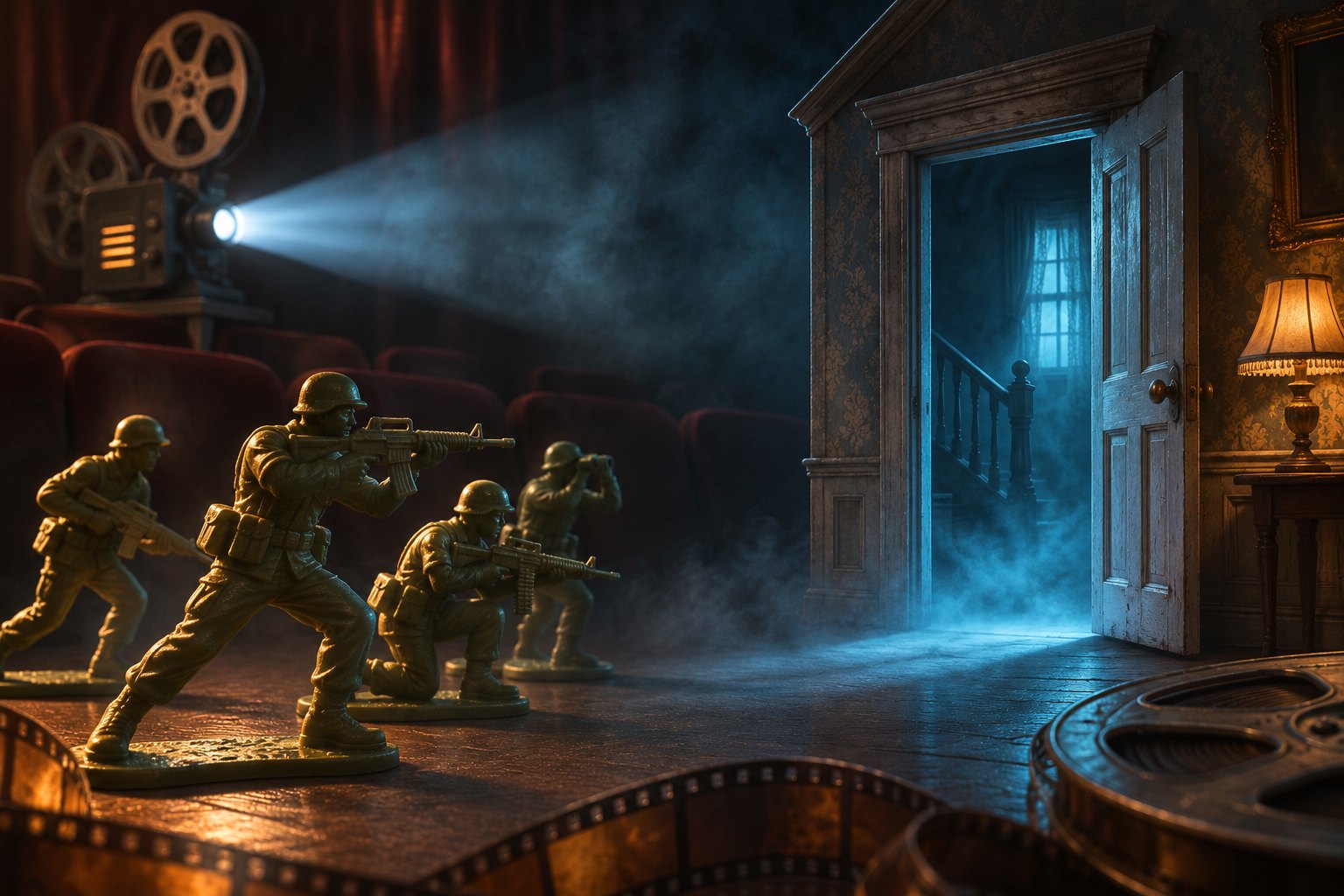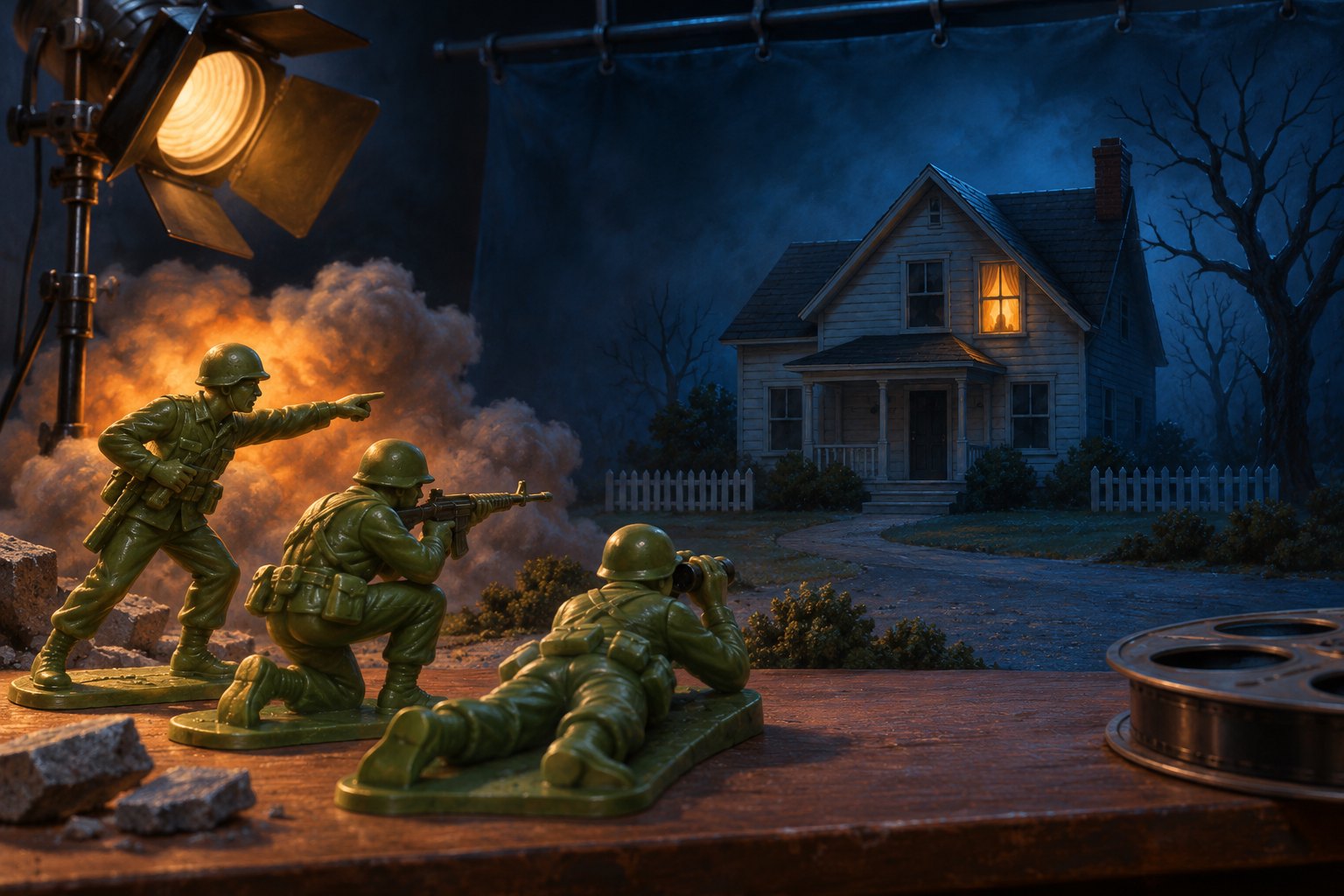
Bradley Cooper and Danny McBride’s G.I. Joe movie is set for 2028, while Paramount has moved its next Paranormal Activity into the Halloween 2027 season. Those are the central developments in [Variety’s release report](https://au.variety.com/2026/film/global/bradley-cooper-danny-mcbride-g-i-joe-movie-release-date-paranomal-activity-42352/). For viewers following these projects, the announcement establishes when to expect them. The more interesting creative question is what each film will do with the expectations attached to its name.
One invites anticipation of coordinated action and capable heroes. The other invites the unsettling possibility that familiar surroundings cannot keep anyone safe. My interest in this pairing lies in that contrast: two recognizable properties approaching fear from opposite directions, with character credibility essential to both.
This is spoiler-free release commentary, not a review of either forthcoming film. The scheduling news does not provide a basis for evaluating finished performances, quoting dialogue, or interpreting endings. It does, however, offer a useful starting point for considering what would make these returns satisfying.
What the release news actually tells viewers
The practical distinction is straightforward: the reported G.I. Joe release falls in 2028; the new Paranormal Activity is being positioned for the Halloween season in 2027. “Halloween” describes the seasonal window here and should not automatically be read as an October 31 opening.
A changed date also requires careful interpretation. It tells us that a release plan has changed. By itself, it does not establish production trouble, creative disagreements, reshoots, or the studio’s confidence in the finished movie. Those explanations require separate evidence.
There is nevertheless an obvious editorial connection between Halloween and a horror title: the season can give audiences an occasion to gather for a scare. That is a plausible advantage of the positioning, not proof of Paramount’s internal reasoning or a prediction of commercial success. The film still has to deliver an experience worth that outing.
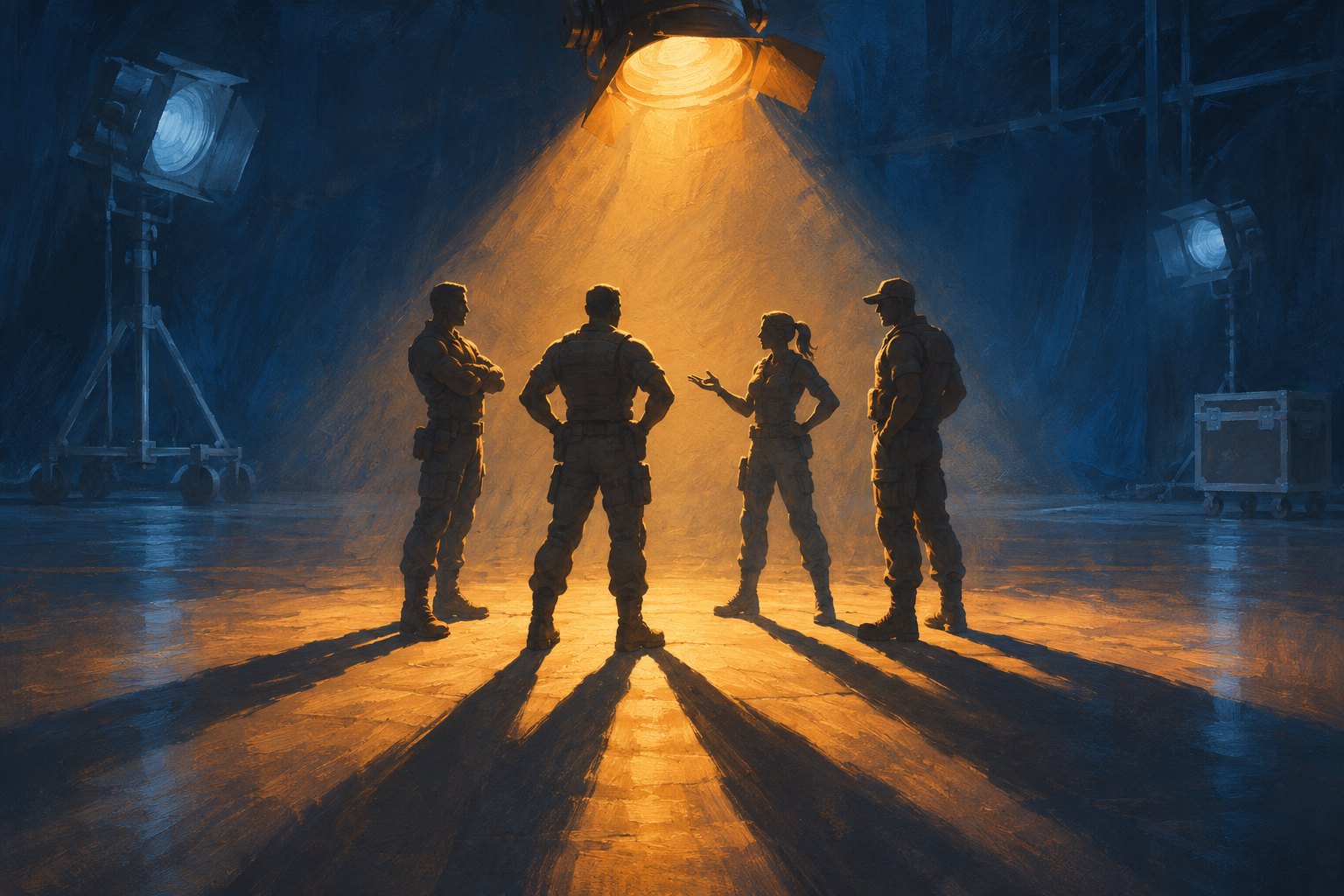
G.I. Joe needs a team viewers can understand
The Cooper–McBride association gives G.I. Joe an immediate conversation starter. But recognizable names cannot answer the most consequential dramatic question: why should viewers care about the people carrying out the mission?
For an action ensemble, my strongest preference is for competence with visible limits. Someone may be excellent at solving a tactical problem while struggling to recognize another person’s fear. A leader may inspire confidence yet find it difficult to admit uncertainty. These are possible dramatic approaches, not descriptions of the new film’s characters or story.
Such tensions matter because an action sequence becomes more engaging when its outcome changes a relationship. A rescue can establish trust. A reckless decision can cost someone authority. A successful operation can leave the group divided over the price of winning. Without that human consequence, even a beautifully executed sequence risks feeling detachable from the movie around it.
Let personality emerge through decisions
An ensemble does not need a lengthy introduction for every member. What it needs is a clear distribution of perspective. Who notices danger first? Who assumes the plan will work? Who speaks when everyone else would prefer silence? Answers expressed through behavior can distinguish characters more efficiently than a roll call of abilities.
For Cooper’s involvement, the useful question is what emotional pressure the material creates, rather than whether a familiar screen presence can command attention. Our discussion of the character demands behind James Bond casting considers a related issue: recognition becomes dramatically valuable when a role gives it something specific to accomplish.
McBride’s association also leaves an intriguing question of tone. Humor could expose competitiveness, puncture self-importance, or establish affection within a group. My preference would be for jokes that reveal relationships while allowing danger to retain its weight. A comic reaction can deepen a tense moment; a reflexive punch line can make that same moment feel disposable. Which balance this project chooses remains to be seen.
Paranormal Activity needs fear with a human perspective
The Halloween positioning gives Paranormal Activity a readily understandable occasion. Its creative challenge is more intimate: persuading viewers to invest attention in spaces and people before asking them to fear what might happen there.
For this kind of horror, an ordinary room can do substantial dramatic work. Viewers gradually learn its arrangement, its light, and the distance between safety and an open doorway. Once that geography feels familiar, a small disturbance can become meaningful. The effect depends on establishing a baseline, not simply keeping the image dark.
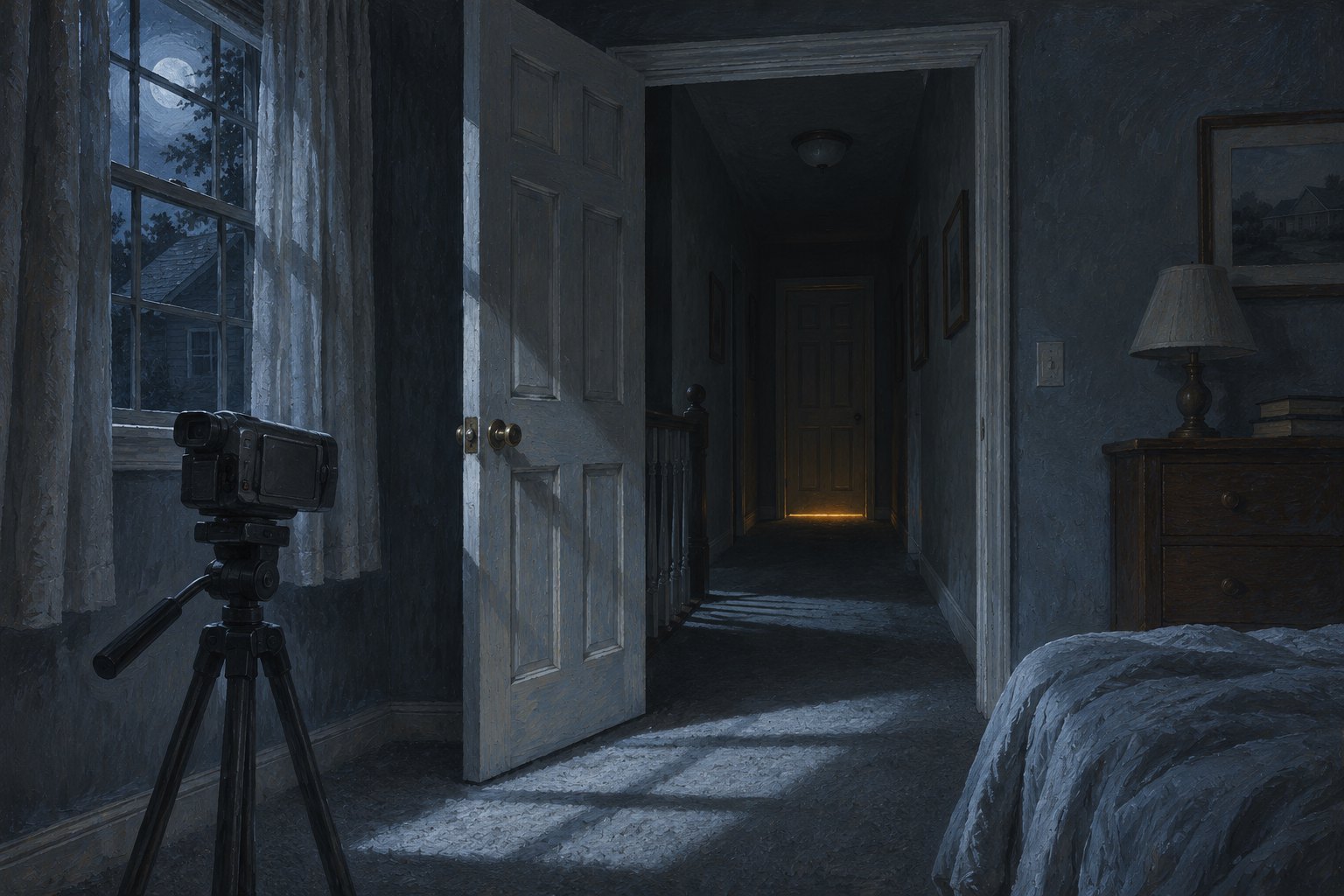
Character perspective gives that visual attention a purpose. Consider the difference between someone recording because they want evidence and someone recording because they cannot stop looking. The equipment might be identical, but the emotional experience changes. One person hopes to settle a question; the other may already be trapped by it.
That distinction is a critical standard for the forthcoming film, not a claim about its plot or visual format. Any use of recorded images would benefit from a convincing relationship between the person operating the camera and the danger being documented. The audience should understand why looking feels necessary, even when looking becomes frightening.
Believable disagreement can make fear more painful
A horror story can gain tension when characters interpret the same event differently. Skepticism becomes interesting when it protects something: a relationship, a sense of stability, or the belief that ordinary explanations still apply. Belief becomes equally interesting when accepting it carries a cost.
My preference is for both positions to remain emotionally intelligible. If one character exists only to dismiss obvious danger, disagreement becomes a device for delaying the next scene. If each person has something credible to lose, the conflict can make an unsettling event feel personal before anything more spectacular occurs.
What future footage should help us assess
As these projects move closer to release, a useful preview should offer more than recognition. For G.I. Joe, I would look for readable action geography, distinct ensemble behavior, and some indication that choices have consequences. For Paranormal Activity, I would look for a coherent point of view and an ability to make ordinary space uncomfortable without explaining every threat.
Neither trailer could settle the quality of a complete film. But those details would give viewers something more substantial to discuss than names and dates. As our commentary on Matt Damon’s addition to Stuntnuts explores, an attention-getting association becomes meaningful through its function within the work.
Two different fantasies about control
The deeper connection between these announcements is the question of control. An action team can offer the pleasure of people coordinating their abilities against danger. Domestic horror can unsettle the belief that attention, evidence, or preparation will make danger manageable. Both approaches become richer when the characters’ confidence is tested rather than merely asserted.
That is the promise worth watching across these two releases. My hope for G.I. Joe is that teamwork becomes something the characters earn. My hope for Paranormal Activity is that vulnerability grows from people and places we have learned to understand. The calendar supplies an arrival window; the storytelling must supply the reason to care.
Original content by this site's editorial team. Published: November 7, 2026 at 02:56:44 PST (Los Angeles time)