
Josh Allen backed The Buffalo Miracle because its account of neighbors helping strangers expressed what he values about Buffalo. His first film project with Out of Pocket Studios gives that attachment a concrete subject: people who turned a restaurant into refuge during the Christmas blizzard of 2022. In his premiere remarks, Allen described the Buffalo connection as essential to his decision. His explanation makes the project sound less like an exercise in expanding a celebrity brand than an opportunity to recognize the community around him. [Allen’s premiere remarks](https://www.aol.com/articles/josh-allen-talks-hbo-project-033855000.html).
That distinction supplies the most interesting way into the documentary. A famous quarterback can attract attention, but the people opening doors, sharing warmth, and accepting help carry its human stakes.
Spoiler notice: This article discusses reported situations and the closing moments of the documentary. It is a critical interpretation of verified reporting and the official synopsis, rather than a firsthand assessment of every scene, performance, or editing choice.
What The Buffalo Miracle Is About
Directed by Ben Proudfoot, the 37-minute documentary follows strangers who sheltered inside a McDonald’s during the Buffalo blizzard. HBO announced its November 24, 2026 debut and HBO Max availability. Its description identifies firsthand testimony and hand-drawn animation as the film’s storytelling tools, with restaurant employees, stranded residents, and rescuers contributing to the account. [HBO’s film announcement](https://www.webwire.com/ViewPressRel.asp?aId=363628).
The setting gives the story an immediate dramatic clarity. A restaurant normally organizes brief transactions: order, pay, eat, leave. An emergency changes the meaning of that space. Remaining inside becomes the point. The person behind the counter acquires responsibilities that no ordinary customer interaction could prepare them for.
For character-centered criticism, this is a useful starting point. The question is not simply who deserves the label of hero. It is how people understand their obligations when familiar roles stop being sufficient. A manager, a customer, and a stranger can suddenly become essential to one another.
Why Allen’s Involvement Fits the Story
Allen’s stated attachment to Buffalo explains the choice without requiring speculation about private financial arrangements or creative control. Supporting a film and directing it are different responsibilities. His executive-producer involvement should not erase Proudfoot’s authorship or turn the documentary’s participants into supporting characters in the quarterback’s career.
My reading is that the project’s strongest connection to Allen lies in recognition. A public figure closely associated with a place can help an audience notice people who rarely receive comparable attention. The value of that association depends on where the attention ultimately lands.
This also establishes a reasonable standard for judging celebrity-backed nonfiction. Does the recognizable name help viewers encounter unfamiliar lives? Does the story remain intelligible and moving to someone with no investment in the celebrity? Those questions matter more than treating an executive-producer credit as an automatic guarantee of authenticity.
Kristin Kosha and Jeffrey Spengler: Kindness as Work
Reporting identifies employees Kristin Kosha and Jeffrey Spengler as central to keeping the restaurant available to people seeking safety. Their contribution directs attention toward practical care: maintaining a place where frightened, displaced people can remain together. [Associated Press reporting on the participants](https://abcnews.com/Entertainment/wireStory/josh-allen-teams-oscar-winning-director-produce-buffalo-138405716).
From their perspective, the moral problem is immediate. Someone needs somewhere to go. An abstract belief in helping others becomes a decision involving space, supplies, time, and responsibility. That is a richer foundation for a documentary than a generalized declaration that a city has good people.
It also changes how heroism can be understood. An exceptional act need not resemble a spectacular feat. Keeping a shared environment functioning requires attention that is easy to overlook precisely because it resembles ordinary service work. The emergency reveals the human importance of tasks an audience might otherwise regard as routine.
The People Receiving Help Must Remain Individuals
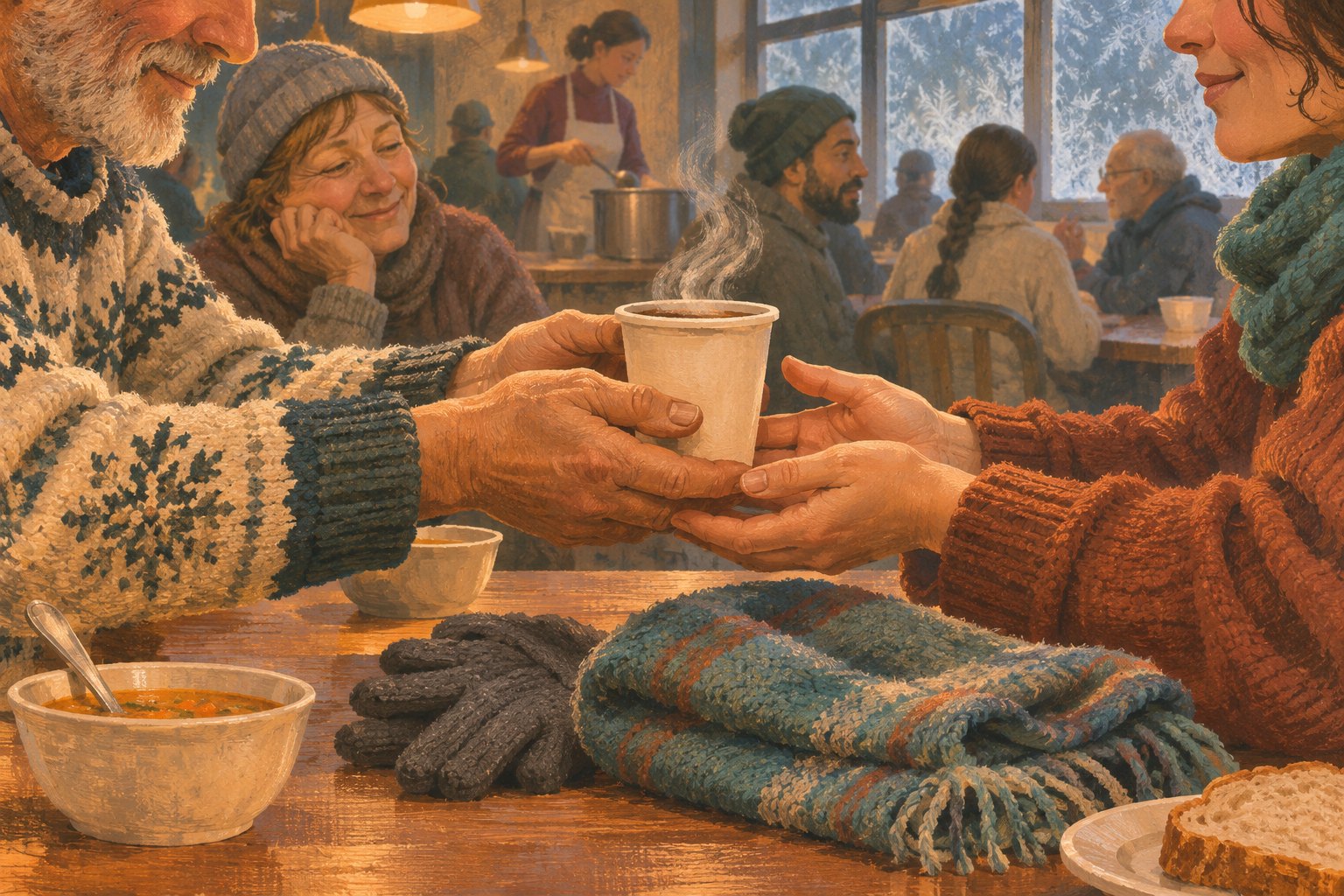
HBO’s synopsis describes people facing different vulnerabilities, including a father caring for an infant, a young man with Down syndrome away from his mother, an engaged couple separated from family, and immigrant business owners facing a language barrier. Those circumstances give the shared shelter distinct personal meanings.
A parent’s immediate concerns will not be identical to those of someone trying to navigate unfamiliar speech. Being gathered in the same room does not make everyone’s experience interchangeable. The critical opportunity is to recognize common need without flattening individual differences.
That is also where an uplifting documentary faces its hardest obligation. Gratitude should not become the only emotion a person is permitted to express. Fear, embarrassment, uncertainty, and the wish to remain independent belong in accounts of receiving help, even when the overall story is hopeful. These are standards for evaluating the film’s approach, rather than claims about unverified scenes.
What Football Can—and Cannot—Provide
The official synopsis describes the shelter’s occupants gathering around a laptop to watch Buffalo play Chicago. The game offers a shared activity while their own circumstances remain unsettled.
That is a persuasive role for sports in this story. Watching together can restore a fragment of ordinary life: something to anticipate, discuss, and react to in company. It gives people a common focus without requiring them to explain everything they have just experienced.
Our analysis of looking beyond football highlights considers why a visible result can obscure the coordinated work beneath it. A related distinction matters here. The game may supply emotional relief, while the shelter’s continued operation depends on practical efforts happening around the screen.
Shared attention can change an experience, much as our discussion of watching movies with a crowd explores. Company does not remove uncertainty. It can make uncertainty less isolating.
The Closing Words Give the Story Its Human Scale
According to the Associated Press, participant Paache’ Spikes-Redding says, “Sports brings us together.” The report also identifies her final on-screen greeting: “Merry Christmas to all. And to all a good night.” She died after filming, before seeing the completed documentary.
Those reported words deserve restraint from a critic. The first expresses her understanding of a shared experience; it need not be inflated into a universal claim that sports resolve division. The second preserves an individual voice, playful and familiar, within a story that also contains loss.
My interpretation of The Buffalo Miracle is that its deepest subject is the responsibility created by proximity. People do not have to know one another well before another person’s needs become their concern. Allen’s backing makes sense within that idea: belonging to Buffalo involves noticing whose actions sustain it. The documentary’s most meaningful promise is to make that work visible—and to let the people who performed it remain the center of their own story.
Original content by this site's editorial team. Published: November 25, 2026 at 17:12:36 PST (Los Angeles time)