David Fincher’s discussion of AI use in Cliff Booth centers on a practical possibility: reducing the number of takes while keeping human performers at the heart of filmmaking. Variety reports that Fincher addressed both the film’s use of AI and the technology’s potential to work with “real human beings.” The distinction matters, but it leaves an artistic question open. Keeping an actor in the process does not, by itself, explain how much of that actor’s performance survives.
For audiences, the useful question is what happens to character. Does a technological adjustment preserve a moment that would otherwise be lost? Does it change the intention behind a glance? Could a smoother scene become a less revealing one? Those questions offer a more productive way into Fincher’s argument than treating either efficiency or technological novelty as an artistic achievement.
This is spoiler-free commentary on Fincher’s reported position and its implications for screen performance, rather than a scene-by-scene review of Cliff Booth.
What Fincher’s argument establishes—and what remains open
The reported premise has two connected parts: AI has a place in the discussion of Cliff Booth, and Fincher sees potential for the technology to reduce repeated takes without eliminating human performance. That is an argument about how filmmaking could work. It should not automatically become a claim that a particular production saved a measurable amount of time or that its performances improved.
Nor does the broad term AI tell viewers precisely what happened to an image. An assessment needs to distinguish between a tool’s involvement, the purpose of an adjustment, and its effect on the finished scene. Without that specificity, both praise and condemnation can outrun the evidence.
My view is that Fincher’s proposition deserves consideration on a narrower basis: can a tool help filmmakers retain an expressive human moment without substantially rewriting its meaning? That standard allows for useful intervention while keeping the actor’s creative contribution visible in the discussion.
Fewer takes can protect a performance—or limit its discovery
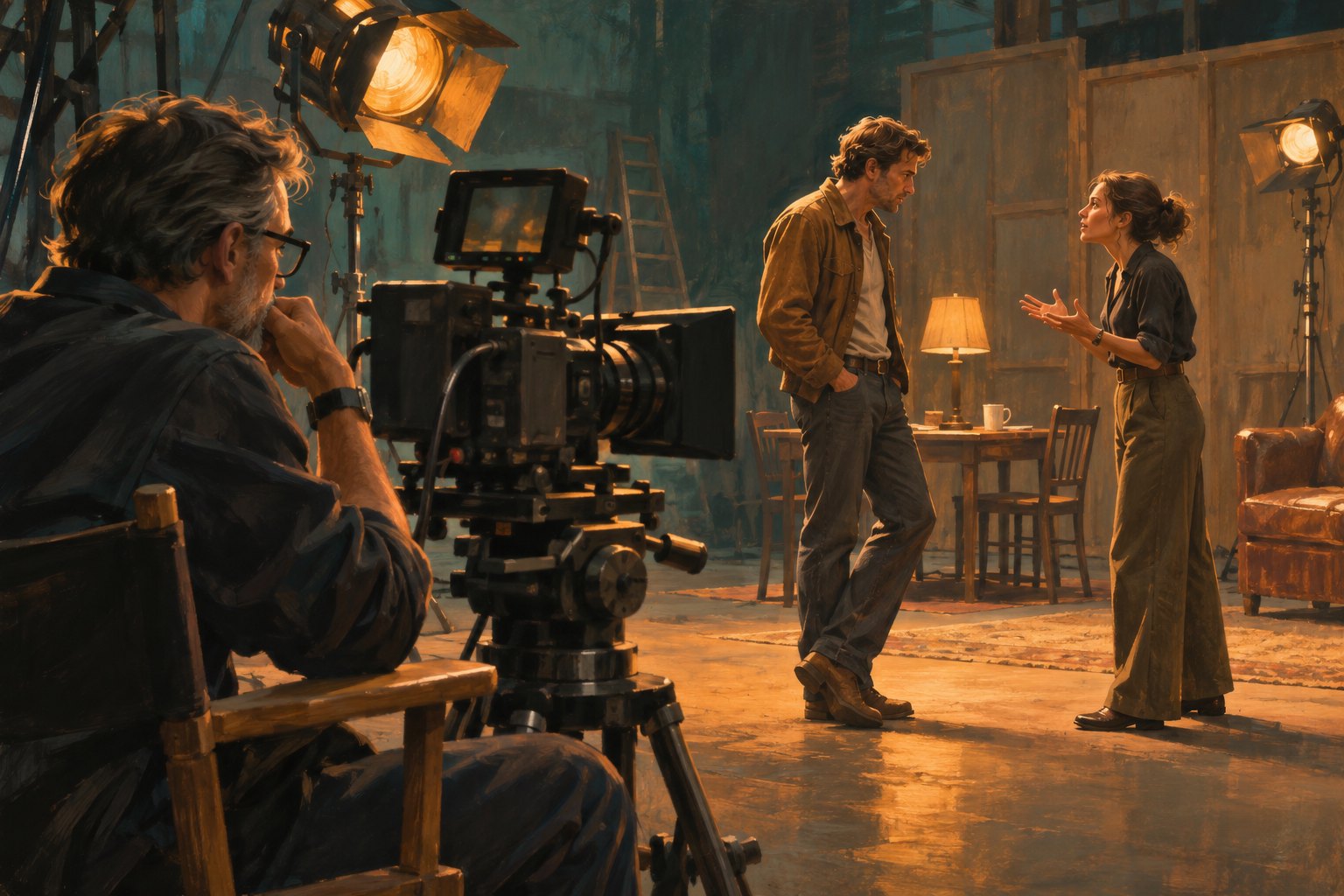
A take is more than another attempt to capture the same event. It can be a new interpretation. A performer might enter a scene with confidence, then discover that hesitation makes the exchange more interesting. A scene partner might respond differently, changing the rhythm for everyone. Repetition can produce discovery as well as exhaustion.
That makes the promise of fewer takes attractive but incomplete. Consider a hypothetical scene in which an actor gives a compelling performance while a minor technical distraction compromises the shot. If a correction could preserve that performance, the benefit would be artistic as well as practical. The actor would not need to reproduce a fleeting emotional state simply to solve an unrelated problem.
Now consider a different hypothetical: a scene has been recorded competently, but the characters’ relationship has not yet become convincing. Ending the work early because expressions might be adjusted afterward would answer a dramatic problem with a technical shortcut. It could remove the opportunity for the performers to discover something together.
These are possibilities, not descriptions of what happened on Cliff Booth. They explain why take counts alone tell us little about quality. The valuable distinction is between repetition that serves the scene and repetition that merely repairs the recording.
A character lives in the timing between gestures
Character analysis often concentrates on dialogue and decisive actions. Yet a performance also tells us how a person occupies the space between those things. A delayed reply can suggest calculation, hurt, distraction, or restraint. The words may stay identical while the character changes.
Imagine an exchange in which someone agrees to help another person. Immediate agreement might communicate loyalty. Agreement after a long look might suggest suspicion. A smile arriving before the answer could imply affection; the same smile arriving afterward could make the response seem calculated. These are hypothetical examples, but they show why seemingly small adjustments deserve serious critical attention.
This is particularly useful when considering the questions raised in our analysis of Cliff Booth, decency, and masculine confidence. A viewer’s moral interpretation depends on more than what a character does. Delivery, posture, and reaction help determine whether behavior feels generous, defensive, habitual, or self-serving.
The implication for Fincher’s argument is straightforward: preserving a recognizable face and voice is only part of preserving a performance. The relationship among movement, intention, and response matters too.
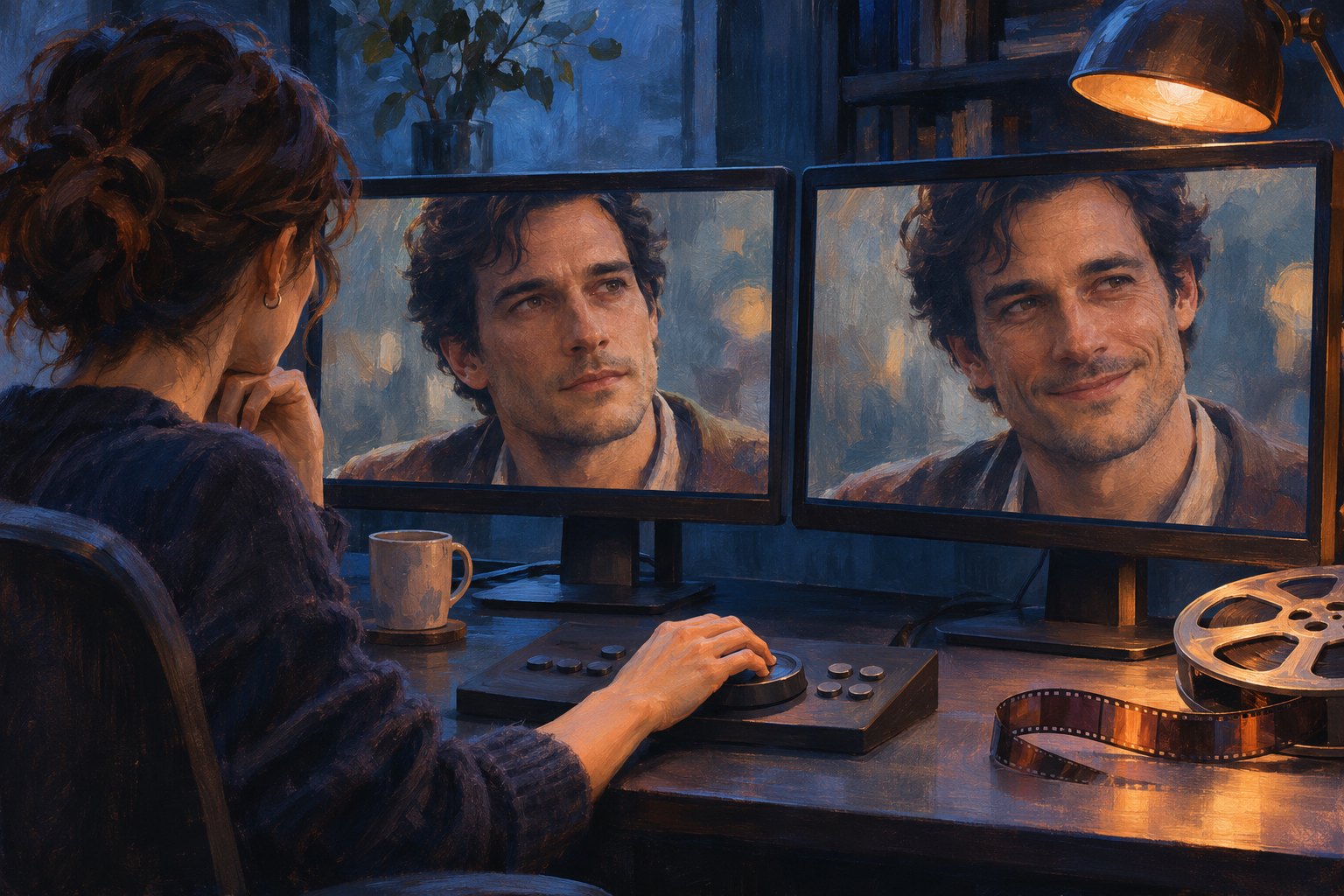
Technical correction and dramatic revision need different judgments
Film performances already reach audiences through selection and arrangement. Framing directs attention. Cutting determines how long we watch someone listen. Sound can make an otherwise quiet reaction more prominent. The existence of an intervention is therefore not sufficient grounds for calling a performance inauthentic.
But different interventions carry different creative weight. Removing a distraction from the frame and changing the apparent emotion of a face raise different questions. The first might help the audience see an actor’s decision more clearly. The second might introduce a decision the actor did not make.
There is no universally obvious boundary between those categories. A tiny adjustment can have a large dramatic effect, while an extensive technical repair might leave the performance’s meaning intact. The relevant measure is consequence, not simply how many pixels changed.
Artistically, I would judge an adjustment by whether it strengthens the scene’s emotional logic. A technically immaculate moment can still feel disconnected from the reaction that follows. Conversely, an uneven breath or awkward pause can make an exchange feel specific and alive.
How viewers can assess the result without guessing at the tools
Watching a film should not require identifying its software. An unusual image is not proof of AI involvement, and a convincing image does not explain how it was made. Viewers can assess the dramatic result while remaining cautious about production claims.
- Watch the listener. Does the reaction seem connected to what the other person has just said, or does the exchange feel emotionally disconnected?
- Follow changes in intention. Can you understand why a character becomes warmer, more guarded, or more aggressive?
- Notice the rhythm. Do pauses build tension or reveal uncertainty, or does every moment seem pushed toward the same polished tempo?
- Separate preference from evidence. Disliking a shot is a valid response; attributing its appearance to a particular tool requires support.
These questions complement our discussion of Cliff Booth and the difference between movie pleasure and dramatic satisfaction. An appealing moment still needs a convincing relationship to the film around it. Technical fluency cannot establish that relationship on its own.
The deeper issue is who gets to shape the performance
The strongest version of Fincher’s argument is that technology could relieve people of unnecessary repetition while preserving the work that made a take valuable. That is a worthwhile ambition. Its success would depend on decisions about which qualities to protect, which problems to repair, and when further work with the actors remains necessary.
Human presence is the beginning of that discussion. Human authorship is the harder part. Performers contribute choices, not merely faces, voices, and movements available for rearrangement. Directors and editors shape those choices into a film, but the resulting collaboration is most interesting when the performer’s particular understanding of the character remains legible.
For me, the decisive standard is whether the finished scene retains that specificity: the gesture that seems to belong to this person, the pause that reveals this relationship, the contradiction that makes this character difficult to summarize. If fewer takes can protect those qualities, the artistic case is persuasive. If greater control smooths them away, efficiency will have cost the film something worth keeping.
Original content by this site's editorial team. Published: November 25, 2026 at 14:16:27 PST (Los Angeles time)