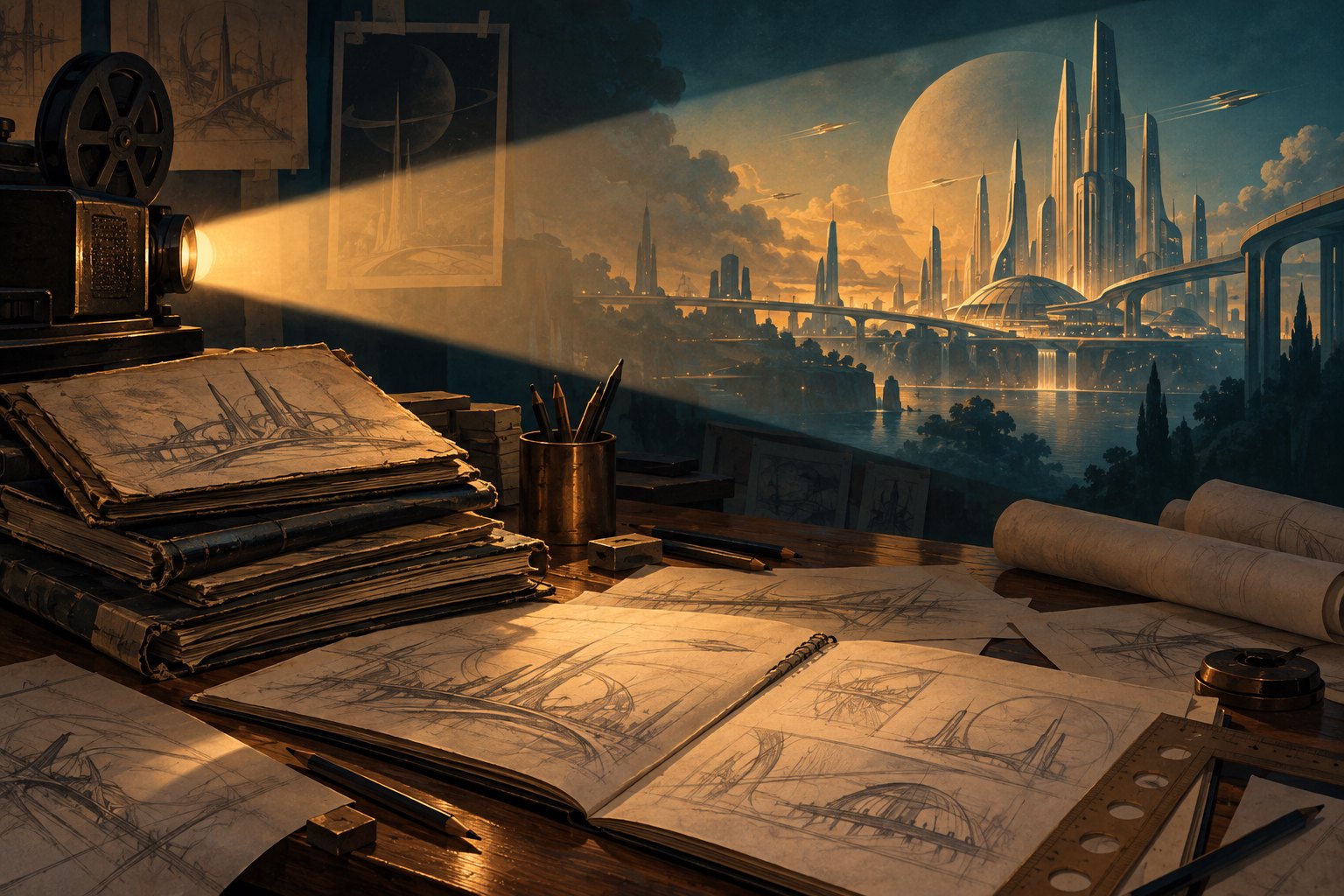
Brad Bird’s Ray Gunn took more than 30 years to reach the screen because keeping an idea alive and securing the means to make it are different achievements. Bird’s interviews describe a project that needed to be retrieved from studio limbo, supported at an ambitious scale, and adapted from his preferred hand-drawn approach to computer animation. Persistence mattered, but so did finding partners willing to finance the film he wanted to make.
That history makes Ray Gunn especially intriguing. It also deserves careful handling: decades of development do not mean decades of continuous production, and a difficult journey does not automatically produce a great movie. This is a spoiler-free examination of that journey and the film’s announced premise, rather than a review of the completed feature.
The long wait was about getting the film made
DiscussingFilm’s coverage places the three-decade struggle at the center of the story. Bird’s separately published interviews help explain its practical dimensions. Speaking with Animation World Network, he described two connected obstacles: retrieving the project from a corporation that was sitting on it, then persuading other people to support its realization. He credited Netflix with stepping forward.
There is an important distinction here. An unfinished film can be delayed because its story refuses to work. It can also remain unmade because nobody controlling the necessary resources wants to commit. Bird’s account emphasizes the latter problem, while acknowledging that the storytelling became more refined over time.
For viewers, this changes the meaning of the familiar phrase “passion project.” Passion can keep a filmmaker returning to an idea. It cannot, by itself, assemble a production. The useful question is what had to change before that commitment could become a finished work.
Hand-drawn ambition met a financing decision
One consequential change was the animation medium. In his interview with What’s on Netflix, Bird said, “I couldn’t get support for doing it hand-drawn.” He described an offer to make that version with half the budget, an arrangement he felt would not accommodate the film’s scope. Computer animation became a workable solution.
That is more specific than saying the movie simply waited for technology to catch up. Bird wanted to make a large film in a medium that prospective backers would not support on the terms he needed. Accepting CG helped reconcile those competing requirements.
There is a real artistic tradeoff worth considering. A drawn line can simplify a face, exaggerate a posture, or make an entire environment feel like an extension of a character’s mood. Dimensional animation offers another set of expressive possibilities. Neither approach guarantees that a mystery will be compelling or that a character will feel alive.
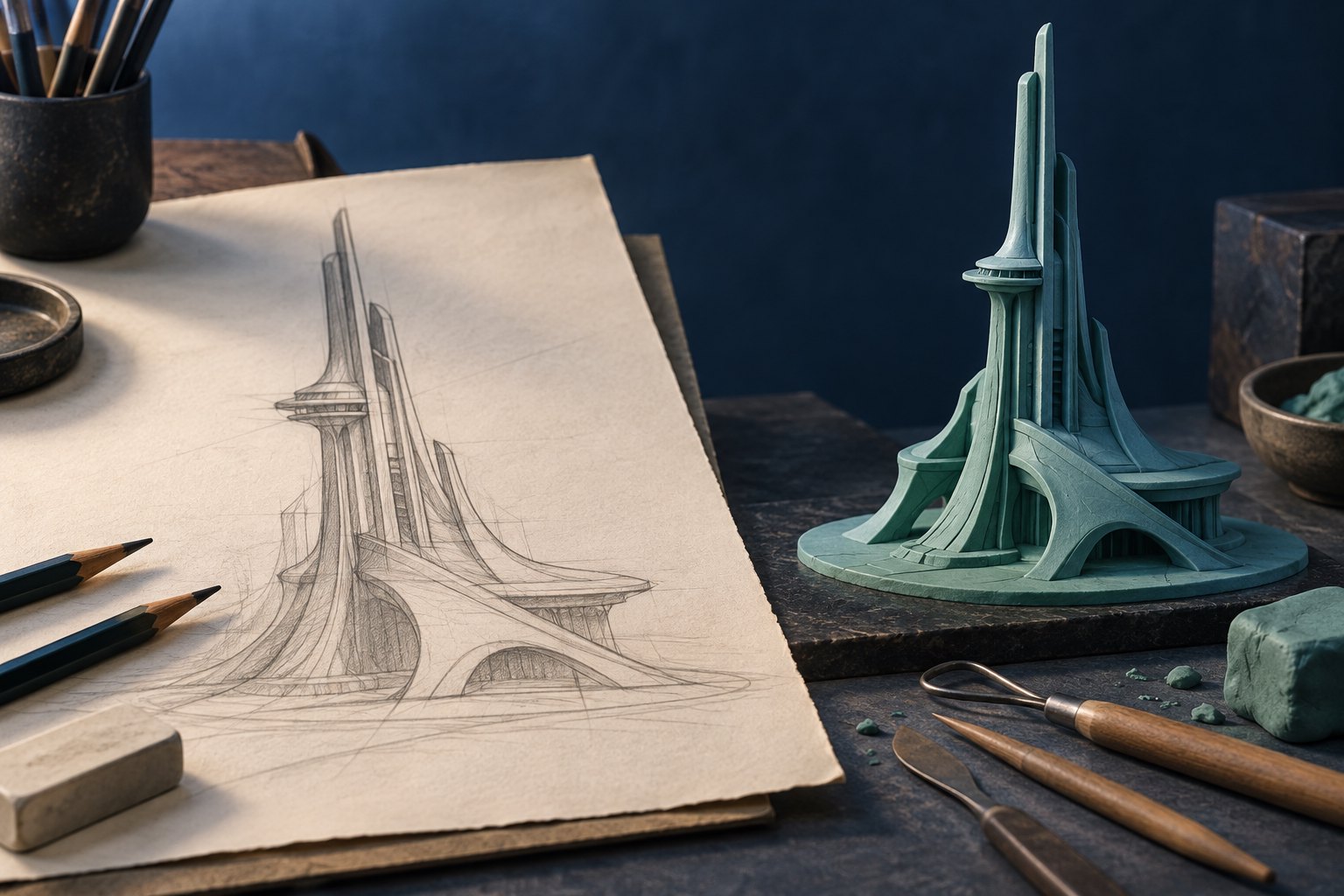
My view is that the meaningful compromise concerns what the images can communicate. Preserving every early production preference would mean little if the film could never be completed. Equally, completion alone cannot establish that every change improved it. Those judgments belong to the actual movement, staging, and performances on screen.
A detective who can make the future feel personal
Netflix’s official preview identifies Raymond Gunn, voiced by Sam Rockwell, as an old-fashioned investigator in Metropia, a futuristic city shared by humans and aliens. Small surveillance devices have taken over much of the legwork associated with his profession. Venus Nova, voiced by Scarlett Johansson, is a major star whose orbit draws him into danger.
That setup gives the technological spectacle a potentially useful point of view. A future city means something different to a detective whose abilities may no longer seem necessary than it does to a visitor admiring its architecture. From Ray’s position, progress can raise an uncomfortable question: what does his experience still allow him to see that a device cannot?
This is an interpretation of the premise, not a claim about his eventual character arc. Its promise lies in the tension between collecting information and understanding people. A detective story can turn on the difference between having access to evidence and recognizing why someone lies.
For that tension to work, Ray will need more than an appealing silhouette or a supply of cynical remarks. His habits should affect the investigation. His mistakes should reveal something about his judgment. His persistence should carry a cost that viewers can understand without needing to memorize the city’s technology.
Venus Nova puts performance inside the mystery
Venus’s celebrity introduces a complementary problem: someone can be widely visible and still remain difficult to know. The announced premise places a professional observer near a person whose public identity is itself a performance. That relationship offers a strong foundation for suspicion, misunderstanding, and shifting sympathy.
It also creates a clear test for character writing. Does the film let Venus pursue goals that make sense from her perspective? Can the audience distinguish what she wants from what other people project onto her? A glamorous mystery figure becomes more interesting when her choices have an internal logic, even before that logic is fully explained.
Our discussion of looking beyond visual spectacle in animation applies directly here. The expressive achievement would be making an audience revise its understanding of a person through a gesture, hesitation, or reaction. A beautifully designed city can support that moment; it cannot replace it.
Thirty years creates expectations the film cannot control
A long development history encourages audiences to imagine several movies at once: the original hand-drawn version, the production that might have happened earlier, and the eventual release. Only the last can be judged as a finished work. The others remain fascinating possibilities, shaped partly by what each viewer hopes was preserved.
This can become an unfair burden. Every ordinary scene risks being measured against three decades of anticipation. Conversely, affection for a filmmaker’s persistence can make weaknesses seem less important than they would in another movie. Both responses allow the production history to crowd out the experience of watching.
As with our examination of how a trailer shapes expectations for performances, the useful approach is to separate an enticing proposition from its execution. For Ray Gunn, that means asking whether the investigation develops clearly, whether relationships change convincingly, and whether the futuristic setting creates dramatic problems with satisfying consequences.
What the wait ultimately means
Netflix has announced a December 4, 2026, opening in select theaters, including limited 70mm engagements, followed by streaming on December 18. Until the film can be assessed in full, its strongest established achievement is reaching this point without abandoning the central idea that kept Bird interested.
The deeper significance of its development story is the distinction between protecting an intention and preserving every method of expressing it. Bird’s account suggests that the story endured while the means of making it changed. That is a more revealing creative question than whether perseverance always pays off.
When Ray Gunn arrives, the most persuasive answer will come through its characters. If Ray’s investigation and Venus’s choices make this extraordinary world feel emotionally specific, the long wait will become background. The film will finally be able to occupy the present tense.
Original content by this site's editorial team. Published: September 25, 2026 at 02:28:44 PDT (Los Angeles time)