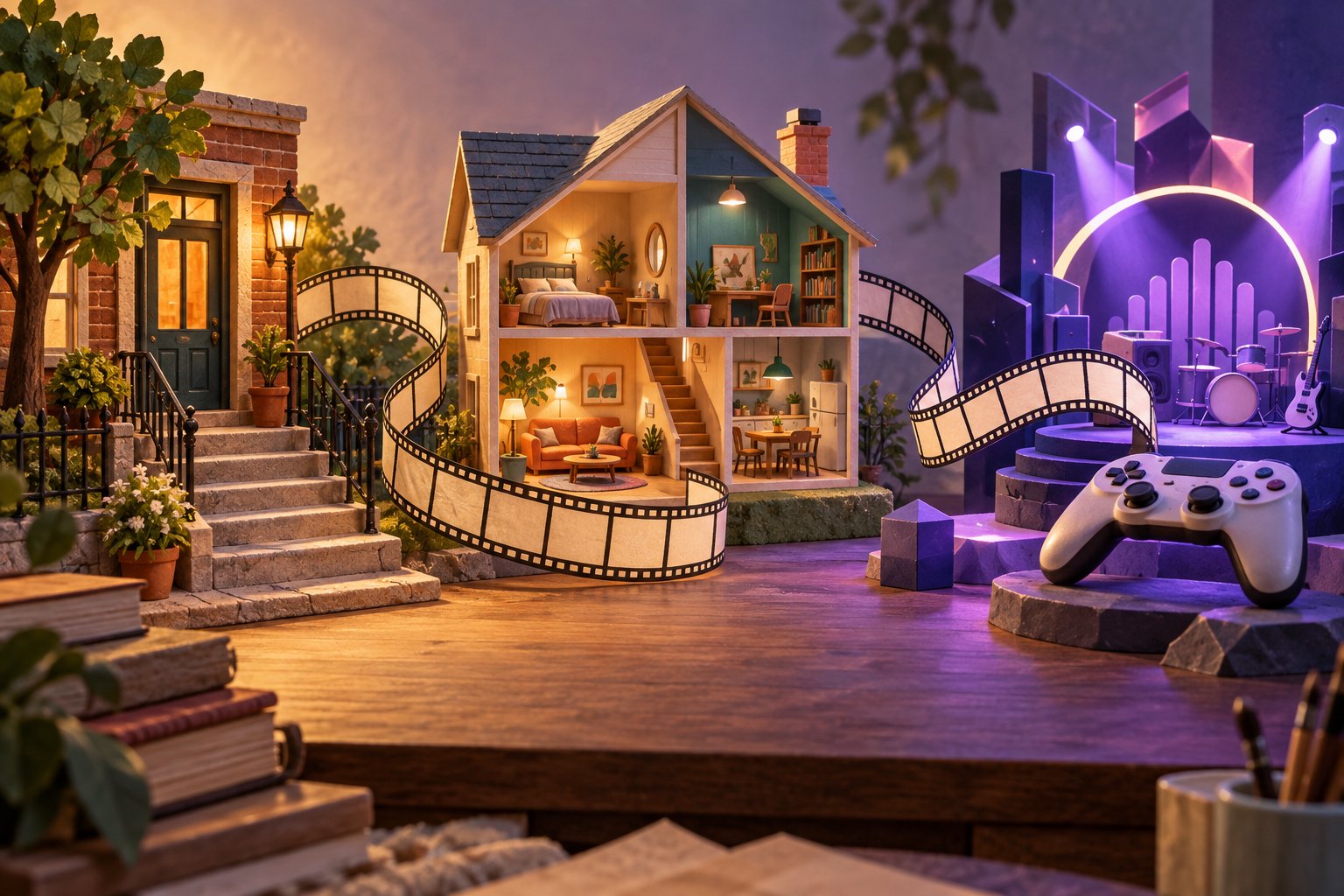
A Sesame Street movie at Netflix, a Gabby’s Dollhouse spinoff, and a KPop Demon Hunters game are the three developments highlighted in Variety’s reporting. Together, they make an intriguing entertainment proposition: familiar worlds returning in forms that ask audiences to engage differently. A feature needs to sustain and resolve a story. A spinoff needs a reason to exist independently. A game needs to make participation worthwhile.
Those distinctions matter more than the convenience of grouping recognizable titles together. My interest in these announcements lies in whether each project can do something its particular format makes possible. Recognition might prompt someone to press play, but it cannot supply an ending, establish a new dramatic identity, or make a repeated action enjoyable.
This is a spoiler-free analysis of the announcements, not a review of the finished projects. The news establishes the projects under discussion; it does not provide a basis here for evaluating their scenes, performances, dialogue, or gameplay. The creative standards below are critical judgments, not descriptions of unverified material.
Three Formats, Three Different Promises
For readers sorting out the news, the essential distinction is straightforward:
- Sesame Street: a movie at Netflix, raising the question of how a familiar screen world becomes a satisfying feature.
- Gabby’s Dollhouse: a spinoff, raising the question of what deserves its own continuing focus.
- KPop Demon Hunters: a game, raising the question of what the audience should actually get to do.
These are different creative assignments. Expanding a running time does not automatically create a movie. Moving attention to another part of a fictional world does not automatically create an independent series. Giving a player control does not automatically make that control expressive.
The useful comparison is therefore between the experiences these formats can offer. It is not a prediction that one project will succeed while another disappoints, or an assumption that all three serve an identical audience.
Sesame Street: A Movie Needs the Satisfaction of Completion
The distinctive opportunity for the Sesame Street movie is an ending that gives the preceding journey shape. A feature can allow an early misunderstanding, an awkward encounter, or a small act of generosity to acquire meaning much later. Its length becomes valuable when the audience remembers something that the characters must finally understand.
That is a more useful measure than sheer scale. A succession of lively sequences can fill a feature without making its final moments feel earned. The stronger structure would connect those sequences through consequences: something learned in one encounter changes a decision in the next. This is a standard for the prospective film, not a claim about its plot.
From a character perspective, the decisive question is what becomes possible by the ending that was emotionally impossible at the beginning. The answer need not involve a drastic personality change. A character might come to understand another person more generously or find the courage to ask for help. Such modest movement can support a complete film if the storytelling makes us feel its importance.
Our earlier discussion of preserving a child’s point of view in the Sesame Street movie addresses the adaptation’s perspective. The additional issue here is closure: viewers should finish this particular story feeling that their attention has led somewhere. Familiarity can welcome them in; the film still has to earn its goodbye.
Gabby’s Dollhouse: A Spinoff Needs Its Own Source of Stories
A spinoff faces almost the reverse structural challenge. Where a movie needs a persuasive destination, a continuing series needs a premise capable of generating fresh situations. The question is not simply whether an existing world has more places or personalities to show. It is whether shifting the focus changes the kinds of stories that can be told.
One revealing test is to imagine explaining the new show without leaning on its parent title. Can its appeal be described through a relationship, a recurring activity, or a distinctive way of solving problems? If the only explanation is that it belongs to a familiar franchise, the creative identity remains difficult to locate.
This matters especially for characterization. Someone who works beautifully in brief appearances may need additional dimensions when given sustained attention. A recurring mannerism can punctuate a scene; it cannot carry every scene. A successful shift in focus would let viewers discover preferences, limitations, and relationships that create variation without making the personality unrecognizable.
For the announced Gabby’s Dollhouse spinoff, that is the prospect worth watching: a new center of interest that gives returning viewers another reason to care while offering newcomers a clear entrance. Connections should enrich the experience. Understanding the basic pleasure of an episode should not feel like a test of prior viewing.
KPop Demon Hunters: A Game Must Translate Appeal Into Action
The KPop Demon Hunters game introduces the largest change in the audience’s role. A film determines when viewers receive information and how long they remain with an image. A game must account for players who hesitate, repeat an action, misunderstand a cue, or approach a task differently.
That makes the central design question concrete: what action is satisfying enough to perform again? Music, movement, exploration, and cooperation are possible avenues for adaptation, but none should be mistaken here for confirmed features. The announcement of a game alone does not establish its mechanics.
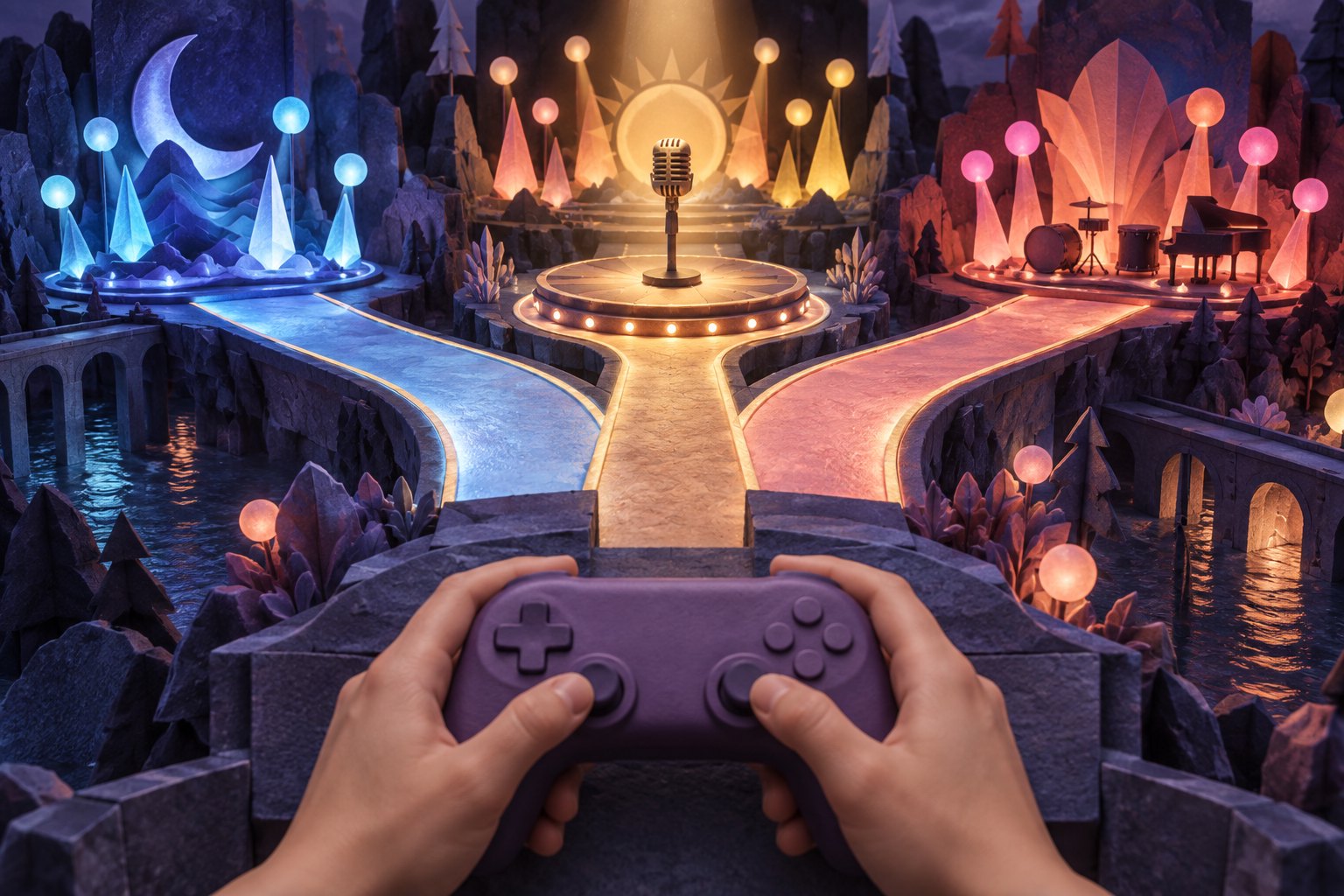
My preference would be for actions that communicate personality. A game can make a character feel distinctive through timing, responsiveness, or the way an action helps someone else. Dialogue and recognizable appearances can contribute, but the player’s experience also depends on what the controls encourage and what the game rewards.
There is a useful distinction between possessing a familiar character’s image and experiencing an activity that feels appropriate to that character. A costume or portrait provides recognition. An action with an expressive rhythm can offer identification. This does not require elaborate branching narratives; even a simple interaction can have character if its feedback is carefully considered.
The same principle informs our discussion of looking beyond visual spectacle in animation: attractive presentation invites attention, but the relationships between movement, emotion, and meaning determine what that attention yields.
The Deeper Test: Does Expansion Change Our Relationship With the Story?
What makes these announcements worth considering together is the possibility of three different relationships with familiar material. A movie can offer the pleasure of completing a journey. A spinoff can establish a recurring relationship with a newly emphasized corner of a world. A game can let the audience discover satisfaction through participation.
Those possibilities also suggest how to judge the eventual results without confusing size with achievement. For Sesame Street, look for an ending supported by what came before. For the Gabby’s Dollhouse spinoff, look for a premise that produces its own pleasures. For the KPop Demon Hunters game, look for interactions worth returning to after recognition wears off.
The most rewarding expansion would change what audiences understand or experience while preserving a reason to care. These projects have three different opportunities to accomplish that. Their familiar names make the introductions easy; their forms will determine whether the encounters become memorable.
Original content by this site's editorial team. Published: September 25, 2026 at 01:45:25 PDT (Los Angeles time)