The West Virginia Film Office brings an easily overlooked part of filmmaking into focus: the relationship between a real location and the fictional lives presented there. For moviegoers, the useful distinction is between a production’s connection to a place and the meaning that place acquires on screen. A recognizable landscape can establish where a camera stood. It takes character, performance, and dramatic choices to establish why being there matters.
WSAZ’s coverage of the West Virginia Film Office provides an occasion to examine that distinction. The editorial question is how to evaluate regional filmmaking without confusing attention for achievement. A production announcement and a persuasive finished movie offer different kinds of evidence.
This is film commentary, not a review of a particular movie. The examples below are hypothetical illustrations of storytelling choices, not descriptions of announced productions.
Separate the filming location from the story’s setting
Three questions help clarify almost any conversation about a state’s connection to cinema: Where was the movie filmed? Where does its story take place? Whose experience organizes that story? The answers may overlap, but they should never be treated as interchangeable.
A location can stand in for somewhere else. A story set in West Virginia can also be evaluated separately from the production’s physical footprint. And a movie can name a community while allowing its residents very little perspective of their own. Those distinctions matter whether the finished work is a comedy, thriller, family drama, or documentary.
For readers following the West Virginia Film Office, this is a useful way to interpret future movie coverage. Look for precise descriptions of a project’s relationship to the state. A filming credit establishes one connection; it does not automatically establish cultural insight, local authorship, or artistic quality.
Ask what the landscape makes a character do
The phrase “the landscape is a character” gets used so often that it can become a substitute for analysis. A more revealing test is whether the setting changes anyone’s choices. If the same scene could move almost anywhere without changing its emotional or practical stakes, the scenery may be doing mostly decorative work.
Consider a hypothetical story about someone deciding whether to return home. An expansive view might communicate affection, distance, or unease. But the drama becomes specific when geography affects a decision: whom the person can visit, how a journey interrupts the day, or which familiar route they avoid because of an unresolved relationship.
The crucial detail is consequence. A road matters when traveling it costs something. A house matters when entering it changes the balance between people. A beautiful vista becomes dramatically useful when the film shows what the person looking at it stands to lose.
That attention to readable space also informs our discussion of how mountain films turn terrain into meaningful decisions. Across very different genres, geography becomes engaging when viewers understand its relationship to human action.
Give residents desires beyond explaining the region
My strongest critical preference is for regional films that let people be complicated before asking them to represent a place. A character should be allowed to want an ordinary, inconvenient, even selfish thing. Affection for home need not eliminate frustration with it. Ambition need not make someone disloyal.
A useful warning sign is the supporting character who exists only to explain local customs, offer wisdom, or supply atmosphere. Such a role may be warmly performed, yet still leave the person without meaningful agency. The question is whether that character can affect events through a decision of their own.
Imagine a visitor asking a resident for help. Does the resident have competing obligations? Can they decline? Does helping create a problem that the film continues to follow? These small structural choices determine whether the encounter presents two people with lives or one protagonist accompanied by a convenient guide.
Look for specificity in performance and framing
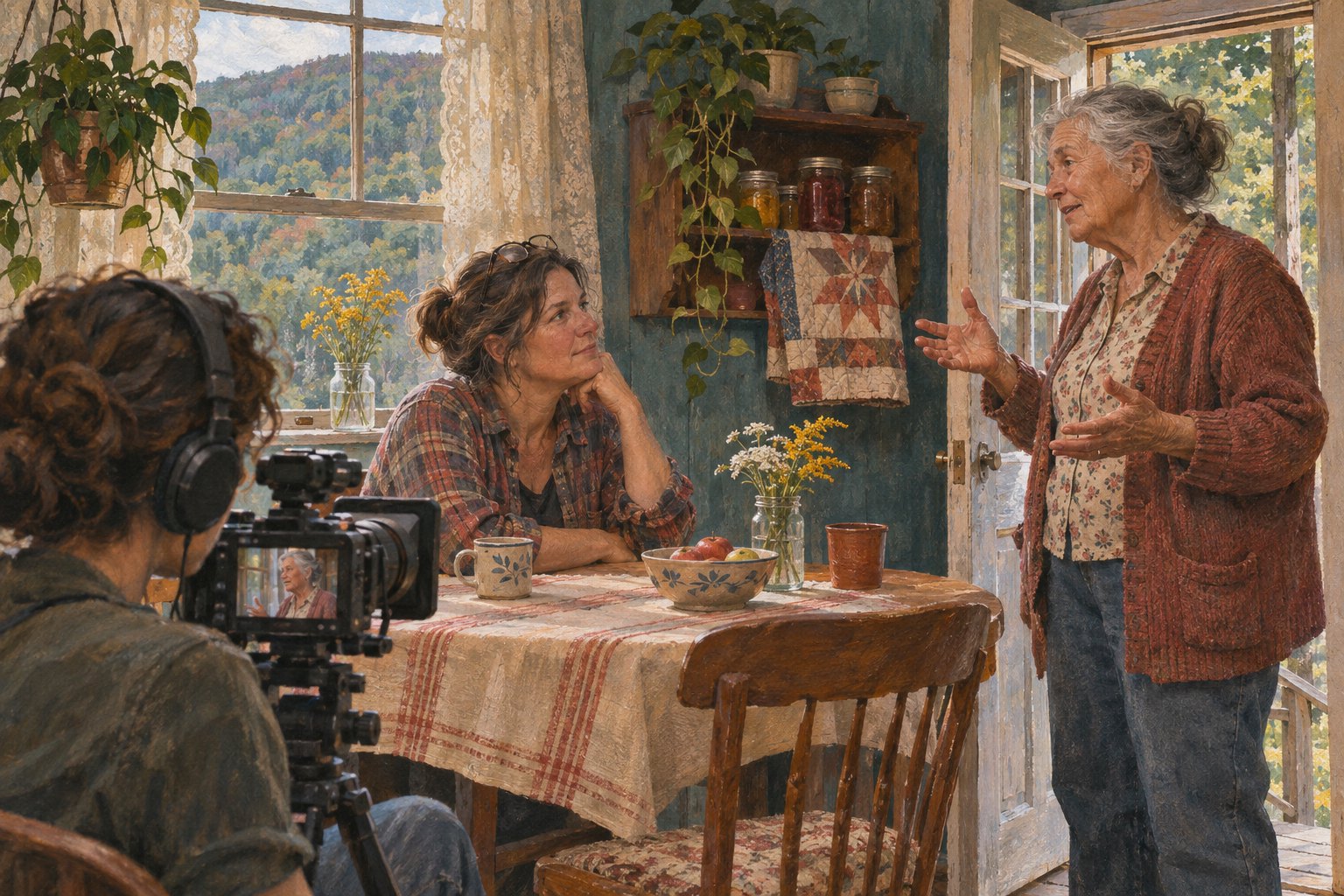
A convincing sense of place can emerge through behavior rather than explanation. Who sits down without asking? Who remains in the doorway? Who knows where something is kept? Such details can establish familiarity, authority, or estrangement without requiring a speech about community.
Camera placement reinforces those relationships. A scene filmed entirely from a newcomer’s perspective may make everyone else seem mysterious. Giving another person a sustained reaction shot can reveal the cost of the newcomer’s behavior. Neither approach is automatically wrong; the important issue is whether the film understands the perspective it privileges.
Dialogue deserves the same scrutiny. Regional speech should belong to a person with intentions, not function as a novelty. Instead of asking only whether a line sounds distinctive, ask what the speaker is trying to accomplish: conceal embarrassment, win an argument, soften a refusal, or prevent someone from leaving.
Those intentions make dialogue memorable. Without an identified film and verified dialogue to examine, attaching a supposedly representative movie quotation to West Virginia would obscure the very specificity that good criticism should protect.
Judge production opportunity and artistic achievement separately
Film-office coverage naturally invites interest in what might become possible. From a critical perspective, however, opportunity is the beginning of the discussion. Resources can enable a production; they cannot tell us whether its scenes develop, its performances connect, or its ending earns its emotional effect.
Our commentary on what film funding needs to make possible examines a related distinction. Support becomes artistically meaningful through the work it enables. The sensible response to an announcement is curiosity about the resulting film, followed by evaluation of the film itself.
The same precision should govern claims about local participation. Filming nearby, hiring locally, consulting residents, and giving local creators decision-making authority describe different relationships. Coverage should identify which relationship it means. Viewers should resist treating any one of them as automatic proof of all the others.
A practical viewing checklist
When watching a movie associated with West Virginia, these questions offer a more useful starting point than simply counting recognizable locations:
- Perspective: Whose understanding of the community guides the audience?
- Agency: Can regional supporting characters change the course of the story?
- Consequence: Does the setting affect decisions, relationships, or movement?
- Complexity: Are people allowed conflicting feelings about the same place?
- Resolution: Does the ending acknowledge the lives that continue beyond the protagonist’s departure or return?
No movie must answer every question in the same way. A broad comedy and an intimate drama have different aims. The checklist helps identify what a film is doing before deciding how well it works.
The deeper issue is who gets to define home
The most compelling cinematic possibility behind attention to the West Virginia Film Office is a wider range of perspectives. A region gains little dramatic depth if every story arrives with the same assumptions about its people. Complexity emerges when characters can disagree about what home offers, what it demands, and whether they want to stay.
For me, a successful regional film makes those disagreements understandable without forcing them into a single verdict. Its landscapes carry memories; its interiors contain competing loyalties; its residents possess futures beyond their usefulness to the plot. That is when a place becomes more than something audiences recognize. It becomes something they understand through the people living there.
Original content by this site's editorial team. Published: November 6, 2026 at 23:15:21 PST (Los Angeles time)