
Joe Milton is easy to get excited about: that is the appeal at the center of Bleeding Green Nation’s Eagles film-review headline. The useful question is what that excitement establishes. An athlete can command attention before viewers have enough evidence to judge how consistently he will deliver. Recognizing that distinction makes watching more interesting, because it turns an immediate reaction into something worth investigating.
Here, film review means studying football footage. There is no dramatic feature to assess, no screenplay to quote, and no fictional character arc to reconstruct. Yet the topic belongs in a wider conversation about how moving images persuade us. A camera records an action; selection and repetition determine which actions stay in our minds. With Milton, the challenge is to remain receptive to possibility while asking what the footage actually supports.
Excitement Is a Starting Point for Evaluation
Calling a player exciting expresses an expectation about the viewing experience. It suggests that something might happen worth watching. Calling a player dependable makes a different claim: that useful performance can recur across changing circumstances. Those judgments can coexist, but neither automatically establishes the other.
My view is that enthusiasm becomes most valuable when it produces a specific question. What caught your attention? Was it the speed of an action, the difficulty of the situation, or a choice you did not anticipate? Naming the attraction gives a viewer something to test on the next play. Without that step, admiration tends to become a loop: a moment looks impressive because we already expect to be impressed.
For anyone approaching Milton through the Eagles discussion, this is a practical distinction. Enjoying the possibility surrounding a player does not require a prediction about his ceiling. It requires curiosity. A useful review should help that curiosity become more precise.
The Highlight and the Full Sequence Tell Different Stories
A highlight usually directs attention toward a payoff. The ball arrives, a receiver makes a catch, or a play continues beyond the point when it seemed finished. Those moments are satisfying because their meaning appears immediate. The viewer sees an outcome and instinctively assigns credit.
A complete sequence complicates that first impression. What happened before the release? Which parts of the field were visible? Did the receiver have to interrupt his movement? Was another option available within the frame? These are questions to bring to Milton’s footage, not claims about particular plays. They help separate an arresting image from an explanation of how the result occurred.
Camera position also limits interpretation. A close view can reveal movement while concealing the routes developing farther away. A wider angle can show spacing while making smaller details difficult to read. When an option falls outside the frame, viewers should resist assuming either that it existed or that it did not. The edge of the picture is also an edge of the evidence.
Watch the People Around the Quarterback
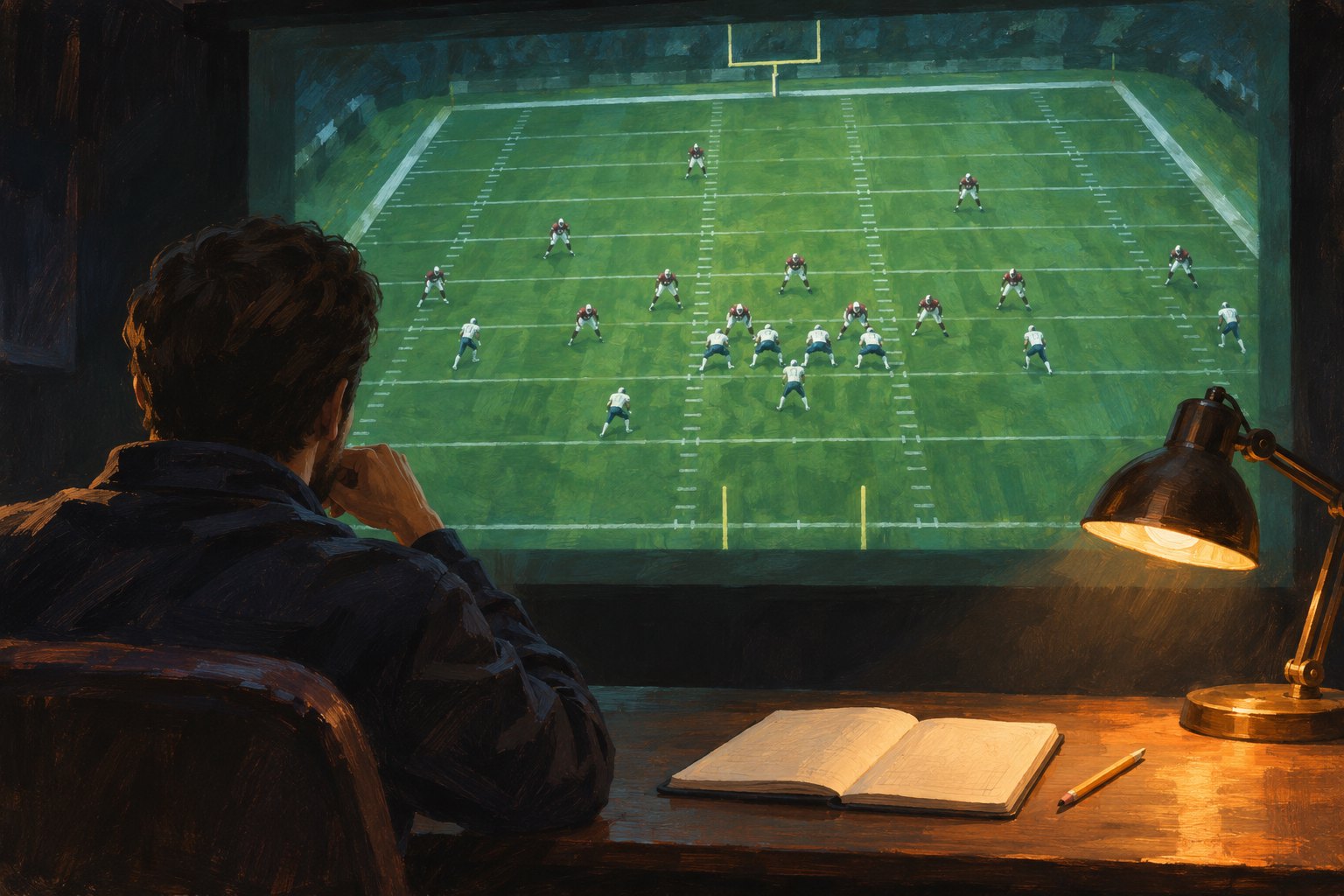
Quarterback-centered coverage naturally gives Milton the leading role. That focus helps organize a discussion, but it can make other players seem like scenery. A more revealing viewing method temporarily shifts attention away from the person holding the ball.
Start with the intended receiver. Watch his movement before and after the pass arrives. A completed throw can leave him well positioned to continue, or it can demand an adjustment that changes what happens next. Completion alone does not describe that difference. Following the receiver helps a viewer assess the relationship between delivery and opportunity.
Then watch the protection and the defenders. Where does space open or disappear? When does a defender change direction? Which movements occur before the quarterback commits? These observations do not reveal the private instructions governing a play, but they can prevent the final result from swallowing everything that preceded it.
This attention to shared effort has a counterpart in our discussion of individual ambition and collective filmmaking in I Play Rocky. A compelling central figure gives an audience someone to follow. Understanding the work still requires looking at everyone who helps shape the outcome.
A Repeatable Way to Watch Milton’s Footage
Instead of asking every clip to settle Milton’s overall value, give each viewing a smaller task. The following approach keeps observations concrete without pretending that a television angle supplies a complete coaching explanation.
- Watch once at normal speed. Identify the result and your immediate reaction. Notice what drew your eye.
- Return to the beginning. Follow the sequence before the throw rather than replaying only its most dramatic instant.
- Change your point of attention. Track the receiver, then a visible defender, then the space around the quarterback.
- Separate observation from inference. A player changing direction is visible. The exact assignment or intention behind that movement may remain uncertain.
- Look for comparable situations. A pattern needs more than one memorable example, and differences in circumstances matter.
The aim is not to drain enjoyment from the experience. It is to discover whether the thing you enjoyed survives closer inspection—and whether less conspicuous moments deserve more credit.
More Footage Helps Only When It Broadens the Picture
Watching longer does not necessarily mean learning more. A collection that repeatedly emphasizes the same kind of successful moment can strengthen an impression without testing it. Ordinary plays, unsuccessful attempts, and situations with different constraints help a viewer ask better questions about consistency.
That principle also shapes our examination of whether a longer screen portrait creates deeper understanding. Additional running time matters when it introduces meaningful context. For Milton, the equivalent is variety: footage that allows an appealing interpretation to encounter evidence that might qualify it.
Fairness works in both directions. One unsuccessful play should not become a complete identity any more than one spectacular result should become a guarantee. A careful viewer can acknowledge a limitation without erasing promise, and recognize promise without declaring the evaluation finished.
Let the Player Remain an Open Question
The deeper attraction of the Milton discussion is the pleasure of possibility. Sports invite viewers to imagine what could come next, much as a dramatic scene encourages anticipation. The difference is that a real athlete is not moving toward an ending written for the audience’s satisfaction.
That makes restraint an essential part of honest commentary. Milton does not need to become a predetermined success story or a cautionary tale to merit attention. The most useful response to excitement is to keep watching closely: identify the action, consider the surrounding players, acknowledge what the camera cannot show, and remain willing to revise the judgment. Enthusiasm gives the review its energy. Evidence gives it somewhere to go.
Original content by this site's editorial team. Published: November 6, 2026 at 21:26:24 PST (Los Angeles time)