Armored Trooper VOTOMS: Die Graue Hexe has shared nine minutes of footage. For viewers following the anime film, that is the immediate news—and an invitation to consider what a substantial preview should actually reveal. Mechanical design can attract attention in seconds. Establishing a person worth following takes a different kind of filmmaking.
This is spoiler-free commentary on the footage announcement, not a review based on a complete screening. The announcement alone cannot support scene-by-scene judgments, authenticated dialogue quotations, or conclusions about the ending. What it does raise is a useful critical question: how much can an extended glimpse tell us about the relationship between armored spectacle and human experience?
Why nine minutes creates a different expectation
Nine minutes gives a preview room to do more than introduce a visual identity. Depending on how the material is presented, viewers may have time to register pacing, shifts in attention, and the relationship between action and quieter dramatic beats. Those qualities matter because a movie must sustain interest between its most immediately marketable images.
Duration, however, is an opportunity rather than proof of quality. An impressive excerpt can belong to an uneven film; an initially puzzling passage can gain force through later context. The sensible response to this announcement is curiosity about the filmmaking, without treating the amount of footage as a recommendation in itself.
For Die Graue Hexe, the most useful distinction is between seeing more material and understanding more of the story. Those experiences are not necessarily identical. Additional images become dramatically valuable when they clarify what someone wants, what stands in the way, or what failure would mean to that person.
The person inside the armor should guide the criticism
A character-centered assessment of armored combat begins with access. Does the audience understand an encounter through the person operating the machine, through an observer, or through a detached view of the battlefield? Each choice changes the emotional meaning of the same physical event.
A distant view can make movement legible and impressive. A restricted view can emphasize uncertainty. Cutting between them can create tension between what the audience knows and what a character can perceive. These are general possibilities of cinematic perspective, not descriptions of verified shots in this preview.
My critical preference is for action that makes capability and limitation equally understandable. A machine becomes more interesting when its power does not erase the operator's exposure to error, fear, or incomplete information. That does not require a speech explaining every feeling. Timing, hesitation, and a response to another person can carry the necessary weight.
The same concern underlies our discussion of what turns a commanding screen presence into a feature-length protagonist. Recognition supplies an initial attraction; a character's competing desires give the audience a reason to remain involved.
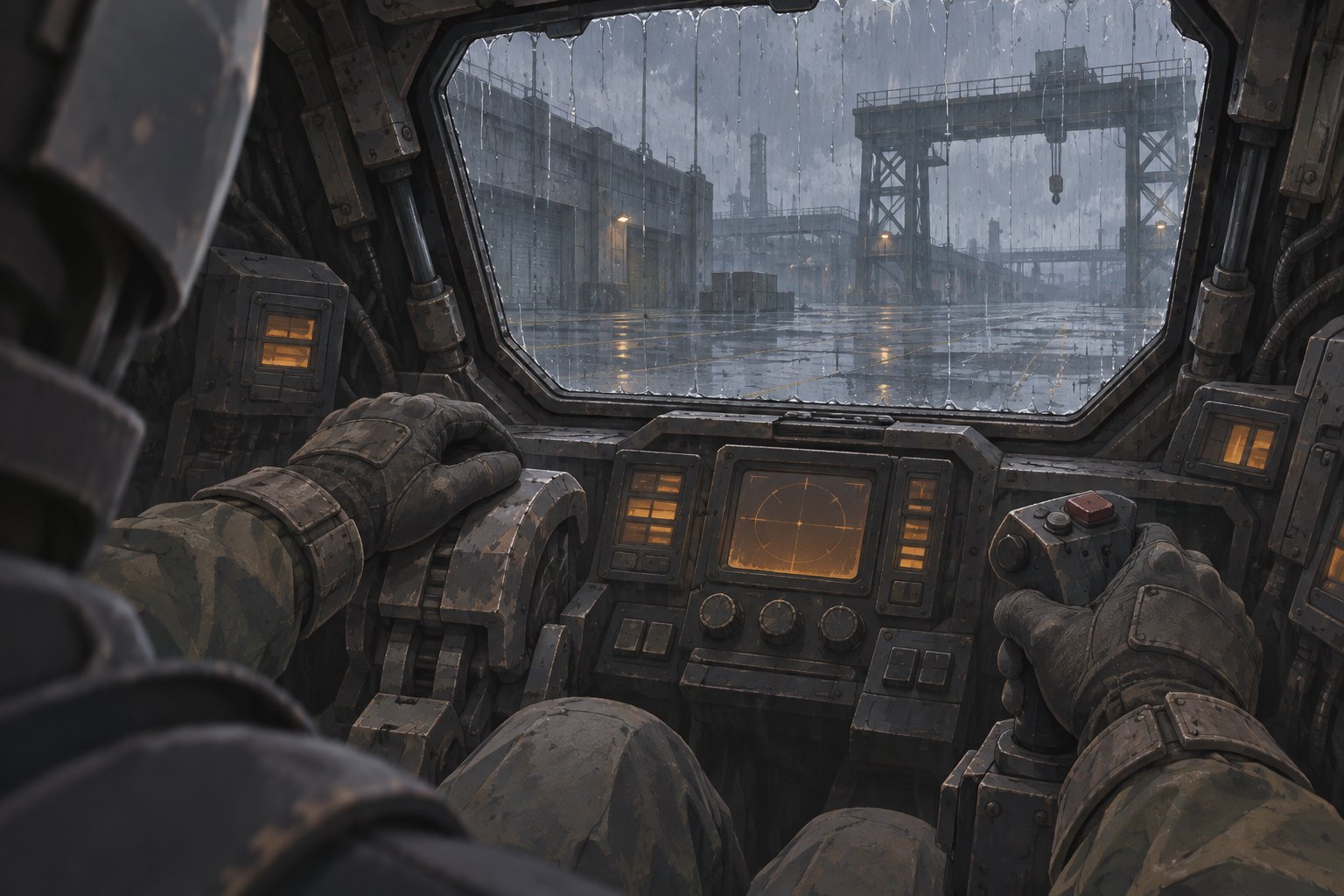
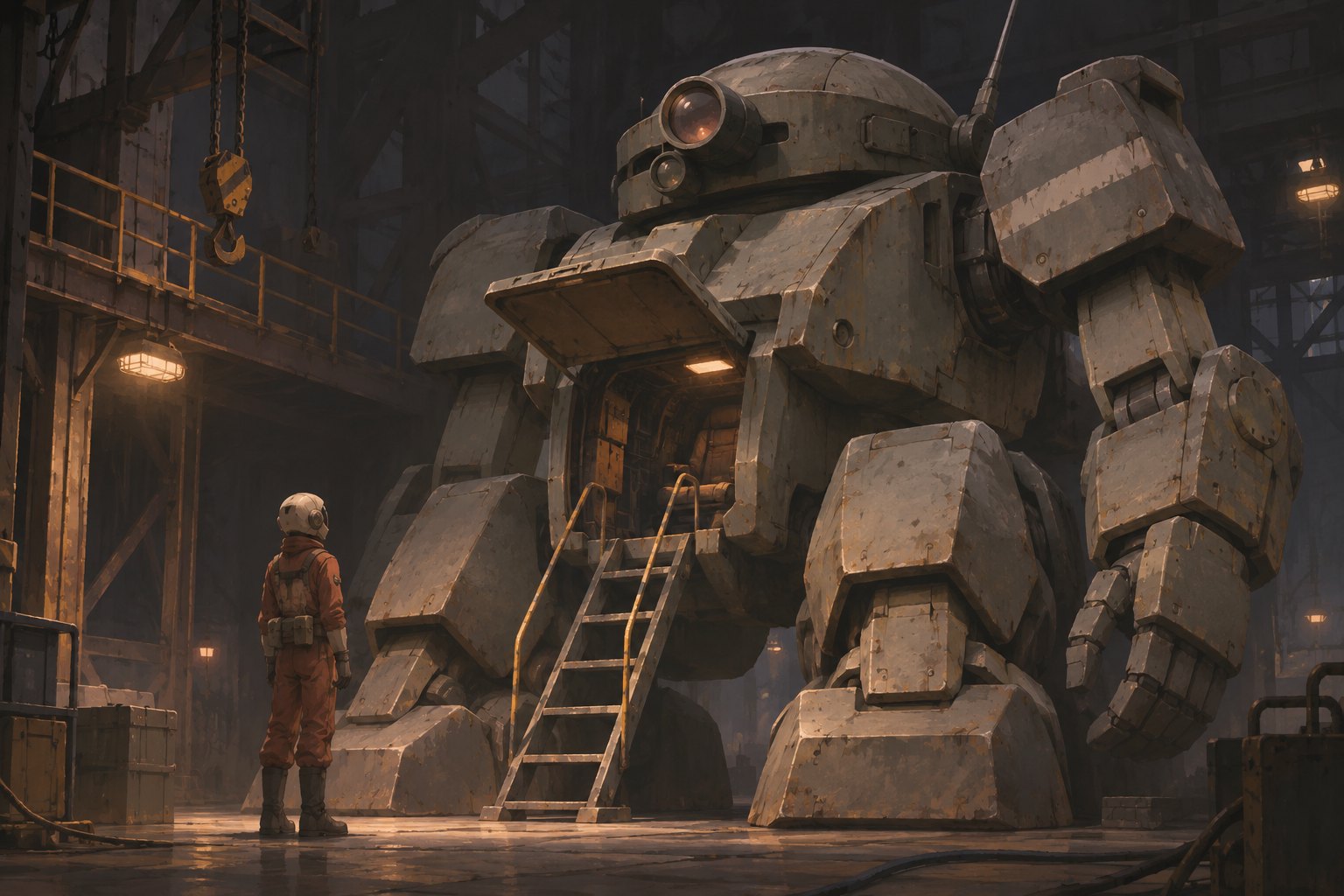
The illustrations accompanying this article are conceptual artwork, not official film stills or representations of verified scenes.
What to watch for beyond mechanical detail
Whether action communicates a decision
Movement is not automatically characterization. A figure can execute an elaborate maneuver without revealing much about personality. The more revealing question is whether an action expresses a choice: caution over speed, obedience over judgment, or personal risk over another person's exposure.
These examples are a viewing framework, not claims about the plot of Die Graue Hexe. They help distinguish an attractive sequence from one that gives later events emotional leverage. When a choice is clear, viewers have something to reconsider as the story develops.
Whether the environment limits the character
Production design becomes dramatic when it affects behavior. Distance, visibility, confined space, and physical obstacles can determine what a character knows or can accomplish. An environment that constrains action feels consequential; one that merely surrounds it may remain decorative, however elaborate its rendering.
For an extended preview, this offers a practical test: can you explain the immediate difficulty in ordinary language? You need not understand every technical term. Understanding why someone cannot simply proceed is often enough to create suspense.
Whether a moment has an aftermath
A brief reaction can change the meaning of a large event. Relief, silence, irritation, or an interrupted exchange can establish that something has registered beyond its physical impact. The important issue is not whether a preview includes a particular emotional response, but whether the filmmaking allows consequences to matter.
This is also where restraint can be persuasive. A film need not announce its seriousness through constant suffering. A small adjustment in behavior may communicate more than emphatic music or a heavily underlined line of dialogue.
What this announcement cannot settle
The nine-minute release does not, by itself, establish how well the complete film develops its relationships, resolves its conflicts, or earns its final emotional effect. It also does not justify attaching a score to a movie that has not been assessed in full.
Dialogue deserves the same discipline. A memorable quotation belongs in criticism when its wording and context can be checked. Without that grounding, an apparently evocative line can distort a character rather than illuminate one. No film dialogue is quoted here for that reason.
Viewers should likewise separate enthusiasm for the announcement from evidence about the finished work. Our commentary on evaluating a movie beyond its headline-making reaction explores a related principle: the conversation surrounding a film can identify a question, but the film must supply the answer.
The deeper question: what does armor let us see?
The most productive interpretive lens for this announcement is the tension between protection and visibility. Armor conceals a body while making its power more conspicuous. Cinema can exploit that tension by asking viewers to recognize a person whose outward appearance is dominated by equipment.
That is a possible avenue for reading Die Graue Hexe, not a declaration of its established theme. A full review would need to trace the idea through specific choices, relationships, and consequences. The distinction matters: interpretation should grow from the movie rather than arrive fully formed before it.
For now, the nine-minute announcement offers a focused reason to pay attention. The lasting question is whether the film makes its armored figures legible as people—individuals whose decisions remain compelling after the immediate impact of the machinery has passed.
Original content by this site's editorial team. Published: November 21, 2026 at 14:01:28 PST (Los Angeles time)