Johnny Knoxville is among the cast of a Return of the Living Dead sequel that is gearing up, according to Deadline. That is an intriguing match for a franchise where bodily catastrophe and appalling judgment can generate laughter and dread in the same moment. The casting news establishes his involvement; it does not establish what his character will do or how the finished movie will play.
The most useful way to assess the creative opportunity is to revisit Dan O’Bannon’s 1985 The Return of the Living Dead. Its zombies are memorable, but its frightened people give the mayhem its force. A worthy continuation needs to understand why those people make us laugh before making us feel trapped alongside them.
Spoiler warning: The following review discusses the original film’s character arcs and ending. Observations about the sequel are expectations, not descriptions of its story.
Frank and Freddy: The Disaster Starts With Being Impressive
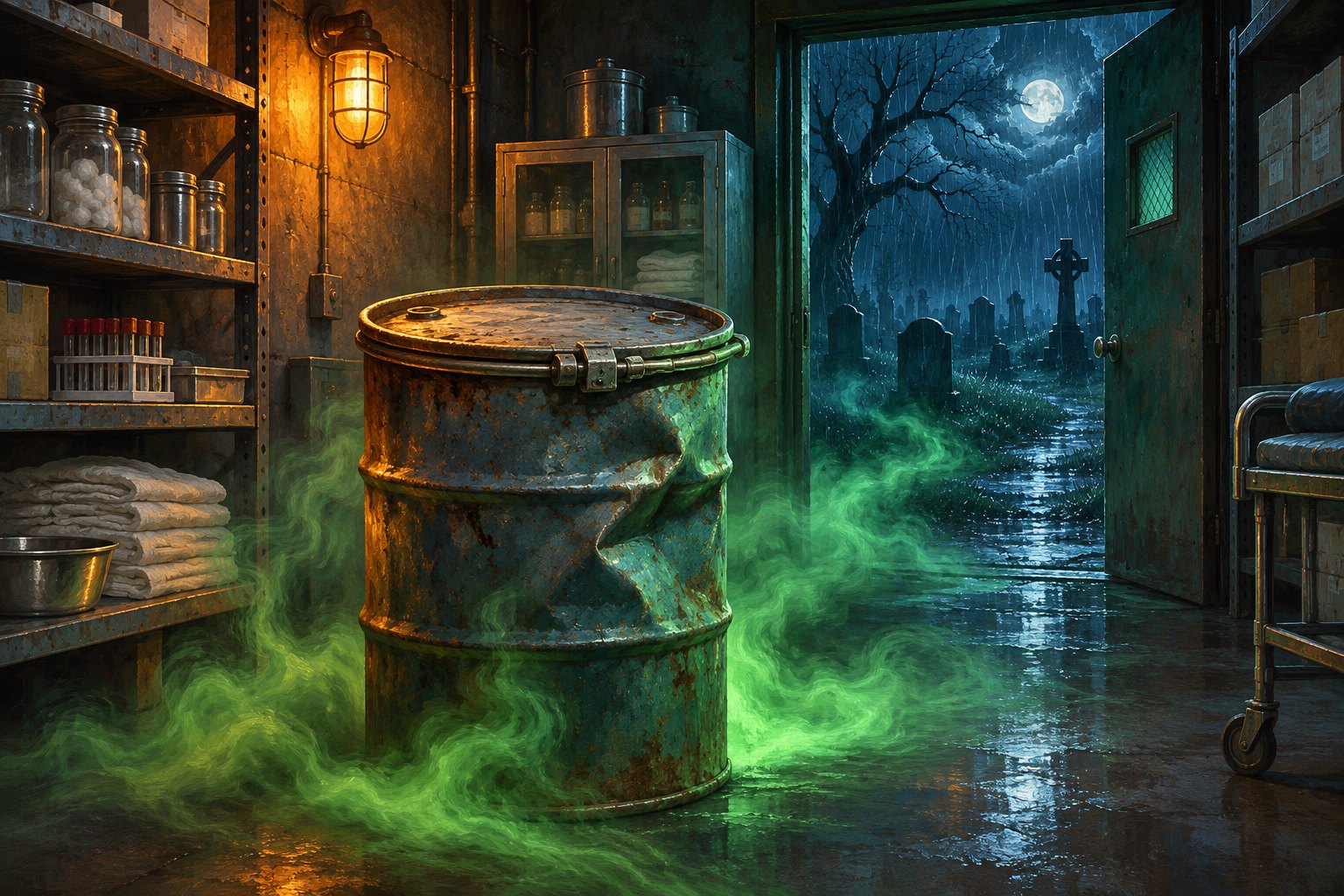
At the medical supply warehouse, experienced employee Frank shows newcomer Freddy a military container and accidentally releases the substance inside. James Karen’s Frank and Thom Mathews’s Freddy begin as an immediately recognizable workplace pairing: the veteran who enjoys knowing things and the new hire who has little reason to challenge him.
That imbalance is the foundation of the comedy. Frank’s confidence gives Freddy permission to relax, while giving the audience a reason to anticipate trouble. The joke lands because authority here is a performance. Frank wants to seem worldly; knowing when to leave something alone would be considerably less impressive.
Once the accident happens, embarrassment competes with survival. Frank’s instinct to manage appearances feels painfully human. O’Bannon understands that people do not instantly become clearheaded emergency responders when circumstances change. They carry their petty anxieties into the catastrophe.
For me, Karen’s performance is the film’s strongest achievement. His alarm becomes extravagantly funny without losing its connection to an ordinary man’s terror. We can laugh at his inability to cope while recognizing that nothing in his working life has equipped him for this.
Burt and Ernie: Practical Skills Meet an Impossible Problem
Warehouse owner Burt and mortician Ernie expand the circle of apparent competence. Clu Gulager gives Burt a forceful presence, while Don Calfa makes Ernie seem accustomed to situations other people would find disturbing. Their confidence initially suggests that someone might finally take charge.
But the men’s attempts to destroy the reanimated remains lead to cremation, and contaminated smoke subsequently returns in the rain. Their solution spreads the danger. The chain of consequences makes the film more satisfying than a collection of unrelated zombie attacks: each effort to restore order helps dismantle it.
There is a sharp distinction between possessing useful skills and understanding the problem those skills are being applied to. Ernie understands his workplace. Burt knows how to issue instructions. Neither advantage makes their assumptions reliable.
That is a valuable lesson for the sequel’s comic construction. Escalation works best when an apparently sensible response produces an awful consequence. Simply making everyone foolish would flatten the tension. The original is funnier because its characters sometimes appear almost capable of getting through the night.
Tina and Freddy: Affection Becomes a Vulnerability
The relationship between Freddy and Tina gives the film a more intimate kind of horror. As Freddy deteriorates, Tina refuses to abandon him. His eventual attempt to attack her turns the person she wants to protect into someone she needs protection from.
From Tina’s perspective, staying is an act of loyalty. From the audience’s perspective, it becomes unbearable suspense. Beverly Randolph’s sincerity matters because the scene would collapse if Tina seemed merely oblivious. Her mistake grows from a recognizable moral impulse: leaving a suffering loved one feels wrong.
Freddy’s transformation also changes how we interpret his earlier helplessness. At first, his distress invites reassurance. Later, reassurance cannot reach him. Familiarity remains visible after safety has disappeared, making the relationship more disturbing than an encounter with an anonymous creature.
The film offers less interior life to several members of the surrounding ensemble. That unevenness is a limitation: some deaths register primarily as shocks. Yet Freddy and Tina give the broader chaos an emotional center, proving that a horror comedy can sustain genuine attachment without slowing to explain itself.
The Zombies’ Best Joke Is Also a Threat
“Send more paramedics” is a superbly economical expression of the movie’s personality. A zombie uses the machinery of rescue to summon additional victims. The line is funny because it is so practical, and frightening for exactly the same reason.
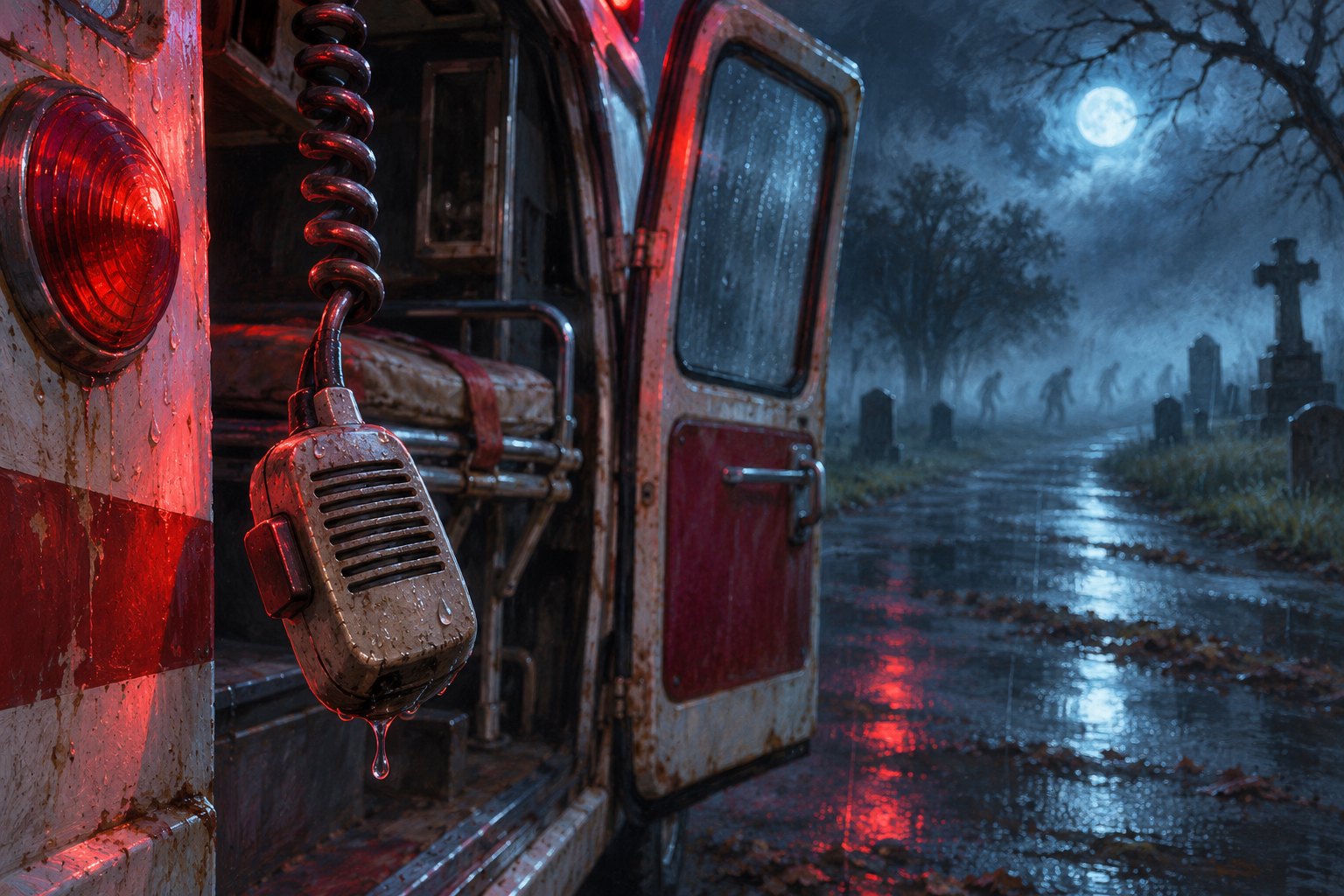
The joke changes the balance of intelligence. The living struggle to understand what is happening; the dead recognize an opportunity. Emergency procedures continue to function, but their purpose has been hijacked. Communication no longer guarantees help.
Then a captured zombie explains “the pain of being dead.” Suddenly, the appetite for brains has an appalling emotional dimension. These creatures retain an awareness of suffering. Their hunger becomes comprehensible without becoming forgivable.
That scene is, to my mind, the film’s most disturbing idea. Death has removed neither sensation nor need. The creature’s explanation briefly forces the survivors—and us—to hear a monster as a sufferer. The movie finds room for pity inside disgust, then refuses to make that pity comforting.
What Knoxville’s Casting Makes Interesting
My interest in Knoxville’s involvement is the possibility of a performance that can accommodate both absurdity and vulnerability. The original’s comedy depends on bodies that stop obeying their owners and people whose confidence disintegrates under pressure. A performer willing to look ridiculous could fit that world, provided the screenplay gives the embarrassment consequences.
That remains a casting interpretation. Nothing about the reported involvement justifies assigning Knoxville a warehouse job, a heroic role, or a particular fate. The larger issue resembles the one explored in our analysis of how a recognizable comic personality can support a feature: familiarity attracts attention, but character relationships must sustain it.
A promising sequel would give its ensemble conflicting reasons to act, allow jokes to emerge from those conflicts, and preserve the possibility that a funny scene can become frightening. Those are more meaningful standards than the number of recognizable creatures or repeated catchphrases.
The Ending Reveals What the Sequel Must Understand
The original ultimately escalates to military destruction, followed by the suggestion that contamination will continue. Read through the characters, the ending extends a pattern already established at the warehouse: someone declares a problem manageable, applies force, and overlooks the consequences.
My deeper reading is that the film attacks the comfort of believing responsibility can be passed upward until someone competent takes over. Workers turn to a boss; survivors turn toward institutional power. Increasing authority produces increasing destructive capacity, without a corresponding increase in understanding.
Its explicit reference to Night of the Living Dead sharpens that argument. Frank invokes a familiar horror movie, but familiar zombie rules fail to provide dependable guidance. The reference is more than a knowing wink: it implicates the audience’s confidence in having seen this kind of story before.
That makes The Return of the Living Dead an especially rewarding choice for viewers seeking the genre surprises discussed in our guide to looking beyond conventional movie-night choices. Its lasting achievement is the way comedy exposes helplessness. Knoxville’s sequel has a compelling inheritance if it remembers that beneath the outrageous behavior are people who desperately want the nightmare to make sense.
Original content by this site's editorial team. Published: November 21, 2026 at 15:16:33 PST (Los Angeles time)