
A new film adaptation of the sacred Hindu epic Ramayana has prompted debate over authenticity, according to Associated Press reporting. The central question deserves more care than a simple verdict about whether filmmakers are allowed to change a cherished story. What, exactly, must survive the journey to the screen: recognizable events, the meaning of a character’s decisions, a devotional relationship with the story, or all three?
My critical position is that an adaptation’s strongest claim to faithfulness comes from making its characters’ obligations and choices intelligible. Visual recognition matters, but it cannot carry that responsibility alone. A beautiful image may invite reverence; a dramatic scene must also establish what deserves our attention and why.
This is critical commentary on the authenticity debate, rather than a firsthand review of the finished film. It does not assess unverified scenes, performances, dialogue, or an ending.
Authenticity needs a more precise definition
The word authenticity can conceal several different judgments. One viewer may be asking whether a particular event has been preserved. Another may object to the emotional tone. A third may feel that the film uses sacred imagery without allowing its religious meaning enough space. Those objections require different answers.
A useful discussion should identify the reference point, the disputed choice, and its consequence. Saying that a portrayal feels unfamiliar describes a response. Explaining that a change removes the reason for a character’s decision makes an argument about adaptation. Both deserve a hearing, but they should not be mistaken for the same claim.
Equally, creative freedom is a starting condition of filmmaking, not a complete defense of every decision. A change can be deliberate and still dramatically weak. Fidelity can be painstaking and still produce a scene that gives an unfamiliar viewer little understanding of what is at stake.
Start with character perspective, not visual resemblance
A character-centered approach offers a way to examine the Ramayana adaptation without reducing the debate to costume, scale, or promotional imagery. The following questions are standards for evaluation, not claims about what this particular film contains.
Rama: can the audience understand the obligation?
For Rama, the important cinematic question is how the film communicates the relationship between action and responsibility. Does the audience understand the principle behind a decision? Does the scene make that principle legible through behavior and relationships, or does it depend entirely on viewers arriving with that knowledge?
There is no requirement that a sacred figure be rewritten as an uncertain contemporary protagonist. Stillness, restraint, and conviction can all be dramatically expressive. The test is whether the filmmaking gives them meaning. A sustained look or measured response can reveal a moral position when the surrounding scene establishes what that response costs.
Sita: whose experience organizes the scene?
With Sita, attention to perspective is especially useful. Whenever a scene concerns her, a critic can ask whether it makes room for her understanding of the situation. Whose reaction receives the close-up? Whose words determine the scene’s emotional conclusion? Does the editing allow her response to register before moving elsewhere?
These are concrete questions about cinematic agency. They do not require inventing new actions or measuring a character’s importance by physical activity. Speech, refusal, attention, and silence can all express agency. What matters is whether the audience is invited to recognize an interior life rather than merely observe a figure of significance.
Ravana: explanation must clarify responsibility
For Ravana, a useful distinction is between making a character understandable and making his conduct excusable. A portrayal can explore motivation while preserving moral judgment. Conversely, a forceful visual introduction can announce menace without explaining how power operates in the story.
The relevant critical question is what any added emphasis accomplishes. Does it sharpen the conflict and illuminate the choices of others? Or does it consume attention without deepening understanding? Complexity earns its place through dramatic consequences, not simply through extra screen time.
Why a sacred story can feel personal
A viewer’s attachment to a sacred epic may involve more than recollection of its events. It can also involve the person who first told the story, the setting in which it was encountered, or the feelings associated with hearing it. A film enters that relationship with its own faces, voices, pacing, and emphases.
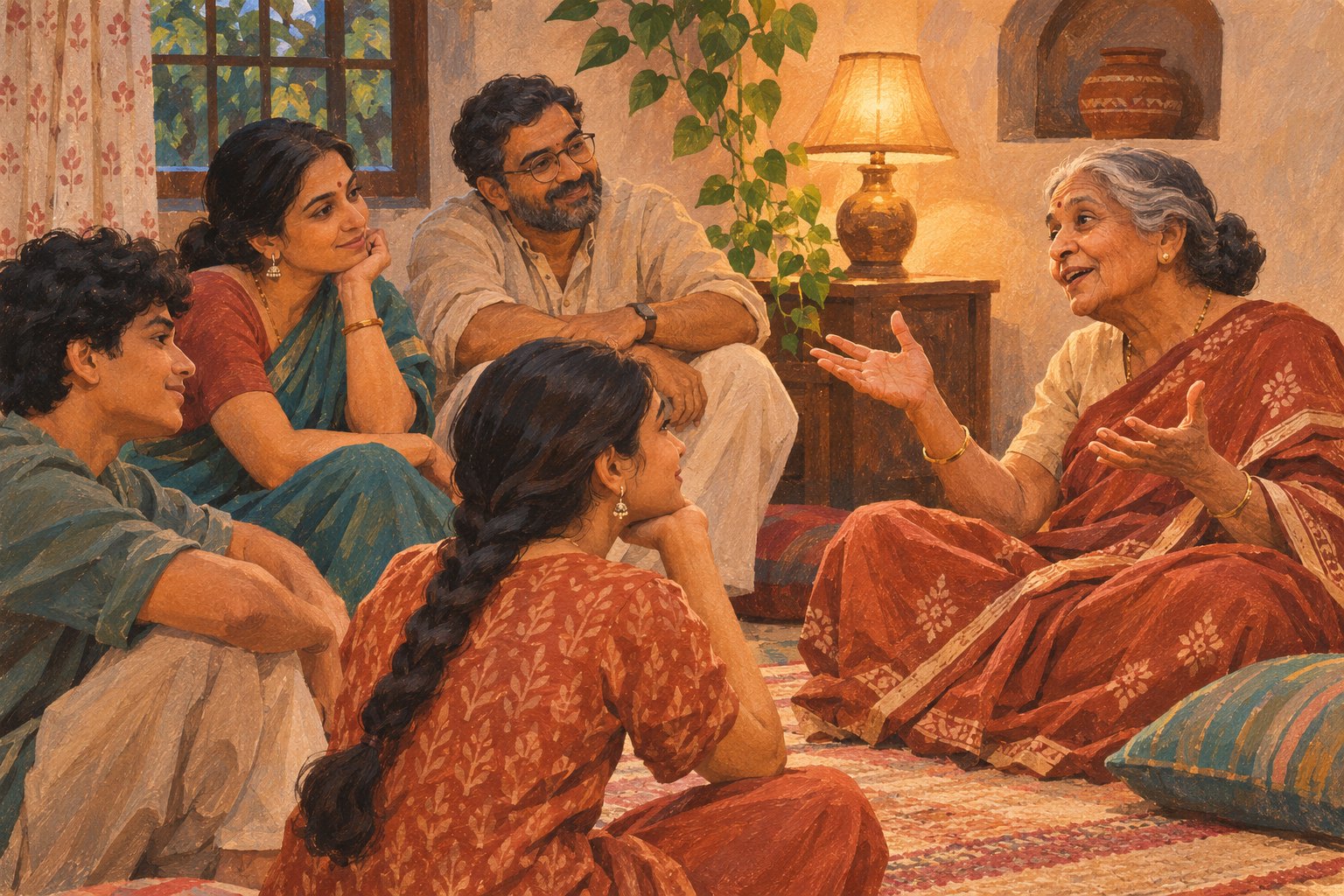
This helps explain why recognition is an incomplete measure of success. A viewer might recognize every major element and still experience a change in meaning. Another might find an unfamiliar presentation illuminating. Neither reaction, by itself, establishes what the film has done well or badly; the next step is to connect that feeling to a specific artistic choice.
Adaptations also have to create an encounter for viewers who lack that prior attachment. Our commentary on turning a familiar story into convincing character drama explores that general challenge. The religious stakes here are distinct, but the storytelling question remains relevant: what does the film itself help its audience understand?
Dialogue and spectacle should reveal meaning
Memorable dialogue deserves close attention in any eventual review, but only in its verified form and dramatic context. A line drawn from another adaptation or an English translation cannot responsibly be presented as dialogue from this film. Without authenticated wording, quotation would create false precision.
When assessing dialogue, listen for relationships as well as declarations. Who addresses whom? Is the speech intimate, ceremonial, confrontational, or reflective? Does the response alter its meaning? A sentence that looks straightforward on the page can acquire a different force through delivery, silence, and editing.
Spectacle deserves the same contextual treatment. Grandeur can communicate wonder, danger, or reverence. Its value depends on what the sequence enables us to perceive. After an elaborate passage, can we better understand a character’s commitment, fear, or responsibility? That is a more revealing question than whether the image looks expensive.
Individual achievements also need to be distinguished from the film’s overall effect. As our discussion of the difference between a compelling performance and a successful film suggests, admiration for one element does not settle how well the whole work functions.
A deeper test of faithfulness
The most productive interpretation of this debate is that adaptation redistributes attention. Cinema determines which face we watch, how long a silence lasts, when music guides our response, and where a sequence ends. Even a film that preserves events must make choices about their significance.
For a Ramayana adaptation, those choices deserve scrutiny because sacred meaning cannot be evaluated solely by checking whether familiar elements appear. My standard would be whether the film helps viewers understand why its characters’ actions matter while treating the story’s religious significance with sustained attention. A persuasive judgment must ultimately demonstrate that through the film itself—scene by scene, choice by choice.
Original content by this site's editorial team. Published: November 24, 2026 at 10:42:44 PST (Los Angeles time)