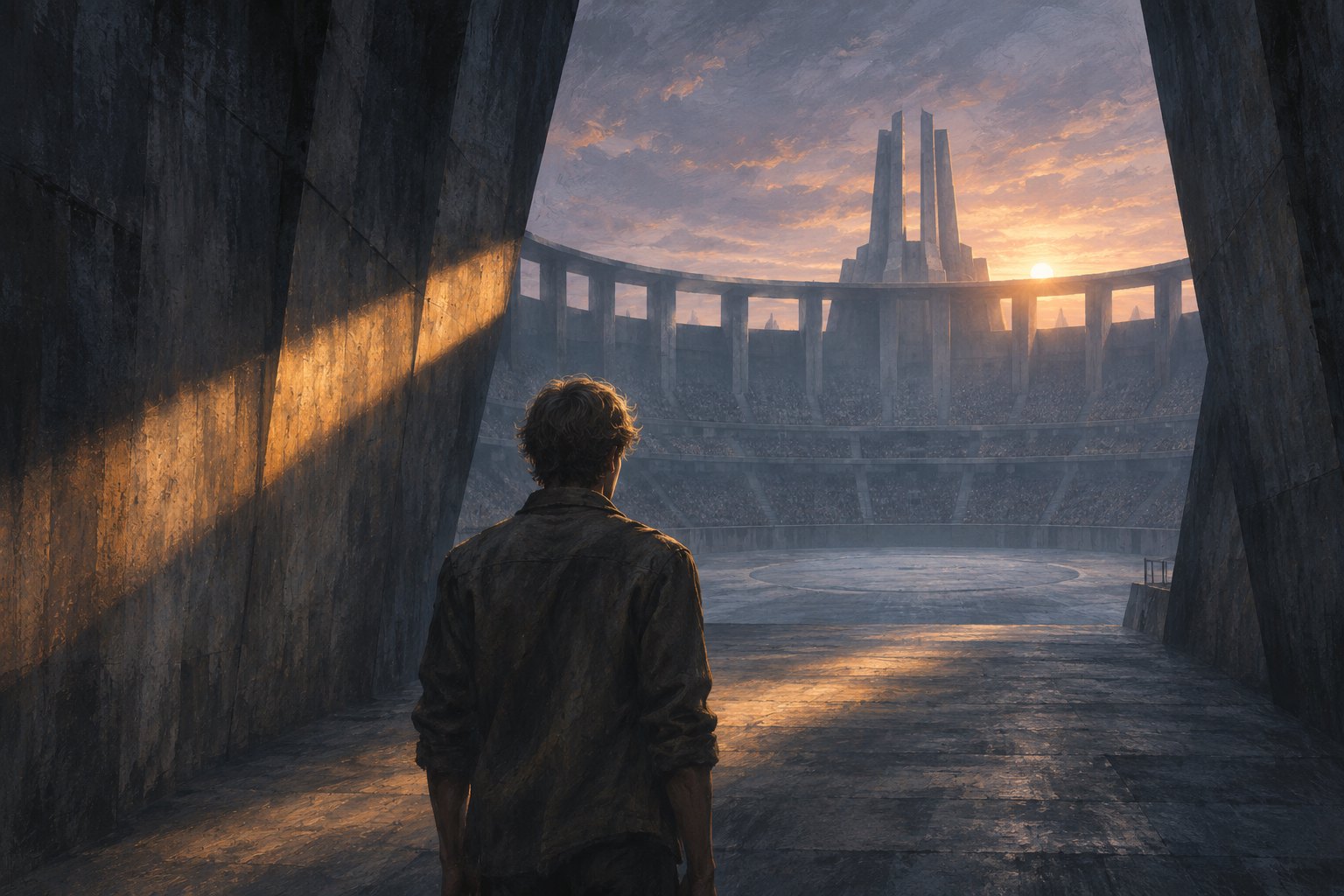
The Hunger Games: Sunrise on the Reaping has an immediate attraction: Haymitch gets to become the center of his own story. The question is whether that shift produces a compelling drama or simply adds more history to a character audiences already find interesting. Variety’s assessment suggests a qualified success, finding the prequel engaging while identifying a tendency to wander.
That combination matters more than a simple thumbs-up or thumbs-down. An origin story can hold attention through recognition, curiosity, and atmosphere without making every narrative detour feel necessary. For Haymitch, the meaningful test is whether learning about his past changes our understanding of him.
This is spoiler-free critical commentary on the film’s premise and Variety’s reported assessment, not a firsthand screening review. Specific scenes, dialogue, and Easter eggs are not evaluated here without verification.
What the mixed assessment actually tells viewers
Variety’s headline presents two judgments that can comfortably coexist: the film offers reasons to keep watching, and its narrative does not always move with purpose. Neither judgment cancels the other. Together, they suggest that the appeal of spending time with Haymitch may be stronger than the structure carrying his story.
It is important to keep that observation within its limits. A criticism of wandering storytelling does not identify which scenes run long, which relationships receive insufficient attention, or whether the ending resolves earlier problems. Those conclusions require evidence from the film itself. Nor should the headline’s comparison with The Ballad of Songbirds & Snakes become a claim about body counts or the severity of particular violence.
For a prospective viewer, the useful distinction is between engagement and urgency. Engagement makes us interested in the next scene. Urgency makes that scene feel necessary because something unresolved demands an answer. A prequel can have plenty of the former while struggling to sustain the latter.
Haymitch needs a present tense of his own
The central difficulty of an origin story is that audiences arrive looking forward. They watch the younger character for signs of the person they already recognize. A gesture can become a clue; a disappointment can become an explanation. That habit is understandable, but it can reduce a life to a sequence of causes.
A stronger approach gives the younger character immediate concerns that matter on their own. From Haymitch’s perspective, his experiences cannot merely be preparation for a later role. What he wants now, what he misunderstands now, and what he can still imagine for himself should possess their own weight.
This is where character-focused criticism becomes more useful than counting franchise references. The revealing question is whether a choice makes sense to Haymitch at the moment he makes it. Does he have a reason to trust, resist, withdraw, or persist? The audience’s knowledge of his future should complicate those decisions without replacing their immediate logic.
Our discussion of what makes a familiar story worth revisiting considers a related challenge. Recognition can invite us into a film, but a changed understanding of a character is what makes the return worthwhile.
Why wandering matters in a character origin story
Slow storytelling and unfocused storytelling are different problems. A quiet conversation can move a film decisively if it changes a relationship. An elaborate action passage can leave the drama standing still if everyone emerges with the same priorities and understanding they had before.
For Haymitch’s story, the most useful measure of momentum would therefore be consequence. After an encounter, what becomes harder for him? What belief becomes less secure? What obligation becomes impossible to ignore? These changes give a narrative direction even when the pace becomes deliberately patient.
Conversely, a series of individually interesting episodes can feel scattered when the emotional connections between them remain weak. Viewers may remember what happened without understanding why one experience leads into the next. That is a particular danger for prequels, which can accumulate explanations faster than they develop an argument about their protagonist.
Variety’s reservation raises this structural question without settling it scene by scene. The fair response is to recognize the concern, rather than invent examples to illustrate it. The critical standard remains clear: additional history earns its place when it alters our reading of a decision, a relationship, or a cost.
The person inside the spectacle

Putting Haymitch at the center also invites a distinction between being visible and being understood. A protagonist can occupy most of a movie’s screen time while remaining emotionally distant. Close attention requires more than following where he goes; it means giving the audience access to the pressures shaping his choices.
For a story organized around deadly competition, this distinction is especially valuable. Spectacle makes an event legible from the outside: someone advances, someone loses, someone attracts attention. Character drama asks what those visible outcomes mean to the person experiencing them.
My view is that an origin story becomes most affecting when it preserves a gap between those perspectives. What looks decisive to an observer may feel unresolved to the character. What appears to demonstrate strength may involve a compromise the character cannot comfortably explain. These are interpretive possibilities, not claims about particular scenes in Sunrise on the Reaping.
The supporting characters must matter beyond Haymitch
There is another risk in organizing a film around the making of a familiar figure: everyone else can become an instrument of his development. One person teaches him something, another disappoints him, another provides a reason to change. That structure may be efficient, but it can leave the surrounding world feeling thin.
A richer character study allows other people to have priorities that do not conveniently serve the protagonist. Their decisions should sometimes frustrate our access to Haymitch rather than explain him. A relationship becomes more persuasive when both participants seem to have something at stake.
This connects with our examination of who gets a voice beyond a film’s leading man. Centering a recognizable character does not require making every other perspective secondary in emotional importance.
The deeper promise of returning to Haymitch
The most interesting possibility in Sunrise on the Reaping is not that Haymitch will become easier to explain. It is that he might become harder to simplify. An effective account of someone’s past should reveal the limits of the labels attached to them, allowing incompatible impulses and unfinished feelings to remain visible.
That is also why a prequel’s value cannot be measured only by how neatly it connects to what follows. Neatness can become a limitation. People do not experience their lives as carefully arranged evidence for an eventual identity, and fiction gains emotional force when it remembers that.
Variety’s qualified response leaves a useful expectation: there may be substantial appeal in this return to Haymitch, alongside questions about its dramatic focus. The deeper standard is whether the journey gives him an inner life that exceeds its explanatory purpose. More history can satisfy curiosity. A more complicated person can make the entire familiar story feel different.
Original content by this site's editorial team. Published: November 17, 2026 at 06:30:46 PST (Los Angeles time)