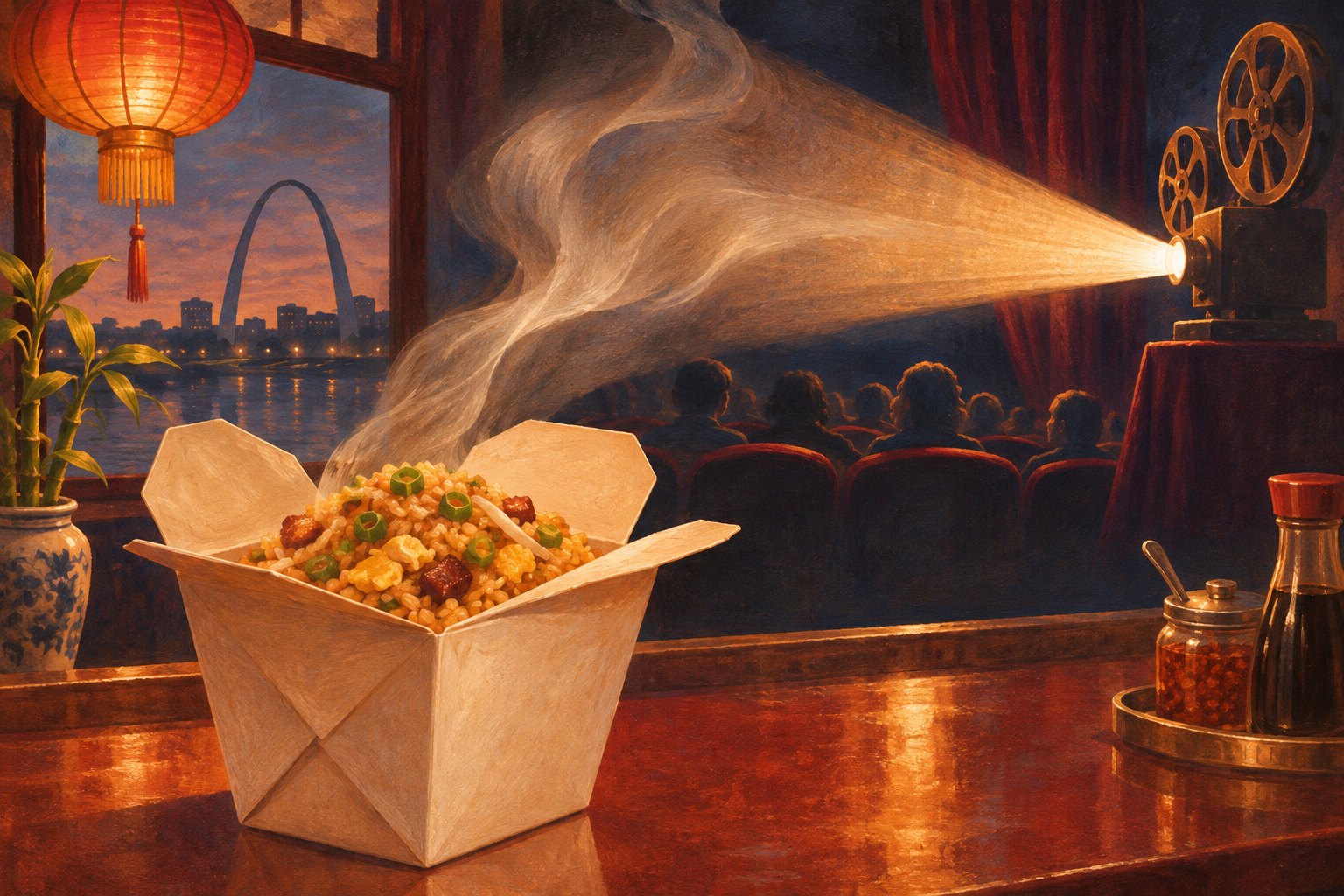
A documentary about St. Louis-style Chinese food has premiered at a local film festival, according to KMOV. The subject brings an appealing question into the theater: what happens when a meal people recognize becomes something they are asked to examine? For moviegoers, the attraction extends beyond food photography. A regional food tradition offers a way to explore how people describe home, remember one another, and assign meaning to everyday places.
This is spoiler-free premiere commentary, not a review of the completed film. The premiere report establishes the subject and event; it does not provide a basis for evaluating individual scenes, performances, editing, or dialogue. What merits attention now is the documentary's premise—and the specific storytelling opportunities that make it worth following.
Why this subject belongs on a movie screen
St. Louis-style Chinese food is a subject with a built-in tension between familiarity and curiosity. A local viewer may arrive with strong preferences and personal associations. Someone unfamiliar with the city may need the film to explain what distinguishes the food and why those distinctions matter. An effective documentary must make room for both viewers without turning its participants into tour guides.
That creates a more interesting assignment than simply identifying a signature dish. The camera can ask how knowledge travels: who teaches someone to prepare an order, who remembers an earlier version, and who decides that a particular taste represents a place. These are potential avenues of inquiry, not descriptions of scenes confirmed to appear in this film.
For my money, the strongest reason to make this kind of documentary is attention. A meal can disappear in minutes. Cinema can slow down the gestures, decisions, and relationships around it, allowing something ordinarily treated as background to occupy the center of the frame.
The people should be more memorable than the plate
A character-focused approach to nonfiction begins with a distinction: documentary participants are people with lives beyond the story being assembled. They should not have to function as a cheerful proprietor, a loyal customer, or a convenient voice of tradition. Those roles may introduce someone, but they cannot explain them.
Consider the different meanings a familiar order could carry. For a customer, it might be attached to a family routine. For a cook, it could represent practiced skill and the pressure to deliver consistency. For someone encountering it for the first time, it may raise questions that longtime customers no longer think to ask. None of those perspectives automatically outweighs the others.
The critical question is whether a documentary lets such differences develop. When every interview merely confirms that the food is beloved, affection can become repetitive. When people explain what they value and why, a shared subject can reveal distinct personalities. Viewers gain something more durable than a list of places to eat: an understanding of how another person pays attention.

What the phrase St. Louis-style asks a film to explain
The regional label is doing substantial work. It connects a culinary tradition to a particular American city, but the phrase alone cannot tell viewers how that connection developed. A documentary has the opportunity to distinguish personal recollection, shared custom, and historical evidence rather than allowing them to blur together.
A participant remembering a childhood meal offers valuable testimony about experience. That memory does not, by itself, establish when a recipe originated or who first introduced it. Likewise, several people agreeing that something tastes right establishes a shared preference, not necessarily a complete account of its history. Good documentary storytelling can honor memory while remaining precise about what it proves.
I would also resist treating authenticity as a simple pass-or-fail test. A more productive critical approach asks what a preparation means to the people making and eating it. Does consistency matter most? Does adaptation carry its own value? Who gets to answer? These questions leave room for regional identity to be specific without requiring every participant to describe it identically.
Appetizing images need a point of view
Food offers filmmakers immediate visual pleasures: steam, color, movement, texture. Those qualities can make a subject inviting, but beautiful close-ups do not automatically explain it. The meaningful choice is what surrounds the image of a finished meal.
A preparation sequence can reveal skill if viewers can follow its stages. It can also conceal work if editing reduces everything to a few spectacular gestures. An interview can become intimate when a speaker has time to finish a thought; rapid cutting can turn that same person into a supplier of slogans. These are useful distinctions to watch for when the documentary becomes available to you.
Sound deserves similar attention. The balance between conversation, kitchen activity, and music determines whether a restaurant feels like a workplace, a social space, or a nostalgic abstraction. A documentary's attitude toward its subject often emerges through those choices before anyone states an argument.
What a local festival premiere adds
Presenting this subject at a local film festival creates the possibility of recognition operating alongside discovery. Some viewers may bring knowledge that exceeds what appears on screen. Others may encounter the subject with few expectations. That mix can make a screening especially interesting, although the premiere announcement alone tells us nothing about the audience's actual response.
The setting also invites a useful distinction between cultural significance and artistic achievement. A subject can deserve preservation even when a film's execution remains open to debate. Our discussion of looking beyond festival award labels makes a related point: recognition should lead viewers toward the work and its choices.
There is a connection, too, with how exhibition settings shape our attention to cinema. Giving an everyday subject a theatrical setting asks an audience to spend sustained time with it. The value of that invitation depends on what the film helps people notice.
The deeper question is what counts as a city's memory
The most compelling possibility in this premiere is that an ordinary meal can become an entry point into public memory. Cities are experienced through repeated encounters as well as major landmarks. A familiar counter, a remembered order, or a conversation over food can matter deeply without ever becoming an official symbol.
A documentary about St. Louis-style Chinese food has an opportunity to give those experiences duration and individual voices. Whether this film fulfills that opportunity requires viewing the work itself. The premise already offers a worthwhile reason to pay attention: it asks audiences to consider how much of a place lives in habits they rarely stop to examine.
Original content by this site's editorial team. Published: November 8, 2026 at 22:52:12 PST (Los Angeles time)