Steven Spielberg is set to direct a Western based on The Heart in Winter, with Cillian Murphy and Jessie Buckley starring and Paul Thomas Anderson writing the screenplay, according to Variety’s report. The announcement invites an immediate question beyond the names involved: what will this Western ask us to see when it shows us open country?
That question matters because landscape can do two very different jobs. It can decorate a story, supplying handsome horizons between conversations. Or it can become part of the drama, making a character’s freedom, vulnerability, or isolation physically legible. My interest in this adaptation lies in the second possibility: a Western in which the distance between people tells us as much as the distance they travel.
This is a spoiler-free critical preview, not a review of a completed film. The reported creative lineup establishes the project’s premise as a filmmaking proposition. It does not establish its performances, individual scenes, dialogue, or ending. Those distinctions leave room for a substantive discussion of cinematic form without pretending that an announcement is a screening.
The horizon should belong to someone
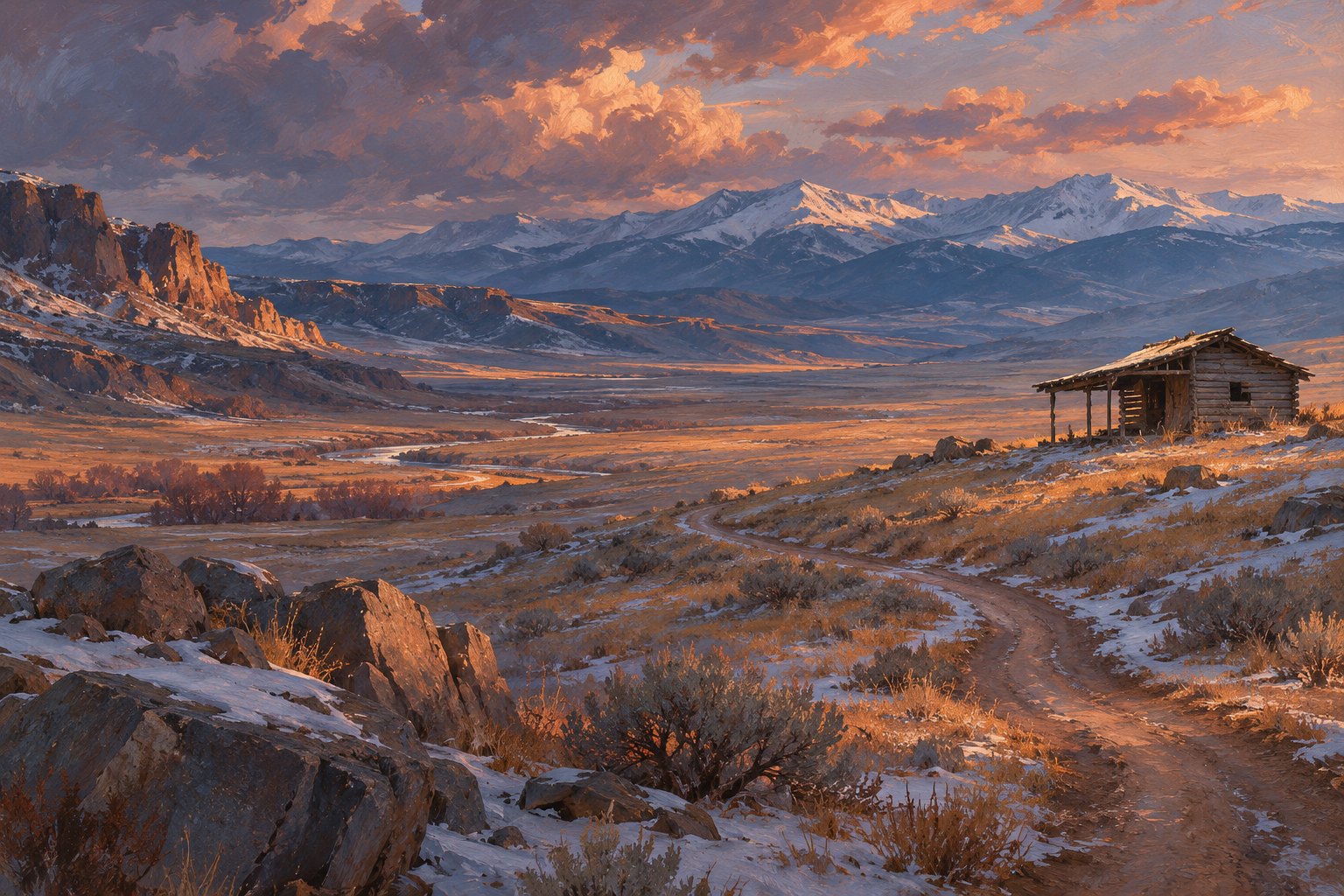
A panoramic shot is never emotionally neutral. From one character’s perspective, an empty valley might suggest opportunity. From another’s, the same valley could mean exposure: nowhere to rest, nowhere to disappear, no obvious help. The image becomes dramatic when the audience understands whose problem it represents.
For Spielberg’s planned Western, that offers a useful standard. Does a landscape shot change our understanding of a decision? Does it establish something a person must cross, endure, abandon, or protect? Or could it be moved elsewhere in the film without changing the scene’s meaning?
Beautiful photography can satisfy on its own, but character-driven filmmaking asks more of it. A distant shelter means little until the film establishes what reaching it would cost. A road becomes interesting when taking it closes another possibility. The strongest images make geography and intention inseparable.
These are examples of how the genre can work, not descriptions of scenes announced for The Heart in Winter. They identify the distinction I would bring to a future review: whether the camera admires the world or helps us understand how someone lives inside it.
Murphy and Buckley need distinct relationships with space
The casting of Murphy and Buckley makes questions of perspective especially inviting, but it would be premature to assign either actor a particular temperament or narrative function. A cast announcement cannot tell us which character drives a scene, who withholds information, or how the screenplay distributes sympathy.
What it does suggest is a reason to watch the eventual film’s allocation of attention. When two performers share a frame, who gets to move? Who must wait? When one person speaks, does the camera remain with that speaker or examine the listener’s response? Such decisions can make a relationship feel reciprocal, unstable, or quietly unequal.
A familiar trap in star-led drama is treating one character’s face as the destination of every important moment. The other person becomes an emotional delivery system: provoking regret, desire, or revelation without receiving comparable interior life. A more compelling adaptation would allow both characters to become difficult to read at different moments.
Our earlier look at the creative collaboration behind The Heart in Winter considered the appeal of the assembled talent. The next critical question is more specific: how will the finished film distribute the right to look, act, and be understood?
A room can be as revealing as a mountain range
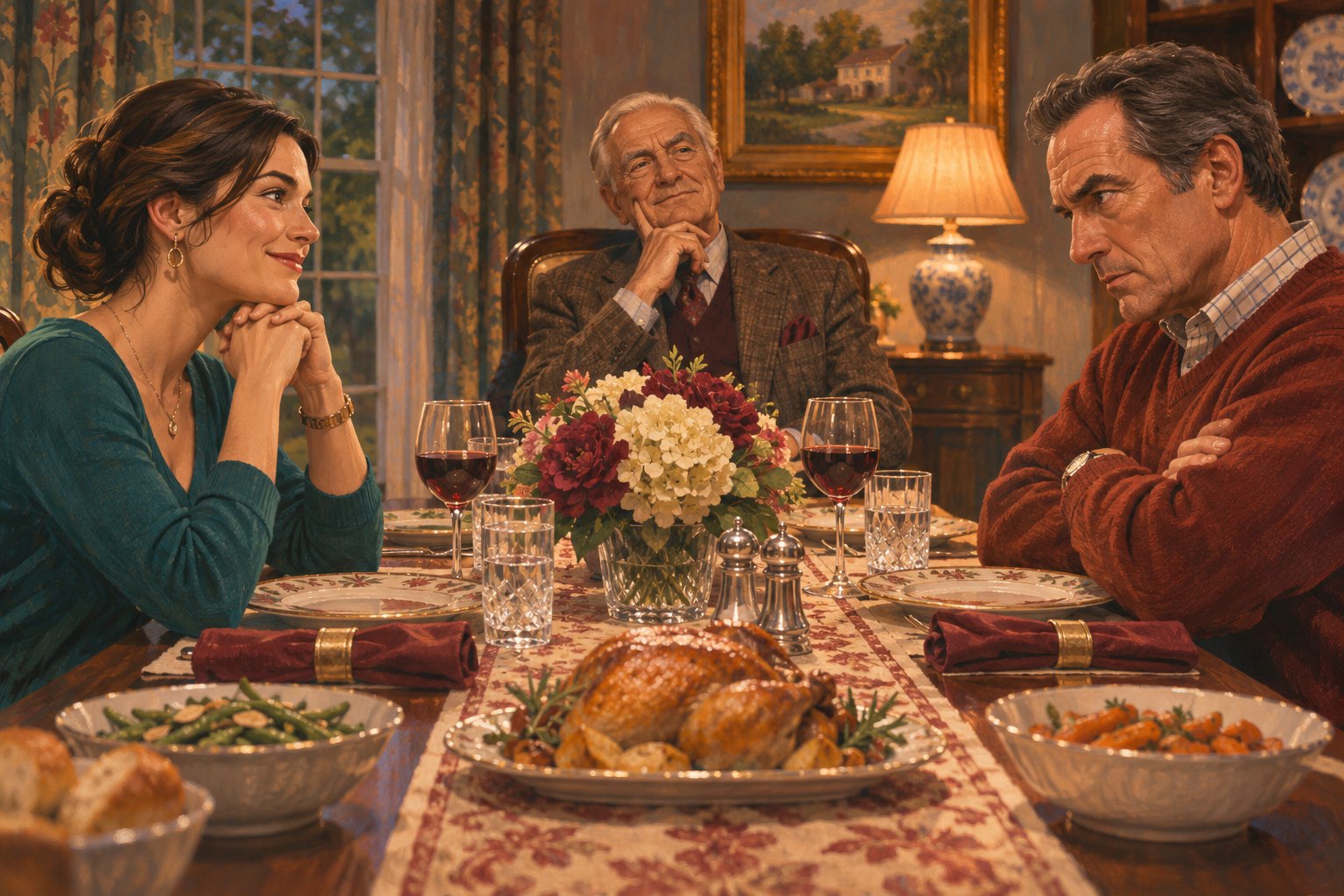
The Western’s open spaces receive much of the attention, yet an interior can expose the pressures that a sweeping vista conceals. A doorway creates an exit. A table divides people while giving them a reason to remain together. A window offers a view without necessarily offering access.
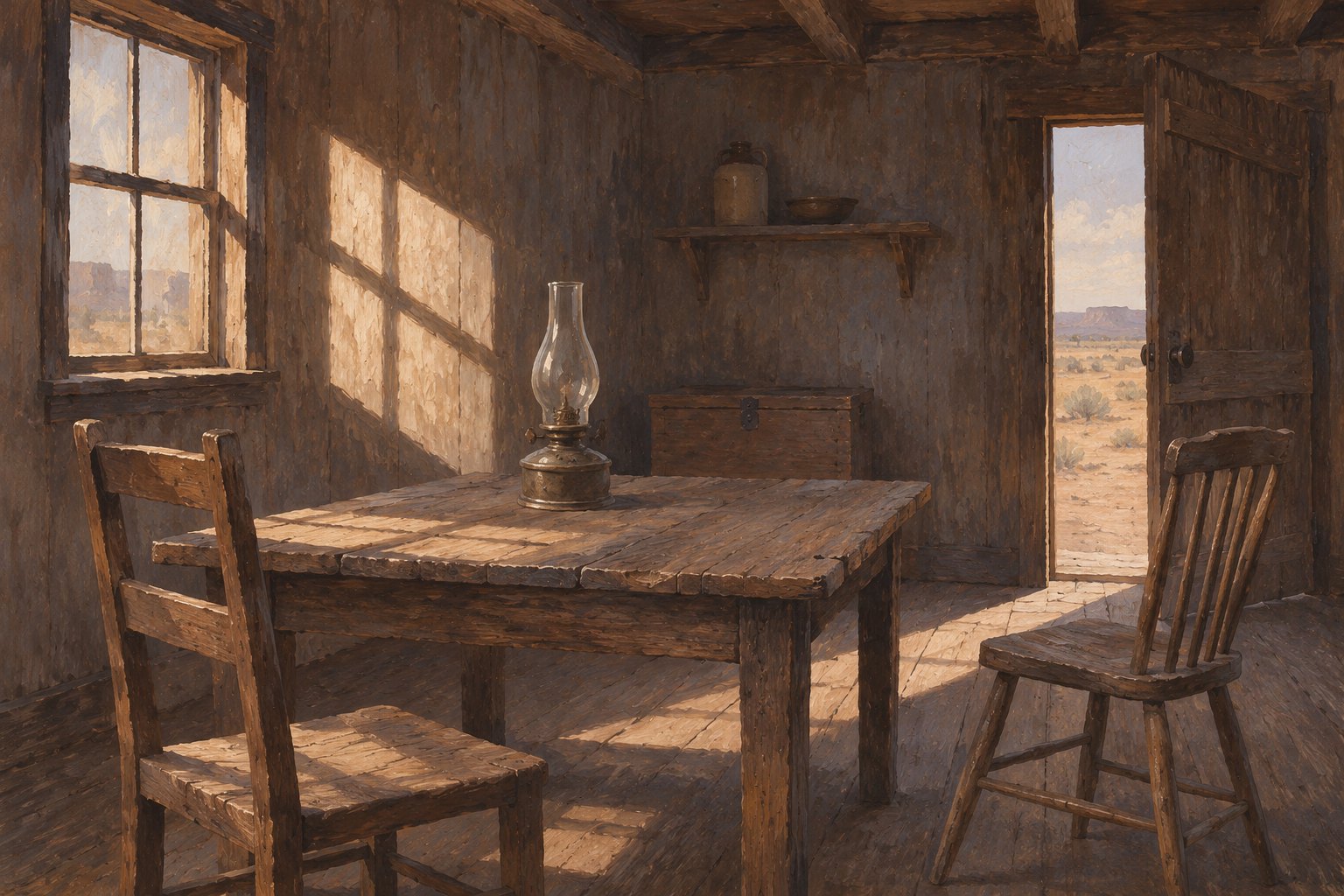
Both illustrations accompanying this essay are conceptual Western imagery, not production stills or representations of confirmed scenes.
Consider a hypothetical conversation in which one person stands near an exit while another sits behind a table. Even before the dialogue supplies context, the arrangement raises questions about control and departure. Moving the standing person into a chair could transform the scene without changing a word.
This is where an adaptation can give characters depth without explaining every feeling aloud. The practical use of a room—who occupies it comfortably, who hesitates at its edge—can reveal the difference between being welcomed and merely being permitted to stay. For a film interested in human relationships, those distinctions are substantial dramatic material.
Anderson’s screenplay will face a problem beyond dialogue
With Anderson reported to be writing the adaptation, attention will understandably turn to language. But adapting prose is also a process of deciding what words no longer need to carry. An observation expressed by a narrator might become a pause, an interrupted action, or a change in where the camera stands.
The meaningful question is not simply whether memorable sentences survive. It is whether their dramatic function survives. Does a line expose self-deception? Does it make a relationship less secure? Does it allow the reader—or eventually the viewer—to perceive something the character cannot?
No film dialogue is quoted here because no authenticated screenplay or finished-film dialogue underpins this preview. Inventing an evocative exchange would falsely turn an expectation into evidence. Once the film is available, its actual lines can be assessed alongside the performances and images that give them force.
The broader issue resembles the distinction explored in our discussion of adaptation and emotional fidelity in Sunrise on the Reaping: preserving material and preserving its effect are related achievements, but they are not identical.
What would make this Western worth revisiting?
For me, the strongest possible outcome would be a film whose spaces change meaning as its characters change. A location introduced as reassuring might later feel restrictive. A stretch of open ground might become less liberating once we understand what crossing it requires. Returning to an image would then deepen the story rather than simply repeat a visual motif.
That is a critical hope, not a prediction about Spielberg’s choices. The reported involvement of Spielberg, Anderson, Murphy, and Buckley provides a reason to pay attention; it cannot provide an advance verdict.
The deeper opportunity in The Heart in Winter is to examine a distinction the Western is especially equipped to make visible: having space around you does not necessarily mean having choices. If the adaptation makes that tension specific to its characters, its landscapes could become more than impressive backgrounds. They could show exactly where freedom begins, and why someone might still be unable to reach it.
Original content by this site's editorial team. Published: November 23, 2026 at 13:47:05 PST (Los Angeles time)