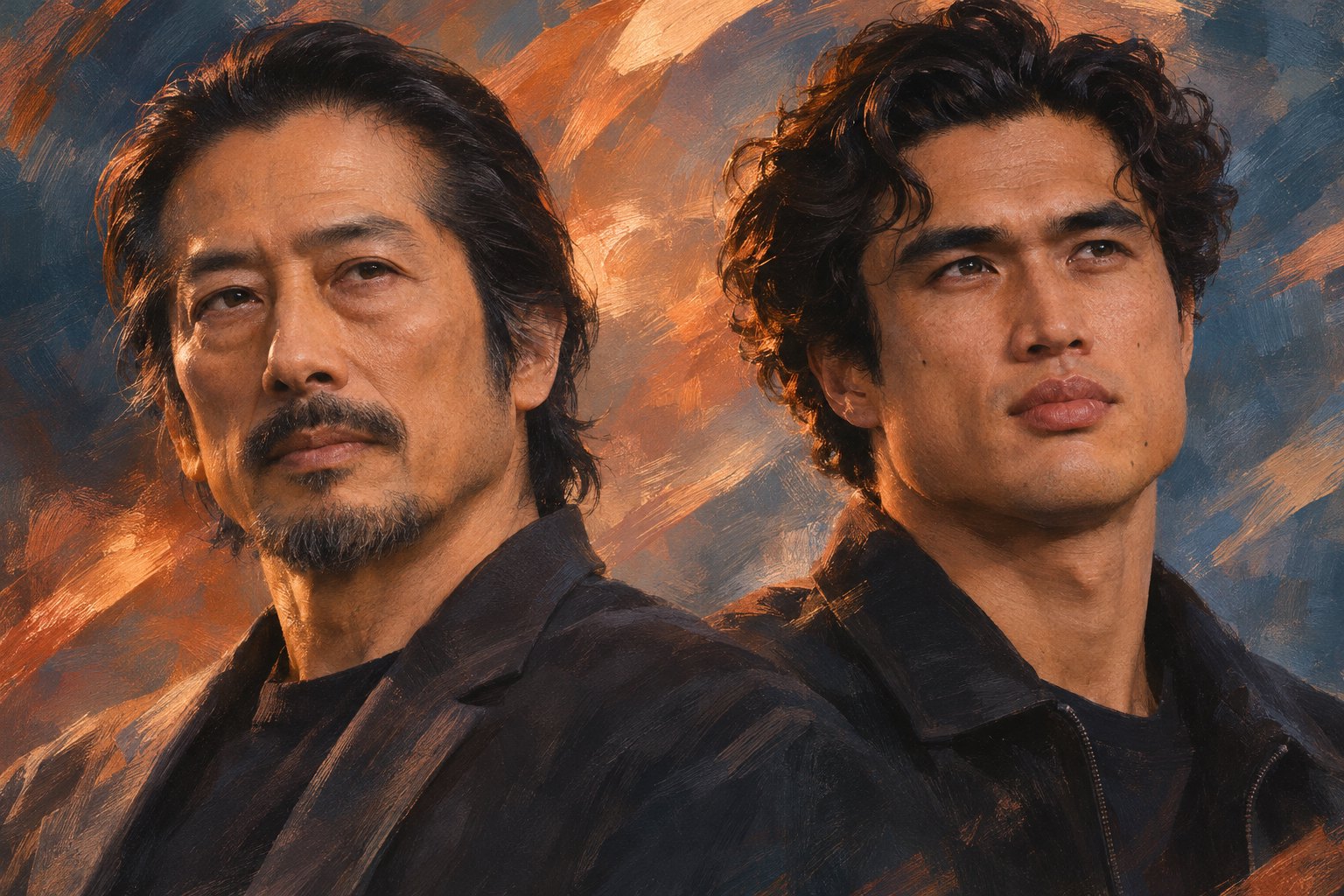
Hiroyuki Sanada is being linked with Charles Melton in Naruto, according to Deadline’s casting coverage. The pairing gives the project a compelling point of interest: how two distinctive screen presences might contribute to a shared dramatic world. For an adaptation carrying a recognizable title, that question deserves as much attention as the eventual costumes, effects, and action.
The attraction is easy to understand. Casting lets audiences begin imagining a movie before its storytelling is available to judge. But imagining the possibilities and evaluating the result are separate activities. This is a spoiler-free critical preview, not a review of a completed film. The casting development provides a starting point for discussing performance; it does not establish the quality of the screenplay or reveal how either actor’s scenes will work.
What the Sanada–Melton news actually tells us
The central reported development connects Sanada, Melton, and Naruto. That is meaningful news, but the wording of a casting headline cannot carry every conclusion readers might attach to it. Appearing opposite another performer does not, by itself, specify the number of shared scenes, the balance of screen time, or the emotional importance of their relationship.
It also does not establish a release date, a completed production, or a particular storyline. Those details need their own confirmation. Assigning characters or outlining scenes on the strength of this headline would turn anticipation into an invented synopsis.
The useful editorial question is therefore narrower: what should audiences want from this pairing? My answer is a film in which recognizable actors make the characters more specific. Every entrance should tell us something about a person’s intentions. Every conversation should have a purpose beyond reminding viewers that two notable names have joined the cast.
A strong pairing needs differences that matter
Two actors can be individually compelling while producing little dramatic energy together. Chemistry depends on the relationship a screenplay gives them and the opportunities a director creates for them to respond to one another. Matching intensity is only one possibility. A quieter performance can unsettle a forceful one; apparent confidence can conceal dependence; restraint can become a form of resistance.
These are possibilities for Sanada and Melton, not descriptions of their Naruto roles. The distinction matters because advance casting discussion often becomes a contest over imagined performances. It is more productive to ask whether the eventual film allows each actor a different rhythm, a different objective, and a different way of handling pressure.
Consider a basic dramatic situation: one character wants an answer while another wants to delay giving it. A scene like that can reveal hierarchy, distrust, affection, or embarrassment without a speech explaining the relationship. If the film gives its performers that kind of playable tension, their presence can become part of the storytelling rather than an attraction positioned beside it.
This is also the issue behind our discussion of how an impressive creative collaboration becomes compelling drama. The names establish interest. The relationships must sustain it.
Character perspective should guide the adaptation
A character-centered approach begins with practical questions. What does this person want in the scene? What do they misunderstand? What would they rather conceal? What changes because they encounter someone else? These questions are useful for evaluating any adaptation because they connect a large fictional world to an immediate human experience.
For Naruto, the casting conversation should eventually lead back to those fundamentals. Viewers encountering the property for the first time need to understand why a decision matters without completing outside homework. Established fans deserve scenes that offer an emotional experience beyond recognizing a familiar name or image.
The same moment can serve both audiences. A pause before accepting help can communicate pride to a newcomer while carrying additional associations for someone familiar with the source material. That is the kind of layered storytelling worth hoping for: accessible on its own terms, with room for deeper recognition.

The camera must give performances room to develop
Casting is only one part of a screen performance. Framing, editing, sound, and scene length determine what viewers can actually perceive. An actor may suggest uncertainty with a small reaction, but that choice disappears if the edit moves away before the reaction registers.
For a pairing such as Sanada and Melton, I would look for scenes that let behavior unfold across more than isolated close-ups. A shared frame can reveal who controls the space, who seeks approval, and who refuses eye contact. The distance between two people can sometimes explain their relationship more efficiently than dialogue.
Action deserves the same attention. A sequence becomes dramatically useful when a choice changes the situation: someone hesitates, improvises, misjudges another person, or accepts a cost. Technical spectacle can make an encounter exciting, but the aftermath determines whether it belongs to the characters’ story. The eventual review should ask what each major confrontation reveals, not merely whether it looks expensive.
Fidelity is more demanding than resemblance
Discussion of an adaptation naturally turns toward whether it looks right. Visual recognition has value, especially for audiences with a long attachment to a property. Yet resemblance alone cannot establish that a movie understands the material it is translating.
A more revealing test concerns cause and consequence. Does the film make a character’s choice understandable? Does a relationship develop through behavior? When the story asks for an emotional response, has it supplied enough experience to earn one? Those questions leave room for changes in form while holding the adaptation accountable for dramatic coherence.
Our analysis of character reinterpretation in The Man from U.N.C.L.E. explores a related problem: a familiar identity can survive on the surface while the relationships underneath it take on a different meaning. A useful adaptation review examines that meaning rather than treating every alteration as automatically good or bad.
What would make this casting pay off?
The most encouraging outcome would be a Naruto in which viewers stop thinking about the announcement and start responding to the people on screen. Sanada and Melton would need roles with specific desires, contradictions, and consequences. Their characters should affect the surrounding story instead of existing mainly to lend it prestige.
That is the deeper promise of the pairing: the possibility that performance can make a large fictional world feel personal. A glance can reveal the cost of authority. A delayed reply can expose uncertainty. An apparently minor decision can change how an audience understands a relationship.
For now, the casting news creates a reason to pay attention. The decisive question remains what the film gives these actors to express—and whether those expressions help viewers understand why its characters choose, struggle, and change.
Original content by this site's editorial team. Published: November 23, 2026 at 12:35:36 PST (Los Angeles time)