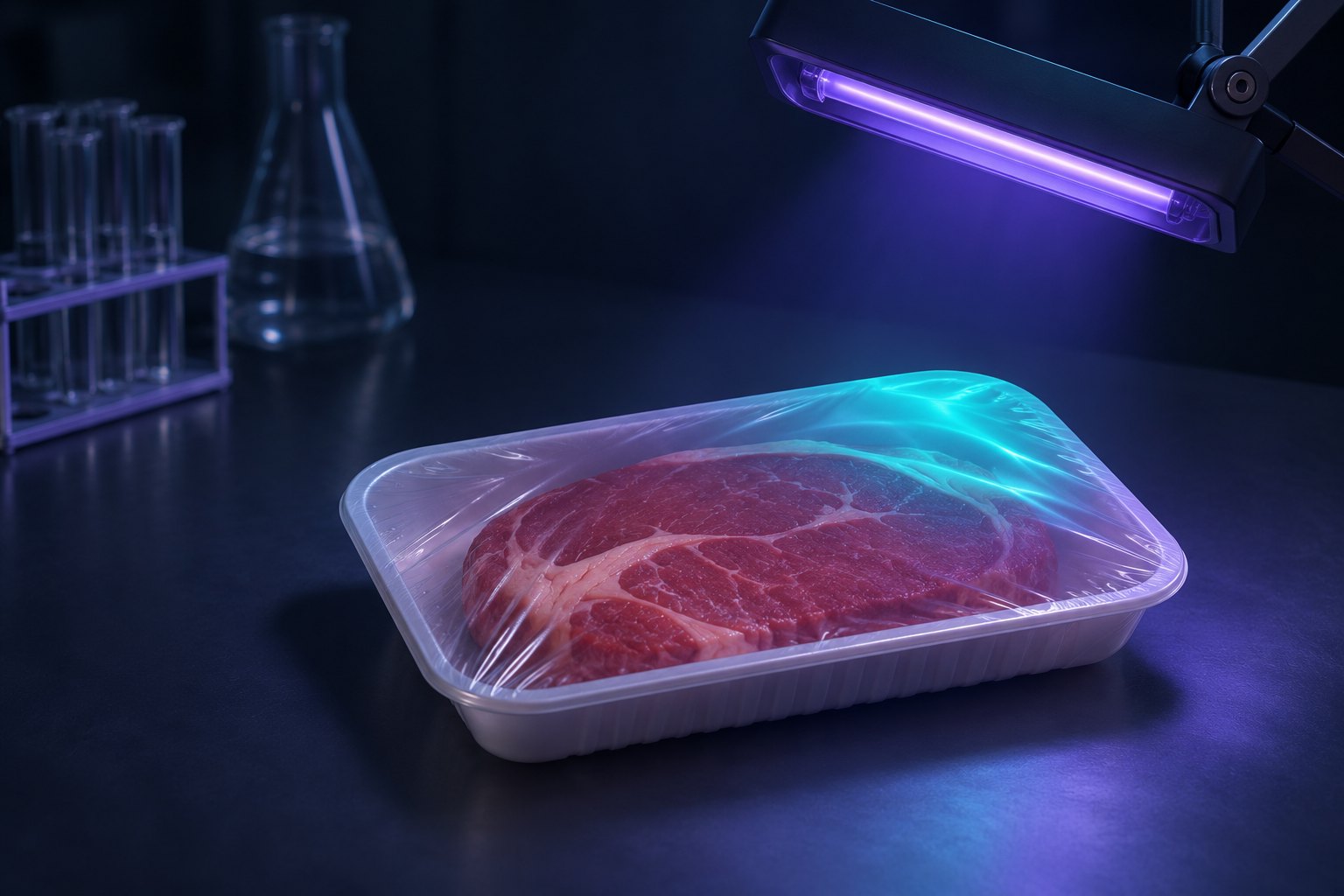
Smart packaging film that lights up under ultraviolet illumination as meat loses freshness offers an immediately understandable proposition: let the package reveal something about the food inside. The reported development connects a visible response in the film with declining meat freshness. That is an intriguing starting point, but it does not, by itself, establish how accurately the material works or what a shopper should conclude from its appearance.
The distinction matters because this is an unusually persuasive visual idea. A transparent surface becomes a signal; an ordinary package appears to disclose hidden information. Here, film means packaging material. There is no movie to review, but there is a revealing question for anyone interested in visual storytelling: when does an arresting image become reliable evidence?
What the reported development actually establishes
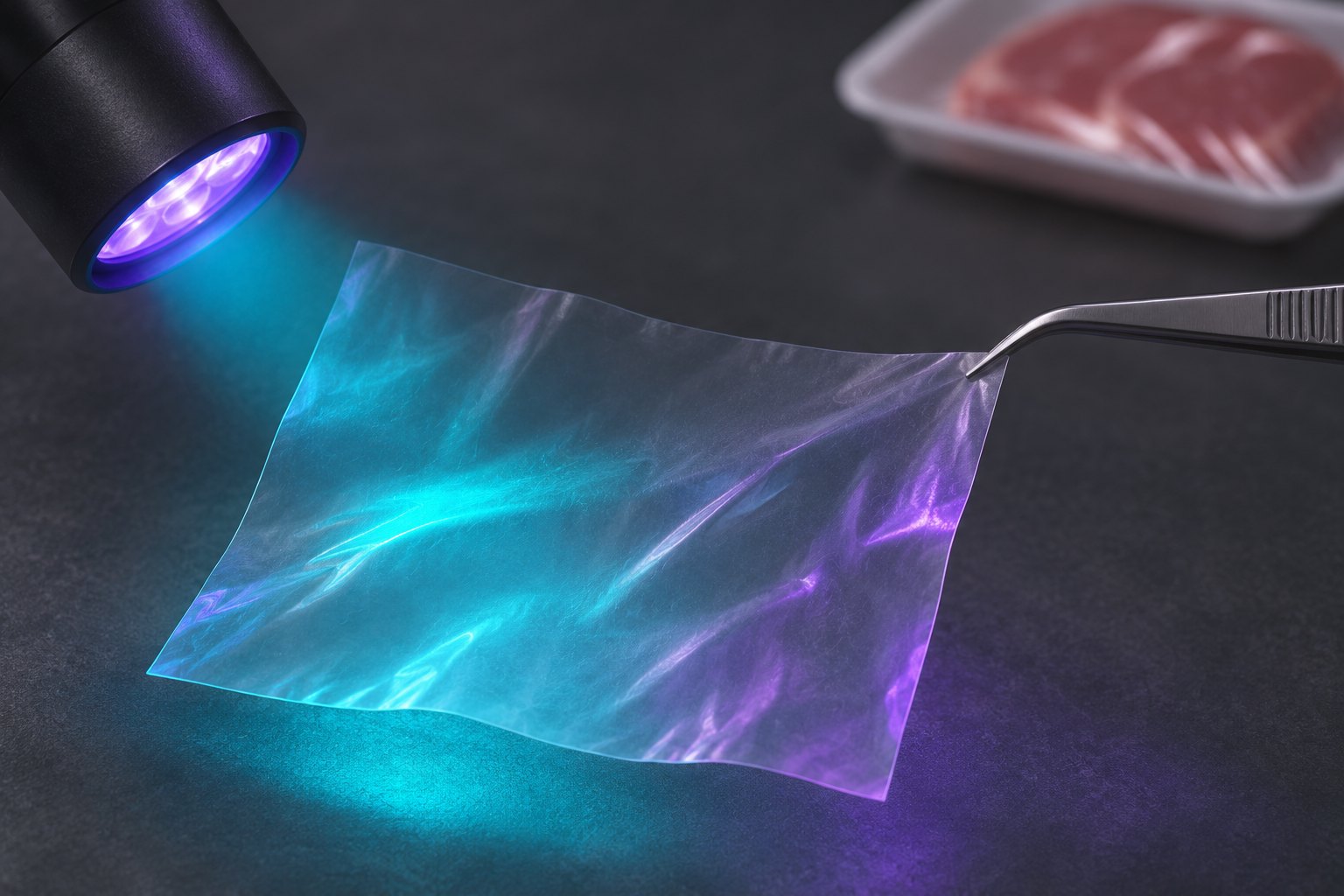
The central report describes smart packaging film that lights up under UV as meat loses freshness. Its essential elements are the packaging material, ultraviolet illumination, and a response associated with freshness loss. Those elements explain the appeal without requiring speculation about the chemistry behind it.
Several details remain unestablished in that basic account: the material's composition, the particular meat tested, the timing of its response, and the method used to measure freshness independently. There is also no basis here for specifying its accuracy, price, commercial availability, or regulatory status.
These gaps should shape how the development is described. A reported freshness-responsive material is a narrower claim than a finished package that tells every consumer exactly when food should be discarded. The first deserves attention on its own terms. The second would require substantial additional evidence.
Why the UV condition is part of the story
The phrase “under UV” is essential. Readers should not picture an ordinary grocery package spontaneously glowing in a refrigerator. The reported visual effect has a particular viewing condition: ultraviolet illumination. Whether the same material offers any useful indication under everyday lighting is a separate question.
That condition also raises practical questions about the intended user. Would someone inspect the film during packing, at a store, or at home? Would interpretation depend on a specified lamp or viewing arrangement? The available description does not settle those questions, but the answers would affect how useful the idea becomes.
A demonstration can show that a visual response exists. A usable system must also explain how to observe that response consistently. For this packaging concept, illumination belongs in the explanation alongside the glow itself. Leaving it out would turn a conditional observation into a misleading promise.
A freshness signal needs an interpretation
Even if a change is easy to see, its meaning may require explanation. Does the film respond gradually? Is there a defined point at which the appearance becomes significant? Could two observers disagree about the same sample? These are questions to investigate, not established problems with this particular material.
The word freshness also needs a working definition. To evaluate a claim about freshness loss, readers need to know what the researchers measured and how the visual response compared with that measurement. Without that connection, a photograph can communicate a difference while leaving the importance of the difference unresolved.
The reported glow should not be interpreted as a universal safe-or-unsafe verdict. Nothing in the basic account establishes that scope. Equally, it would be unjustified to assume that an absent or faint glow guarantees anything about a particular package. Those conclusions would go beyond the reported relationship.
The most useful next explanation would therefore connect three things: what changed in the meat, what changed in the film, and what decision the observed change can support. That sequence would make the technology understandable without pretending that visibility alone supplies certainty.
What would make the packaging genuinely useful?
From an editorial perspective, the strongest test of this idea is whether it helps someone make a better-informed decision. A striking effect earns attention. A clearly defined purpose earns confidence.
- A stated use: Identify who is expected to read the signal and where that inspection would happen.
- A defined measurement: Explain what freshness means in the testing and how it was assessed independently.
- A readable response: Show how an observer distinguishes meaningful change from an ambiguous appearance.
- A documented scope: Specify which products and conditions the evidence actually covers.
- A clear development stage: Distinguish experimental results from a package available for routine use.
These are evaluation criteria, not a list of accomplishments already demonstrated. They also prevent an appealing possibility from expanding into unsupported claims about reducing waste, saving money, or replacing existing procedures. Such benefits would need their own evidence.
Why the image feels so convincing
For a film-minded audience, the attraction is recognizable. Light directs attention toward a detail and seems to transform uncertainty into knowledge. The package supplies a compact visual narrative: something has changed, and now we can see it.
My reading is that the image's power comes from that apparent resolution. It makes an abstract process feel immediate. But a viewer can understand the visual story faster than the underlying evidence warrants. The glow may be memorable before its limits are understood.
That difference between observing an image and interpreting it also informs our commentary on how photography, film, and video shape the act of looking. Framing and illumination influence what attracts attention; they do not independently establish what an observation proves.
Our discussion of optical thin-film research and the language of movie memory offers another point of comparison. Connections to cinema can help explain why a scientific image captures the imagination, provided the analogy remains separate from the technical claim.
The real promise is information, not spectacle
The deeper appeal of this smart packaging concept is a proposed change in the package's role. Instead of serving only as a container, the material could also communicate something about its contents. Whether this particular approach fulfills that promise depends on evidence about the response and the circumstances in which it can be interpreted.
For now, the reported UV effect is interesting because it gives freshness loss a visible expression. The next meaningful question is what that expression allows a person to know. A compelling glow begins the story; a dependable explanation is what would give it practical value.
Original content by this site's editorial team. Published: November 6, 2026 at 17:53:11 PST (Los Angeles time)