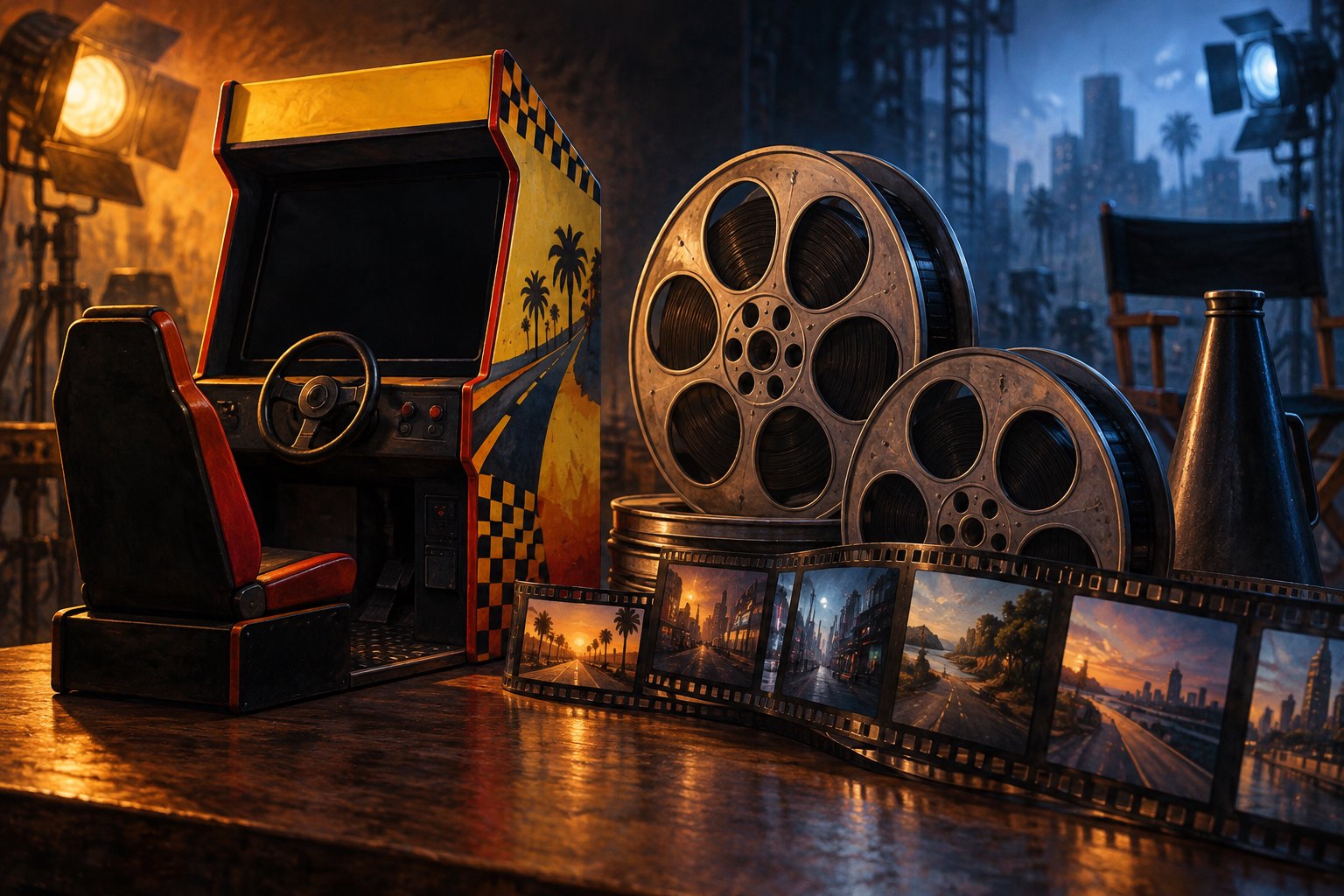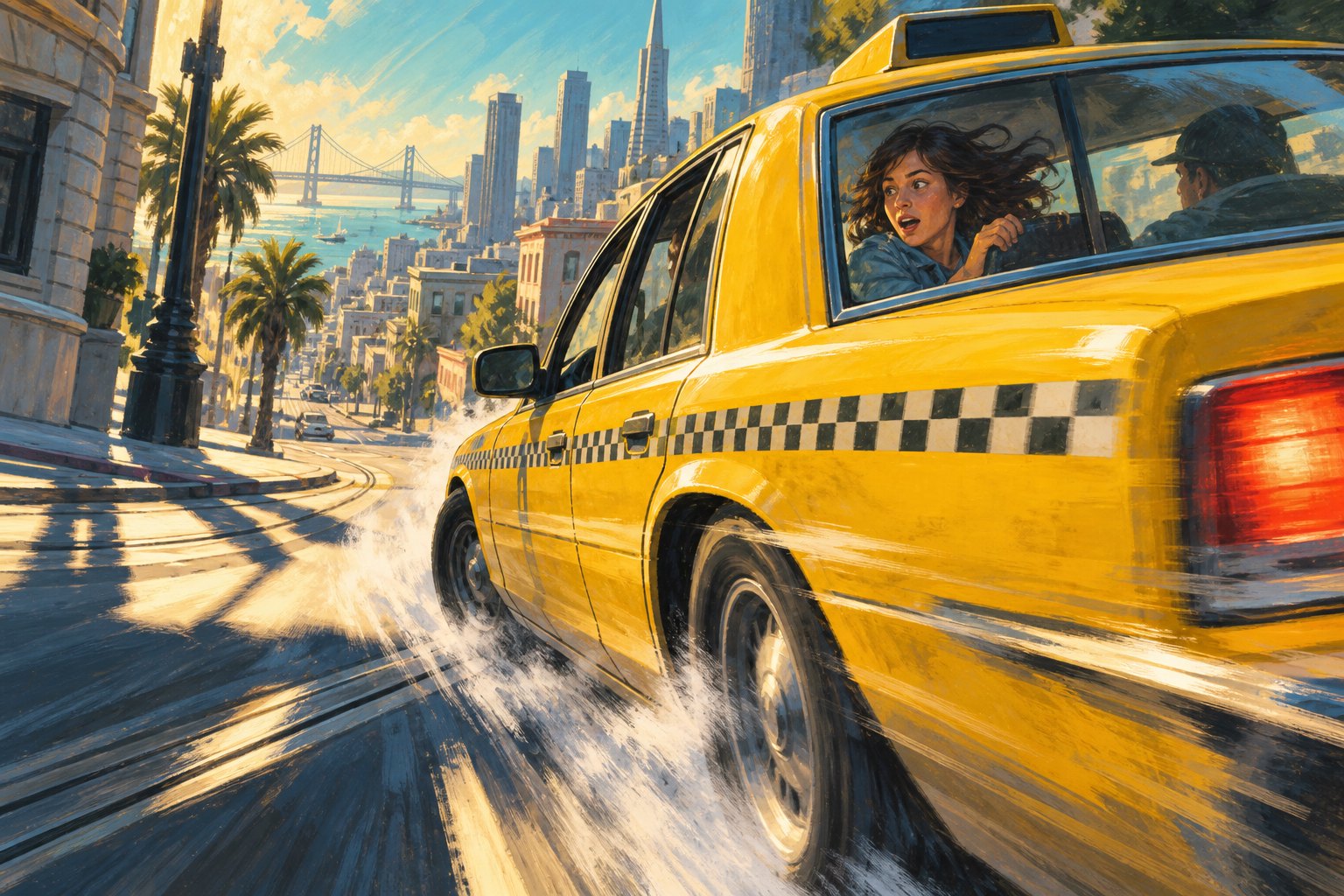
Netflix and SEGA have announced a film adaptation of Crazy Taxi as part of a new multi-title collaboration. The announcement invites an obvious visual expectation: a cab, a city, and movement pushed toward absurdity. But the most promising place to consider this adaptation may be the seat behind the driver. A passenger experiences every maneuver without controlling it, and that difference could give the movie a distinctive comic point of view.
This is spoiler-free adaptation commentary, not a review of a finished film. The discussion below concerns creative possibilities, not confirmed scenes or characters. It does not establish a release date, cast, director, plot, or production format. There is also no verified film dialogue to quote or basis for identifying Easter eggs.
What the Netflix and SEGA announcement establishes
The central news is straightforward: Crazy Taxi is the subject of an announced movie adaptation within a broader collaboration involving multiple titles. That establishes the project’s place in the partnership. It does not, by itself, tell us whose perspective will organize the story or what kind of experience the filmmakers intend to create.
Those are separate questions. Our discussion of Netflix’s film and television format choices for SEGA adaptations considers the larger structural picture. Here, the useful focus is smaller: what happens inside one vehicle when the person choosing the route and the person paying for the trip understand the ride differently?
That relationship offers a practical way to think about screen adaptation. A movie audience cannot steer. It watches somebody else make decisions, then reads the consequences through performance, framing, and editing. The passenger occupies a similarly dependent position. Giving that character a meaningful perspective could help the film turn movement into an experience viewers can interpret.
The passenger can change the meaning of a stunt
A spectacular maneuver carries limited emotional information on its own. Its meaning changes when the camera finds the person experiencing it. Delight makes the driver seem exhilarating. Irritation makes the same behavior seem exhausting. A passenger who barely looks up can puncture the driver’s self-image more effectively than a shouted complaint.
Consider a purely hypothetical editing choice: an exterior shot presents a turn as an enormous achievement, then an interior shot reveals someone quietly protecting a takeout container. The contrast supplies a joke because the two characters have different priorities. The driver measures success through the maneuver; the passenger measures it through an intact lunch. This is an illustration of comic technique, not a description of the announced film.
The strongest version of that approach would allow passengers to do more than react on command. Constant screaming becomes another sound effect. A specific response suggests a person with expectations, habits, and limits. Someone might admire technical skill while disliking the performance surrounding it. Someone else might enjoy the spectacle until it interferes with an ordinary obligation.
In my view, that variety would be more valuable than making every encounter louder. It gives the audience different ways to understand the driver and prevents the movie’s energy from settling into a single repeated joke.
A taxi interior is a compact stage for comedy
The inside of a cab offers useful restrictions. Driver and passenger face the same direction but rarely look directly at each other. Conversation passes between rows of seats. A mirror permits a brief exchange of glances. Someone can claim confidence while their hands reveal tension. These physical arrangements can make a relationship visible without requiring a speech about it.
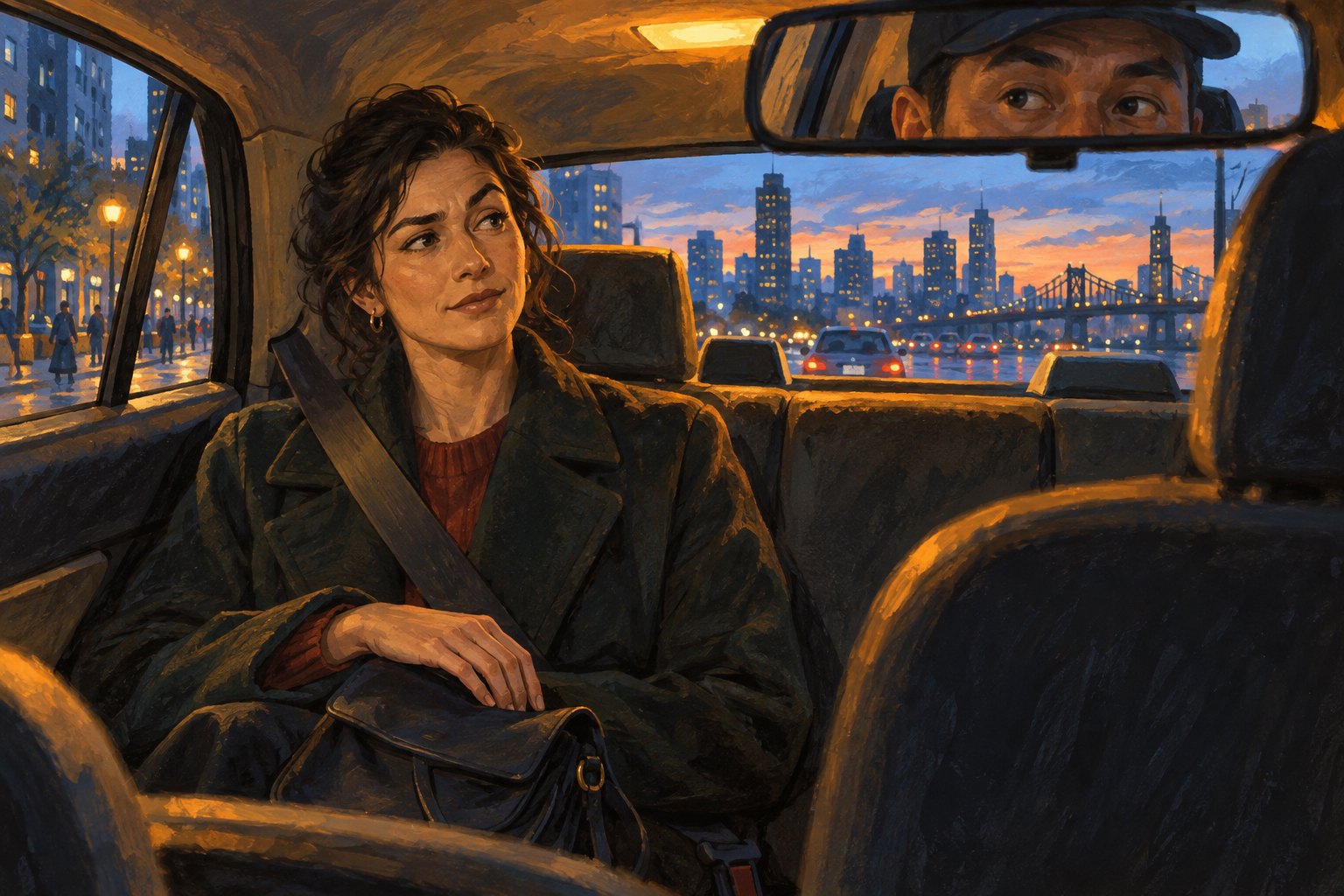
A rearview mirror is especially useful because it makes attention part of the scene. A driver checking a passenger’s expression may be looking for approval, assessing discomfort, or realizing a joke has failed. The same small action can convey different motives depending on timing and context. An adaptation could use that economy to develop character while keeping the vehicle moving.
Stillness would matter, too. A pause at a curb could allow the passenger’s expression to finish a joke that a rapid cut would interrupt. Returning to the same interior composition after a hectic sequence could expose a changed relationship: confidence has weakened, irritation has become curiosity, or both people are reassessing the other.
None of this requires the film to abandon visual extravagance. Clear, patient moments inside the car could give that extravagance a human scale. The audience would have something recognizable to return to between bursts of spectacle.
Give each side of the ride a different definition of success
Our earlier commentary on the emotional stakes of a Crazy Taxi movie addresses the broader need for investment. Passenger perspective makes that question concrete. What does a successful journey mean to each person sharing the vehicle?
For a driver, it could mean demonstrating competence or earning recognition. For a passenger, it could mean arriving composed, keeping a promise, or simply being listened to. These are possible dramatic objectives, not announced character details. Their value lies in how easily they can conflict without either person becoming a villain.
The resulting comedy could come from a mismatch between impressive service and useful service. A driver might solve a problem the passenger never had while missing the request that actually mattered. That offers room for both vanity and vulnerability: the person who wants applause may discover that another person wants consideration.
Passengers would need some agency for this relationship to develop. They could challenge an assumption, contribute knowledge, or alter a decision. Otherwise, the back seat becomes a place to store witnesses to the protagonist’s brilliance. An encounter becomes more interesting when the driver cannot predict what the other person will notice or value.
What would make the action readable?
From a critical standpoint, speed is most effective when viewers can understand the choice behind it. Geography matters because a shortcut, obstacle, or sudden change of direction needs a visible relationship to the intended destination. If every shot merely communicates motion, the audience loses the pleasure of anticipating a solution.
Passenger perspective could help preserve that clarity. A look through a side window can establish what is approaching. A reaction can identify the moment a seemingly confident plan becomes questionable. But those shots need precise placement. Cutting to a face before the audience understands the situation asks the actor to supply suspense that the staging has not earned.
The useful questions for eventual footage would therefore be specific: Can we follow the maneuver? Does the reaction reveal personality? Does the sequence change anything between the people in the car? These criteria provide a firmer basis for judgment than the number of vehicles, cuts, or references visible on screen.
The deeper possibility: sharing space without sharing control
A passenger-centered reading points toward an appealing theme for this adaptation: temporary trust between strangers. One person holds the steering wheel; another must communicate what matters while accepting that they cannot control every decision. That imbalance can support comedy without requiring the movie to become solemn.
The opportunity I find most interesting is a shift in what counts as expertise. Driving skill might attract attention, but understanding the person in the back seat could become its own measure of competence. The distinction would let a flamboyant character remain flamboyant while learning something specific about other people.
The announcement does not establish that Netflix and SEGA will pursue this direction. It makes the direction worth considering. A Crazy Taxi movie could deliver abundant motion, yet its most revealing moment might be a glance in a mirror: the instant a driver realizes that the passenger is having an entirely different ride.
Original content by this site's editorial team. Published: September 14, 2026 at 17:45:13 PDT (Los Angeles time)