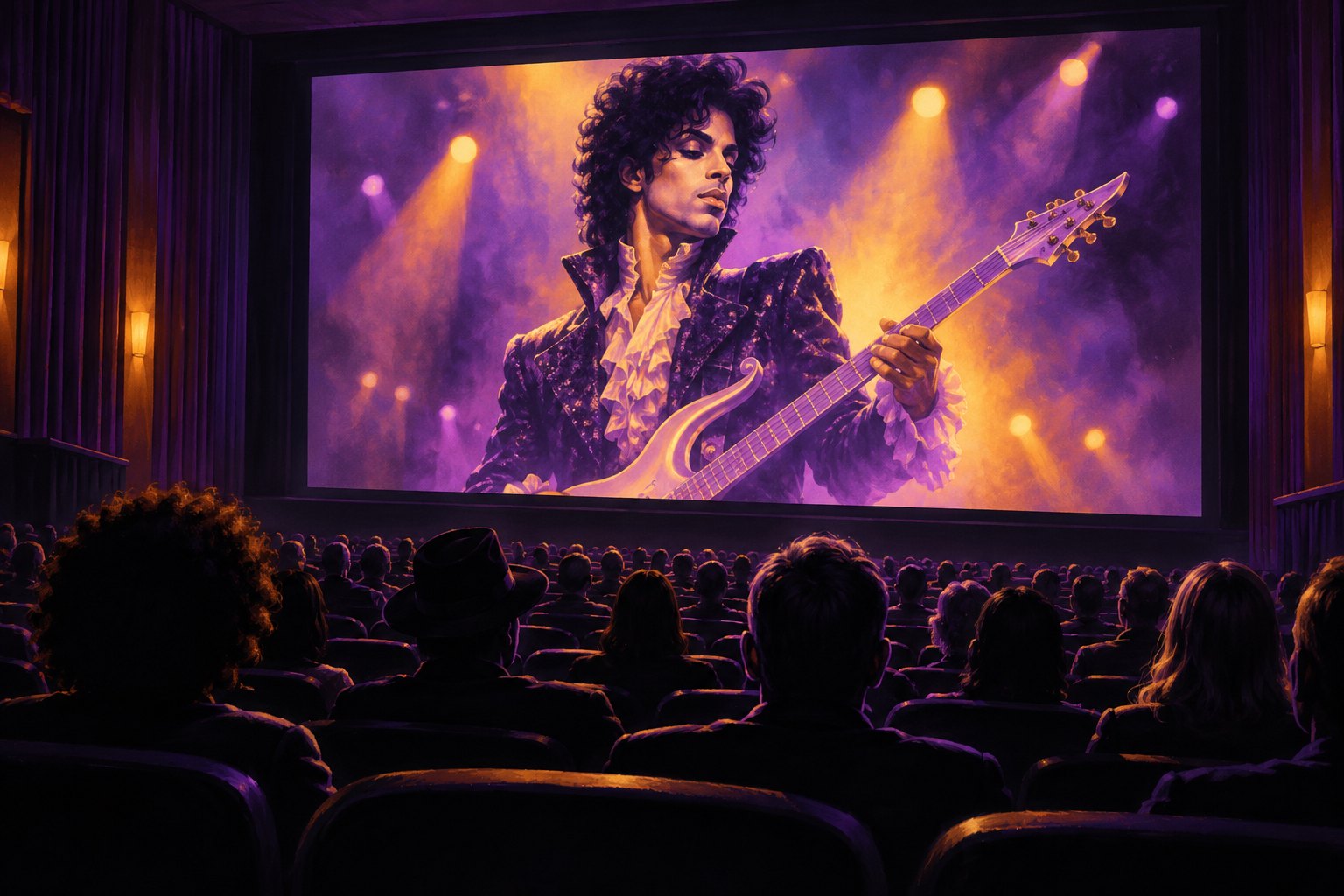
Prince is returning to movie theaters with a new concert film, alongside an expanded edition of 3121, according to Bring Me The News. For moviegoers, the pairing offers an appealing possibility: hearing the music in one setting, then watching how performance gives it another shape. The strongest reason to care is the chance to see musical decisions become visible.
This is a spoiler-free critical preview, not a review of a screened film. The reported news establishes the theatrical return and expanded edition. It does not, by itself, establish the film’s artistic success. A judgment about its performances, editing, or sound needs to come from the finished work; specific scenes, stage remarks, and musical surprises should not be guessed into existence.
What the concert film and expanded edition offer differently
An album and a concert film organize attention in different ways. Listening allows a voice, a rhythmic detail, or an instrumental phrase to become the center of the experience. A film adds bodies and space: where a performer stands, whom they watch, and how a musical exchange travels across a stage.
That distinction makes the 3121 pairing interesting even before questions of bonus material enter the conversation. An expanded edition invites renewed listening. A concert film potentially supplies another perspective on the work of making music happen in front of people. Neither format automatically explains the other, but each can sharpen the listener’s attention.
The useful question is what the theatrical experience contributes. Does the camera make an exchange between musicians legible? Does the sound preserve the relationship between voice and accompaniment? Does the film allow a performance to develop, or keep interrupting it with visual emphasis? Those are the standards that turn anticipation into meaningful film criticism.
Watching Prince as the central screen presence
A character-focused approach to a concert film needs care. Prince is a real performer, and a stage persona is not a fictional character whose private thoughts a reviewer can confidently narrate. What can be analyzed is the public performance: gesture, posture, timing, attention, and the relationship established with the room.
Consider how differently a camera can frame authority. A close-up can make a performer seem to command every second. A wider shot might reveal that the same moment depends on another musician’s response. Both images can be accurate, yet they tell different stories about where the energy originates.
For this film, a productive viewing approach will be to follow where Prince directs his attention. When a performer turns toward a bandmate, waits for a response, or leaves space in a phrase, the audience may be seeing collaboration take shape. Whether this particular film captures such moments remains something to assess on screen.
Reputation can make that close observation harder. Viewers may arrive ready to applaud a legacy before noticing a specific choice. Our commentary on Patrick Stewart and the expectations audiences bring to a major screen appearance considers a related tension: an artist’s history matters, but the work in front of us still deserves individual attention.
The band and audience belong in the picture
Concert cinema can narrow an ensemble into a single famous face. That may produce striking images, but it can also conceal how a performance works. A rhythm section, supporting voices, and other instrumentalists influence momentum even when the camera leaves them outside the frame.
My preference is for concert filmmaking that lets us understand those relationships. When an instrumental line changes the direction of a song, seeing its source can deepen the pleasure of hearing it. When musicians respond to one another, a sustained shot can communicate more than a rapid sequence of isolated faces.
The audience has a different role. Reaction shots can show a shared exchange, especially when a response changes the pace or feeling of a performance. Used mechanically, however, they can instruct viewers to feel excitement without revealing what caused it. The distinction is whether the crowd contributes to the sequence or merely punctuates it.
That makes editing central to any eventual review. The concert happened in one space; the film constructs our access to that space. Its choices determine whether we experience a group making music together or a collection of individually impressive images.
How listening to ‘3121’ could enrich the screening
For anyone planning to explore both releases, listening and watching can become complementary activities. Start by noticing a few elements in the music: the placement of a vocal phrase, the relationship between bass and percussion, or the point where an arrangement opens up. These observations give the ear something concrete to follow.
If the film includes material you recognize, pay attention to how the performance treats it. A change in emphasis can alter a song’s emotional effect without changing its words. A pause can create anticipation; an extended passage can move attention from the composition toward the musicians’ interaction. These are possibilities to listen for, not claims about this film’s contents.
Newcomers do not need to treat the expanded edition as homework. A concert film should establish its own rhythm and give unfamiliar viewers a way into the performance. Recognition can add pleasure, but the screen experience should also reward curiosity.
What would make the theatrical return worthwhile?
A large screen makes small physical choices easier to notice. It can also expose unfocused cutting or images that provide little new information. Similarly, powerful playback is valuable when it brings out musical relationships; sheer loudness cannot substitute for clarity.
Three questions will be useful when judging the finished film:
- Does the editing preserve musical development? A passage needs enough continuity for its tension and release to register.
- Can the listener distinguish the performers’ contributions? The sound should support attention to the ensemble as well as its central figure.
- Does the camera reveal something worth seeing? Framing should add expression, interaction, or spatial understanding to the music.
There is a related issue in our discussion of the Difficult People reunion and what live performance reveals: delivery and timing can make familiar creative material feel newly available. A recorded concert faces the additional challenge of preserving that immediacy through the camera.
The deeper promise: seeing the work inside the presence
The most compelling possibility here is that the film could make a celebrated performer more observable. Screen presence is often discussed as an unexplained gift. Concert cinema can reveal some of its practical ingredients: attention, restraint, responsiveness, and the ability to shape an audience’s expectations over time.
That is the standard I would bring to Prince’s theatrical return. The expanded 3121 offers a reason to listen again; the film offers a reason to look closely. If those experiences illuminate each other, the lasting reward will be a more precise appreciation of the performance—one grounded in what we can actually hear and see.
Original content by this site's editorial team. Published: October 29, 2026 at 17:55:23 PDT (Los Angeles time)