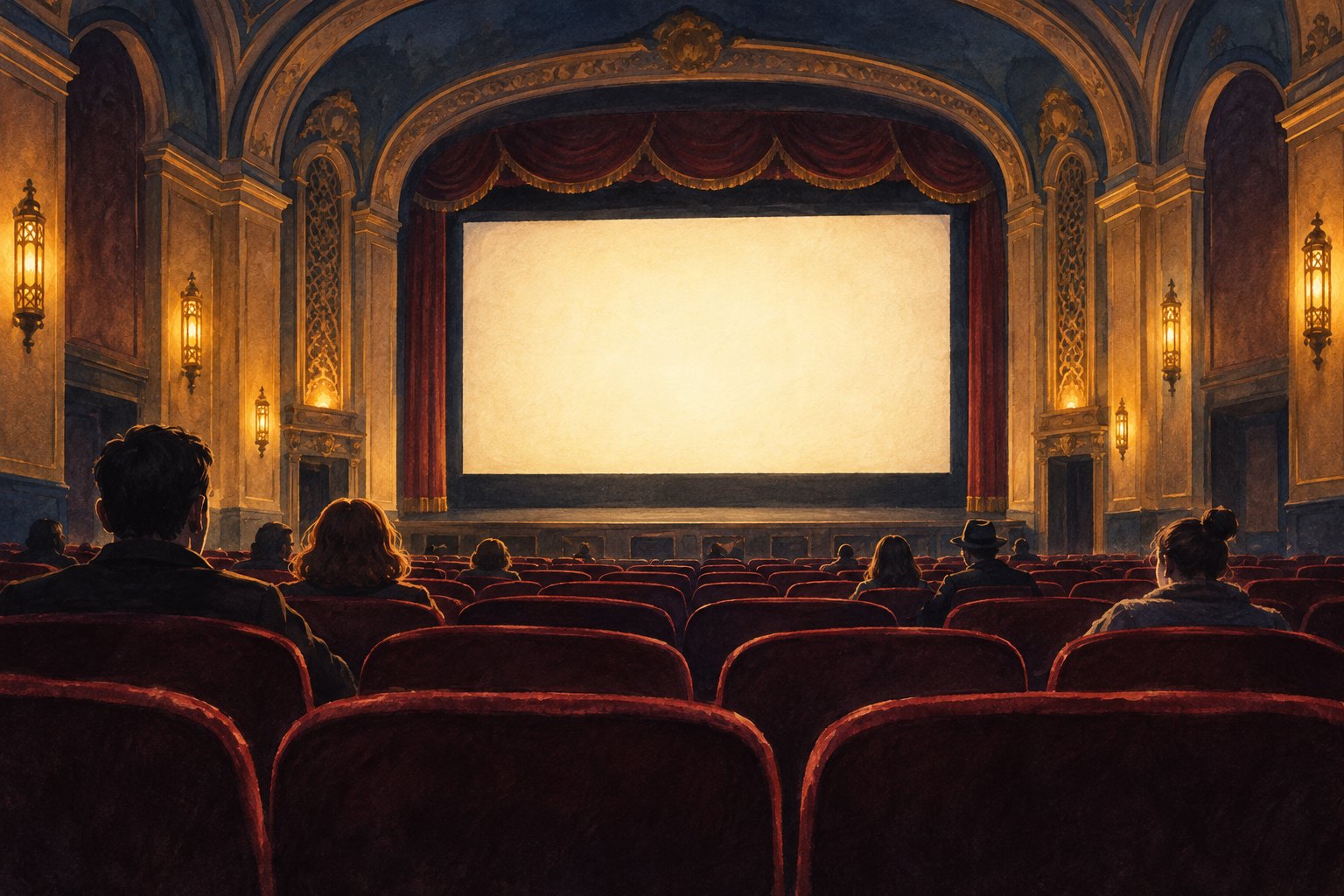
Milwaukee’s Oriental Theatre is heading into the Turner Classic Movies spotlight. According to WPR’s September 22 report, the cinema will be featured in Still Now Showing, a series about historic movie theaters. For viewers wondering which Milwaukee venue is getting the attention, the Oriental is the answer. For movie lovers, the more interesting question is what that attention might help us see.
A theater can become so familiar that its role disappears behind whatever title is on the screen. We remember the performance, the ending, the argument afterward. Less often do we consider the place that brought those experiences together. My view is that the Oriental’s upcoming showcase offers an opportunity to examine that relationship: how a building becomes part of a city’s film culture through repeated, ordinary use.
What is known about the TCM feature
WPR identifies Milwaukee Film as the theater’s operator and reports that a TCM crew was scheduled to visit on Wednesday and Thursday that week. The story describes Still Now Showing as a series showcasing historic cinemas. It does not provide a premiere date for the Oriental installment.
That distinction matters if you are looking for something to watch tonight. A reported production visit is not a broadcast announcement. There is no confirmed airtime in that report to put on a calendar, and the finished feature’s interviews, structure, and editorial emphasis cannot yet be assessed here.
This is commentary on the announcement, rather than a review of the completed program. There is no fictional plot to summarize or character dialogue to quote. The critical interest lies in the choice of subject and in the possibilities of telling a theater’s story through the people who use it.
Why a movie theater deserves the close-up
Film criticism usually begins with what appears within the frame. Yet viewing conditions can influence which parts of a film reach us most strongly. A face held in close-up asks for a different kind of attention when it occupies a large screen. A quiet exchange can feel unusually exposed when an audience settles into silence around it.
Those effects do not guarantee a better interpretation. A crowd can distract, and solitary viewing can be intensely attentive. But a shared screening creates a particular encounter with a movie: everyone has committed to roughly the same stretch of time, and each person’s response exists alongside responses they cannot control.
That is why I find a working cinema a compelling documentary subject. Its significance extends beyond attractive interiors. The room establishes the conditions under which strangers experience something together, then leave with different accounts of what happened. A useful portrait would make that process visible.
The Oriental announcement also turns attention toward the receiving end of cinema. Industry coverage follows projects through casting, production, festivals, and release. The theater is where those journeys meet an audience. Our discussion of what an opening-night festival selection means considers how presentation shapes expectations; a venue portrait can explore what happens once those expectations enter the room.
The people who could give the story depth
A theater documentary has an obvious visual temptation: let the camera drift across decorative details while affectionate voices explain that the place is special. That can be pleasurable television. It can also leave the central claim untested. Beautiful surroundings explain why someone might look inside; they do not fully explain why someone returns.
I would be more interested in a portrait organized around specific perspectives. What does a regular patron notice that a first-time visitor misses? What makes a newcomer feel welcome? How does someone responsible for a screening define a successful evening? These are questions for the feature, not descriptions of interviews known to be included.
The answers need not agree. One viewer may value the familiarity of returning to the same seat. Another may want the surprise of a film they would never have chosen at home. Someone else may care most about having a place to bring a friend. Together, such perspectives could show how a theater serves different needs without reducing its audience to a single sentimental voice.
Specific memories would be especially valuable. A recollection of an unexpected laugh or a difficult conversation after a screening can reveal more than a general declaration of love for movies. The detail gives another person something to recognize, question, or compare with their own experience.
How an audience changes a character’s story
The connection to character analysis is practical. Imagine watching a scene in which a protagonist offers an apology. Some viewers may hear sincerity; others may hear another attempt to avoid responsibility. A nervous laugh elsewhere in the auditorium can alert you to an ambiguity you had overlooked. The performance remains the same, but your attention shifts.
This is a hypothetical example, not a scene attributed to the TCM program. It illustrates one reason theaters matter to criticism: they expose the distance between a filmmaker’s choices and the range of responses those choices produce. Watching together makes that distance audible.
There is a limit, of course. An audience reaction is evidence of a reaction, not proof that a reading is correct. The loudest laugh cannot settle whether a character is sympathetic. As our analysis of divided early responses to Digger argues, disagreement becomes useful when we examine the judgments behind it.
A cinema gives that disagreement somewhere to continue. The conversation in the lobby can send a viewer back to a gesture, a pause, or a decision they initially dismissed. In that sense, the screening does not necessarily end when the credits finish.
Preservation should include the experience of visiting
For me, the strongest case for celebrating a historic theater concerns its present use as much as its age. Architectural survival is meaningful, but a functioning cinema also depends on decisions that visitors experience directly: the clarity of the presentation, the comfort of the room, the welcome at the entrance, and the films available to see.
A thoughtful showcase could connect those everyday concerns to the larger idea of preservation. What should remain familiar? What needs to change so that people can keep attending? Those questions allow affection and scrutiny to coexist. They also keep a venue’s story open to people who have no childhood memories of it.
National exposure may encourage curiosity about the Oriental, but an announcement alone cannot establish future attendance or lasting benefits. The useful next step for an interested viewer is straightforward: wait for a confirmed program listing, and check current screening and visitor information before planning an in-person trip.
What would make this spotlight memorable
When the Oriental feature becomes available, I will be looking for the relationship between the space and its users. Does the filmmaking give us time to understand how people move through it? Do individual voices offer concrete experiences? Does the theater emerge as a place with an active present, as well as a past worth remembering?
The deeper promise of this story is that film history continues through acts of attention. Someone chooses a screening, takes a seat, and encounters a movie they may carry for years. Milwaukee’s Oriental Theatre is now getting attention of its own. A revealing TCM portrait could show why the place where that encounter happens belongs in the story, too.
Original content by this site's editorial team. Published: September 23, 2026 at 21:55:39 PDT (Los Angeles time)