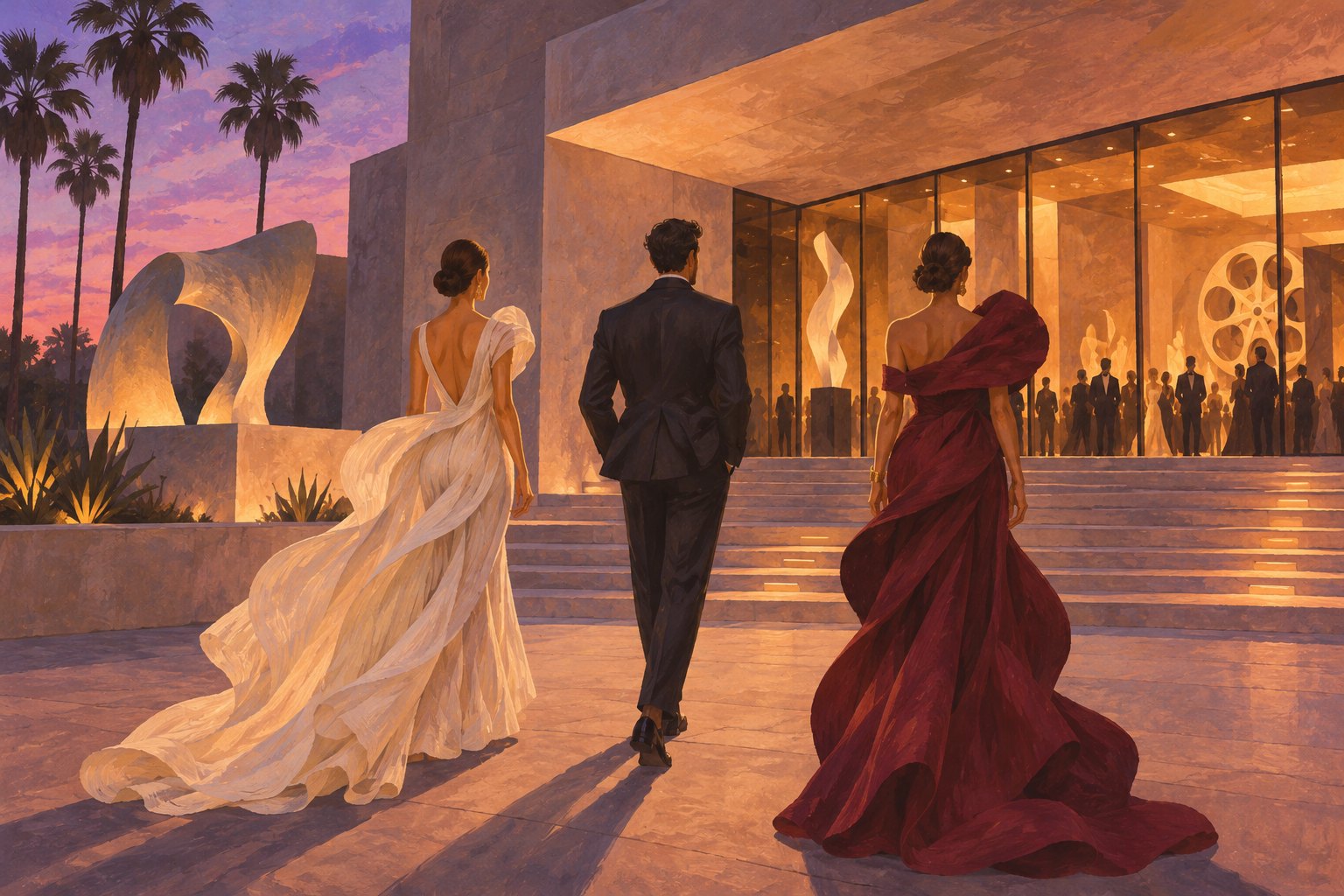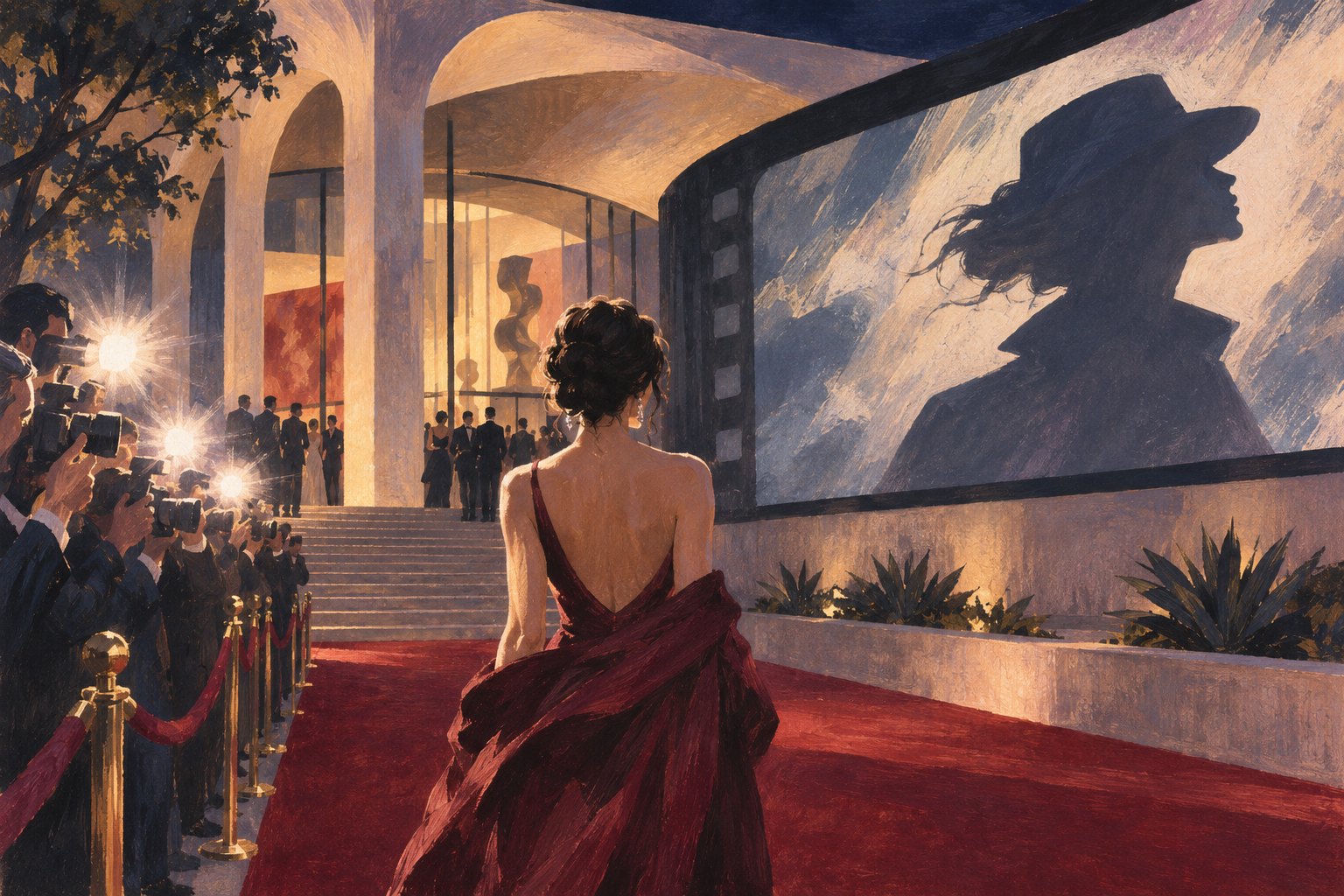
The 2026 LACMA Art+Film Gala red carpet is the subject of a Page Six celebrity photo roundup. For movie fans drawn to the arrivals, the appeal begins with recognition: a face associated with a favorite performance appears outside the fictional world that made it familiar. This article considers that encounter rather than presenting an independently verified guest list or identifying individual outfits.
There is something revealing about the switch. On screen, we watch a person pursue a goal, hide a feeling, or make a damaging choice. On a red carpet, we see a public appearance whose surrounding circumstances may remain largely outside the frame. Both experiences invite interpretation, but they give us very different evidence.
My interest in this year's LACMA coverage lies in that gap. Beyond the pleasure of seeing familiar stars, it offers an opportunity to consider what we bring to an actor's face—and what a photograph can actually tell us.
The familiar face arrives with a fictional history
Recognizing an actor rarely feels neutral. A performer who moved us in a film may seem approachable before we know anything about them. Someone convincing as a calculating antagonist may carry a trace of that menace into an otherwise ordinary photograph. Those impressions belong to our viewing experience; they are not reliable descriptions of the person.
This is one of acting's more interesting aftereffects. A successful performance can make an invented life feel so complete that its emotional associations outlast the movie. The face becomes a shortcut to memories of fear, affection, frustration, or relief.
The LACMA red-carpet context invites us to notice that shortcut. If a gala image feels unexpectedly cheerful, reserved, or glamorous, the surprise may reveal how thoroughly we had associated its subject with a character. It does not necessarily reveal a transformation in the actor.
That distinction also changes the way we discuss range. Looking unlike a famous role is not, by itself, proof of versatility. Range becomes visible through the work: different rhythms of speech, different responses to pressure, different ways of listening and occupying a scene.
A public appearance is not an extra scene from a movie
Movie characters exist within structures that help us interpret them. We know what happened before an exchange. We hear the question that precedes a pause. Editing may reveal the consequence of a glance several scenes later. Even ambiguity has a surrounding dramatic context.
A gala photograph generally offers much less. A turned head could reflect a photographer's request, an approaching acquaintance, or something entirely outside the picture. Without corroborating context, assigning a motive turns a visible gesture into an invented story.
For that reason, descriptions such as confident or uneasy work best as accounts of an image's effect, not declarations about someone's inner state. A photograph can create an impression of distance. It cannot establish that its subject felt alienated.
This is especially relevant when viewers encounter people together. Sharing a frame does not establish a friendship, a feud, a romance, or a future collaboration. The excitement of recognizing two performers should not become a casting announcement that nobody has made.
How the photograph shapes the story
The person in a red-carpet image is only one part of its meaning. Framing determines what surrounds them. A close crop can create intimacy; a wider view can reveal a crowded, highly organized photographic setting. Neither view necessarily tells the whole story.
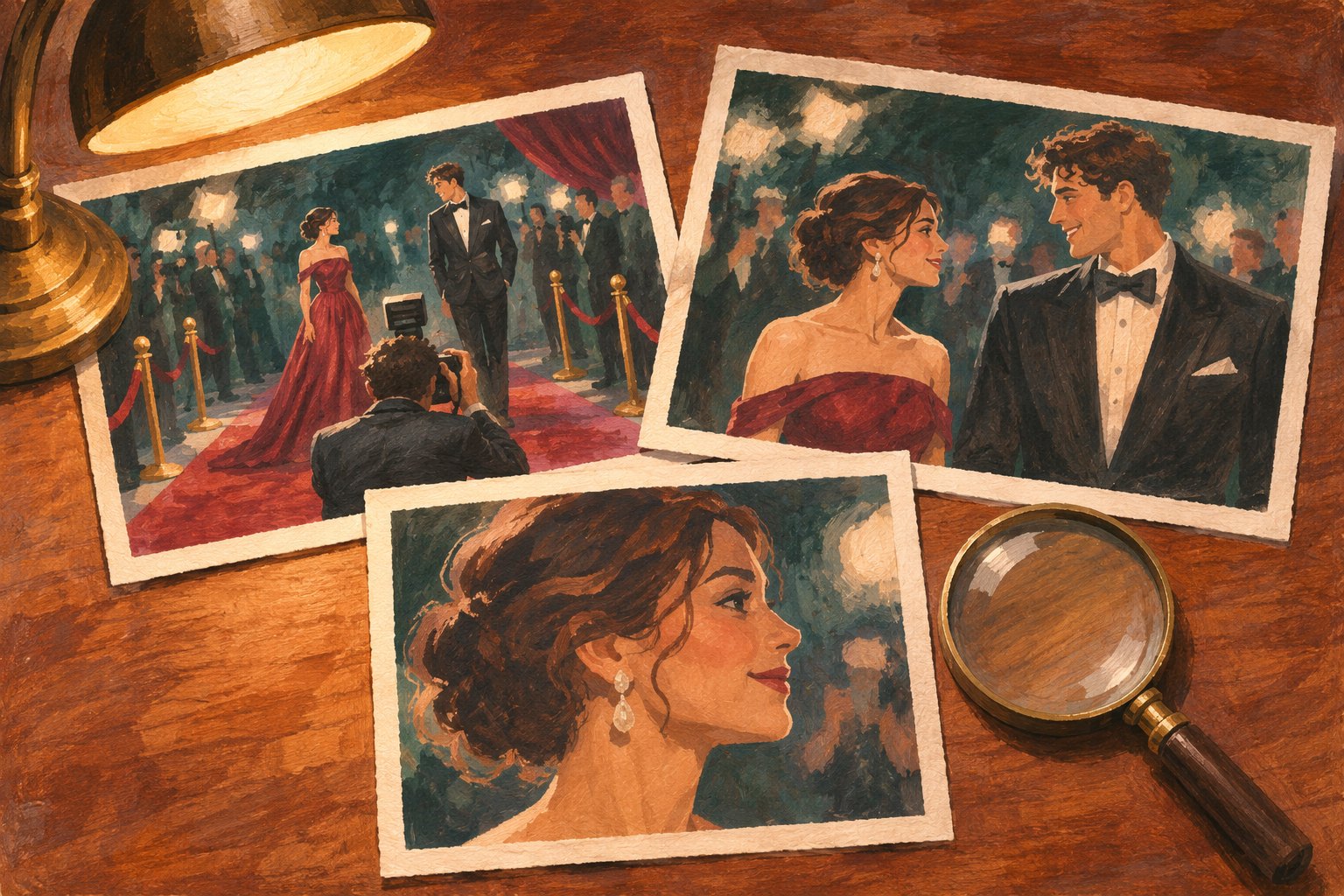
The illustration above is conceptual, not documentation of the gala. Its different views demonstrate why visual context matters: a face, a shared pose, and a wider gathering prompt different interpretations even when they seem to belong to one occasion.
Sequence matters, too. Moving from a solo portrait to a paired image encourages the viewer to connect them. That connection may be no more than an editorial arrangement. Film audiences are practiced at finding continuity between images, which makes a celebrity gallery surprisingly fertile ground for assumptions.
A useful viewing habit is to separate three things: what is visible, what a reliable caption establishes, and what you infer. A person looking toward another person belongs to the first category. Their identities belong to the second when confirmed. A theory about their relationship belongs to the third.
Keep fashion criticism and acting criticism distinct
There is plenty to enjoy in the visual design of a gala appearance. Our companion piece on what makes a LACMA red-carpet look memorable explores that subject through silhouette, texture, movement, and styling.
But the judgments involved differ from those we make about a performance. An arrival photograph rewards immediate visual clarity. Acting can depend on hesitation, inconsistency, or a response so small that its significance only becomes apparent later. Someone who dominates a still image is not automatically the most compelling performer in an ensemble.
The reverse is equally important. A restrained public appearance tells us nothing decisive about an actor's imaginative reach. Publicity presence and dramatic skill can overlap, but neither is a dependable substitute for the other.
My preference is to let each form succeed on its own terms. Enjoy a striking photograph for its composition and presence. Evaluate acting through the decisions that make a character's experience specific.
Turn recognition into a better viewing question
The most useful next step after recognizing a performer is to become more precise about the work you remember. Instead of stopping at the idea that someone was great, ask what they actually did to make a scene persuasive.
- Watch the listening. Notice whether the character's attention changes when another person speaks.
- Identify the immediate goal. Ask what the character wants from this particular exchange, rather than summarizing their entire personality.
- Follow a change in behavior. Look for the moment when persuasion becomes defensiveness, or confidence gives way to uncertainty.
- Consider the filmmaking. Distinguish the actor's contribution from the effects of framing, music, and editing.
These questions keep a familiar face from becoming a fixed expectation. They also connect with our discussion of leaving room to be surprised by a movie: recognition can invite attention without deciding the response in advance.
What the LACMA red carpet leaves unresolved
The deeper attraction of the 2026 LACMA Art+Film Gala coverage is the temporary overlap between screen memory and public visibility. We recognize people partly through lives they have only pretended to live. An appearance outside those roles reminds us that the attachment is both powerful and incomplete.
That incompleteness is worth preserving. A gallery need not solve a personality, predict a career, or confirm a relationship to be enjoyable. For a movie lover, its best outcome may be a renewed desire to watch closely: to return to the work and discover how a familiar person makes an unfamiliar character feel real.
Original content by this site's editorial team. Published: November 7, 2026 at 20:39:40 PST (Los Angeles time)