Professional skiers Maggie Voisin and Parkin Costain are set to host the Stumptown Film Festival, according to the Flathead Beacon, which describes the event as inaugural. For moviegoers, the announcement raises an appealing question: what happens when people who understand skiing from inside the sport help bring its screen stories to an audience?
The potential extends beyond impressive descents. A ski film can make speed exhilarating, but it can also reveal how someone thinks: where they look, when they hesitate, whom they trust, and what they decide is worth attempting. Those are cinematic questions as much as athletic ones.
This is a festival commentary and viewing guide, not a review of screened films. The hosting announcement provides a reason to examine that promise; it does not establish a particular film’s narrative, dialogue, or artistic success.
What athlete hosts can bring to the moviegoing experience
Voisin and Costain’s involvement creates an opportunity to connect two kinds of attention. An experienced skier may notice a subtle adjustment that a casual viewer misses. A moviegoer may respond to the framing, rhythm, or emotional tension without knowing the technical name of a maneuver. A rewarding festival can give both viewers something to discover.
Professional experience could help make the labor behind an image more legible. A descent that occupies seconds on screen may invite questions about preparation, collaboration, and the decision to begin. Whether the festival actually explores those questions remains to be seen, but the hosts’ relationship to the sport makes them especially relevant.
That is also why celebrity recognition should be only the beginning of the event’s appeal. The more interesting possibility is an exchange between athletic knowledge and cinematic curiosity. Viewers should leave able to describe something they noticed, not merely someone they recognized.
Character begins with a decision
In narrative filmmaking, character emerges through choices. The same principle offers a useful way into nonfiction sports cinema, provided viewers remember that the people on screen are real and that editing presents only part of their experience.
Watch for how a film establishes an athlete’s intention. Is there a clearly expressed objective? Does the surrounding footage explain why it matters? Can the audience distinguish personal ambition from a goal assigned by narration? Without that foundation, even an extraordinary performance can feel emotionally remote.
Small moments can carry substantial meaning. A filmmaker might preserve a conversation, an uncertain pause, or a change of plan. Such details can establish relationships and priorities more effectively than a string of admiring descriptions. These are possibilities to watch for, not claims about scenes in Stumptown’s program.
Equally, a pause does not automatically prove fear, and a determined expression does not explain someone’s inner life. Good criticism should identify what the image shows before assigning it a psychological meaning. Athlete perspective matters most when the film makes room for the athlete’s own account.
The camera should help us understand the mountain
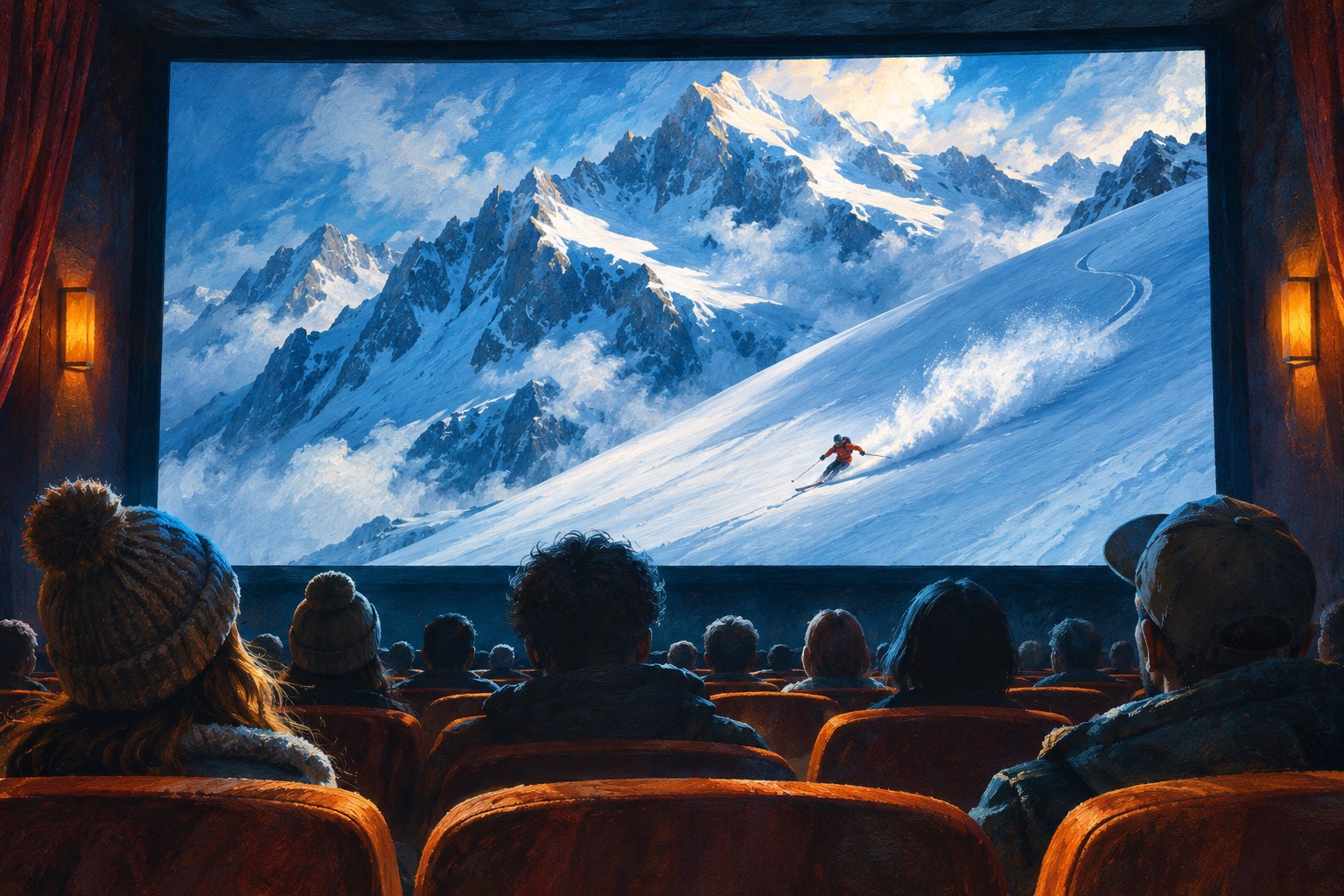
One of the clearest tests of an action sequence is whether its geography makes sense. Before a descent begins, can you understand the skier’s position and intended route? During the movement, can you follow the relationship between the body and the terrain?
A wide shot can establish scale and distance. A closer view can reveal physical effort. A moving camera can produce an immediate sensation of speed. None of these approaches is inherently superior; their value depends on how they work together.
My preference is for action filmmaking that gives the viewer enough spatial information to appreciate a choice. If every cut introduces a new angle without preserving orientation, intensity may increase while understanding decreases. A longer shot can sometimes be more exciting because it allows movement to develop continuously.
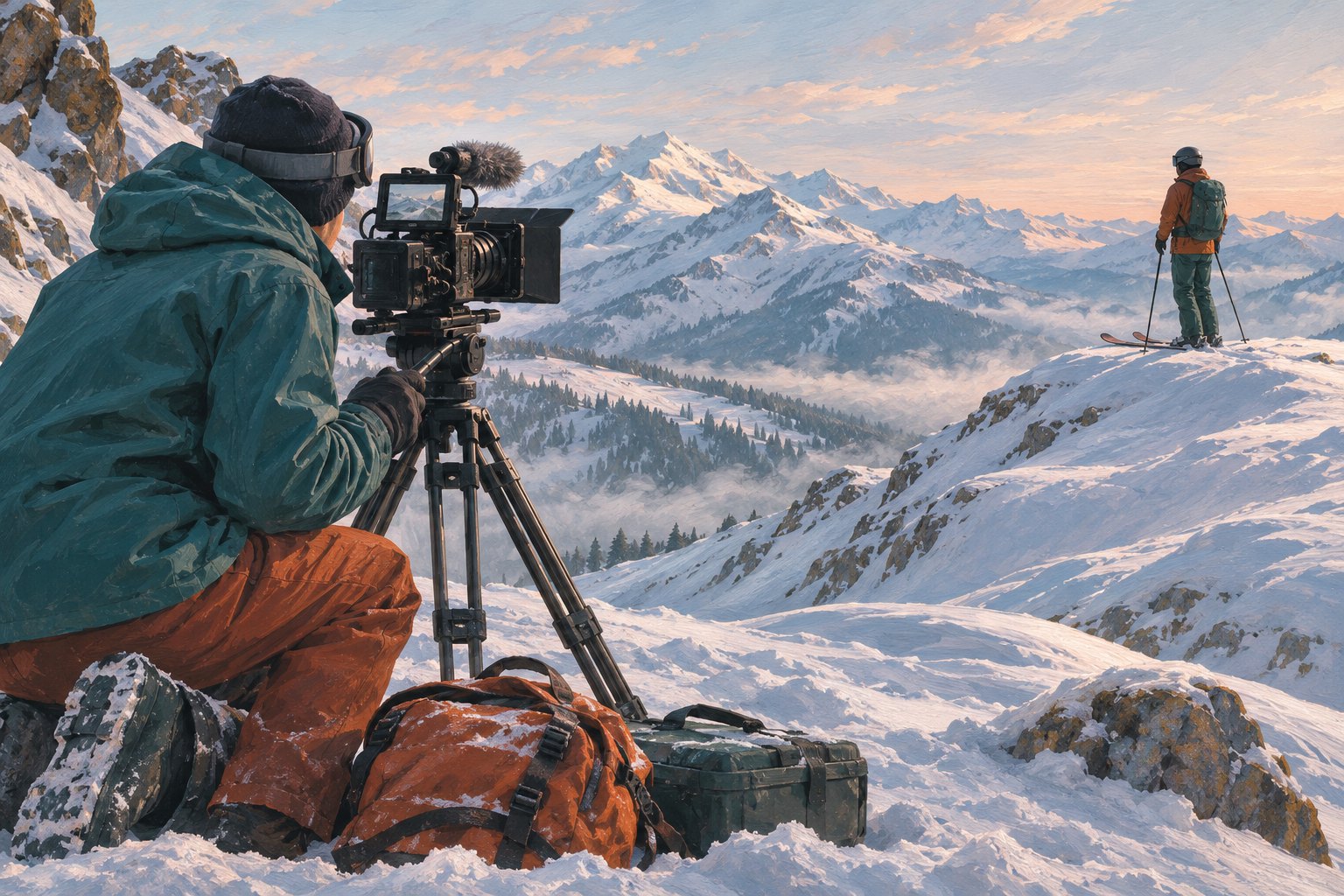
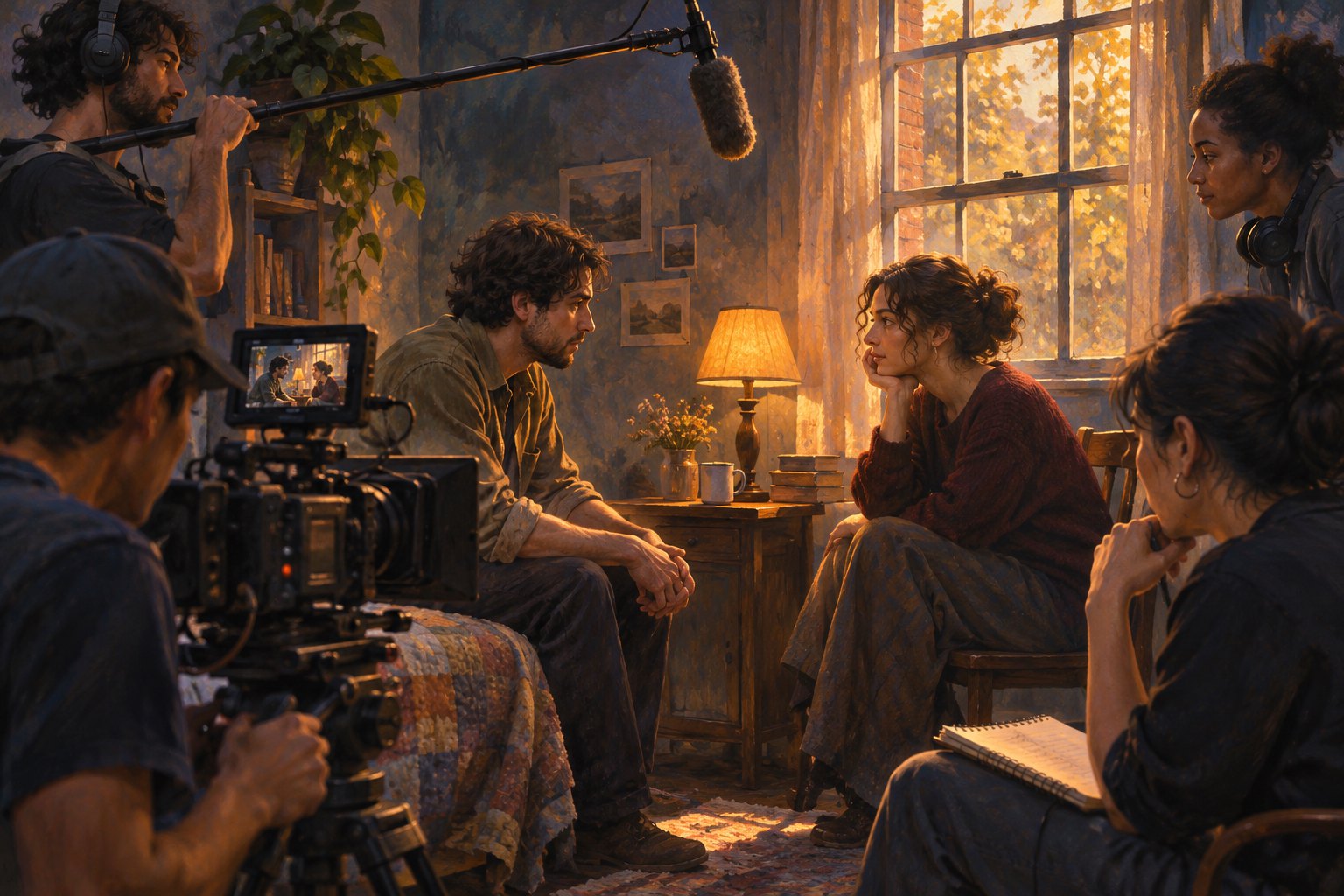
The image also has another author: the person behind the camera. Thinking about where that person stands, what the lens includes, and what remains outside the frame can deepen appreciation of the filmmaking. The mountain becomes a shared working environment, even when the finished shot isolates a single skier.
Listen for what the soundtrack makes you feel
Music can supply momentum before a viewer has understood the stakes. That can be pleasurable; a ski sequence does not need to defend every burst of energy with exposition. Still, it is useful to notice whether a film’s emotional force survives beyond its soundtrack.
Consider how the balance changes when music recedes. Breath, wind, equipment, and the sound of movement can bring attention back to a body occupying a physical space. Silence can create anticipation. A sudden musical entrance can transform an otherwise restrained image into a declaration of triumph.
These choices shape interpretation. The question is whether sound develops a feeling already present in the scene or supplies a feeling the surrounding material has not earned. That distinction is especially helpful when several films share the same vocabulary of sweeping landscapes and dramatic action.
A festival program needs room for different experiences
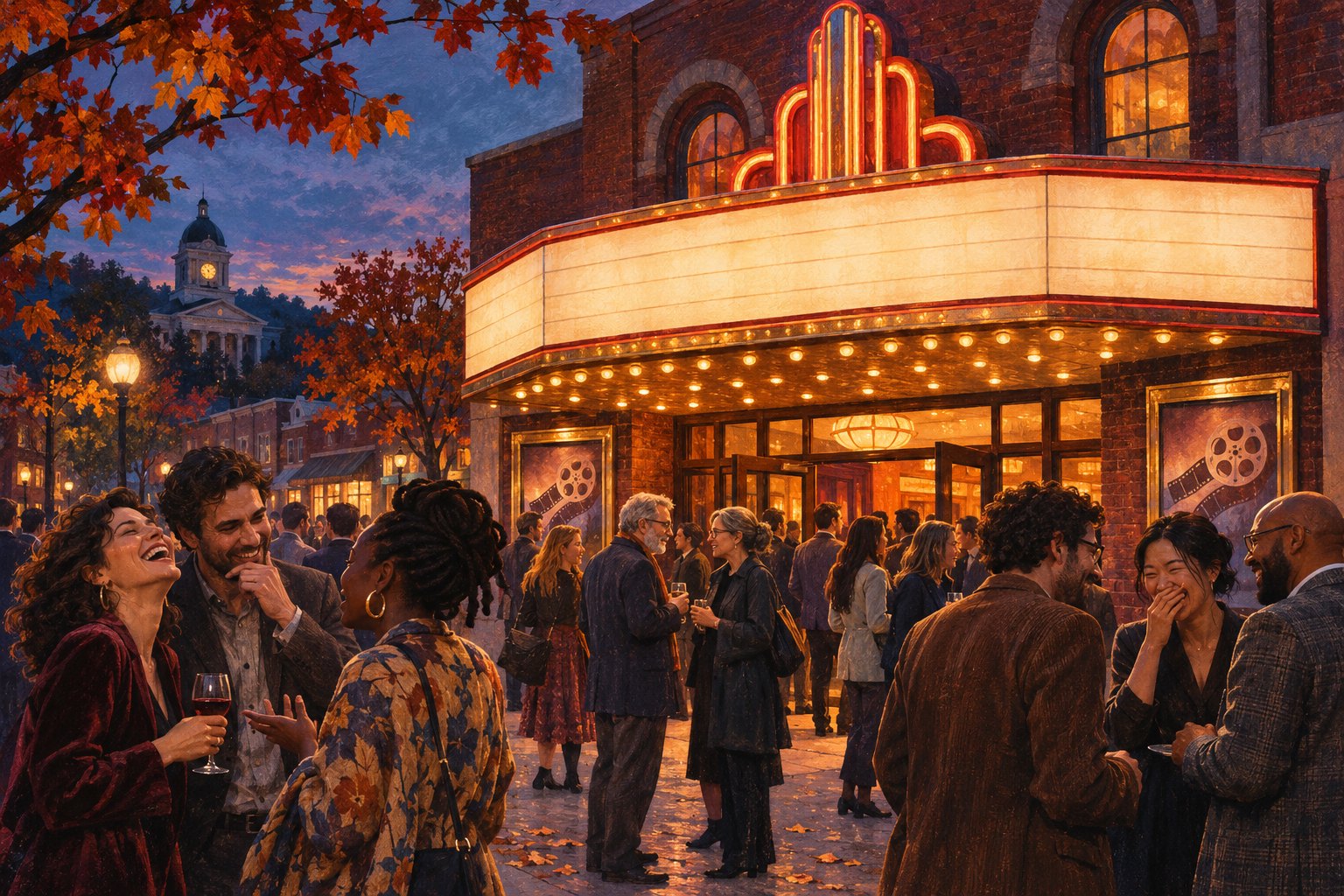
For Stumptown, one interesting artistic question is how individual films might speak to one another. A festival acquires an identity through selection and sequence: what introduces the evening, what changes its pace, and what remains in the audience’s mind afterward.
A quiet portrait could make a subsequent action sequence feel different. A film attentive to companionship could complicate an earlier image of individual achievement. These are programming possibilities, not a description of an announced lineup.
Our commentary on Ray McKinnon, Danny McBride, and festival storytelling approaches another event through the questions its associated work invites. Voisin and Costain’s festival invites its own inquiry: which aspects of skiing become visible when athletic performance is presented as cinema?
Four questions to take into a screening
A useful response does not require technical expertise. Start with what the film makes understandable and what it leaves unresolved:
- Whose perspective guides the experience? Notice who speaks, who receives sustained attention, and whose contribution stays at the edge of the frame.
- What makes the central objective matter? Look for specific motivations rather than assuming every descent carries the same significance.
- Can you follow the action? Consider whether camera placement and editing clarify the terrain and movement.
- What changes by the ending? The change might involve a relationship, an understanding, or simply the way you see an earlier image.
The importance of watching relationships closely also runs through our analysis of companionship in Pyre. The subject is very different, but the critical habit transfers: attend to how people respond to one another before reducing their experience to a message.
The deeper promise: making expertise visible
The most compelling prospect for Maggie Voisin and Parkin Costain’s Stumptown Film Festival is that it could expand what audiences recognize as worthy of attention. Skiing on screen need not reserve all its interest for the largest movement. Judgment, patience, collaboration, and pleasure can also become the substance of a film.
My standard would be whether the experience gives viewers a fuller understanding of the people within those spectacular landscapes. A memorable descent can provide the immediate thrill. A memorable film can change how we watch the next one—making us attentive to the decision before the movement, the relationships around the athlete, and the work that allows an image to exist.
Original content by this site's editorial team. Published: November 6, 2026 at 22:02:41 PST (Los Angeles time)