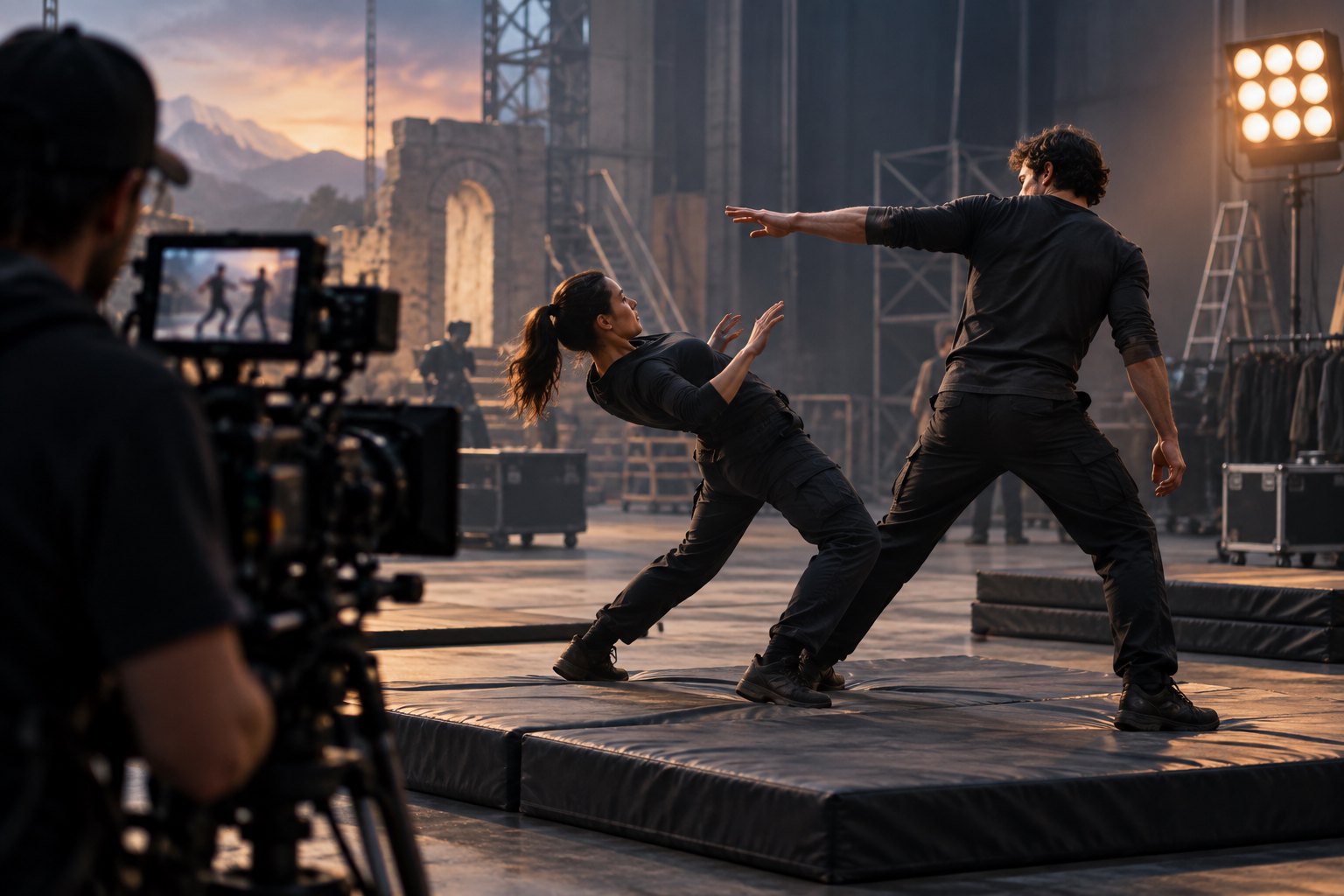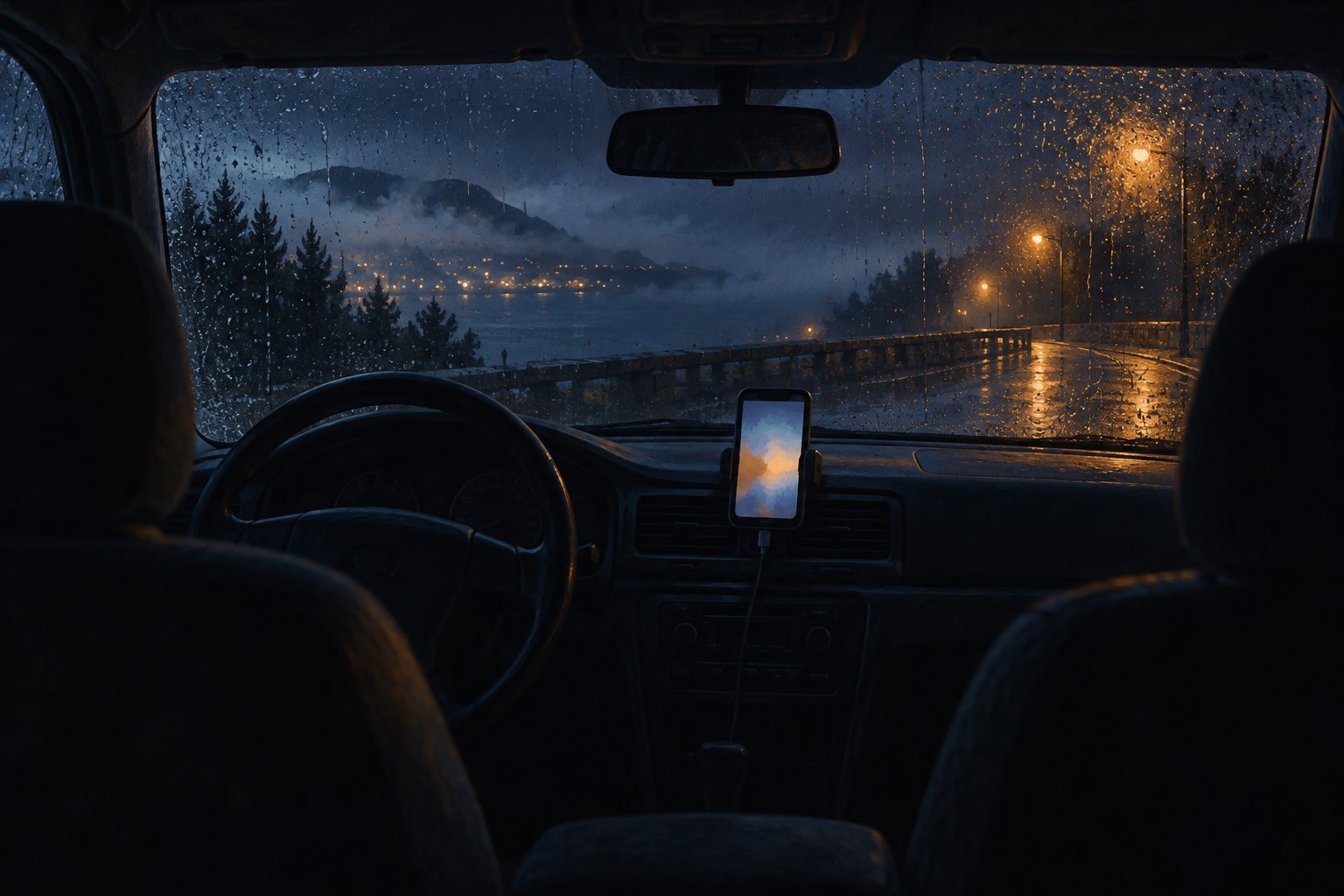
John Torres’s The Remotes places a disturbing possibility inside a familiar experience: when someone tells us where to go, relief can arrive before suspicion. Its grieving detective investigates road deaths connected to a voice-guided app, making the promise of direction both a practical convenience and an emotional temptation. Torres’s conversation with Joshua Minsoo Kim in Film Show 071: John Torres offers a useful way into that tension: the wish to be guided can grow stronger when making decisions becomes exhausting.
Spoiler note: This critical companion discusses the premise, character relationships, and selected formal details documented in festival materials, published criticism, and Torres’s interview. It does not reveal the mystery’s resolution or offer a firsthand screening verdict.
Mijares: A detective whose loss complicates his authority
Alchris Galura plays Detective Mijares, a widower investigating unusual traffic accidents. ScreenAnarchy’s account places him on the verge of emigrating when the assignment interrupts his departure. The investigation leads toward a driver-retraining program and two sisters, Eva and Gill, played by Julia Richards and Gabby Padilla.
That starting point gives Mijares two competing relationships with uncertainty. Professionally, he must reduce it: establish connections, identify responsibility, and distinguish coincidence from evidence. Personally, he inhabits a loss that no successful investigation can undo. Solving a case and finding a way to live are different tasks, even when the same person desperately needs both.
My reading of that conflict is that his grief makes the detective framework especially productive. A conventional investigator offers viewers a dependable method for understanding an unfamiliar world. Mijares brings a reason to doubt whether understanding will be enough. The person following clues also wants distance from the place where his life changed.
This does not make mourning a character flaw. It makes certainty emotionally expensive. A voice that appears to know the next step may offer something evidence cannot: temporary freedom from having to choose.
Eva and Gill: Hearing a person inside a system
ScreenAnarchy identifies Eva as the app’s voice and describes a recording sequence in which her delivery becomes part of its unsettling appeal. The sisters are involved in the retraining program and are also experiencing loss. Their connection to the mechanism under investigation therefore sits alongside an emotional condition they share with Mijares.
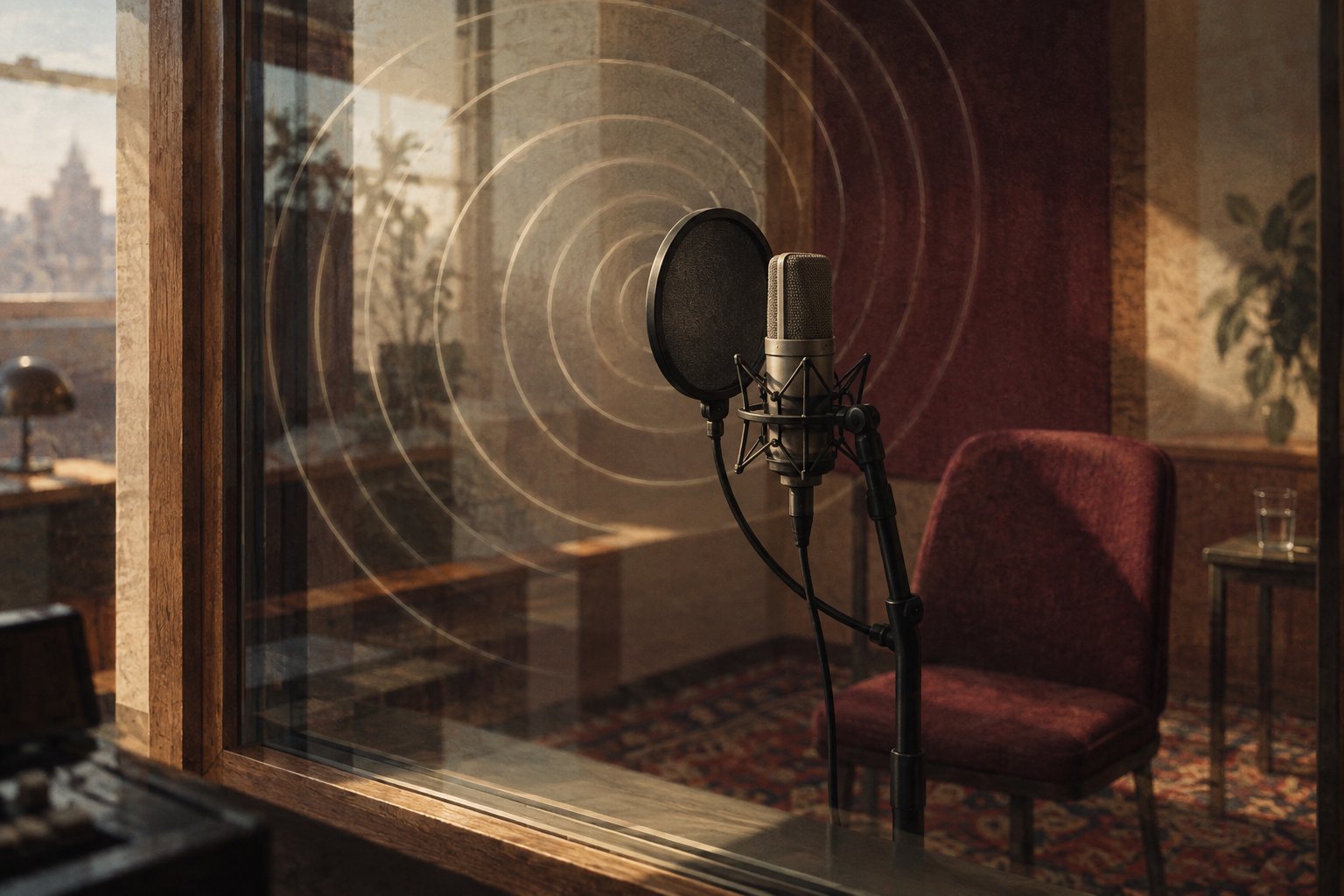
For character analysis, the distinction between a woman and her recorded voice matters. A recording preserves expression while removing the speaker from the immediate encounter. The listener receives intimacy without necessarily having access to intention, context, or an opportunity to question what is being said.
Eva’s position consequently invites a question more interesting than whether the voice sounds sinister: what happens when something recognizably human becomes repeatable guidance? Warmth can survive recording, but accountability does not automatically travel with it. A person can sound present while remaining inaccessible.
Gill also deserves attention beyond her proximity to the mystery. Watching the sisters as people means asking what each understands, what each wants, and how their behavior changes together and apart. Their shared grief should not be treated as proof of identical motives. Nor should the detective’s perspective automatically settle how the audience judges them.
The question of who controls a woman’s account also runs through our analysis of how Prima Facie brings testimony to the screen. Here, the distinctive problem is a voice that can circulate independently of its speaker.
Why reassurance belongs in a noir mystery
Film at Lincoln Center describes The Remotes as combining science fiction and documentary elements within a neo-noir framework. Its festival description also identifies a political dimension involving surveillance and control. Those contexts widen the stakes beyond an isolated technological malfunction.
A driver-training system carries an implied claim to authority: it knows how a person should behave. That makes its reassuring presentation dramatically important. Instructions do not need to sound threatening to narrow someone’s freedom. They can promise safety, improvement, or an easier way through the day.
The resulting interpretive question is about consent under pressure. A person may choose guidance while lacking the energy or information to evaluate it. This is different from saying that every reliance on technology represents surrender. The more precise concern is whether a system benefits from making its users less able to challenge it.
Our discussion of technical systems and personal responsibility in NAZA approaches accountability through a different form of cinema. With Torres, the fictional mechanism makes that issue intimate: authority enters through the ear.
Listening for instability, not just clues
Torres describes a concert sequence in which the film cuts to Mijares in another room while music remains audible and another voice enters. His explanation emphasizes uncertainty about where that voice belongs. The scene offers a concrete viewing strategy: notice when hearing something stops guaranteeing that its source is clear.
In the interview, Torres calls the voice a “ghost presence.” That is a description of his filmmaking, rather than dialogue spoken by a character. The phrase suggests why sound can connect the mystery to bereavement: an absent person can remain powerfully present in memory without becoming available again.
Published responses indicate that the film’s balance is open to debate. Andrew Parker’s review for The GATE praises its combination of emotional poignancy and fear. Shelagh Rowan-Legg at ScreenAnarchy finds its nocturnal atmosphere compelling but questions the later movement toward daylight and a more explicit romantic narrative. These are individual critical judgments, not a settled verdict.
For viewers, the useful test is whether a change in atmosphere deepens the characters or interrupts the experience already established. Slowness earns its place when attention changes what we understand. Ambiguity earns its place when several interpretations remain meaningfully possible.
A personal film about the limits of comfort
Torres explains that his mother’s wish for him to make a more recognizable fiction film helped shape this project; she died during the pandemic. That history gives the film’s interest in surviving voices a personal context, without making the director interchangeable with Mijares.
The deeper interpretation I would bring to The Remotes is that comfort needs room for refusal. A trustworthy relationship allows uncertainty, disagreement, and silence. A dangerous system can imitate tenderness while steadily reducing those possibilities. The distinction is difficult to hear when reassurance is precisely what someone needs.
There is also a visual connection worth watching for: Kim identifies an eye-and-road superimposition that recalls Torres’s People Power Bombshell: The Diary of Vietnam Rose, and Torres acknowledges the observation. It is better understood as a recurring artistic motif than a secret key to the plot. In this story, it invites a fitting final question: when we believe we are finding our way, who is shaping what we see?
Original content by this site's editorial team. Published: September 13, 2026 at 21:24:42 PDT (Los Angeles time)