Netflix’s original movie experiment deserves a tougher standard than whether there is something new to watch. The meaningful question is whether its films give viewers something worth remembering: a character whose choices feel painfully recognizable, a sequence with its own visual logic, or an ending that changes the meaning of everything before it. If the experiment needs rethinking, that is where a better version should begin.
IndieWire has advanced the argument that Netflix’s original movie experiment has failed and that the company could benefit from that failure. It is a provocative critical proposition. It should not, by itself, be mistaken for proof of financial failure or an announcement that Netflix is abandoning original films. My view is narrower: moving beyond the idea that an original-film label is inherently valuable could produce a healthier relationship between the service, filmmakers, and audiences.
This is industry commentary about the Netflix original movie proposition, rather than a review of an individual film. No plot spoilers follow.
Before Calling the Experiment a Failure, Define the Test
There are several different arguments hiding inside the word failure. A movie can disappoint a critic while satisfying its intended audience. It can attract attention without inspiring affection. It can also be artistically accomplished without becoming a widely shared cultural reference. Those outcomes should not be collapsed into a single verdict.
A business assessment would require evidence about costs, revenue, subscriber behavior, and the role movies play within the wider service. A headline cannot settle those questions. An artistic assessment asks something else: does the work have a distinctive point of view, and do its formal choices serve that perspective?
For viewers, there is a third test: confidence. When you choose a film, how much reason do you have to believe it will reward your time? An appealing premise can win the first few minutes. Trust is built when the movie develops that premise with intelligence, surprise, and emotional precision.
The most useful reading of the failure argument concerns that trust. A recognizable distribution label can identify where a movie comes from. It cannot do the work of making the movie matter.
A Character Is a Better Starting Point Than a Content Category
Consider the difference between describing a film through its category and describing it through its protagonist. A category gives us an action comedy, a romantic drama, or a thriller. A character gives us a person pursuing something for reasons that may be incomplete, contradictory, or embarrassing. The category helps us choose. The person gives us a reason to stay.
For any Netflix original, a revealing critical question is whether the central conflict belongs specifically to its characters. Could another hero step into the same scenes without changing much? Does the protagonist’s temperament alter how a confrontation unfolds? Does a mistake create consequences that survive beyond the next sequence?
This is especially important in familiar genres. Predictability is not automatically a flaw. A romantic comedy can follow a recognizable destination while making the route feel personal through the lovers’ incompatible habits, defenses, and desires. An action film can make a familiar rescue compelling by establishing exactly what its hero misunderstands about the person being rescued.
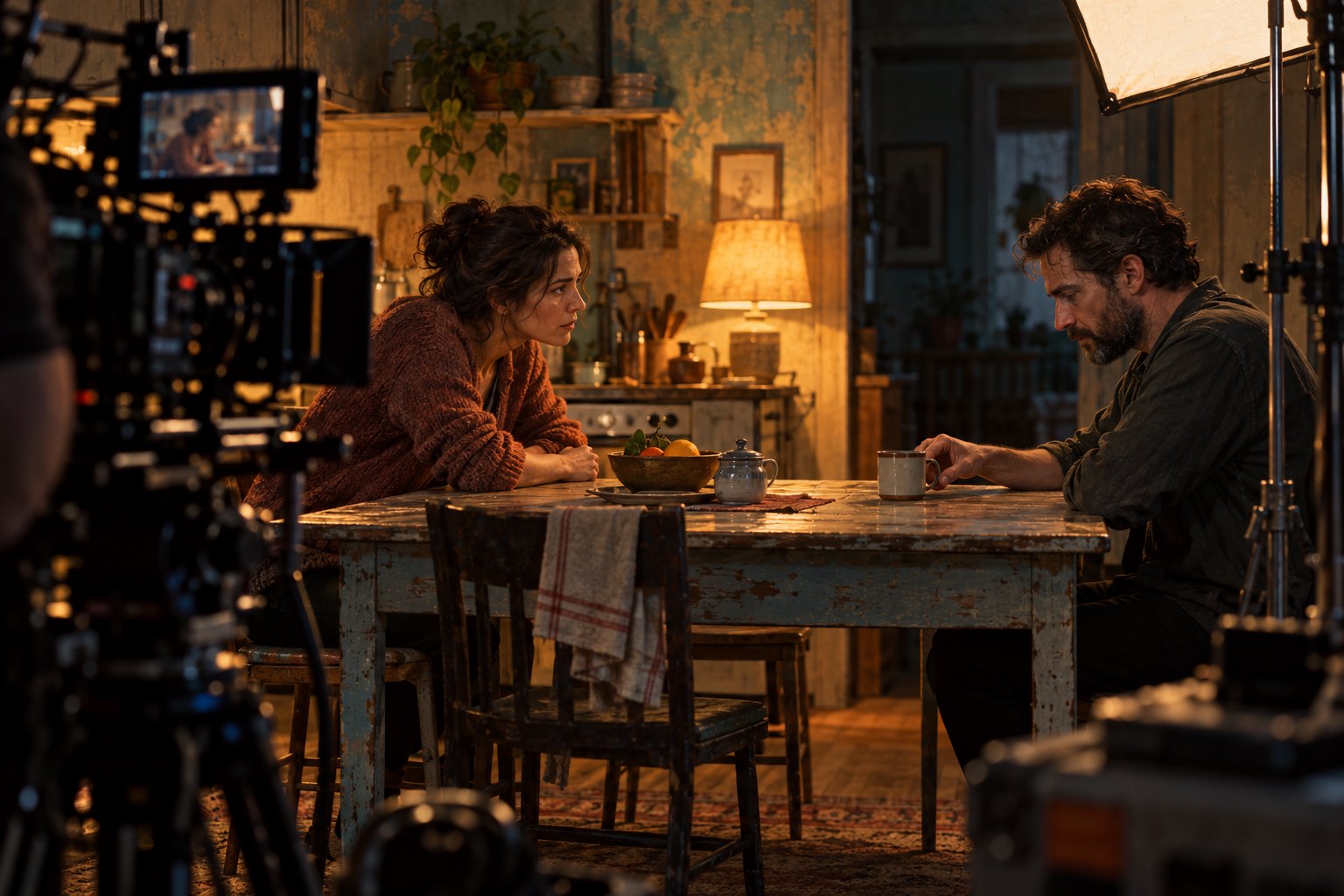
Dialogue belongs to that same test. Memorable lines acquire force through who speaks them, what they conceal, and what speaking them costs. A polished sentence cannot compensate for an interchangeable speaker. Silence, hesitation, and a failed attempt to explain oneself can reveal more than an obviously quotable speech.
That emphasis also informs our discussion of the character questions behind a high-profile casting announcement: recognition creates anticipation, but dramatic relationships must earn the investment.
Convenient Viewing Does Not Require Disposable Movies
There is nothing artistically suspect about watching a movie at home. Nor must every film aspire to solemnity, awards, or a three-hour running time. A brisk comedy that understands its performers can be more satisfying than an ambitious drama that repeatedly explains its themes.
The creative danger is treating ease of access as sufficient justification for a film’s existence. A movie still needs rhythm, visual decisions, and scenes that develop rather than merely restate information. Accessibility should make the encounter possible; it should not lower the expectations brought to it.
One practical way to assess a film is to notice what happens between its advertised attractions. Are transitions perfunctory? Do supporting characters have purposes beyond helping the lead? Does the camera reveal a relationship through distance and framing, or does dialogue have to explain everything?
These are concrete questions about craft. They also allow criticism to remain fair. A modest genre exercise can answer them beautifully, while a prestigious production can struggle. Neither budget nor seriousness guarantees expressive filmmaking.
What a Better Netflix Movie Strategy Could Look Like
The prospect of improvement is more persuasive when it describes choices rather than simply demanding fewer films. A smaller slate could still be timid or repetitive. Selectivity matters only if the selection protects something valuable.
- Give each project a specific creative reason to exist. The case for a film should extend beyond its marketable combination of genre and cast.
- Match scale to the story. An intimate conflict should have room to remain intimate; spectacle should grow from dramatic needs.
- Protect differences in tone and form. A stronger identity for the service need not mean a uniform identity for its movies.
- Help audiences understand individual films. Presentation should communicate a movie’s particular pleasures instead of making everything appear equally urgent.
These are proposals, not descriptions of an announced Netflix policy. Their value lies in giving the optimistic half of the failure argument a testable meaning. Improvement would show up in more distinctive finished films and clearer reasons to seek them out.
Our commentary on the value of sustained attention in film culture addresses a related concern. Discovery becomes more meaningful when viewers have space to discuss and reconsider a movie after the initial encounter. A streaming service could encourage that relationship, too.
The Real Opportunity Is to Make the Label Matter Less
I would resist declaring an entire body of films artistically worthless. That kind of sweeping verdict replaces criticism with branding in reverse. Individual works deserve individual judgments, including the possibility that an uneven enterprise can support exceptional filmmaking.
But there is a productive challenge inside the argument that Netflix’s experiment has failed. It asks whether the promise of original movies has become detached from the qualities that make an individual movie necessary. The answer should emerge through better work, rather than a more emphatic promise.
Netflix would be better served by films audiences describe through their characters, images, and emotional contradictions. The deeper opportunity is to become less central to the way those films are discussed. When viewers remember the person on screen before they remember the platform, the movie has begun to develop a life of its own.
Original content by this site's editorial team. Published: October 29, 2026 at 22:38:48 PDT (Los Angeles time)