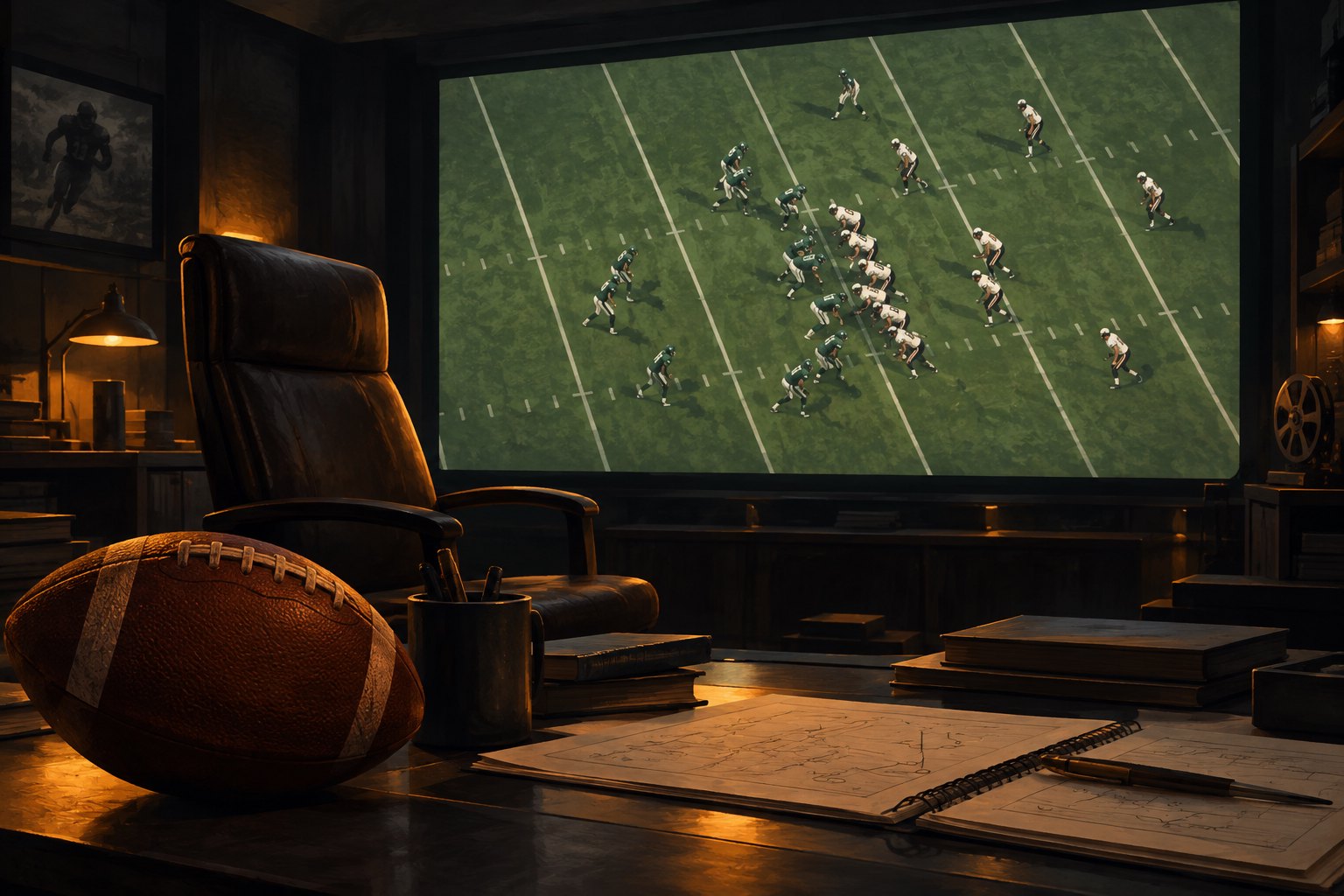
Greg Cosell’s Film Study WK 8 — 10.29.26, published by the Cleveland Browns, concerns the kind of film watched to understand football. For anyone arriving in search of a movie review, that distinction matters immediately. The subject is competitive action recorded for examination: people moving through space, making decisions under pressure, and producing outcomes that can look simpler than the work behind them.
This article is a viewing guide and critical commentary, rather than a review based on a complete screening of the installment. It does not attribute particular tactical conclusions or quotations to Cosell. Its focus is how to approach this Week 8 study thoughtfully—and why the habits that make football analysis useful can also sharpen our understanding of screen storytelling.
What the Week 8 title establishes
The identifying details are straightforward: Greg Cosell, the Cleveland Browns, a Week 8 film-study installment, and the date October 29, 2026. Those details identify the subject without establishing which plays receive the closest attention, what conclusions the discussion reaches, or how effectively the presentation supports those conclusions.
That boundary is useful for viewers. A title can help you locate a program, but it cannot substitute for its argument. Before deciding whether an analysis persuades you, identify the question it is trying to answer. Is a particular sequence being used to explain an individual decision, a collective pattern, or the interaction between opposing players? Each question requires different visual evidence.
My editorial standard for a program bearing the label film study is simple: it should leave viewers better able to explain something they can see. Confidence and specialized vocabulary are less valuable than a clear connection between an observation and a conclusion.
Start with the player’s available choices
A character-focused movie review asks what someone wants, what stands in the way, and what choices remain possible. Football analysis can borrow that structure, provided it respects a crucial difference: athletes are real people, and footage does not give viewers direct access to their thoughts.
When approaching Cosell’s Week 8 installment, distinguish visible behavior from inferred intention. A player’s movement may be observable. The reason for that movement may require additional context. Even a persuasive explanation should make that transition clear.
The quarterback’s perspective
If a passing play is examined, resist beginning with the eventual result. First consider the situation at the moment a decision becomes necessary. Which spaces are visible? How much room remains around the passer? When do receivers and defenders change their relative positions?
A receiver who looks available in a paused image may not have been equally available at the relevant instant. That is why timing matters as much as location. A useful interpretation follows the development of an opportunity instead of treating the final arrangement of bodies as the entire story.
The receiver’s perspective
Follow a receiver before looking at the ball. Notice how movement changes the space around other players. In a hypothetical example, one receiver’s path might draw a defender away from another area, creating an opportunity elsewhere. That example illustrates a question to ask; it is not a description of a play confirmed in this installment.
This attention to relationships also belongs in character criticism. Our discussion of Jimmy’s need for help in Going for Two considers a football-related story through dependence and support. On a field, too, concentrating entirely on the most conspicuous person can conceal the contributions that make an outcome possible.
Look beyond the action that attracts the camera
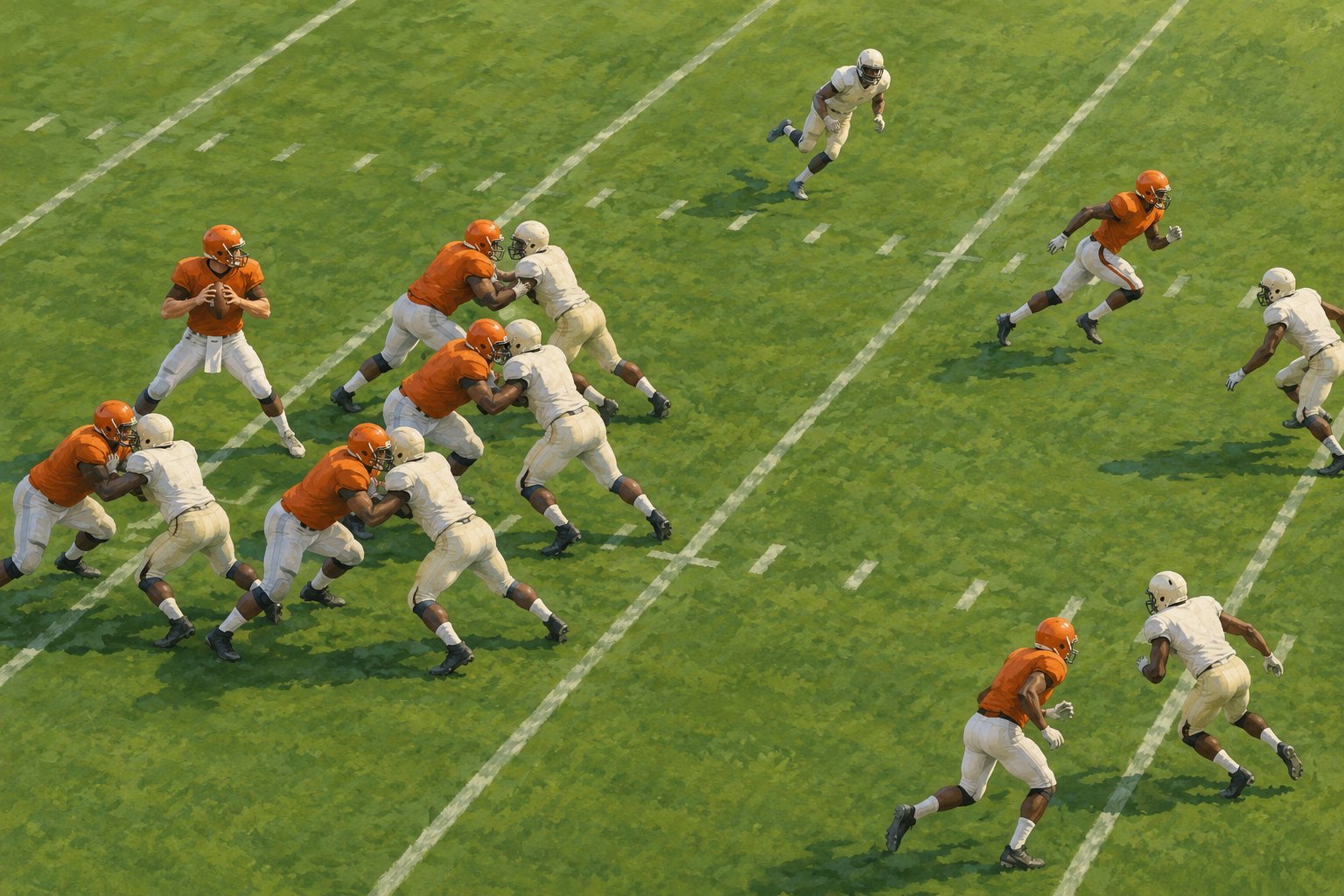
The ball offers an obvious center of attention. It also creates a viewing habit that can obscure other activity. To get more from a football breakdown, deliberately choose a second subject: a blocker, a defender away from the immediate action, or the space a receiver is approaching.
That shift does not require mastering an entire tactical vocabulary. Begin with concrete descriptions. Someone moves inward. Someone holds position. A gap narrows. Two players converge. Precise observation gives technical explanations something to attach to.
Screen criticism benefits from a similar adjustment. A lead performer may command attention while another performer establishes the emotional stakes through a reaction. Our preview of Prince’s concert-film return and its performance possibilities likewise considers the importance of collaboration and presentation. Across these forms, a close view of the star can be compelling while leaving essential relationships outside the frame.
Separate what the camera shows from what the analyst explains
A camera angle supplies information selectively. A wide view may reveal relationships across space while making a small gesture difficult to read. A closer view may clarify that gesture while concealing what happens elsewhere. Neither view automatically contains the whole explanation.
When evaluating a claim in Cosell’s Week 8 study, ask whether the relevant evidence is actually visible. If the explanation depends on activity outside the frame, recognize that the conclusion draws on something beyond the image in front of you. It may still be reasonable, but its basis should remain distinct.
Slow motion introduces another consideration. It makes sequences easier to inspect while giving viewers more thinking time than the participants had. Return mentally to the speed of the action before judging how obvious a choice should have been. Clarity after repeated viewing is not evidence that a decision was easy in the moment.
A practical method for watching the installment
Use these steps whenever the program presents footage or describes a sequence closely enough to follow. They are viewing suggestions, not claims about the episode’s editing or presentation.
- Identify the claim. Reduce the explanation to one plain sentence. If you cannot, listen again before accepting or rejecting it.
- Locate the evidence. Find the movement, spacing, or timing that supports that sentence. Separate visible details from assumptions about assignments or intention.
- Watch one supporting participant. Follow someone other than the player receiving most of the attention.
- Restore the sequence. Consider what happened before and after the highlighted instant. A freeze-frame is one piece of a moving event.
- Limit the conclusion. Decide whether the example explains this moment or supports a broader pattern. One sequence alone cannot establish consistency.
The last step is particularly valuable. A vivid example can be convincing without being representative. Good viewing involves asking both whether an explanation fits the example and whether the example justifies the larger claim.
The deeper value of watching again
The most interesting critical possibility in Greg Cosell’s Week 8 film study is a change in how viewers distribute attention. Instead of treating the result as a complete explanation, they can examine the decisions and relationships that preceded it. That approach makes room for contributions that a quick impression may overlook.
It also encourages fairer judgment. In football, as in character analysis, a person’s action becomes more understandable when considered alongside constraints, timing, and the actions of others. Understanding those conditions does not eliminate criticism; it makes criticism more precise.
That is the standard worth bringing to this installment: whether its explanations help you return to the action with sharper questions and better observations. The lasting reward of film study is the ability to notice more when the footage starts moving again.
Original content by this site's editorial team. Published: October 29, 2026 at 20:53:50 PDT (Los Angeles time)