
Avengers: Endgame has reclaimed the all-time top-grossing movie title through its rerelease, according to Forbes. That reported milestone provides a fresh occasion to revisit a film whose most persuasive images of catastrophe are surprisingly small: an empty backyard, a changed face, a parent searching for someone who should be there.
Scott Lang and Clint Barton make an especially revealing pair. Both are fathers forced to confront an impossible absence. Scott responds by imagining a rescue; Clint turns his grief outward as violence. Watching their stories together, I find a compelling argument about hope—and a weakness in how easily this otherwise emotionally attentive movie moves past responsibility.
Spoilers follow for the complete film, including its ending. This review examines the original feature’s story, without assuming that the rerelease changes its scenes.
A commercial comeback invites a different kind of rewatch
A box-office record measures theatrical revenue. It cannot establish which performance is most moving or which character arc withstands scrutiny. Those distinctions matter when an enormous financial achievement starts doing the work of criticism, a problem explored in our commentary on how box-office narratives can become the review.
My judgment is that Endgame earns its emotional scale through the tension between its collective mission and its private reasons for undertaking it. Saving everyone sounds straightforward. Deciding how to live while everyone remains gone is much harder. Scott and Clint reveal that difficulty without needing to command the Avengers or deliver the final blow.
Clint’s opening scene makes disappearance incomprehensible
The film begins with Clint teaching his daughter archery before his family disappears. The scene gives him no opportunity to defend them. One moment he occupies a familiar domestic world; the next, its people are missing.
That restriction of perspective is essential. We understand the larger cause, but Clint cannot experience his loss as a completed explanation. He has to look around. The landscape remains ordinary, which makes its emptiness unbearable. Nothing about the setting offers a visible enemy or a useful next step.
Jeremy Renner’s physical uncertainty matters more here than any display of combat skill. A trained fighter can react to an approaching threat. A father cannot fight an absence. The scene temporarily strips superhero storytelling of its usual promise that exceptional ability will produce an answer.
It also plants the problem his later behavior will fail to solve. Clint wants suffering to make sense. When he cannot restore his family, he begins behaving as though deciding who deserves to survive might compensate for the universe’s indifference.
Scott sees lost time in a living person
Scott’s return from the Quantum Realm brings a different shock: five years have passed outside it. His reunion with an older Cassie makes the missing interval visible through someone he loves.
Paul Rudd’s accessibility is crucial. Scott often supplies comic uncertainty, but here that openness allows the scene to hold conflicting feelings without explaining them away. Finding Cassie is a relief. Discovering how much of her life he missed is another loss. The embrace answers one question while leaving another permanently unresolved.
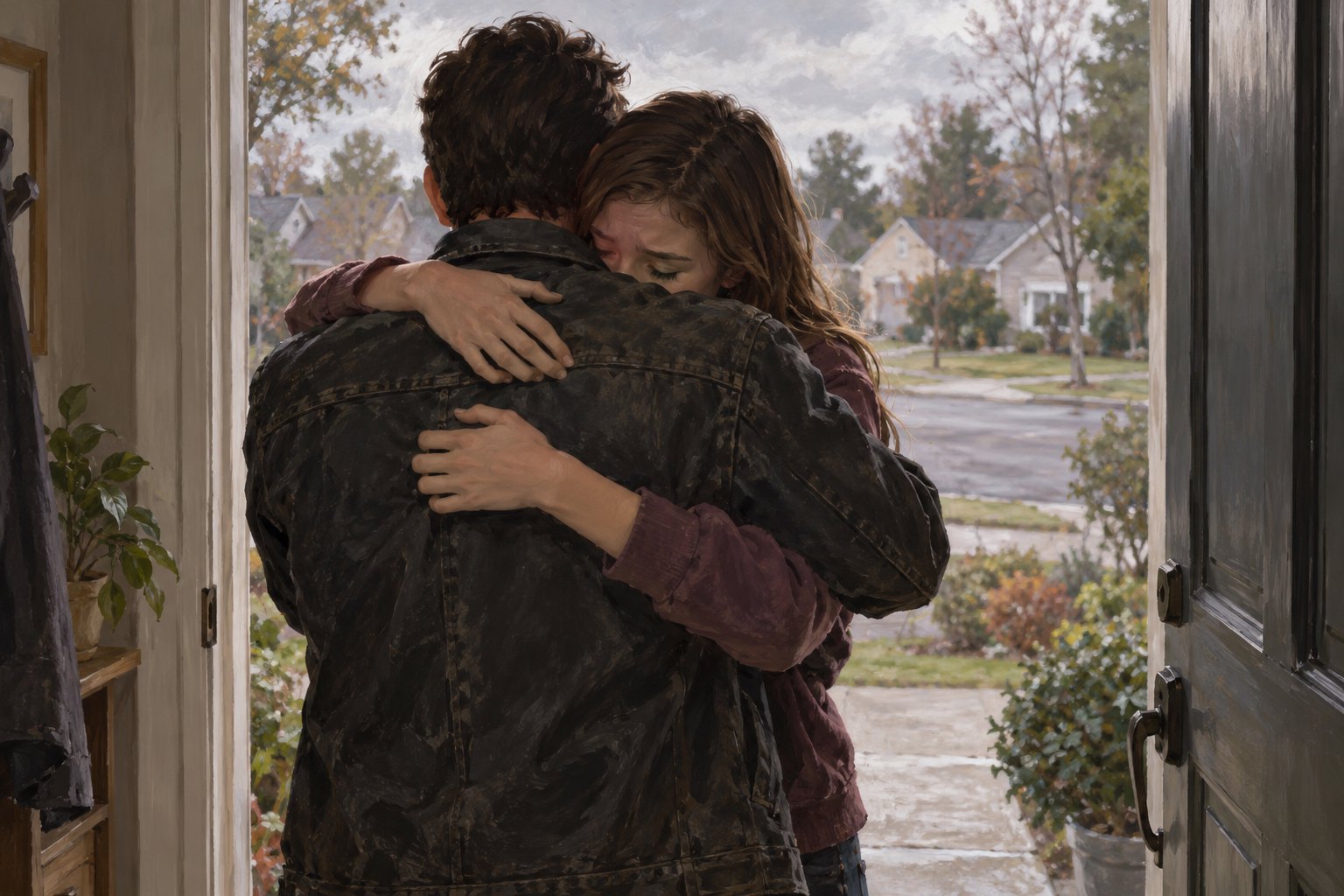
To me, this is one of the film’s strongest uses of its science-fiction premise. Time becomes a relationship rather than an abstract puzzle. Scott does not need an elaborate explanation of what five years means. He can see it.
His subsequent proposal to use the Quantum Realm gives that bewilderment a constructive direction. He cannot supply every technical solution, but he recognizes a possibility. The movie treats imagination as a contribution worth bringing into the room before certainty exists.
That makes Scott’s optimism more substantial than cheerful comic relief. Hope is a willingness to offer an incomplete idea and risk looking foolish. His emotional vulnerability helps reopen a future that the more experienced heroes have struggled to imagine.
“Don’t give me hope” is Clint’s most revealing defense
By contrast, Clint’s campaign as Ronin converts personal devastation into punishment. When Natasha offers a chance of recovery, his response is devastatingly brief: “Don’t give me hope.”
The line works because hope would require him to become vulnerable again. Violence has given him activity, control, and targets. None of those things requires him to believe that life could improve. Accepting Natasha’s offer means admitting that his present existence is something he might have to leave behind—and eventually answer for.
Renner makes the resistance feel exhausted rather than grand. Clint is not protecting a sophisticated worldview. He is protecting himself from the possibility of losing his family twice: first through catastrophe, then through disappointed expectation.
Scott and Clint consequently enter the same mission from different emotional positions. Scott believes an extraordinary possibility deserves investigation. Clint needs another person to help him endure believing in anything at all. Their cooperation suggests that a team can accommodate different levels of hope without requiring everyone to feel ready.
The film understands his grief better than his accountability
Clint’s suffering explains his behavior; it does not settle its moral meaning. This is where I find Endgame less satisfying. The people targeted during his violent campaign receive little interior life, while his family and friendships receive enormous emotional weight.
That imbalance makes sympathy almost automatic. We know whom Clint misses. We have far less reason, within the film’s presentation, to imagine the lives surrounding those he kills. The storytelling makes his pain intimate and the consequences of his actions distant.
His willingness to die on Vormir complicates the picture, but self-sacrifice and accountability are different things. A character can sincerely consider himself unworthy of survival without having confronted what repair would require. Indeed, dying can seem simpler than living with obligations that cannot be resolved through a heroic gesture.
Natasha’s refusal to abandon him remains moving. Friendship need not wait for a person to become morally uncomplicated. Still, the film moves more confidently toward his reintegration than toward examining the harm he caused. Its compassion is persuasive; its reckoning feels unfinished.
Callbacks turn familiar words into uneasy promises
Among the film’s callbacks, Steve Rogers meeting his earlier self offers a particularly useful miniature of its method. “I can do this all day” returns as both a familiar declaration and a joke about hearing one’s own certainty repeated back.
The pleasure comes from recognition, but recognition also exposes change. An earlier heroic identity can be admirable and exhausting at once. Rewatching invites us to notice the distance between a person’s old script for living and what experience has taught them.
The recurring pledge “Whatever it takes” becomes more troubling beside Clint’s story. Determination needs an object and a limit. The same intensity can support rescue or rationalize cruelty. His trajectory gives that rousing phrase a question the spectacle cannot completely quiet: what, exactly, should anyone be willing to do?
The deeper victory is becoming reachable again
Our earlier analysis of Endgame’s victories and farewells considers the cost of the larger ensemble’s ending. Scott and Clint bring a different issue into focus: whether someone wounded by loss can remain available to other people.
Scott keeps reaching outward. Clint has to be reached. Neither response makes the missing years disappear, and neither guarantees a clean moral resolution. What unites them is the eventual decision to participate in a shared future.
That is why I find Endgame worth revisiting beyond its reported box-office comeback. Its grand restoration fantasy contains a recognizable human truth: recovering hope often begins before we can justify it. The film is at its best when it lets that first, uncertain movement toward another person feel as consequential as saving the world.
Original content by this site's editorial team. Published: October 4, 2026 at 13:56:47 PDT (Los Angeles time)