
Jason, the new Friday the 13th movie, has reached a substantial production milestone: Forbes reports that filming has wrapped, alongside an announcement of the cast and release date. The news gives fans a concrete reason to watch the project. It also raises a more interesting question than whether a familiar horror name can attract attention: can the film make its threatened characters feel worth following?
This is spoiler-free commentary on the announcement, not a review of the completed movie. The reporting summarized here establishes the production update but does not substantiate individual performances, story developments, or dialogue. Specific cast names and the calendar release date are therefore not reproduced here. Assessing the film’s scenes, quoting its characters, or identifying Easter eggs would require evidence beyond that announcement.
What the filming update actually tells us
A filming wrap matters because it marks the completion of a major stage of production. It does not, by itself, establish the quality of the finished film. Editing, sound, music, and other finishing work can materially shape the experience audiences eventually have.
That distinction is especially useful with horror. A pause can become unbearable or merely slow depending on where a cut lands. A background sound can establish a threat without showing anything. The same footage can invite viewers to search a frame nervously or direct them immediately toward a surprise.
The cast and release announcement should consequently be read as news about the project’s progress. It is not evidence that the scares work, that the characters have depth, or that the ending earns its impact. Those are questions for a review once the movie itself can be assessed.
Our discussion of the dramatic promise behind Vin Diesel’s Burial Hill announcement approaches a related distinction: an appealing project can establish expectations, while the eventual performance and storytelling still have to fulfill them.
A title that puts the threat first
As a title, Jason is strikingly direct. My reading is that it invites audiences to approach the film through its central horror figure. That is an interpretation of the title’s emphasis, not confirmation that the story adopts his point of view or explains his psychology.
There is a creative opportunity in that emphasis, but also a potential imbalance. When viewers arrive already interested in the threatening figure, the people encountering him must compete for attention. A film can encourage anticipation of his appearance so strongly that the human experience of danger becomes secondary.
For me, the strongest approach would make both interests coexist. The audience can appreciate an imposing screen presence while also wanting someone to escape it. That tension gives a confrontation emotional movement: excitement at the arrival of a recognizable figure collides with concern about what his arrival means.
The title therefore creates a useful critical question. Does the movie build a world around Jason, or does it give its other characters enough presence to challenge his ownership of the screen? The announcement cannot answer that yet.
The cast needs relationships, not just introductions
A cast reveal naturally encourages discussion of individual actors. The harder question is how those actors will function together. In an ensemble horror film, relationships can supply the information that makes an urgent decision understandable: who trusts whom, whose warning gets dismissed, and who feels responsible for someone else.
These are criteria for evaluating Jason, not descriptions of its undisclosed plot. A character does not need an elaborate biography to matter. A specific habit, a disagreement with consequences, or an unexpected moment of generosity can establish a person quickly. What matters is whether that detail changes how we experience their vulnerability.
Dialogue has a practical role here. Before a threat becomes immediate, conversation can reveal differences in confidence, attention, and loyalty. Under pressure, those differences can become choices. A memorable line earns its place when it expresses a recognizable person; a polished quip alone cannot create that recognition.
The same emphasis on interaction informs our commentary on why ensemble chemistry matters beyond recognizable casting. For Jason, the particular challenge will be making viewers care about the connections that danger threatens to break.
Suspense should respect what the characters know
One of the fairest ways to assess horror is to consider a decision from inside the character’s situation. Viewers have advantages: they recognize genre patterns, hear music the characters cannot hear, and sometimes see danger before anyone onscreen does. A choice that looks foolish from the theater seat may be plausible with less information.
Good suspense makes that difference legible. It establishes what someone has heard, what they can see, and which alternatives appear available. The audience can then disagree with a choice while understanding why it happens. That understanding keeps fear connected to a person rather than reducing the sequence to a guessing game.
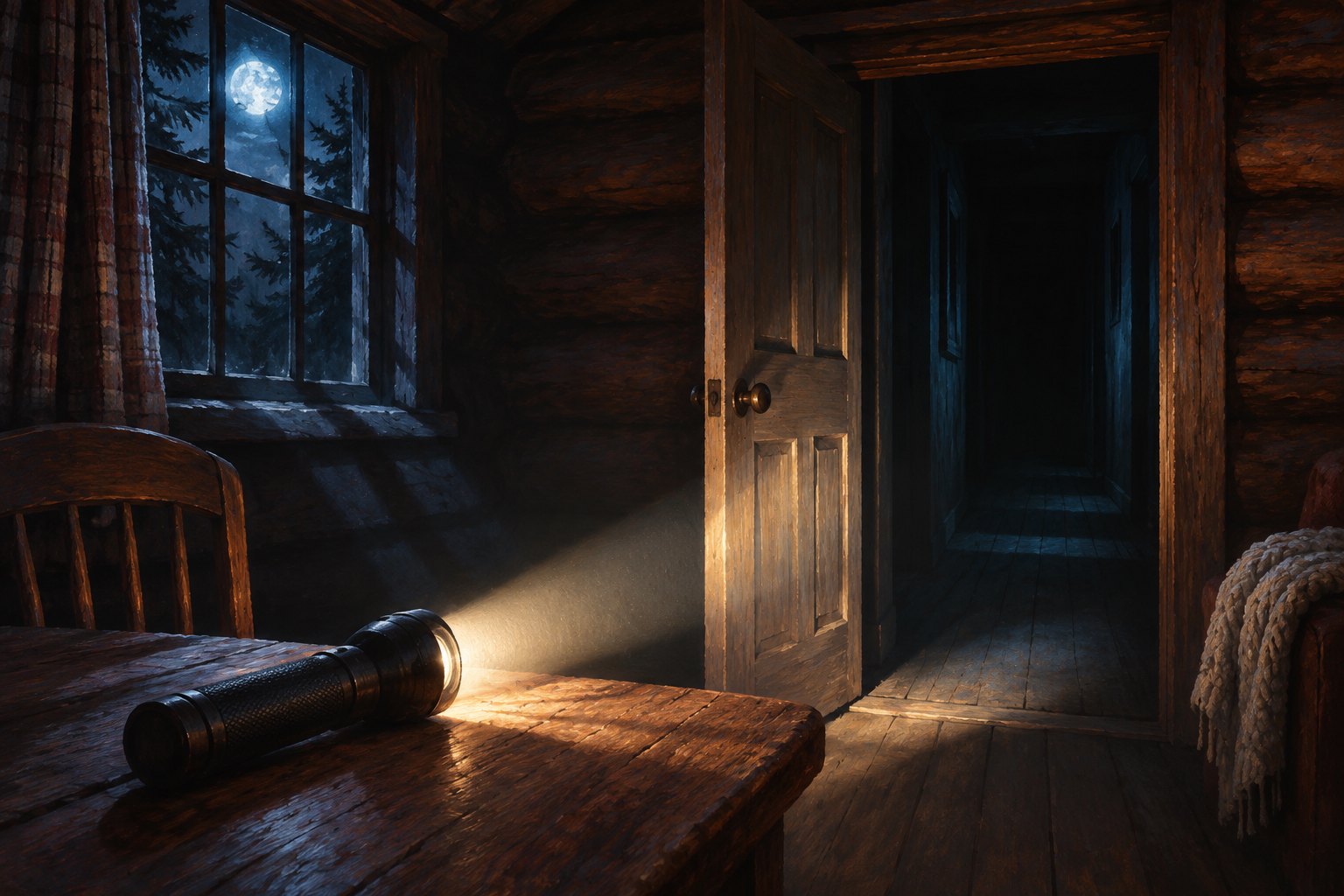
The illustration above explores restricted visibility; it does not depict a verified scene from Jason. Its empty doorway demonstrates a basic suspense problem: a visible route can also conceal information. Framing determines how much reassurance that route offers.
When the film becomes available to evaluate, spatial clarity will be worth watching closely. Can we understand where a character might go? Does a threatening entrance change the possibilities? Clear geography can make a small movement frightening because the audience understands exactly what has been lost.
Recognition should lead somewhere
A familiar horror property gives filmmakers an audience with expectations. Recognizable imagery can create an immediate response, but recognition is only the beginning of a scene. The stronger question is what the image does to the situation unfolding around it.
A callback, if the movie includes one, should ideally have a dramatic function beyond rewarding familiarity. It might alter a character’s understanding, intensify a threat, or make an ordinary object newly unsettling. Without verified footage or a completed-film assessment, there is no basis for identifying particular references or hidden details in Jason.
The deeper test: whose fear will we remember?
The most promising critical lens for Jason is the relationship between an enduring horror figure and the vulnerable individuals sharing his story. The former brings recognition; the latter can give that recognition a fresh emotional cost.
My hope is for a film in which survival reveals character through attention, loyalty, improvisation, and difficult judgment. That does not require solemn speeches or exhaustive explanations. It requires the filmmaking to notice people before asking us to fear for them.
The wrap announcement establishes momentum. The eventual measure of Jason will be more intimate: whether we leave remembering how someone faced danger, alongside the figure who brought it.
Original content by this site's editorial team. Published: November 18, 2026 at 20:43:46 PST (Los Angeles time)