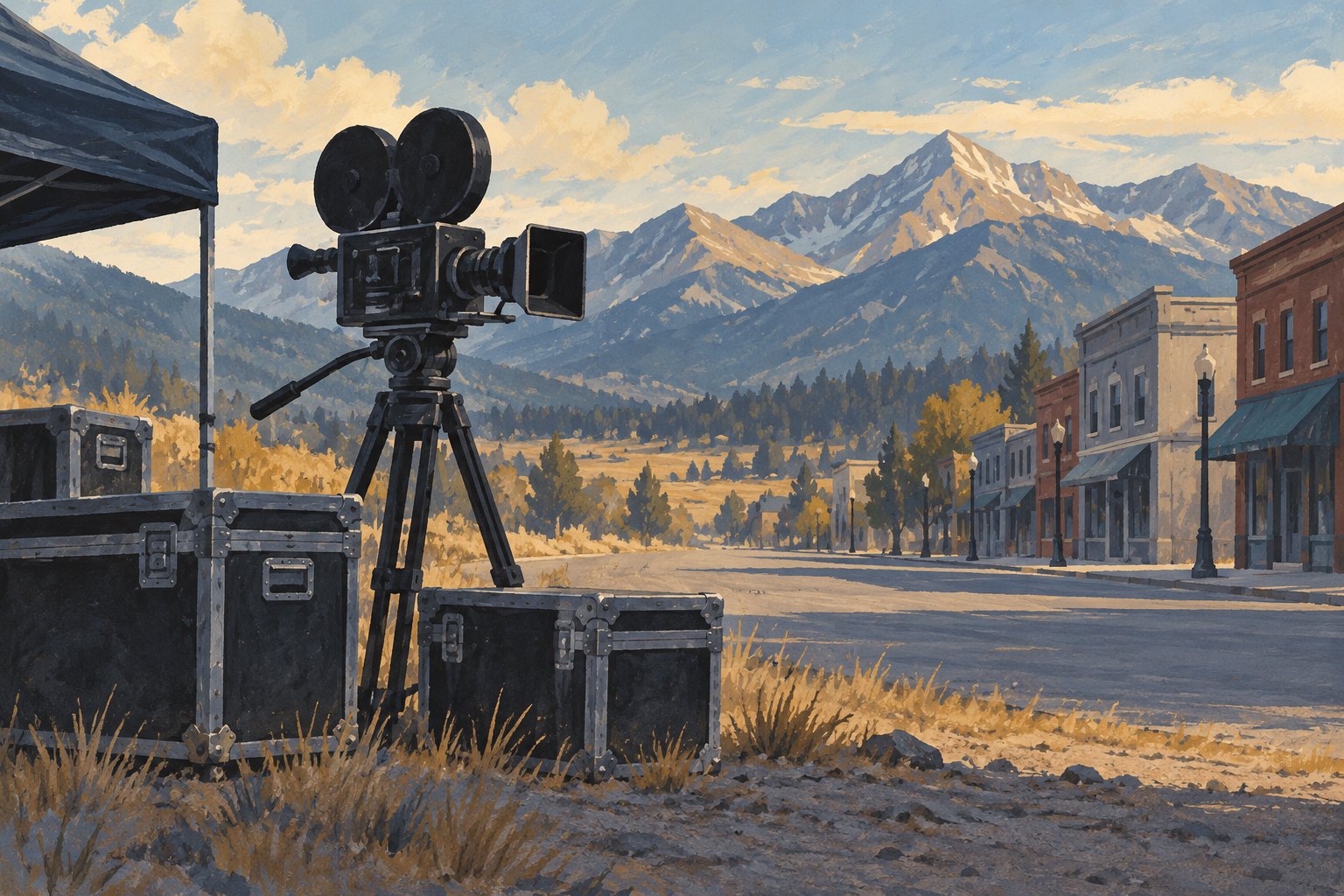
Daily Wire filming in Montana has been temporarily suspended following a special city meeting, according to Deadline. The immediate significance is a reported interruption to filming. That development alone does not establish that the project has been canceled, that its release has changed, or that the finished film will reflect the interruption in any particular way.
For movie audiences, the distinction matters. A production story can become the lens through which a film is discussed before viewers have seen a performance, followed a character, or heard a line of dialogue. This Montana pause deserves attention as a filmmaking development, with its practical consequences and unresolved questions kept separate from judgments about the movie itself.
What the reported suspension establishes
The central reported facts are narrow: filming associated with Daily Wire was taking place in Montana, a special city meeting occurred, and filming was temporarily suspended afterward. Those facts support describing a pause. They do not, by themselves, explain the precise grounds for it, establish its duration, or identify the conditions under which work might resume.
Temporary describes the reported status; it does not promise a quick resolution. An interruption can end promptly or remain unresolved as the parties work through outstanding issues. Neither outcome should be assumed here. Likewise, the sequence of a meeting followed by a suspension is insufficient to reconstruct the arguments presented, the reasoning behind a decision, or anyone’s private motives.
The useful question is therefore what changes next. A documented explanation of the suspension, a clear account of its scope, and an attributable announcement about resuming work would each add something concrete. Speculation about a permanent shutdown adds drama without providing that clarity.
A location is both a setting and a working community
The Montana development brings a broader feature of location filmmaking into view. On screen, a street can function as atmosphere: the place a character returns to, escapes from, or sees differently after a turning point. During production, that same street exists outside the story. It has people using it for reasons unrelated to the camera.
In general, location work requires filmmakers to coordinate creative needs with access, schedules, equipment, and the ordinary use of shared spaces. These are features of the production process, not established explanations for this particular suspension. Their relevance is that they help explain why a city meeting can become consequential to a film’s progress.
From an editorial perspective, the strongest way to assess such a situation is to ask how clearly responsibilities and expectations were defined. What activities were contemplated? What arrangements governed them? What specifically needs to change? Those questions are more useful than treating a municipality as an obstacle in a filmmaker’s adventure or treating a production’s presence as inherently unwelcome.
The people behind a pause are not movie characters
Entertainment coverage often borrows the structure of the films it covers. A setback becomes a confrontation; a participant becomes the antagonist; a later restart becomes a triumphant ending. That structure is satisfying because it supplies motivation and resolution. Applied too early to a developing production story, it can also distort what happened.
A filmmaker’s general interest in completing scheduled work is understandable. So is a local official’s responsibility to address matters within the city’s authority. People living or working near a location may have interests that do not fit neatly into either perspective. None of those general observations establishes what any specific participant said or experienced in Montana.
My view is that good production commentary should preserve this distinction between perspective and evidence. Imagining why someone might care about an interruption can deepen understanding. Assigning that person a motive without support merely turns a real event into a screenplay. The Daily Wire name should not relieve anyone of the obligation to make that distinction.
Why the pause cannot serve as a film review
A character-centered review needs actual dramatic material: choices, relationships, consequences, and the way a performance connects them. Dialogue matters because its meaning depends on who speaks, who listens, and what the scene has established. A filming suspension supplies none of that evidence.
Consequently, this is production commentary rather than an assessment of the film’s plot, performances, or direction. There is no responsible basis here for selecting memorable lines, interpreting a character arc, or identifying Easter eggs. Those elements belong to criticism grounded in the work itself.
The same boundary applies to expectations. A difficult production history does not establish a weak movie, and a smooth production does not establish a strong one. Our discussion of how box-office narratives can shape a movie’s reception explores a related problem: external events can become a substitute for looking closely at what reaches the screen.
By contrast, our character-focused reading of Endgame’s two fathers illustrates the kind of specific dramatic evidence a review can examine. The standard for this Daily Wire project should be equally concrete when its content can be assessed.
What would make the next update meaningful?
Readers following the Montana story should look for developments that answer distinct questions, rather than treating every new statement as equivalent:
- Scope: Which filming activities are affected, and does the interruption extend beyond a particular location or arrangement?
- Reason: What documented explanation accounts for the suspension?
- Resolution: What conditions, decisions, or practical changes would allow filming to resume?
- Schedule: Has the production confirmed any consequence for its timetable?
These questions should not be collapsed into one another. Permission to resume would establish a change in status, but it would not necessarily explain every issue raised earlier. A revised production schedule would not automatically establish a revised release date. A statement expressing confidence would communicate a participant’s position without guaranteeing an outcome.
The deeper issue is how filmmaking earns cooperation
The most useful broader interpretation of this story concerns the relationship between creative ambition and the practical arrangements that make it possible. Audiences usually encounter that relationship only through the finished image. The coordination behind it becomes visible when work stops.
My judgment is that this coordination deserves serious coverage in its own right. It affects how films get made, yet it should neither confer artistic credibility nor take it away. For now, the defensible conclusion remains specific: Deadline has reported a temporary suspension of Daily Wire filming in Montana following a special city meeting. The next meaningful development will explain the pause or change its status. The movie’s eventual merits will require a different kind of evidence: the movie.
Original content by this site's editorial team. Published: October 4, 2026 at 15:03:35 PDT (Los Angeles time)