
The Cowboys beat the Titans 51–30, and the team’s official Tape Talk coverage turns to game film to examine that victory. For readers seeking an explanation of the matchup, the essential distinction is between the result and its causes. Dallas finished 21 points ahead. That establishes a decisive final margin; it does not establish which decisions, individual contributions, or recurring advantages produced it.
Here, “film” means football footage, and the appropriate critical question concerns evidence: what can the images actually demonstrate? This commentary offers a way to evaluate the Cowboys–Titans breakdown without treating unverified plays or player assignments as settled facts. The most useful reading of a high-scoring win begins by resisting the temptation to make every moment fit the final score.
Start With Both Sides of the Score
The attraction of 51 points is obvious. It makes the winning performance the natural center of attention. Yet a serious account of this game also has to make room for Tennessee’s 30. Those totals belong to the same event, and neither should disappear because the other makes a cleaner headline.
There is an important limit here: points on the scoreboard cannot, by themselves, tell us how well a particular unit played. Possession length, starting field position, turnovers, and the circumstances of scoring all affect interpretation. Without establishing those details, declaring that one side dominated every phase would go beyond the evidence.
My preferred approach is to hold two questions open. What helped Dallas create its winning margin? And what problems could remain meaningful despite that margin? The second question does not diminish the victory. It makes the first answer more credible by allowing the performance to contain both achievement and imperfection.
Follow Responsibilities Before Choosing Heroes
Football viewing naturally gravitates toward the player holding the ball. That is usually where the immediate suspense lives. But a breakdown of Cowboys–Titans becomes more revealing when it follows the relationships around that player: who creates space, who preserves it, and who forces an opponent to choose between competing responsibilities.
Consider the quarterback’s perspective as an analytical exercise. A completed pass tells us that the ball reached its target. Understanding the decision requires more: the time available, the receivers visible in the frame, and the defenders’ movement. Even then, footage may not establish the intended progression. A reviewer should distinguish an observable opening from an assumption about what the quarterback was instructed to read.
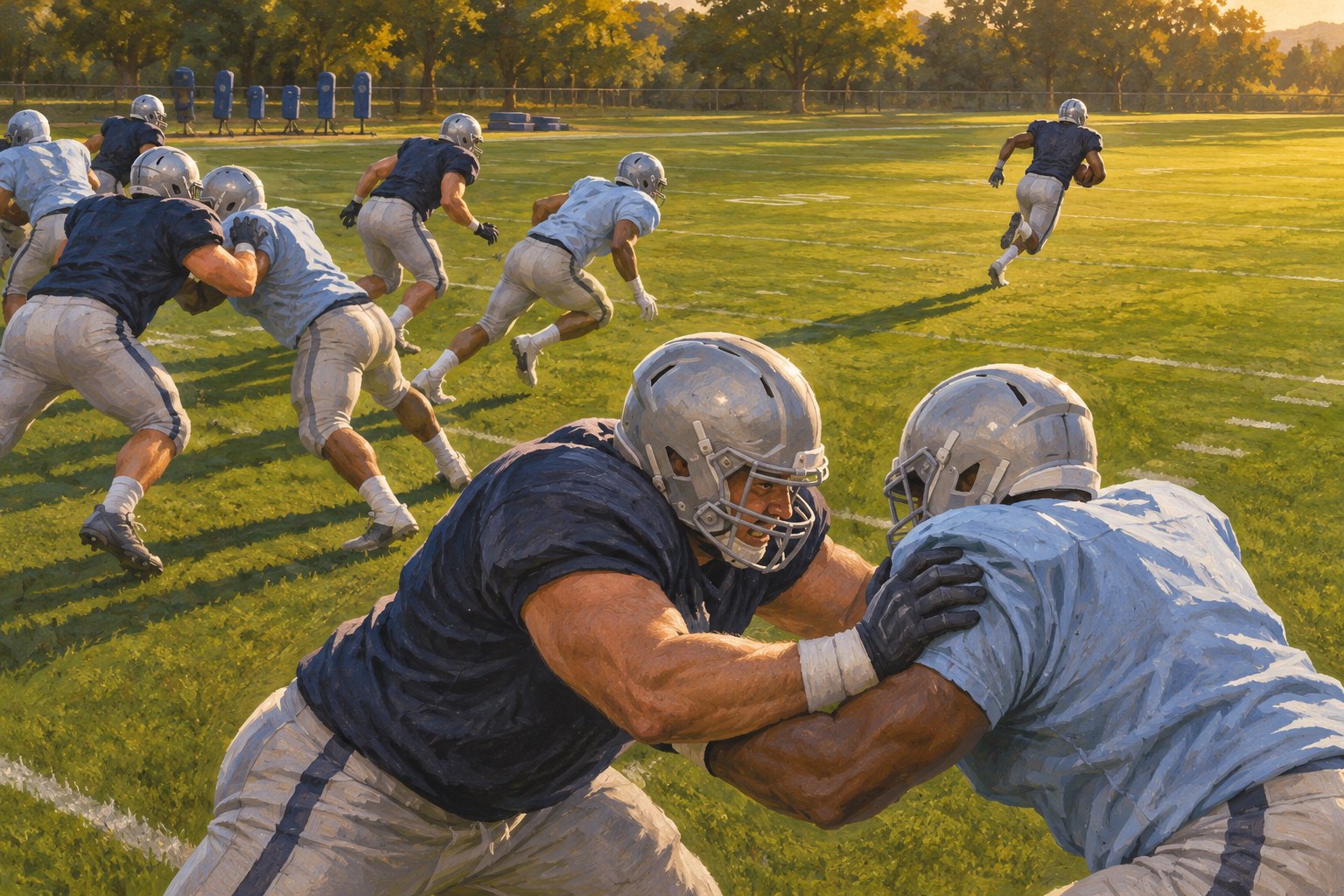
The same discipline applies to a blocker. A player can make a valuable contribution without delivering a spectacular collision. Positioning may matter more than force; delaying a defender can matter more than knocking one down. These are general principles for examining the Dallas performance, not claims that any particular unverified sequence occurred.
For Tennessee’s players, the question should be equally specific. Being beaten on a play does not automatically identify the person responsible for the breakdown. A defender might be responding to another threat or operating within a responsibility the camera cannot fully reveal. Fair analysis gives the losing side the same attention to context that it gives the winner.
Watch the Space Around the Action
One productive way to revisit this matchup is to look away from the ball for an entire replay. Choose a single player and follow the sequence from the beginning. Notice where that player starts, which opponent responds, and whether the movement changes the space available elsewhere.
This does not require pretending to know the playbook. It requires describing what is visible before explaining it. “The defender moves toward the sideline” is an observation. “The defender abandons his assignment” is a conclusion that needs additional support. The difference is small in wording and substantial in fairness.
That distinction develops the idea explored in our commentary on Mike Macdonald and the value of watching game film again. Repetition becomes useful when it changes the question. Watching the same catch repeatedly may reinforce admiration; watching the surrounding movement may explain how the opportunity emerged.
A Practical Method for Reading the Breakdown
For a viewer working through Cowboys–Titans footage, a simple sequence can keep observation ahead of opinion:
- Establish the situation. Note the score, down, distance, and field position when they are available. Leave missing context unresolved.
- Watch once at full speed. Preserve a sense of how little time players have to react.
- Follow one responsibility. Track a blocker, receiver, or defender rather than trying to interpret everyone simultaneously.
- Separate movement from motive. Describe what a player does before inferring why.
- Compare another sequence. A second example can challenge an attractive explanation as easily as it can support one.
The final step matters especially in a 51–30 victory. A successful highlight can demonstrate that something worked once. Establishing a dependable advantage requires a broader sample, including less successful attempts. A convincing explanation should survive contact with footage that complicates it.
Keep the Victory Montage and the Explanation Distinct
A highlight package can communicate the emotional experience of winning. Analysis has a different obligation: it must make the relationship between action and outcome intelligible. Both forms can be enjoyable, but excitement alone cannot establish causation.
Our discussion of the storytelling promises of the football mini-movie considers how a matchup becomes a narrative. Cowboys–Titans presents a related editorial challenge. Once the ending is known, selected moments can make the victory appear inevitable. A useful breakdown preserves the uncertainty players faced before each outcome was decided.
Official team coverage also gives readers a clear perspective to recognize. Dallas is the central subject. That focus need not invalidate the analysis, but viewers should still ask whether the examples explain the opposition’s choices and acknowledge the limits of the available angles. Specific evidence earns confidence more effectively than an enthusiastic verdict.
The Deeper Reading: Credit Is Distributed
The most rewarding interpretation of this Cowboys win is an inquiry into how collective work becomes an individual-looking achievement. The camera follows a throw, catch, or run because each provides a visible conclusion. The work that makes that conclusion possible can happen earlier, elsewhere, or almost unnoticed.
That is where game-film criticism offers something beyond celebration. It can redistribute attention without manufacturing heroes or villains. Dallas’s 51–30 result supplies the ending; thoughtful viewing asks how responsibility was shared along the way. The strongest Tape Talk analysis will leave readers able to explain an action more precisely—and recognize where the images still do not provide an answer.
Original content by this site's editorial team. Published: November 24, 2026 at 11:15:03 PST (Los Angeles time)