Ariana Grande’s Eternal Sunshine Tour is coming to Peacock, according to Variety. For anyone waiting to experience the tour on a home screen, the streaming destination is the useful news. It gives the project a place to look for, although it does not, by itself, answer when viewers can press play or exactly what they will be watching.
The move also raises a question worth considering before any verdict on the finished work: what does a concert become when its audience can pause it, replay it, or discover it without having followed the artist’s every move? For Grande, the opportunity is to reach people whose relationship with the performance begins on their couch.
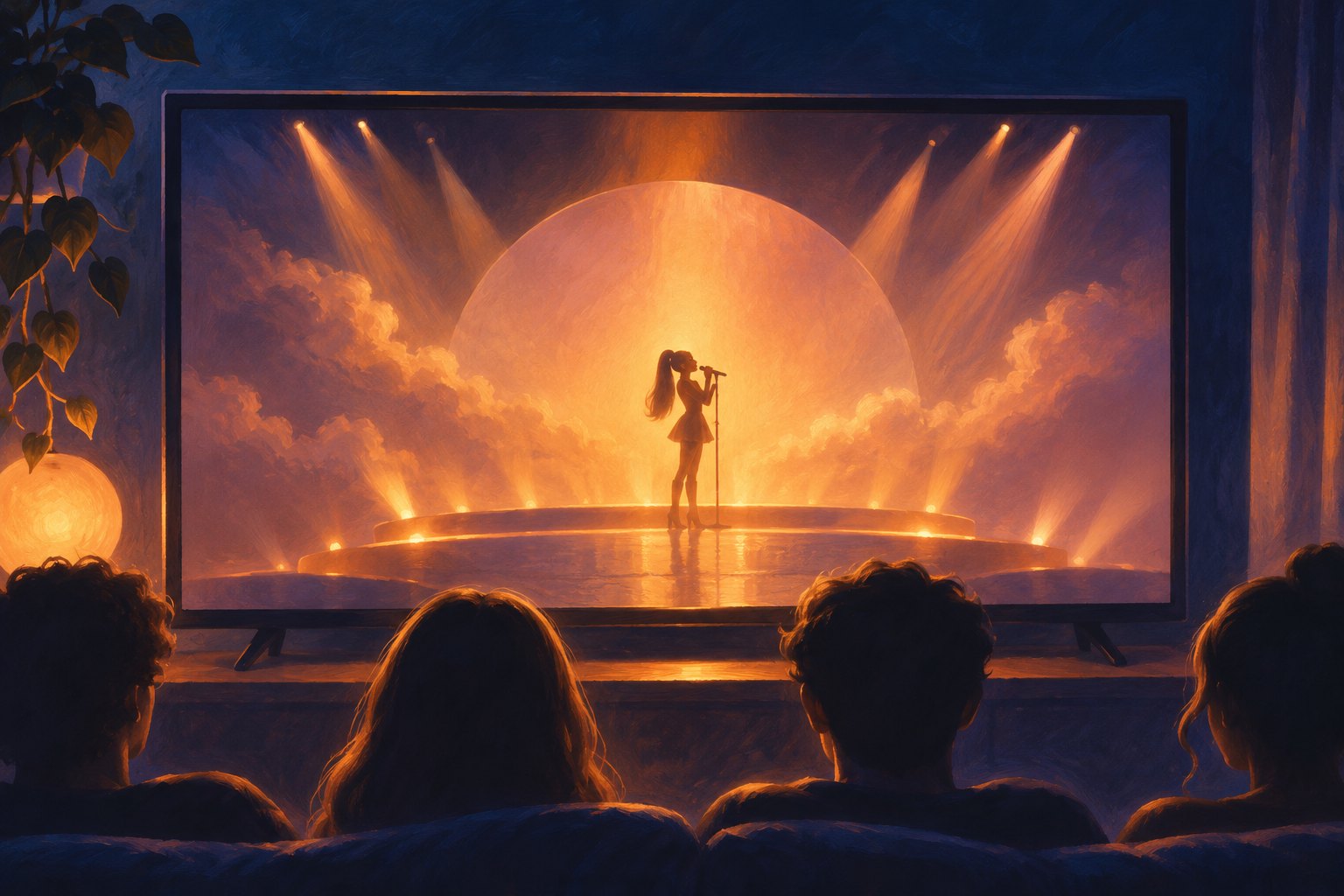
This is a spoiler-free critical preview of the streaming announcement, not a review of a screened film. The illustrations are conceptual artwork, not images from the production.
What the Peacock news establishes
The essential reported information is the connection between Grande’s Eternal Sunshine Tour and Peacock. A precise premiere date, runtime, complete program lineup, subscription requirements, and international availability cannot be established from that announcement alone. Those details matter, particularly for readers deciding whether to subscribe or organize a viewing night.
It is also sensible to keep the format question open. A concert presentation, a tour documentary, and a collection of related films offer different experiences. The wording of a headline should not become an excuse to invent a release structure, a backstage component, or a particular number of installments.
Until those details are established, the practical answer is straightforward: Peacock is the reported destination; a complete viewing guide requires more information. There is no responsible basis here for promising particular songs, guest appearances, venues, or bonus material.
A different question from what the camera can capture
Our earlier preview of the Eternal Sunshine Tour’s cinematic possibilities considered what filming a performance might reveal. The Peacock development shifts attention toward the other end of that exchange: the person watching.
A ticket holder arrives with a substantial commitment already made. They have chosen the date, traveled to the venue, and joined a crowd that reinforces anticipation. A streaming viewer may arrive with nothing more than curiosity. That difference changes how much shared knowledge a concert film can reasonably assume.
My preference is for a concert presentation that welcomes both kinds of audience without constantly explaining itself. A newcomer should be able to follow its emotional movement. A devoted fan should still feel that familiar material has room to unfold. Accessibility does not have to mean interrupting the music with a biography lesson.
Grande as performer, not a fictional character
A character-based approach to a concert film needs care. Grande is a real person performing for an audience, not a protagonist whose private motives can be confidently reconstructed from an expression. The most useful analysis would examine the public performance: how she addresses listeners, manages attention, and moves between different emotional registers.
There are at least three perspectives a critic should keep distinct. There is the artist doing the work, the speaker within an individual song, and the public figure an audience thinks it knows. Those perspectives can overlap, but treating them as interchangeable reduces interpretation to speculation.
A song’s emotional conviction, for example, does not establish a literal account of the singer’s life. Nor would a smile between numbers prove that an earlier expression was insincere. Performance involves deliberate choices. Its artistry often lies in making those choices feel immediate.
That distinction should guide an eventual review of Grande’s screen presence. The question is how convincingly a performance communicates its feelings, and what the completed film allows us to understand about that communication. Claims about private relationships or unspoken intentions would require evidence beyond the stage.
The home audience brings its own story

For someone who attended the tour, a streaming release can become an encounter with memory. They may recognize an emotional high point while noticing details they missed in the room. Their response will inevitably involve comparison between a personal experience and the version preserved on screen.
Someone who could not attend brings a different expectation. They may want a sustained sense of the event rather than a reminder of what they missed. A film that continually depends on existing nostalgia could leave that viewer outside the experience.
Then there is the casual viewer, who may know Grande’s name and a handful of songs but have little investment in the tour itself. For that person, the work must generate interest as it goes. Popularity can persuade someone to start watching; it cannot supply every reason to continue.
This is one reason audience response deserves thoughtful treatment in performance cinema. A cheering crowd can communicate belonging, but it can also become a shortcut that tells viewers how impressed they should feel. The distinction resembles the issue explored in our discussion of how event films turn spectatorship into a story: recorded excitement needs context before it becomes meaningful drama.
How to approach a first viewing
Once release details are available, a first watch will be most revealing if the program has a chance to establish its own sequence. Skipping immediately to favorite songs is an understandable pleasure, but it makes the larger structure harder to judge. Does an early moment gain meaning later? Does the ending feel earned by what precedes it?
A second viewing can answer a different question: what holds up when anticipation is gone? A performance film earns lasting value when returning to it reveals relationships between moments, rather than simply reproducing the thrill of recognition.
For anyone assessing the release, three distinctions will help:
- Personal favorites versus the whole experience: a beloved song can be satisfying even when the surrounding structure feels uneven.
- Visible emotion versus inferred biography: describe what a performance communicates before assigning it a private explanation.
- Tour memories versus screen evidence: judge the film’s choices using what it actually presents, while acknowledging what personal experience adds.
What a lasting concert film preserves
The deeper promise of Grande’s Peacock arrival is a change in the lifespan of a performance. An event that once depended on being somewhere at a particular time can enter a viewer’s ordinary life. It can accompany a reunion with friends, become a private repeat watch, or introduce someone to music they had previously passed over.
That change is not automatically a cinematic achievement. Availability makes a work reachable; the work itself must make returning worthwhile. The strongest outcome would be a presentation that preserves the feeling of an encounter while allowing viewers with different histories to find their own way into it.
For now, the Peacock news supplies a destination, not a verdict. Grande’s Eternal Sunshine Tour will have its most interesting screen test when familiarity, curiosity, and personal memory meet the finished presentation—and the performance has to speak to all three.
Original content by this site's editorial team. Published: November 24, 2026 at 08:54:44 PST (Los Angeles time)