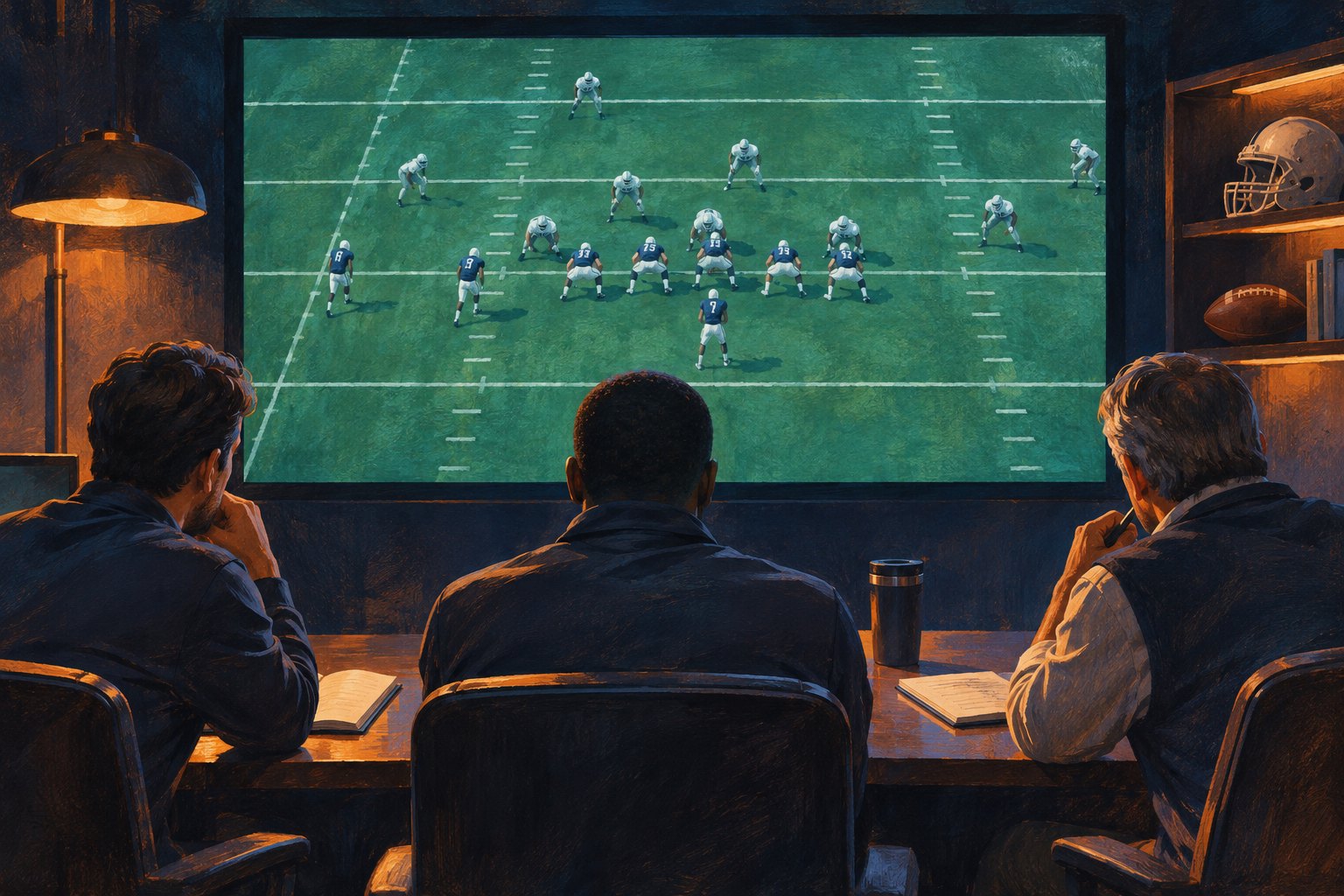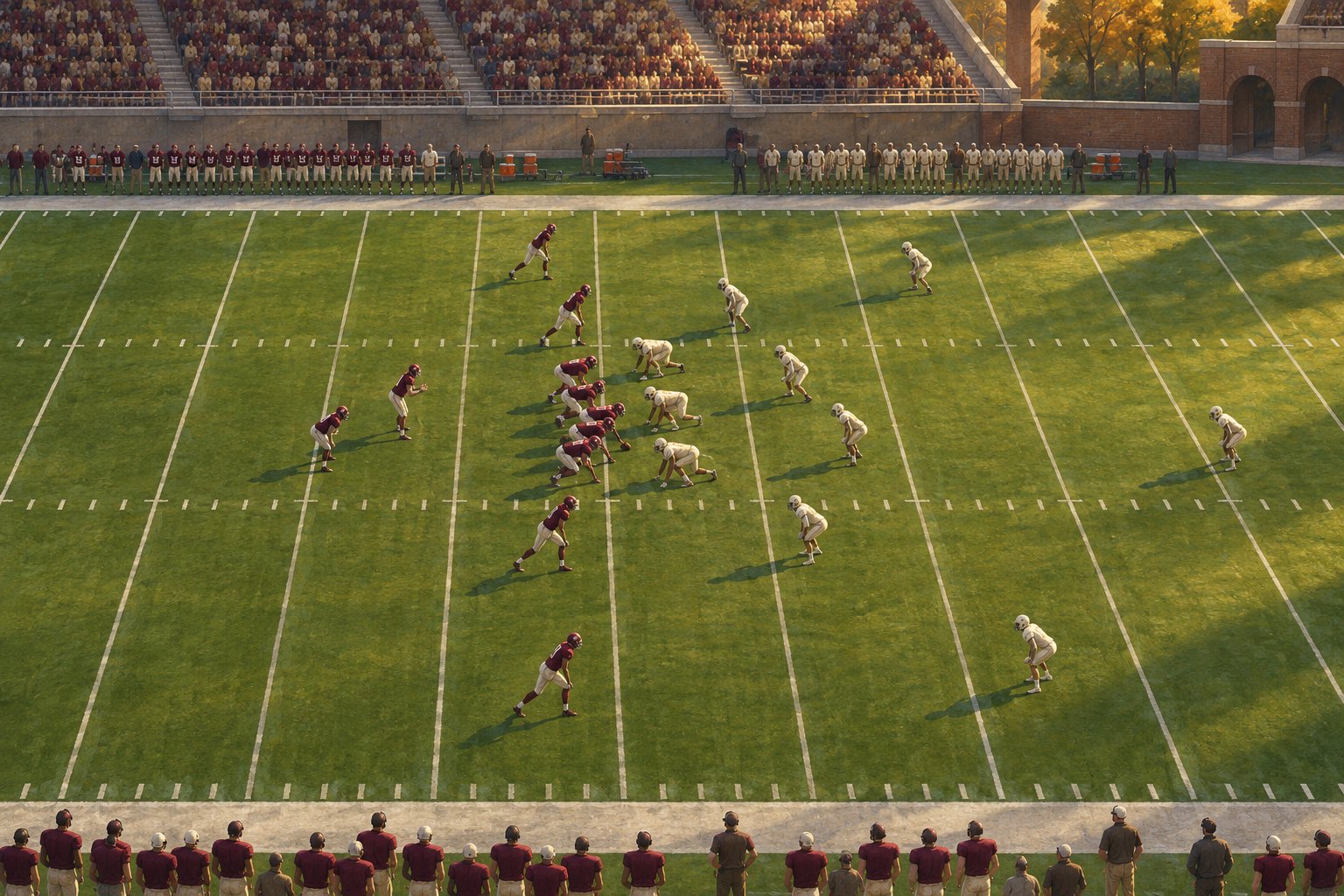
College football All-22 film is available for more than 100 teams, according to Sportico. For viewers who want to understand how a play develops, that is an invitation to watch differently: follow a receiver who never gets the ball, examine the space a defender protects, or notice the block that makes the eventual highlight possible.
The reported scope is substantial, but the team count alone does not establish which individual games are accessible, how complete each archive is, or what access costs. Those details matter when choosing a service. The immediate editorial question is more enduring: once you can see more of the action, how do you make that extra information useful?
My view is that the greatest benefit comes from changing the unit of attention. Instead of collecting spectacular moments, study one player's actions across an ordinary sequence. That approach has something in common with close film analysis: an apparently minor performance can change your understanding of the entire scene.
What All-22 Lets You Follow
All-22 refers to coaching footage intended to show the positioning and movement of all 22 players. Its broad perspective helps viewers track relationships across the field, including activity away from the ball. It is particularly useful when the question concerns how space opens, closes, or changes hands.
A conventional television presentation serves several purposes at once. It follows the action, communicates the result, and brings viewers close to recognizable faces. Coaching footage supports a different task: tracing how a result developed. Neither presentation eliminates the need for interpretation.
Our discussion of the ACC announcement and the importance of framing considers what a wider image makes visible. The next step is developing a repeatable viewing method. Seeing the whole formation is only the beginning; deciding where to look is the real work.
Start With the Player Who Does Not Get the Highlight
Football coverage understandably gravitates toward the person carrying or throwing the ball. An All-22 session becomes more revealing when you deliberately choose someone else. Watch that player before the snap, through the initial movement, and until the play ends. Resist switching your attention back to the ball halfway through.
The receiver: movement without a catch
A receiver's contribution cannot always be read from the target column. In a hypothetical passing play, a route might carry a defender away from the area where a teammate eventually catches the ball. The useful observation is the relationship between those movements: where the receiver travels, how the defender responds, and when the opening appears.
That does not establish that the receiver was deliberately serving as a decoy. Intent requires more evidence than movement alone. A careful description would say that the route drew coverage away from a particular area. It would leave the play's internal instructions unresolved.
The blocker: a brief action with a delayed payoff
Following a blocker shifts attention toward timing. Look at the initial contact, the direction of movement, and the moment the runner reaches that part of the field. A small positional advantage may matter because it exists at exactly the right instant.
This resembles watching an ensemble scene for the performer who sets up another actor's moment. The comparison concerns how we distribute attention, not whether athletes are following a dramatic script. The pleasure comes from recognizing an action whose importance becomes clear only a little later.
The defender: responsibility beyond the nearest opponent
A defender may finish a play close to the ball without having caused the breakdown. Conversely, someone far from the eventual catch may have influenced where the offense could go. Follow the defender's starting position and movement before assigning responsibility.
The essential distinction is between proximity and causation. All-22 can help you investigate that distinction, but it cannot automatically tell you the coverage call, the communication between teammates, or the adjustment a coach expected.
A Five-Pass Method for Studying One Play
Begin with a single snap rather than an entire afternoon of footage. Rewatching with a different question each time gives the session structure and makes it easier to identify where your interpretation exceeds what the image shows.

- Watch once at normal speed. Establish the basic sequence and outcome. Avoid pausing immediately to explain everything.
- Return to the formation. Note where your chosen player starts and whether anyone changes position before the snap.
- Follow only that player. Track direction, timing, contact, and changes of pace. Let the ball leave your attention.
- Watch the relevant opponent or teammate. Test whether the relationship you thought you saw holds up when you follow the other participant.
- Return to normal speed and write a limited conclusion. Separate the visible action from your explanation of its purpose.
A useful note has three parts: observation, interpretation, and uncertainty. For example, a hypothetical observation might be that a defender moves toward an outside receiver. The interpretation might be that this movement helps expose an inside passing lane. The uncertainty is whether the movement reflects the intended assignment or an error.
Keeping those categories separate makes the analysis stronger. It also makes revision easier: new evidence can change the explanation without erasing the original observation.
Do Not Let the Ending Rewrite the Decision
Knowing the result creates a powerful temptation. A completed pass can make every preceding choice look correct; an interception can make an earlier opening seem imaginary. Pause before the decisive action and consider what was visible at that moment.
Our analysis of watching game tape without letting the ending decide everything explores this problem of hindsight. With All-22, the challenge becomes sharper because a paused wide view gives the spectator time and perspective that a player did not possess.
Slow motion is valuable for examining sequence, but it can distort your sense of opportunity. An opening that looks generous while paused may exist only briefly. Return to full speed before describing a decision as obvious.
What a Larger Archive Cannot Prove
Availability across more than 100 teams broadens the potential field of study. It does not make one clip representative of a player's season. Before forming a broad judgment, look for comparable situations, unsuccessful attempts as well as successful ones, and evidence that challenges your first impression.
It also helps to define your purpose. Watching for enjoyment, investigating a particular tactical question, and evaluating a player are different activities. A viewer can appreciate coordinated movement without claiming expertise in the team's terminology or assignments.
The Deeper Reward: Attention Without Instant Judgment
The most interesting promise of expanded All-22 access is a richer appreciation of collective performance. The ball still matters, but it no longer has to determine every second of your attention. A route, a hesitation, or a well-timed block can become worth following in its own right.
For viewers accustomed to close readings of movies, the satisfying habit is familiar: return to the scene, follow someone you overlooked, and reconsider your first judgment. The footage offers more to examine. The quality of the interpretation still depends on patience, specificity, and a willingness to leave some questions open.
Original content by this site's editorial team. Published: November 10, 2026 at 23:57:41 PST (Los Angeles time)