Castmaster is Vulture’s movie-trivia game, and its title puts a familiar moviegoing pleasure in the spotlight: remembering the people who make a film stick. Sometimes an actor’s name arrives immediately. Sometimes you can picture the face, hear the voice, and reconstruct an entire exchange while the name remains stubbornly out of reach.
That gap is a useful starting point for thinking about film. Knowing who appeared in a movie and understanding what their performance contributes are related pleasures, each rewarding a different kind of attention. This spoiler-free Castmaster companion focuses on that relationship, with practical ways to build cast knowledge and carry it into richer viewing. It does not assess individual puzzles or offer a verdict on the game’s interface.
Why remembering a cast feels personal
A cast list looks orderly: names attached to roles. Our memories of those roles can be much messier. You might remember the person who interrupted an argument, delivered an awkward apology, or waited silently while someone else took control of the room. The performance survives as an impression before you can retrieve its credit.
For me, this is the most appealing territory for movie trivia. A question can reopen an experience that seemed finished. Trying to recall a performer brings back a location, a relationship, or the emotional temperature of a scene. The answer has value, but so does the brief return to the film that searching for it creates.
Castmaster provides an occasion to cultivate that curiosity. The useful question to carry beyond any trivia session is specific: what did I remember about this person’s work, and what made that detail memorable?
Separate the actor, the character, and the performance
These three categories are easy to blur. The actor is the credited performer. The character is the person within the story. The performance consists of the choices through which that character becomes legible: posture, timing, emphasis, movement, and reactions to others.
Keeping those categories distinct makes both trivia practice and film criticism more precise. Remembering a character’s occupation might help you reconstruct a scene. It does not establish the actor’s identity. Recognizing an actor from another film might give you a possible name, but the credit still needs checking.
Try a simple exercise after your next movie. Write down one performer, the character they played, and one observable choice. A useful note might describe a character answering confidently while avoiding eye contact. That gives you something to examine. Calling the performance brilliant records enthusiasm without explaining its cause.
Our character-focused Harry Potter movie quiz offers a related approach: use remembered details as an entry into questions about friendship, motivation, and the way a story directs attention.
Give supporting performances a second look
When building cast knowledge, start with the performers whose work actually caught your attention. That may include someone with only a small part. Screen time alone cannot explain why a face stays with you.
Consider a hypothetical scene in which one character makes an implausible promise. The speaker supplies the words, but another performer’s reaction can determine how we receive them. A relieved smile invites hope. A patient silence suggests familiarity with disappointment. A glance toward the exit introduces another possibility altogether.
This is where watching from a character’s perspective becomes useful. Ask what the listener wants, what they know, and what they are trying to conceal. Then look for visible evidence. A supporting character may have little dialogue while still giving a scene its tension.
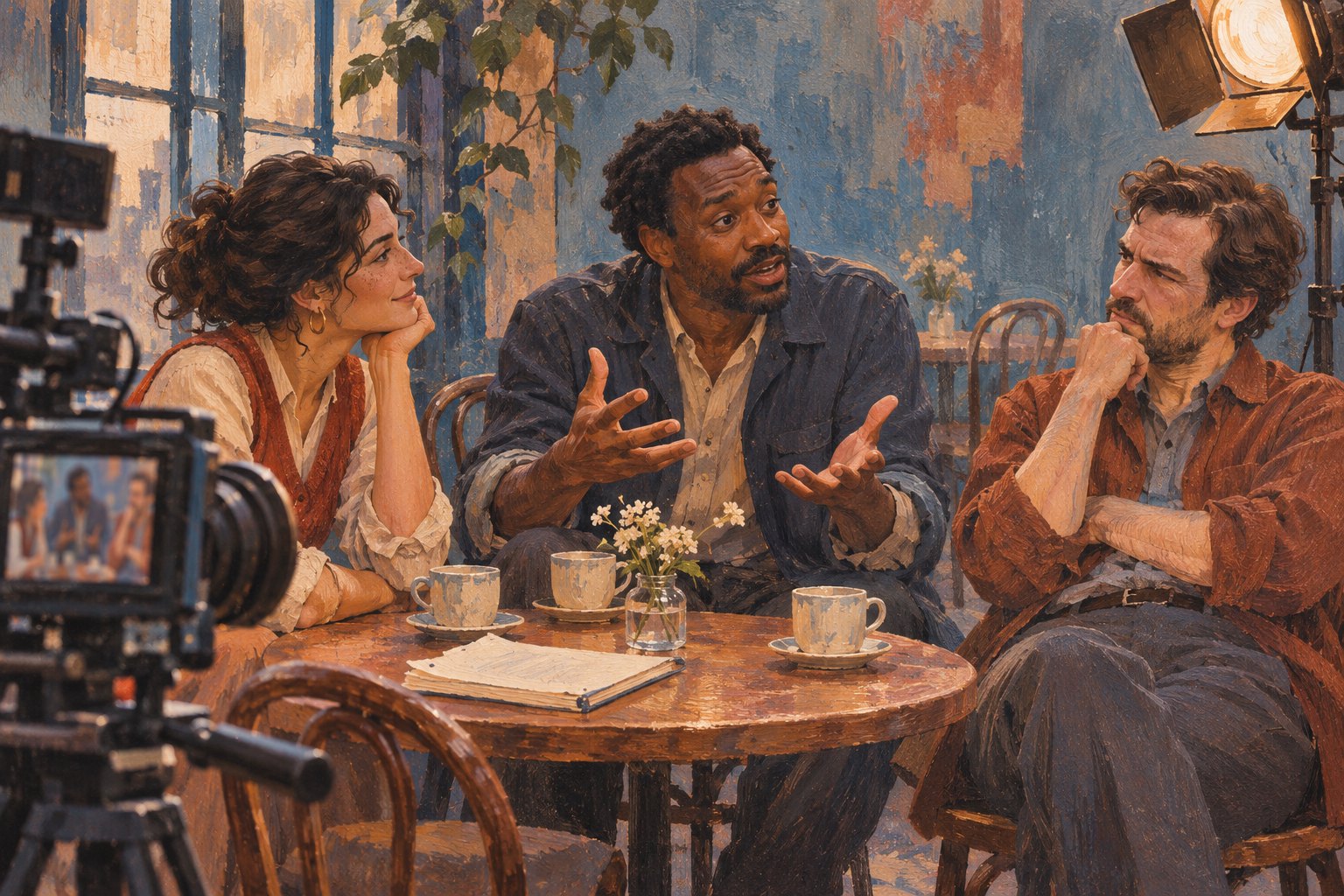
On a rewatch, follow the person who is listening through one exchange. Notice when the film lets you see their reaction and when it withholds it. That exercise also keeps praise proportionate: the effect you notice may depend on acting, framing, and editing working together.
A practical routine for stronger movie recall
You do not need to turn every viewing into homework. A few deliberate habits can give your interest somewhere to go after a Castmaster session. Treat the following as independent practice, rather than instructions for the game itself.
- Choose a film you have actually watched. Begin with a concrete viewing memory instead of assembling names associated with its genre.
- Reconstruct one relationship. Think about a pair of characters who argue, cooperate, or misunderstand each other. Their shared scenes provide a manageable starting point.
- Write down your best recollection. Keep uncertain names marked as uncertain. This prevents a plausible guess from quietly becoming a fact.
- Check the credits afterward. Confirm the performer and role, paying attention to the exact film when titles, sequels, or remakes could create confusion.
- Attach one observation to the verified name. Record a gesture, vocal choice, or reaction you could point to in the film.
The final step gives the exercise an editorial purpose. You are building knowledge connected to something you have seen. It also leaves room for discovery: a performer you barely noticed on first viewing may become the reason you revisit a scene.
Use memorable dialogue carefully
A remembered line can help bring a performance back into focus. Before treating it as evidence, however, verify the wording and who says it. Familiarity is no guarantee of accuracy, especially when a phrase has traveled through impressions, jokes, or casual conversation.
Then consider the delivery. Is the character asking for reassurance, asserting control, hiding embarrassment, or trying to end the conversation? The same words can carry different intentions depending on their rhythm and the response they provoke.
For a film review, an accurate quotation earns its place when the analysis explains what the line does. For trivia practice, it can serve as a reminder of the scene. Neither use requires collecting dialogue without context.
Let a missed answer guide your next viewing
A forgotten name can reveal a useful gap in your attention. Perhaps you followed the central relationship so closely that you barely registered the people around it. Perhaps a familiar performer disappeared convincingly into a role. Those are possibilities to investigate when you return to the film.
Choose a small task for that return. Watch one conversation with attention to interruptions. Follow how a character’s posture changes when another person enters. Notice which reaction makes you revise your impression of the speaker.
The distinction between observation and interpretation also informs our guide to judging what footage actually shows. Describe the evidence first; build your conclusion from it. In movie commentary, that habit helps keep a persuasive reading grounded in the work.
What stays after the trivia ends
My preferred measure of movie trivia’s value is the curiosity it leaves behind. Castmaster belongs to a form of entertainment that can make film knowledge enjoyable to revisit. The opportunity for a movie lover is to follow a recovered name back to a performance.
A cast becomes dramatically meaningful through relationships: who listens, who interrupts, who gets believed, and who changes the atmosphere by entering a room. Remembering the performers gives those contributions names. Watching them closely gives us something worth saying about their work.
Original content by this site's editorial team. Published: November 27, 2026 at 09:57:26 PST (Los Angeles time)