Coach Harbaugh Film Breakdown: Indianapolis Colts concerns football film study, rather than a theatrical movie. The Giants’ listing identifies Harbaugh and the Colts as its subjects, but that title alone does not establish which plays appear, what conclusions the coach reaches, or whether the discussion looks backward at a game or forward toward an opponent. Those distinctions matter for anyone arriving in search of a recap or a tactical verdict.
The useful starting point is the promise of the format: a coach helping viewers understand decisions that ordinary game coverage can make difficult to see. This article offers a viewing framework for that promise, not an assessment of unverified sequences. Its central question is straightforward: when the footage stops, can the explanation help us understand what a player could reasonably know before the result became obvious?
What a coaching breakdown should add to the footage
A highlight tells us where to look by following the ball. A worthwhile breakdown should also explain why the ball arrived there. That can mean directing attention toward spacing, the timing of a movement, or an interaction away from the eventual catch or tackle. The educational value lies in connecting those details to a decision.
For Harbaugh’s Colts subject, the most productive viewing habit is therefore to separate description from explanation. Identifying a player moving across the field describes something visible. Explaining how that movement changes another player’s available options goes further. A strong analysis makes the connection intelligible instead of relying on the coach’s authority to carry it.
This offers a specific standard for evaluating the segment without inventing its contents: does the commentary teach you something you could recognize on another play? An observation becomes useful when it travels beyond the clip that first illustrated it. Simply attaching praise or blame to an outcome leaves the viewer dependent on the next verdict.
Follow the player’s information, not your hindsight
Football footage creates an uneven relationship between viewer and participant. The viewer can revisit an instant. The player had to act while that instant was disappearing. A replay may also expose areas of the field that a participant could not inspect simultaneously.
That difference should shape any player-centered interpretation of the Colts footage. Before judging a choice, ask what was visible at the moment it had to be made. Where was the player facing? What had changed since the snap? Was an apparent opening available early enough to affect the action, or does it look inviting only after the footage has been paused?
These questions do not excuse every error. They make criticism more precise. There is a meaningful difference between overlooking accessible information and failing to anticipate something that became clear only afterward. A useful coaching explanation helps viewers locate that difference.
Our discussion of what football footage can actually tell us about a player explores the broader problem of treating images as proof. Here, the narrower challenge is time: identifying what the image could have meant to someone who had no opportunity to rewind.
Read the play through different roles
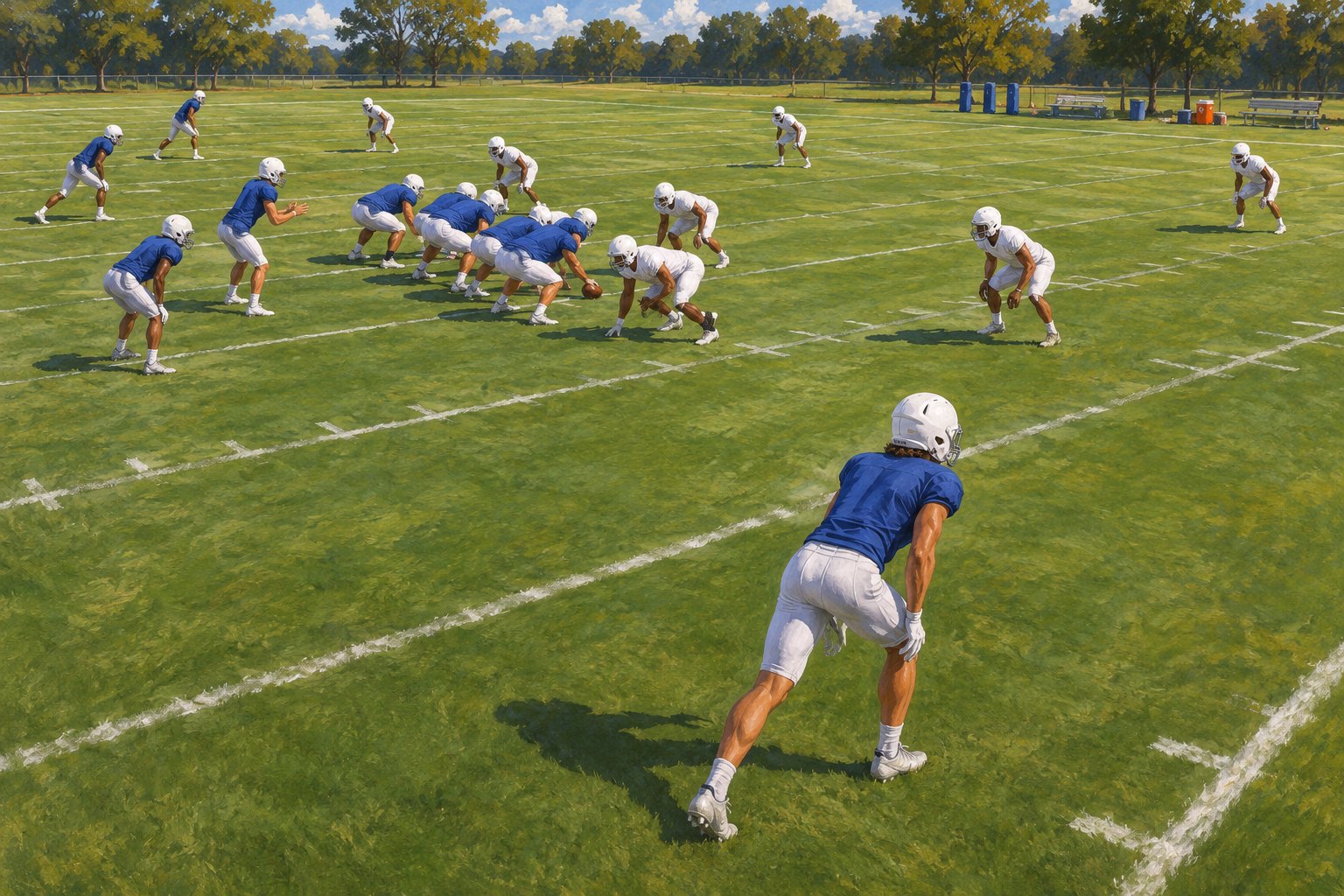
Movie analysis often becomes richer when we consider what each character wants and understands. Football requires a related exercise, with an essential boundary: real players are not fictional characters, and footage does not authorize us to invent their thoughts. We can examine visible actions and possible constraints while leaving unsupported motives alone.
The player handling the ball
Start with the obvious focal point, but resist making that person the entire explanation. If a sequence involves a pass, for example, follow the relationship between the throw and the surrounding action. An outcome may depend on several players’ timing. The relevant question is not simply whether the attempt worked, but which visible conditions made it possible or difficult.
The player away from the ball
On a second viewing, choose someone the original action encouraged you to ignore. Watch that player continuously for as long as the framing allows. Movement away from the focal point can help explain why space appears elsewhere. Equally, the footage may leave the player’s contribution uncertain. Recognizing that limit is more useful than assigning a confident explanation to every step.
The opposing player
Give the defender the same interpretive attention as the attacker, or vice versa. An opponent is responding to information and competing demands, not merely providing an obstacle for the featured player’s success story. Watching both sides turns a highlight into an encounter between choices. That is where coaching commentary can become especially revealing.
Use three passes to understand a sequence
If the segment’s presentation allows you to replay a sequence, a simple three-pass method can keep the analysis focused. It also prevents technical vocabulary from becoming a substitute for observation.
- Watch the action at normal speed. Establish the basic sequence and notice how little time separates movement from consequence. Avoid deciding who deserves credit or blame immediately.
- Follow one relationship. Choose two players whose movements appear connected. Observe how the space between them changes, and distinguish what you can see from what the commentary proposes.
- Return to normal speed. Test whether the explanation still makes sense when the decision must happen at game pace. A persuasive freeze-frame observation should clarify the moving action.
Afterward, try summarizing the explanation in ordinary language. If you can only repeat a technical label, you may have learned terminology without understanding the event. If you can explain which movement changed which option, the breakdown has given you a usable insight.
Separate a good outcome from a good decision
My preferred standard for coaching analysis is whether it resists judging every action by its ending. A successful play can contain a questionable choice. An unsuccessful play can include sound work undone elsewhere. Neither possibility should become an automatic defense; both are reasons to examine the sequence carefully.
This is also where sports analysis diverges from the emotional habits of sports drama. A movie can arrange a climactic result to resolve a character’s journey. Actual competition does not guarantee that effort, judgment, and reward will align so neatly. Our character-focused discussion of the meaning of a football game beyond winning in The Mosquito Bowl approaches that relationship through narrative. Coaching footage calls for a different discipline: keeping the outcome from swallowing the process.
The deeper value of Harbaugh’s Colts subject
The title establishes an opportunity for instruction, but it does not by itself justify a review score, attributed quotations, or claims about specific Colts strengths and weaknesses. Those require the actual discussion and its supporting footage. Treating this as a conventional movie review would also introduce the wrong expectations: there is no verified screenplay, character arc, memorable dialogue, or hidden reference to interpret here.
What makes the subject worthwhile for viewers interested in screen analysis is the possibility of redistributing attention. The ball attracts the eye; an explanation can reveal the work around it. A result invites an immediate judgment; a replay can reopen the question of how that result became possible.
That is the most meaningful test to bring to Coach Harbaugh’s Indianapolis Colts breakdown: after watching, do you notice a decision you previously missed, and can you explain it without borrowing the certainty of hindsight? The best payoff is a more patient, specific understanding of the people moving through the frame.
Original content by this site's editorial team. Published: November 27, 2026 at 09:22:38 PST (Los Angeles time)