Brandon Mull’s description of his feelings about the Fablehaven movie—“cautiously optimistic”—offers fans encouragement with a necessary qualification. The adaptation is taking shape, and its author sees reasons for hope. That is meaningful news. It is also different from having a finished film whose performances, storytelling, and visual imagination can be judged. His measured outlook is the central takeaway from the [Deseret News report](https://www.deseret.com/entertainment/2026/09/26/brandon-mull-shares-updates-on-fablehaven-movie/).
For readers wondering whether to get excited, a little anticipation seems reasonable. A verdict would be premature. The more interesting question is what this adaptation needs to preserve when a world readers have imagined becomes something everyone sees on the same screen.
This is an adaptation preview and critical commentary, not a review of the finished movie. The discussion covers the books’ basic setup without revealing major resolutions. It does not attribute invented dialogue, scenes, or Easter eggs to the film.
What Mull’s optimism can—and cannot—tell us
An author’s confidence matters because adapting a beloved story involves interpretation at every step. Someone must decide what to dramatize, what to compress, and which emotional relationships deserve the most screen time. Readers naturally want reassurance that those decisions begin with an understanding of the material.
But enthusiasm is evidence of an author’s outlook, not a substitute for the audience’s eventual experience. Even a thoughtful adaptation can struggle with pacing. A convincing screenplay can become an uneven movie. Conversely, a change that sounds alarming in isolation can work beautifully through performance and editing.
Mull’s qualification leaves room for that uncertainty. Fans do not have to turn encouragement into a promise or reserve judgment so completely that anticipation becomes impossible. The useful position is curiosity: follow the project, distinguish intentions from completed work, and let the film earn its reputation.
That distinction also shapes our discussion of what a world premiere establishes before audiences see a movie. A milestone creates an opportunity for discovery. It cannot determine the quality of the encounter.
The adaptation’s strongest starting point is a family relationship
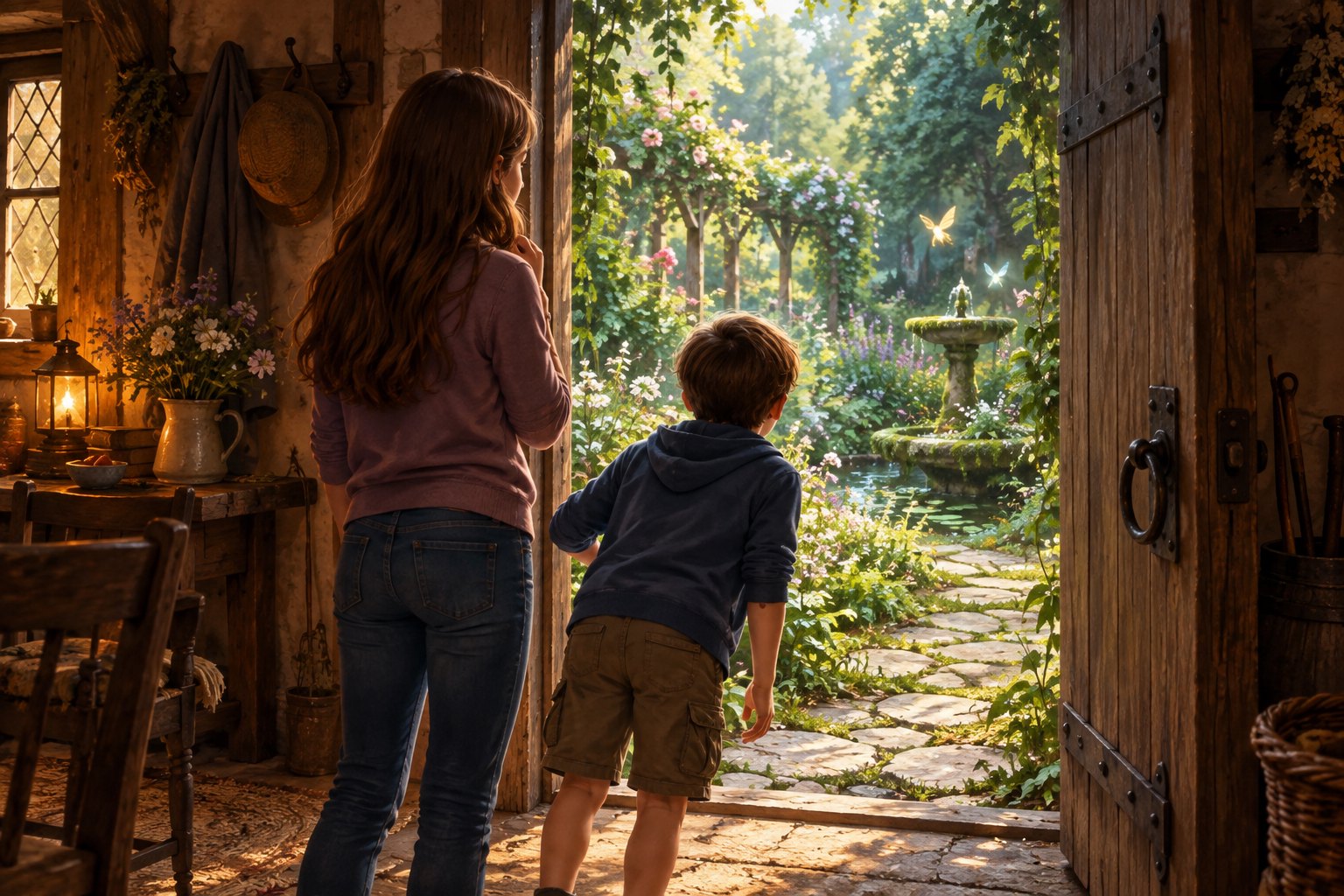
The book series begins with a compelling reversal of an ordinary family visit: siblings Kendra and Seth discover that their grandparents care for a sanctuary for magical creatures. That foundational relationship is described in the [publisher’s introduction to Fablehaven](https://parents.simonandschuster.com/9781442429772). It gives the fantasy a personal point of entry before the audience needs to understand a larger mythology.
From a filmmaking perspective, the grandparents’ home can carry two meanings at once. It belongs to the familiar world of family routines, but it also opens onto something the children do not yet understand. The adaptation’s opportunity lies in allowing those meanings to coexist. An audience should feel the comfort of arriving somewhere apparently ordinary before appreciating how incomplete that first impression was.
My strongest hope for the movie is that it gives the siblings room to experience discovery differently. Two children sharing an adventure should not become interchangeable witnesses to special effects. The camera can reveal who notices a detail, who looks toward the other person, and who hesitates before asking a question. Small reactions can establish a relationship more efficiently than an explanation of it.
These are possibilities for the adaptation, not descriptions of footage. Their value is practical: they offer a way to evaluate whether the eventual film treats its young protagonists as people with distinct perspectives.
Wonder needs a point of view
A fantasy movie can introduce an extraordinary creature and still fail to create wonder. Technical detail establishes what an object looks like. Dramatic context establishes why seeing it matters.
For Fablehaven, I would judge a reveal partly by what happens immediately around it. Does the film allow a moment of uncertainty? Does a reaction change the relationship between the siblings? Does discovering something beautiful make the setting feel more inviting, more difficult to understand, or both?
One useful cinematic approach would be to limit what the audience sees until a character has a reason to notice it. Another would be to let sound suggest life beyond the frame. Neither requires withholding spectacle indefinitely. Both make spectacle part of an experience rather than a succession of illustrations.
The same principle applies to scale. A close view of a child reconsidering something familiar can carry more emotional weight than a sweeping survey of a magical landscape. The landscape becomes memorable when the film gives us someone through whose eyes to encounter it.
A sanctuary should feel like a place with responsibilities
The word sanctuary is especially promising. It suggests that the fantastic world exists for reasons beyond entertaining its visitors. Someone cares for it. Its inhabitants have needs. Entering it means stepping into relationships and obligations that were already there.
That is an interpretation of the premise, not a claim about the movie’s eventual message. But it points toward a richer kind of family adventure. Discovery can become an education in responsibility: the realization that finding something extraordinary does not automatically mean understanding it or having a right to control it.
On screen, this idea would benefit from clear cause and effect. Whenever a fantasy establishes a boundary, audiences need enough context to understand why a decision matters. Mystery can remain; confusion about basic consequences is less helpful. The viewer should be able to follow a character’s reasoning even when that reasoning turns out to be incomplete.
Adults matter here, too. Caretaking is potentially dramatic because it involves choices, compromises, and limits. An adaptation would lose something if its older characters existed only to deliver information before the children’s next adventure.
Faithfulness should be measured through consequences
Readers will understandably compare locations, creatures, and dialogue with what they remember. Those comparisons are part of the pleasure of adaptation. Yet a recognizable detail can be emotionally empty if the movie removes the circumstances that made it matter.
My preferred test of faithfulness is whether choices retain their weight. Does a discovery change someone’s understanding? Does a mistake affect trust? Does a difficult decision emerge from a recognizable relationship? Those questions can accommodate necessary compression while still demanding respect for the story.
This connects with the challenge explored in our commentary on making a familiar fantasy legacy matter through character. Recognition brings an audience into a movie. Emotional consequences give that audience a reason to remain invested.
The deeper promise behind the anticipation
The most appealing possibility for Fablehaven is a movie that treats growing understanding as an adventure in itself. Its family-and-sanctuary premise offers a way to move from the excitement of discovering another world toward the harder question of how to behave within it.
That would give the spectacle lasting meaning. A magical place could become more than somewhere the characters visit; it could change what they believe they owe one another and the world around them.
Mull’s cautious optimism is an appropriate beginning. The eventual film will need to turn that hope into specific moments: an expressive reaction, a believable disagreement, a discovery whose consequences extend beyond the reveal. Those are the moments that could make Fablehaven feel alive on screen.
Original content by this site's editorial team. Published: September 27, 2026 at 17:17:30 PDT (Los Angeles time)