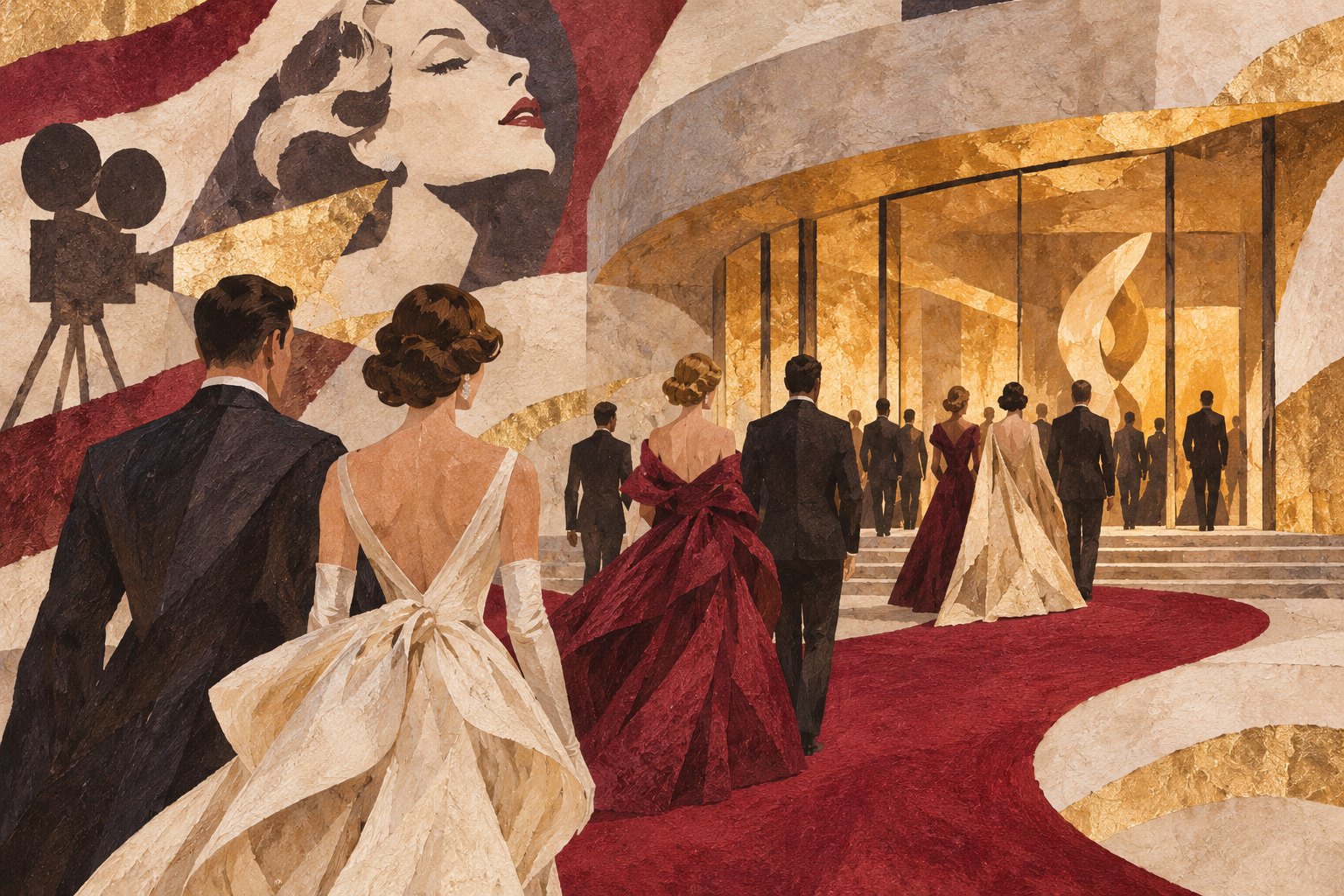
Anya Taylor-Joy, Kim Kardashian and Viola Davis feature in WWD’s coverage of arrivals at the 2026 LACMA Gala. For readers looking for the central attendance news, those are the three names highlighted. Together, they also provide an intriguing starting point for film commentary: how much of what we see on a screen has already been shaped by the public image we carry into it?
A gala photograph offers recognition almost instantly. Dramatic acting asks for something slower. It invites us to watch a person want something, encounter resistance and adjust. My view is that the most useful connection between red-carpet coverage and film criticism lies in understanding that difference. Enjoying a star’s arrival and evaluating a performance involve distinct kinds of attention.
What an arrival tells us—and what remains outside the frame
The attendance report establishes a connection between these public figures and the event. It does not, by itself, establish a new collaboration, a casting announcement or a shared project. Nor does being named alongside one another mean that Taylor-Joy, Kardashian and Davis arrived together or interacted. Those would be separate claims requiring separate reporting.
This distinction matters because celebrity coverage encourages narrative. Place several recognizable names in one headline and readers naturally begin imagining relationships between them. Film storytelling trains us to do something similar: we connect adjacent images and search for a reason they belong together. In news coverage, however, proximity on a page is an editorial arrangement, not evidence of a relationship.
The interesting critical question is therefore not what these arrivals supposedly reveal about an unannounced movie. It is how quickly recognition becomes interpretation—and how easily that interpretation can follow us into our next viewing.
Taylor-Joy and Davis: recognizing a face before meeting a character
For a viewer familiar with Taylor-Joy’s or Davis’s screen work, either name can summon memories before a new scene begins. Those associations are personal. One viewer remembers an expression; another recalls a voice, an emotional confrontation or the atmosphere of a particular story. A publicity image can reactivate that accumulated memory without showing a second of acting.
That is part of the pleasure of movie stardom. We bring a history with us. But it can also narrow our attention. If we expect intensity, we may describe a quiet moment as intense before asking what the character is actually doing. If we expect authority, we may overlook hesitation. The familiar adjective arrives faster than the observation.
A stronger review starts with a concrete question: what changes during the scene? Does the character become less certain after hearing an answer? Does a controlled voice soften when someone leaves? Does an apparently confident gesture conceal a practical attempt to delay a decision? These are hypothetical examples of what to examine, rather than descriptions of either woman’s gala appearance.
The distinction protects an actor’s range. It allows each performance to establish its own behavior instead of becoming another illustration of a reputation the reviewer has already decided upon.
Kardashian and the temptation to review a reputation
Kardashian’s inclusion sharpens the same issue from another direction. A reader may approach her name with strong opinions that have little to do with any particular dramatic scene. That response is worth noticing because it exposes a habit that can affect judgments about any recognizable performer: deciding what someone represents before examining what they do.
Neither approval nor skepticism is an adequate substitute for criticism. If evaluating a screen performance, the questions should remain specific. Is the character’s objective legible? Do reactions respond to the other performers? Does the delivery suit the situation? Does the scene develop, or does it remain fixed at its opening emotional pitch?
Sharing an arrivals headline does not make Kardashian, Taylor-Joy and Davis artistically interchangeable. It does create an opportunity to apply the same discipline to our own viewing: recognize the expectations attached to a name, then let the work complicate them.
A photograph holds a pose; a scene reveals an adjustment
A still image can communicate posture, expression, texture and the relationship between a figure and the surrounding space. Those are substantial visual qualities. Our discussion of vintage fashion at the LACMA gala considers a different aspect of that visual presentation. Here, the crucial element is what a photograph cannot preserve: the passage from one response to another.

Consider an imagined exchange in which someone answers a difficult question with a smile. A photograph might make the smile look reassuring. A scene could reveal that it arrives too late, disappears too quickly or remains in place after the other person looks away. Duration changes its meaning. So do the preceding line, the camera’s distance and the editor’s choice of when to cut.
This is why a persuasive performance review needs verbs more than decorative adjectives. A character deflects, persuades, retreats, tests or reassures. Describing those actions connects interpretation to the drama. Calling someone magnetic may convey enthusiasm, but it leaves the reader wondering what actually happened.
Watch the person who is not speaking
One useful viewing exercise is to follow the listener during a conversation. Notice whether new information changes their breathing, gaze or position. Then watch the exchange again with attention to the speaker. The scene may look different because its emotional center is not necessarily the person delivering the most memorable sentence.
Dialogue gains force through that relationship. Quoting a striking line without explaining who hears it, what preceded it and what follows can turn criticism into a collection of familiar phrases. The words matter; so does the response that gives them consequence.
Our examination of the original Rocky cast across its screen appearances offers a related route into thinking about performers through their characters and relationships. The broader principle is useful whenever celebrity recognition threatens to eclipse the people inside a story.
Let the character revise the first impression
The 2026 LACMA arrivals place Taylor-Joy, Kardashian and Davis within the same piece of celebrity coverage. The most productive response for a film viewer is curiosity about how that public visibility influences perception—not a verdict about talent drawn from attendance.
A star image offers continuity: a face we recognize, associations we remember, expectations we can name. A character can disrupt that continuity. Someone apparently composed may lose control; someone initially difficult to read may become painfully understandable. Good criticism makes room for that revision.
That is the deeper distinction behind the glamour. Recognition tells us who has entered the frame. Watching carefully tells us what happens after the first impression—and whether we are willing to change our minds.
Original content by this site's editorial team. Published: November 8, 2026 at 08:59:14 PST (Los Angeles time)