The 2026 LACMA Art+Film Gala red carpet offers a particularly interesting pairing for movie lovers: Anya Taylor-Joy in vintage Pierre Cardin and Brittany Snow in vintage Ralph Lauren. Both appear in W Magazine’s coverage of the evening; their vintage designer credits are identified in Vogue’s coverage. Those credits introduce a story beyond the familiar question of who wore the most attention-grabbing dress: what happens when an established garment becomes part of a contemporary star’s image?
For this critic, that is a rewarding way into the gala’s fashion. An older design arrives with a history, while the person wearing it supplies a new context. The result can resemble a fresh interpretation of familiar material—a useful connection to cinema, provided we keep the actor separate from the characters audiences remember.
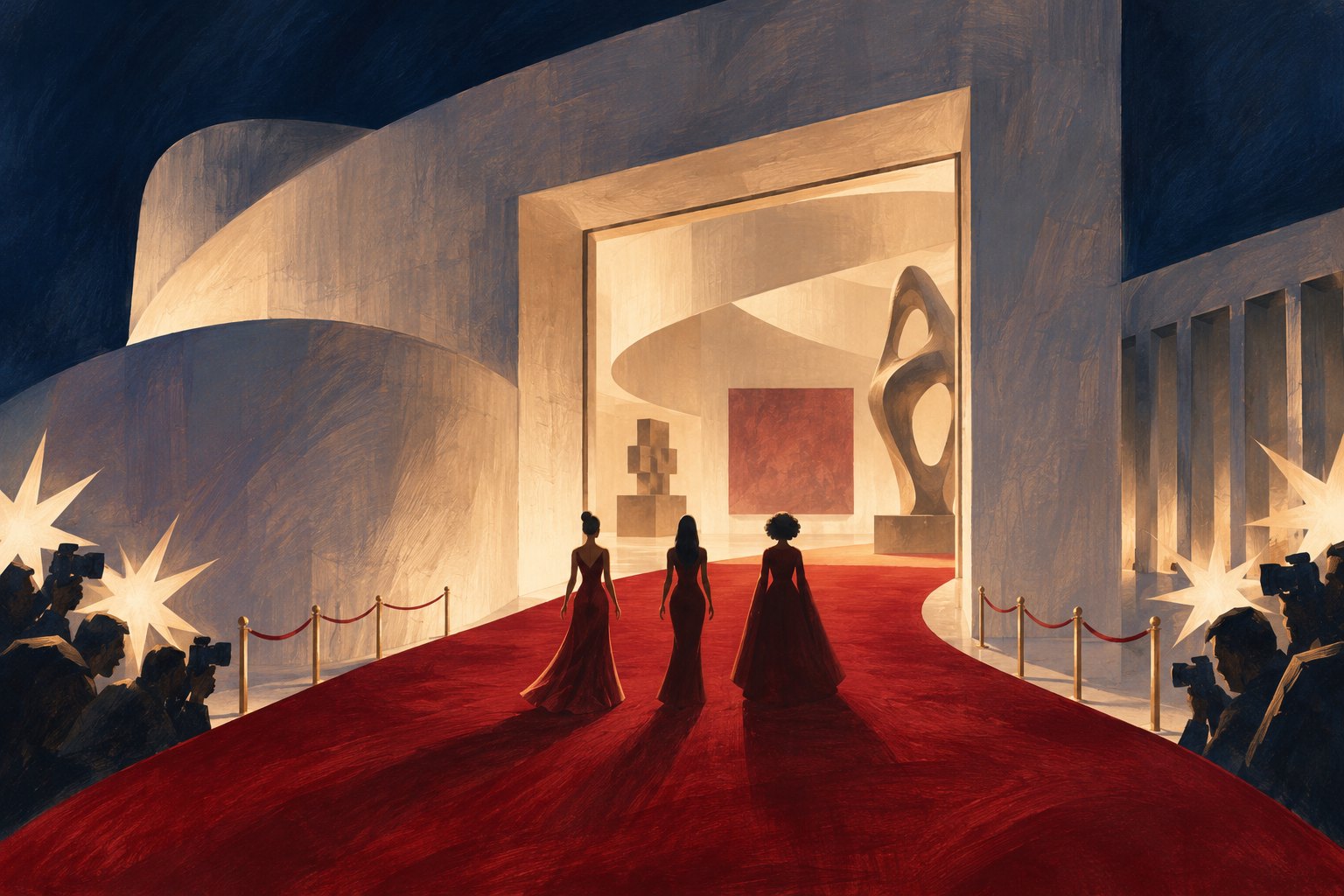
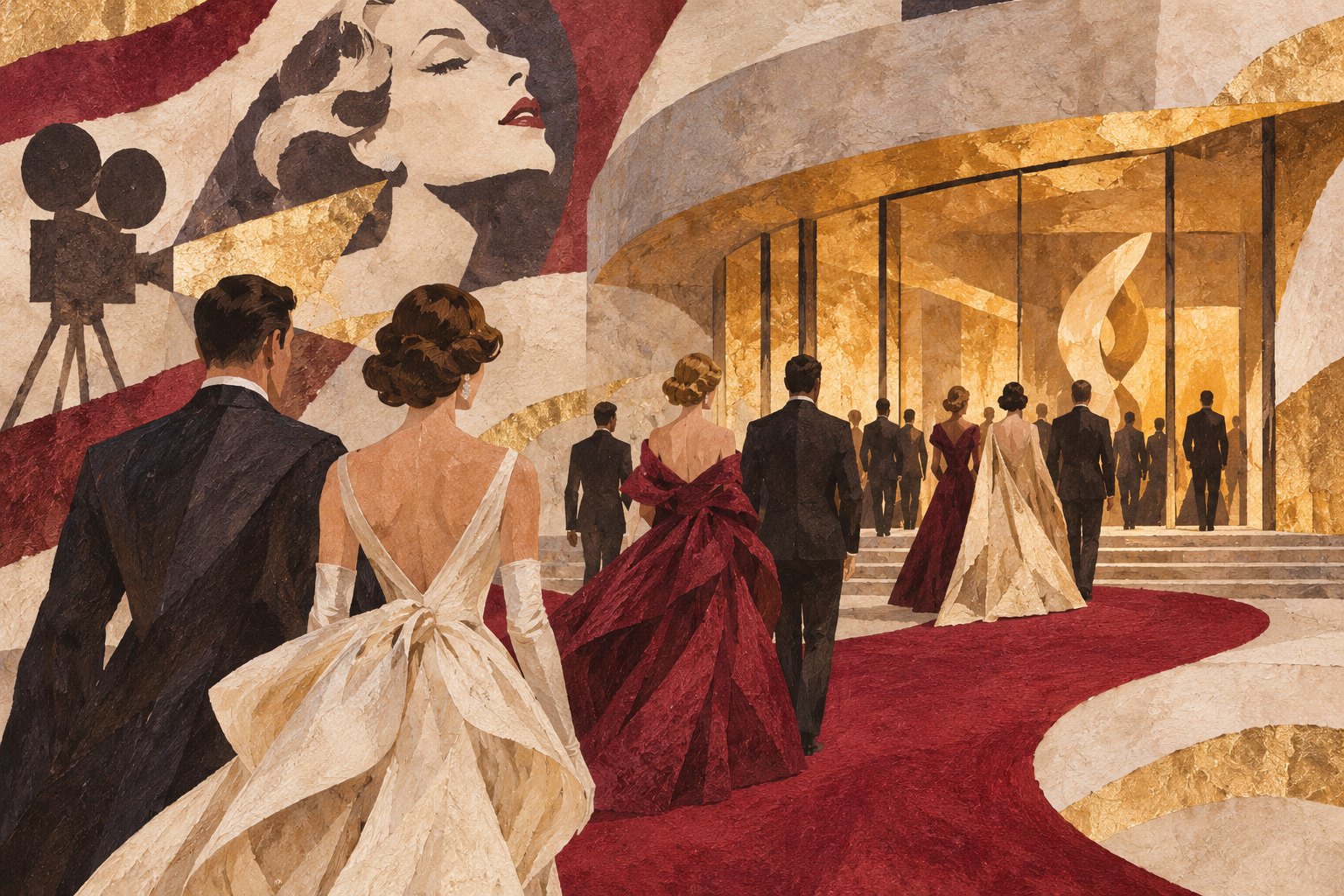
This is red-carpet and film-culture commentary. The accompanying illustrations are conceptual scenes, not photographs of gala attendees or reproductions of their outfits.
The vintage credits worth noticing
W Magazine’s roundup places Taylor-Joy, Snow, and Ashley Park among the evening’s featured arrivals. Vogue identifies Taylor-Joy’s look as vintage Pierre Cardin and Park’s as Prabal Gurung; British Vogue identifies Snow’s as vintage Ralph Lauren. These are useful starting points because they establish a concrete distinction between the looks without requiring speculation about styling intentions.
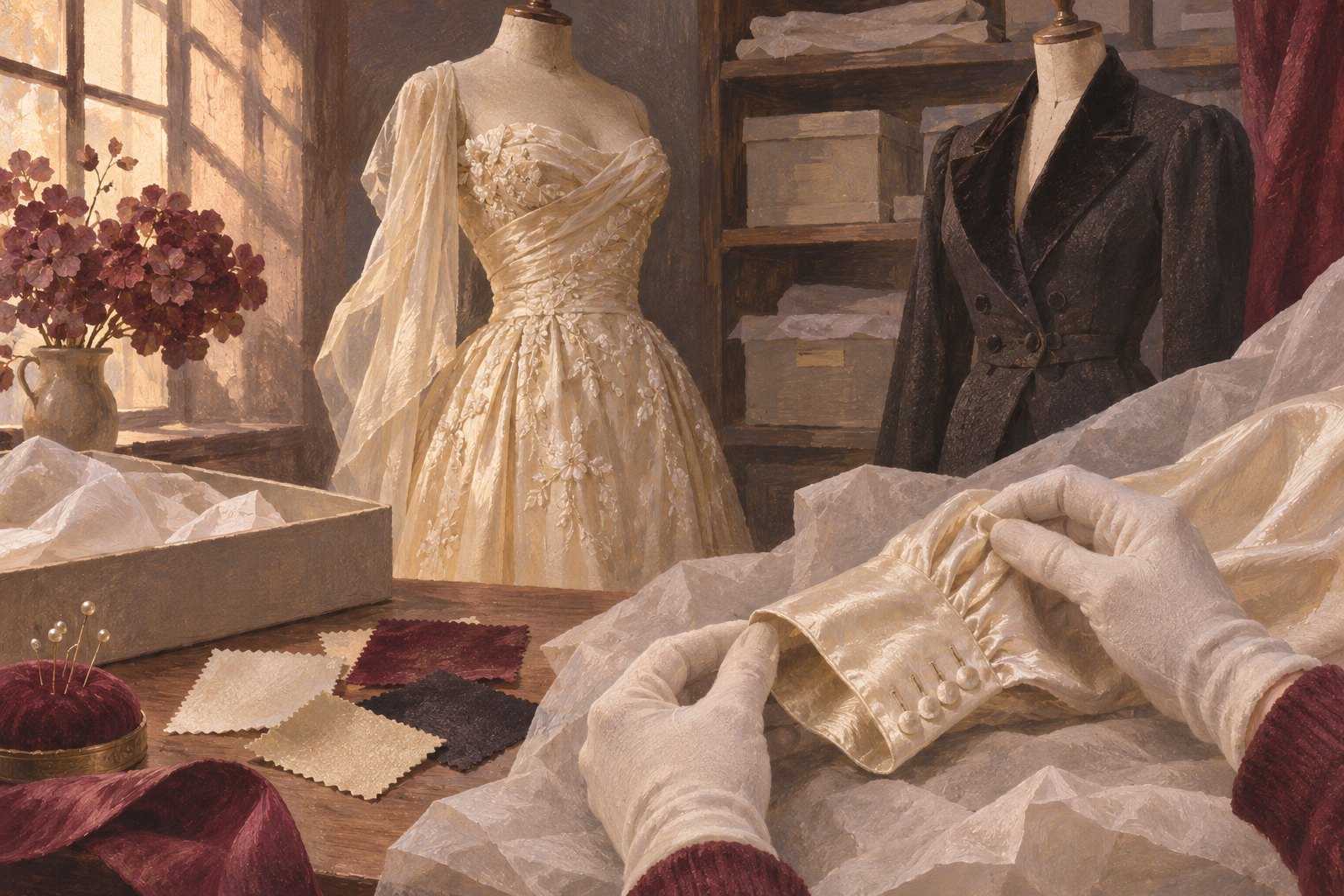
A vintage credit, however, is only a beginning. It does not automatically establish a garment’s original season, previous owner, alterations, or route from storage to red carpet. Nor does it prove that the wearer intended to reference a particular movie. Those details require their own documentation. A precise reading should preserve the difference between knowing the designer and knowing the garment’s complete history.
That distinction makes the Taylor-Joy and Snow pairing more interesting, not less. Both credits invite attention to clothing that predates its current appearance, but there is no need to invent a shared theme or claim that the two women coordinated. Their looks can be considered together as separate examples of the same creative possibility: bringing an existing design into the present.
Anya Taylor-Joy: a familiar face gives an older design a new context
Taylor-Joy’s Pierre Cardin credit creates a meeting between an identifiable contemporary performer and an established design name. The useful critical question is how much each contributes to the way we read the appearance. Would the garment command the same attention on someone unfamiliar? Would the star’s image feel different in another designer’s work?
These questions matter because recognition affects looking. Viewers rarely encounter an actor’s photograph with no associations attached. They may remember a performance, a publicity image, or an earlier fashion appearance before they notice construction or proportion. The face provides a story that the garment itself has not necessarily told.
My preference is to give the clothing a moment before reaching for a movie comparison. Describe the visible outline, the relationship between fabric and body, and the balance of the styling first. Only then ask whether an association with a screen role adds anything specific. Calling a look cinematic should explain its visual effect, rather than merely acknowledge that an actor is wearing it.
Brittany Snow: why vintage need not mean playing a period character
Snow’s vintage Ralph Lauren credit provides a second route into the same conversation. It would be easy to treat the word vintage as shorthand for nostalgia. But a garment’s age does not determine how a present-day audience experiences it. Styling, posture, and photographic framing can make an older piece feel immediate.
This is where red-carpet dressing differs from period costume. In a movie, clothing participates in a fictional world with defined circumstances. It may establish a character’s resources, workplace, ambitions, or relationship to social expectations. At a gala, an older garment need not establish any fictional identity at all. It can simply be a considered choice for the person wearing it.
Reading Snow’s appearance through that distinction leaves room for appreciation without turning her into an invented character. We can be interested in the decision to wear vintage without claiming to know her private motivations. We can also resist assuming that an older design is automatically more sophisticated than a new one. Age is context; the success of an outfit still depends on what the complete appearance achieves.
What red-carpet dressing shares with screen costume
The strongest connection is the way clothing directs attention before anyone speaks. A sharply defined shoulder, a loose sleeve, or a restrictive silhouette can alter our impression of a figure. These are visual effects, not reliable diagnoses of personality. The same outfit can suggest authority to one viewer and discomfort to another.
Film has ways to develop or overturn that first impression. A character can behave unexpectedly, change clothes, or move through settings that reveal the limits of an appearance. A red-carpet photograph gives us a much narrower encounter. It encourages a quick judgment while withholding much of the evidence that would make a character analysis persuasive.
That is why a gala appearance cannot responsibly stand in for a review of someone’s acting. Our discussion of how film collaborators share credit for memorable screen moments offers a related reminder: a compelling image and a dramatic performance emerge from different combinations of work.
How to judge an archival look beyond the label
A designer name can help identify a garment, but it should not finish the criticism. For readers comparing the LACMA appearances, three questions offer a more useful approach than treating provenance as an automatic award.
- Does the whole appearance feel coherent? Consider the relationship between the garment, accessories, hair, and overall proportions rather than isolating a single striking detail.
- What does another angle reveal? A front-facing photograph can conceal structure or flatten volume. Where additional photographs are available, use them before deciding how the garment works.
- Can the judgment be explained without the brand name? If the only argument is that the piece comes from a respected house, the description has not yet become criticism.
These questions also keep fashion commentary focused on choices rather than bodies. It is possible to dislike an outfit’s proportions, find its styling distracting, or prefer a different visual balance without treating the wearer’s physique as a problem to be corrected.
A garment can return without repeating itself
The deeper appeal of vintage on this red carpet is the possibility of continuity without exact repetition. An existing garment enters a different public moment, encounters another wearer, and becomes visible to people who may never have seen it before. That process can renew attention to design without requiring a fictional backstory.
It also gives movie audiences a useful reason to slow down. Alongside the broader questions explored in our commentary on who feels welcome in film culture, there is pleasure in looking carefully at a single creative choice.
Taylor-Joy’s and Snow’s vintage credits make that pleasure tangible. The most interesting judgment is not whether the past has defeated the present, or whether a dress resembles a favorite character’s costume. It is whether an existing design finds a convincing new expression through the person wearing it. That is a question worth asking after the first flash of recognition fades.
Original content by this site's editorial team. Published: November 8, 2026 at 05:10:42 PST (Los Angeles time)