Madonna’s reported seven wins are a major story from the 2026 MTV Video Music Awards. Yahoo’s coverage describes them as her first VMA victories in 27 years, while ABC News reports her return with Sabrina Carpenter and Charli XCX. Together, those developments give the ceremony an immediately recognizable dramatic shape: an established star returns to the spotlight, receives renewed recognition, and shares the occasion with other prominent performers.
For readers following the winners, an important distinction comes first: a reported seven-award total does not establish the individual categories or the complete results for every artist. This article examines Madonna’s reported success and the comeback narrative surrounding it; it is not a complete category-by-category winners list.
The interesting critical question is what that narrative helps us see—and what it encourages us to overlook. Awards establish recognition. Understanding the screen presence behind that recognition requires attention to performance, framing, and the difference between a public persona and a person.
What the reported results establish
The central developments can be stated without attaching unsupported details to them:
- Madonna: Yahoo reports seven wins and describes them as her first VMAs in 27 years.
- Sabrina Carpenter and Charli XCX: ABC News places both artists in its account of Madonna’s VMAs return. Their inclusion in that account does not, by itself, establish any award victories.
- The wider ceremony: Billboard’s coverage tracks winners, while NBC Los Angeles covers results, performances, and major moments. Those are related but distinct parts of the event.
That last distinction matters to anyone comparing the results with the broadcast. Winning an award, delivering a performance, and becoming the subject of the evening’s most discussed image are different achievements. A memorable appearance cannot be converted into a category win, and an award total cannot explain every response to a performance.
Our earlier guide to Madonna’s VMAs appearance approached the event through anticipation. The reported results now shift the discussion toward recognition and the meaning attached to her return.
Why seven wins make such an effective comeback narrative
Seven is a concrete number. A comeback is an interpretation. Bringing them together turns an awards result into a miniature story with an implied beginning, absence, and resolution.
The reported 27-year gap makes that structure especially tempting. It gives the audience a long stretch of time to imagine and a decisive moment to place at its end. Yet a gap between award victories describes the behavior of an awards institution. It does not establish an equivalent gap in an artist’s creative life, public visibility, or relationship with listeners.
My reading is that the most useful version of this comeback story concerns renewed recognition. That interpretation allows the seven wins to matter without making trophies responsible for validating an entire career. It also leaves room for a more demanding assessment of the work itself.
Film criticism encounters a similar problem when a celebrated actor returns to awards contention. Biography can lend a performance emotional weight before a viewer has examined a single scene. The extra resonance is real, but it should sharpen our attention rather than settle our judgment in advance.
Madonna, Carpenter, and Charli XCX: a shared image is not a complete story
ABC News’s account brings Madonna, Sabrina Carpenter, and Charli XCX into the same return narrative. That combination invites interpretations about influence, continuity, and the relationship between established and contemporary pop identities.
It would be premature to assign each performer a symbolic role solely from that association. Describing one as a mentor, another as an heir, and another as a disruptive outsider might produce tidy commentary, but it would also impose a script on real people. A stronger interpretation needs evidence from the appearance itself.
The useful questions are concrete. Who initiates an exchange? How is attention distributed? Does each performer have space to establish an individual presence? Does the staging create a conversation among them, or does it primarily organize everyone around one central figure? These are viewing criteria, not claims about undocumented moments.
They also keep the analysis fair to Carpenter and Charli XCX. Their significance should not be reduced to what their presence supposedly says about Madonna. A shared performance can support several distinct identities, and criticism should remain alert to all of them.
The television frame helps decide what a return means

A televised awards performance reaches viewers through a sequence of choices. Camera distance determines whether we study a face or understand a formation. Shot duration determines whether a gesture develops before us. An edit can connect two performers or interrupt their relationship.
Those choices are particularly consequential when the surrounding story is a return. A sustained close-up may invite us to search for emotion. A wide shot can emphasize command of a large space. An audience reaction can suggest that we are witnessing a moment of collective recognition. None of these techniques guarantees a particular meaning, but each directs attention.
For a useful second viewing, follow one element at a time. Watch the complete staging before concentrating on close-ups. Notice whether edits clarify movement. Then consider whether the emotional impression comes from the performer, the broadcast’s presentation, or their interaction.
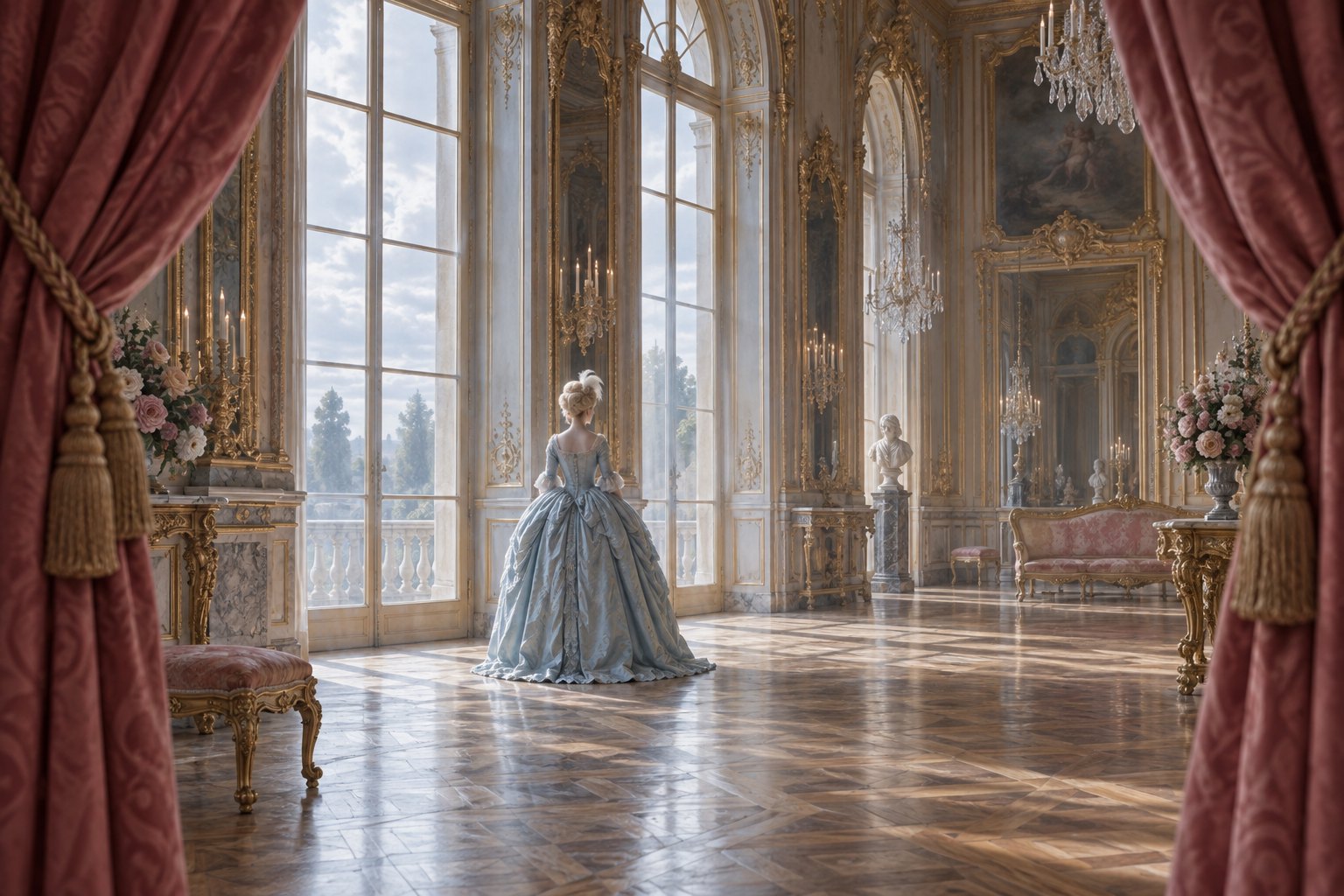
This is where the VMAs become relevant to film commentary: both forms organize our relationship with people through images. Our analysis of public spectacle and private perspective in Marie Antoinette explores a related critical concern. A lavish image can reveal a subject’s position while still leaving their interior life beyond our reach.
What the award total can—and cannot—tell us
Madonna’s reported haul provides a reason to revisit the work recognized by the ceremony. The next step is to identify each award, the work attached to it, and the credited contributors. Without that detail, seven trophies remain a measure of recognition rather than an explanation of artistic achievement.
For viewers interested in visual storytelling, the questions then become specific: does an image deepen a song’s emotional perspective? Does movement express a relationship? Do costume, lighting, and editing develop an idea across time? Spectacle becomes more rewarding when its details contribute to something beyond immediate impact.
My judgment is that the strongest reading of Madonna’s 2026 VMAs story preserves both celebration and curiosity. The reported wins deserve acknowledgment; the appearance with Carpenter and Charli XCX deserves consideration on its own terms. The deeper significance of a return emerges when we examine what an artist does with renewed attention—and how the screen allows us to see it.
Original content by this site's editorial team. Published: September 27, 2026 at 20:54:55 PDT (Los Angeles time)