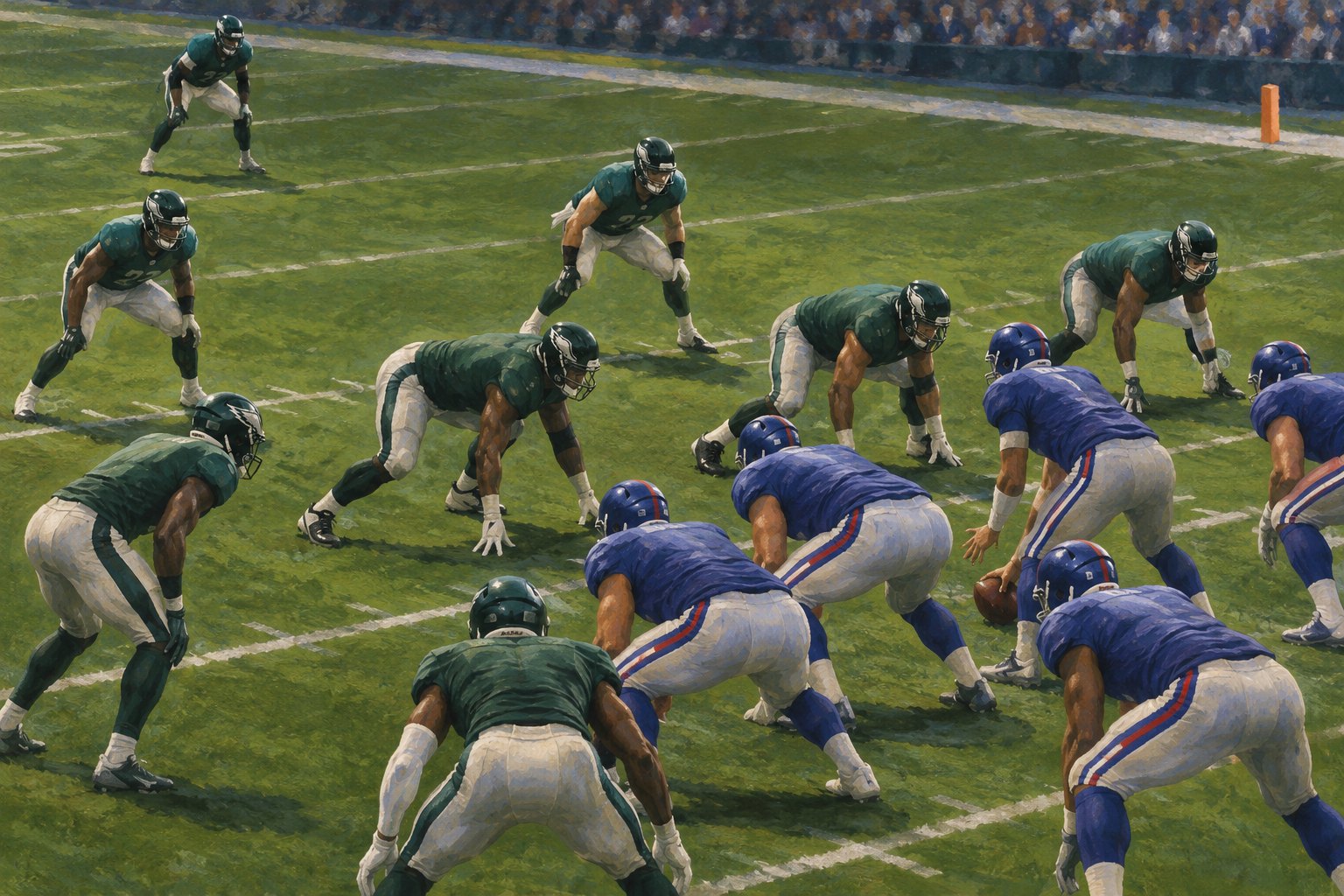
Trevor Lawrence’s Week 9 precision is the focus of the Jacksonville Jaguars’ Film Room feature, and the most useful question it invites goes beyond whether a pass reaches its receiver. Where does the ball arrive, when does it arrive, and what can the receiver do next? Those distinctions give an accuracy discussion substance. A completion records an outcome; close viewing can help explain the quality of the throw that produced it.
This is football film study rather than a narrative movie. Its subjects are athletes making decisions under pressure, and its central interest is execution. The analysis below offers a framework for examining the feature’s stated subject, not a play-by-play verdict or a claim to have independently graded Lawrence’s entire Week 9 performance. Specific throws, dialogue, and statistical conclusions require evidence beyond the program’s title.
Accuracy Begins With the Receiver’s Next Step
For this discussion, it helps to distinguish a catchable pass from a precisely placed one. A catchable ball gives the receiver a reasonable opportunity to secure possession. A precisely placed ball also serves the situation: it may preserve momentum, reduce a defender’s access, or allow a controlled finish near the boundary. These are practical viewing distinctions, not separate official statistical categories.
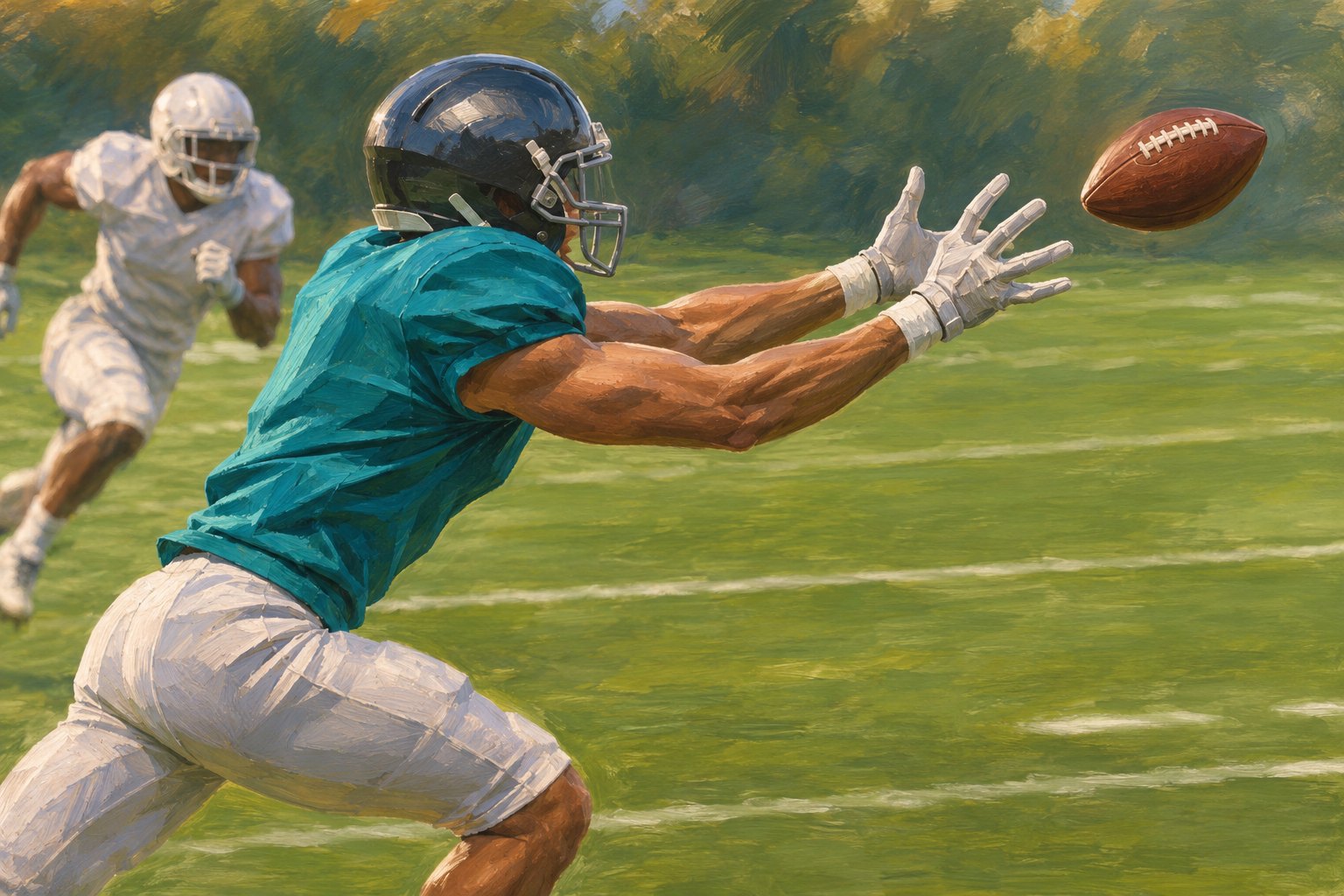
Imagine two hypothetical passes to a receiver moving across the field. One arrives slightly behind him, requiring a turn that interrupts his stride. The other arrives ahead of his chest, allowing him to keep running. Both might become completions. Yet the second may leave the offense with more opportunity after the catch. Watching only the quarterback’s release misses that difference.
That makes the receiver’s body a useful starting point when examining Lawrence. Does he maintain his path? Does he reach comfortably, turn sharply, slow down, or leave the ground? An adjustment is evidence worth investigating, although it does not automatically establish a mistake. Defensive positioning can make an apparently awkward location the sensible choice.
The Defender Helps Define the Target
A receiver does not carry a fixed ideal target around the field. The preferred placement changes with the defender’s position, the receiver’s movement, and the available space. A ball delivered toward one shoulder may keep it away from a nearby opponent. A pass that seems less convenient from an isolated offensive perspective may make better sense when the coverage enters the frame.
Here, defensive leverage simply means the defender’s positional advantage relative to the receiver and the space being attacked. Watch which side the defender occupies and how quickly that relationship changes. Then ask whether the throw exploits the available space or brings the contest back toward the defender.
Our guide to reading defensive football beyond the highlight develops the complementary perspective: individual actions become more intelligible when the surrounding players remain visible. For Lawrence’s accuracy, that means judging the destination of the ball against the defensive picture, rather than treating every receiver adjustment as the same kind of event.
Timing Turns an Opening Into an Opportunity
Placement and timing are closely connected. A receiver can appear open when the quarterback begins his throwing motion and face a much tighter contest by the time the ball arrives. Conversely, a throw released before an obvious opening develops may meet the receiver just as the route creates space. The useful question is how release, route, and arrival fit together.
When watching Lawrence, compare the release with the receiver’s change of direction. If the ball leaves before that change, the sequence may demonstrate anticipation. But the image alone does not establish the precise play call, the quarterback’s complete progression, or what adjustments the players agreed upon. Describe the visible relationship before assigning a detailed explanation.
Slow motion is especially helpful for identifying those moments, but it changes the experience of time. A window that looks generous during a paused replay may have existed only briefly at game speed. Return to the uninterrupted action before deciding that a throw was obvious or easy. The replay should clarify the pressure of the decision, not erase it.
Watch Lawrence’s Movement Without Inventing His Thoughts
The quarterback’s lower body offers another line of inquiry. Notice the space around Lawrence, whether he can settle before throwing, and whether his release follows a reset or occurs while moving. Those conditions help explain the physical demands of a pass. They also make comparisons between throws more meaningful than simply grouping every completion together.
Still, a clean-looking throwing motion is not proof of an optimal decision, and an unconventional release is not proof of poor execution. Mechanics, decision-making, and result are related but distinct. A useful assessment keeps all three in view without allowing one attractive image to settle the entire argument.
The same restraint applies to his gaze. Helmet direction can suggest where he is looking, but it cannot reliably reveal every read or intention. Claims that he deliberately moved a defender with his eyes require stronger support than a brief head turn. Close analysis becomes more persuasive when it states the limits of what the camera shows.
A Four-Pass Method for Watching the Film
Rather than trying to track everyone at once, revisit each available sequence with a different purpose. This keeps attention on observable details and makes the eventual judgment easier to explain.
- Watch at full speed. Follow the play through the catch or incompletion to understand its rhythm before pausing.
- Follow Lawrence. Note the space around him, his movement, and the moment the ball leaves his hand.
- Follow the receiver and nearest defender. Look for changes in separation, direction, and access to the arriving ball.
- Watch the finish. Assess the receiver’s adjustment and immediate next step, then reconnect those details to the throw.
Write conclusions narrowly. “The receiver kept moving through the catch” is an observable statement. “Lawrence made the only correct read” requires knowledge of alternatives and assignments. That difference separates useful analysis from confident narration.
What a Selected Sequence Can—and Cannot—Prove
A feature centered on precision naturally directs attention toward execution worth examining. Its examples can illustrate particular qualities without establishing how consistently those qualities appeared across every attempt. To reach a broader performance verdict, viewers would need the unsuccessful plays and less memorable decisions as well.
This is also an editorial question about sports storytelling. Our discussion of how a football mini movie creates drama after the result is known considers how selection shapes meaning. A technical feature has a different purpose, but the principle remains relevant: the sequence chosen for attention influences the story viewers take away.
The Deeper Value of Precision
My view is that the most revealing way to approach Lawrence’s Week 9 spotlight is through what a throw enables for someone else. An impressive pass need not demand a spectacular catch. Its excellence may lie in letting the receiver keep his balance, protect possession, and continue moving with minimal adjustment.
That is the richer interpretation of quarterback accuracy: a relationship among people moving through changing space. Lawrence’s release matters, but so do the receiver’s path and the defender’s opportunity. The best film analysis makes those relationships visible—and gives viewers a reason for their judgment beyond the fact that the ball was caught.
Original content by this site's editorial team. Published: November 11, 2026 at 22:17:38 PST (Los Angeles time)