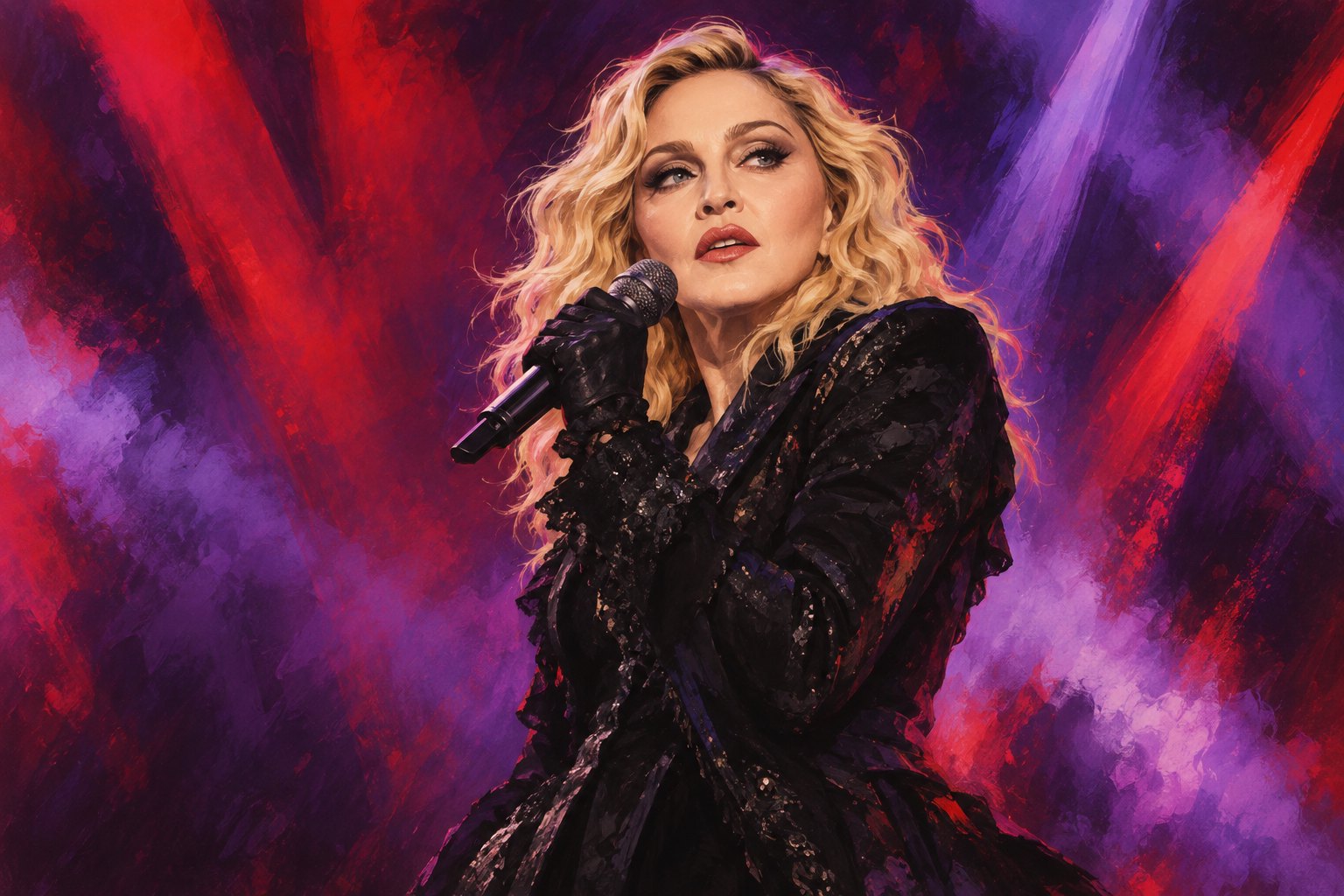
Madonna’s announced performance is a central attraction of the 2026 MTV Video Music Awards. For U.S. viewers, the ceremony’s scheduled broadcast is Sunday, September 27, at 7:30 p.m. Eastern and 4:30 p.m. Pacific on CBS and MTV, with live streaming through Paramount+ Premium. If you are catching up on September 28, the viewing distinction that matters is access to the full replay.
This is a viewing guide and critical preview, rather than a verdict on Madonna’s performance. The interesting question extends beyond what she might sing: how will the television presentation turn a stage appearance into a compelling piece of screen storytelling?
How to watch the 2026 MTV VMAs
The announced U.S. viewing arrangements are:
- Television: CBS and MTV, with a scheduled start of 7:30 p.m. ET or 4:30 p.m. PT on September 27.
- Live streaming: Paramount+ Premium.
- Replay: Paramount+ announced on-demand access for subscribers on all plans beginning Monday, September 28.
- Scheduled broadcast window: Two hours, ending at 9:30 p.m. ET or 6:30 p.m. PT.
These arrangements are described in the [official Paramount+ viewing guide](https://www.paramountplus.com/sneak-peak/sneak-peak-how-to-watch-the-vmas/), which also identifies Madonna as the announced opening performer. That makes the beginning of the complete telecast the logical place to start when looking for her appearance.
Check your subscription tier before choosing a live stream: access to an on-demand library does not automatically include every live broadcast. For a replay, search for the complete ceremony and check the episode date. A promotional special, red-carpet program, and performance highlight package serve different purposes.
Outside the United States, check your local broadcaster or streaming catalog. The U.S. schedule does not establish international availability, and a subscription with the same brand name may carry different programming in another territory.
What Madonna’s announcement tells us—and what it leaves open
A performance announcement establishes an intended appearance. It does not establish the finished set list, guest appearances, costumes, staging, or artistic success. Those distinctions matter especially when anticipation encourages people to describe an event before they have watched it.
There is also a difference between an artist’s place in an awards ceremony and the quality of a particular performance. Nominations create context. Applause creates atmosphere. Neither substitutes for examining the choices made during the actual number.
For Madonna, the most useful critical question is how the performance presents her relationship with the viewer. Does the staging invite intimacy, project authority, create distance, or shift among those positions? These are questions to bring to the broadcast, not claims about what it contains.
Thinking this way allows room for surprise. A spare arrangement might communicate more than a crowded stage. A familiar gesture might acquire a different meaning in a new setting. Conversely, a visually elaborate production can leave little impression if its images never develop an idea.
Watch the screen persona as carefully as the spectacle
A film review often begins with what a character wants and how a scene makes that desire visible. A televised music performance permits a related approach, provided we distinguish a public stage persona from the private person performing.
Watch where Madonna directs her attention. Looking into the lens addresses the person at home; looking across the auditorium acknowledges the live audience. Turning away can withhold access. None of these gestures has a fixed meaning, but their arrangement can establish a relationship as clearly as dialogue does in a dramatic scene.
The revealing moment may be a transition. If a performance moves from a commanding pose to a quieter passage, does the camera allow the change to register? Does the lighting support it? Does the musical arrangement create enough space for a different emotional register?
Our discussion of Jalen Brunson’s SNL appearance and the comedy of letting your guard down considers a related issue: familiarity gets a celebrity our attention, but the performance still has to do something with it. The same standard is useful here.
The television director shapes the performance you see
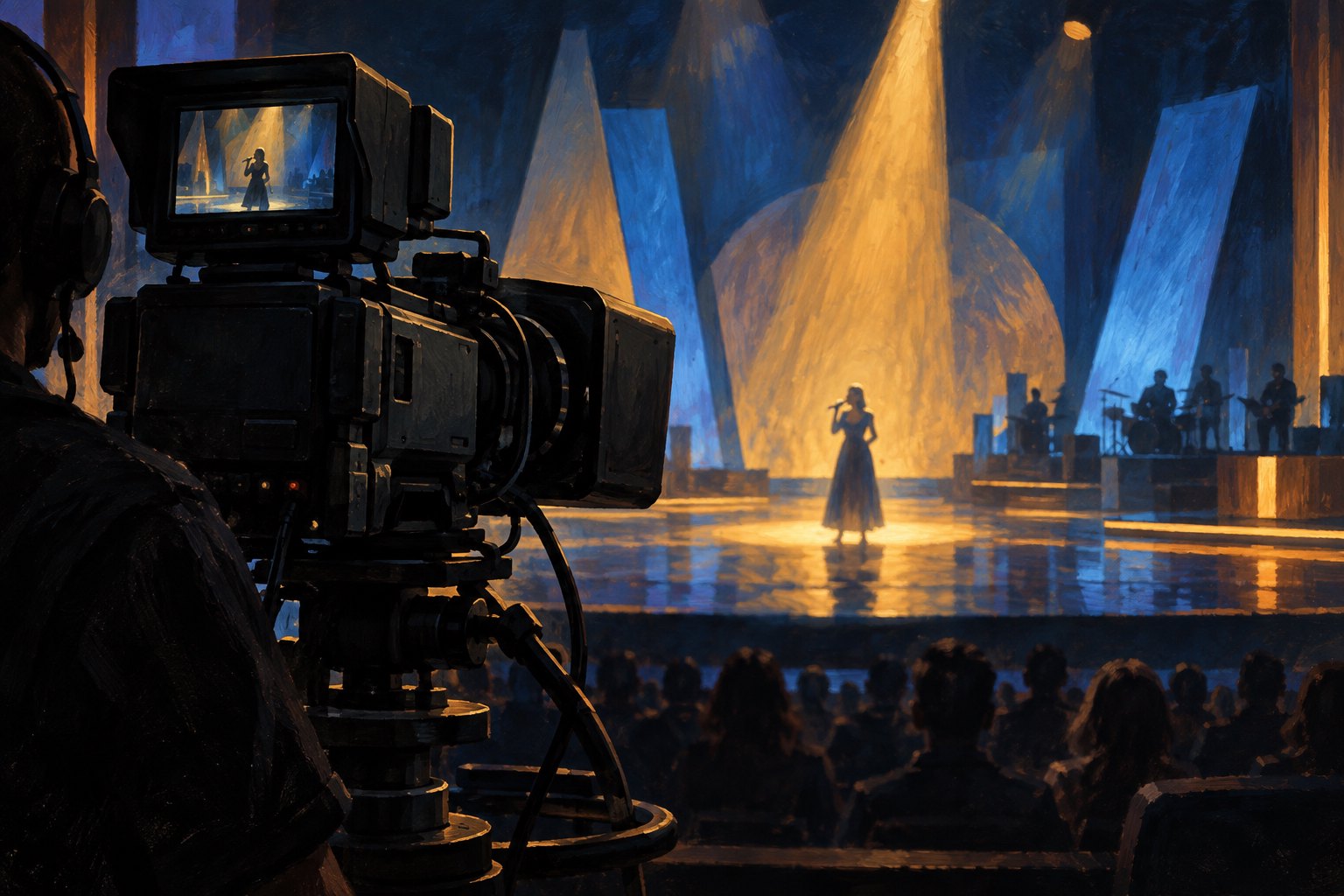
The audience in the room can choose where to look. The audience watching television receives a sequence of choices made on its behalf. That makes camera direction central to any fair assessment of a televised performance.
Wide shots establish relationships
A wide shot can explain the distance between a singer and supporting performers, reveal the shape of choreography, or show how the set organizes attention. When cutting becomes too frequent, those relationships may become difficult to read. Before calling a number visually confusing, consider whether the staging is unclear or whether the broadcast keeps interrupting your view of it.
Close-ups give gestures their weight
A close-up can make a small expression the emotional center of a large production. Its effectiveness depends on timing. Holding on a face gives the viewer time to interpret it; cutting away immediately may reduce the expression to another passing image.
Reaction shots suggest how to respond
A celebrity smiling in the audience supplies social context, but it also directs interpretation. The broadcast can encourage us to experience a moment as triumphant, surprising, or moving by showing someone else responding that way. Enjoy those reactions while keeping your judgment grounded in the performance itself.
The broader issue resembles the distinction explored in our commentary on Amelia Dimoldenberg’s celebrity-image comedy: a public image is material a performance can use, rather than evidence of someone’s private motives.
Use the full sequence to judge a memorable clip
If you encounter Madonna’s appearance through a short excerpt, try watching the complete number before deciding what it achieves. A striking entrance can be an effective beginning without being the whole argument. A quiet section may depend on the louder passage preceding it.
On a second viewing, follow three elements: the opening image, the point where the performance changes, and the final image. Ask whether the ending transforms your understanding of the beginning. This is a practical way to distinguish a sequence that develops from one that simply accumulates effects.
Apply the same care to possible callbacks. A costume, pose, or visual motif may evoke earlier work, but resemblance alone does not establish an intentional Easter egg. A persuasive interpretation needs a specific comparison and an explanation of what the reference contributes.
The deeper question: recognition or a new perspective?
My critical preference is for a performance that gives recognition somewhere to go. Familiarity can produce immediate pleasure; a change in framing, mood, or emphasis can make that pleasure more interesting. The strongest screen performances reward both the viewer who recognizes a reference and the viewer encountering the artist without that history.
That is the standard worth bringing to Madonna’s VMAs appearance. Beyond the arrival, the applause, and the shareable image, look for a coherent relationship between performer, music, and camera. A memorable television moment gives you a picture to remember. A richer one changes what you see in that picture.
Original content by this site's editorial team. Published: September 27, 2026 at 13:42:33 PDT (Los Angeles time)