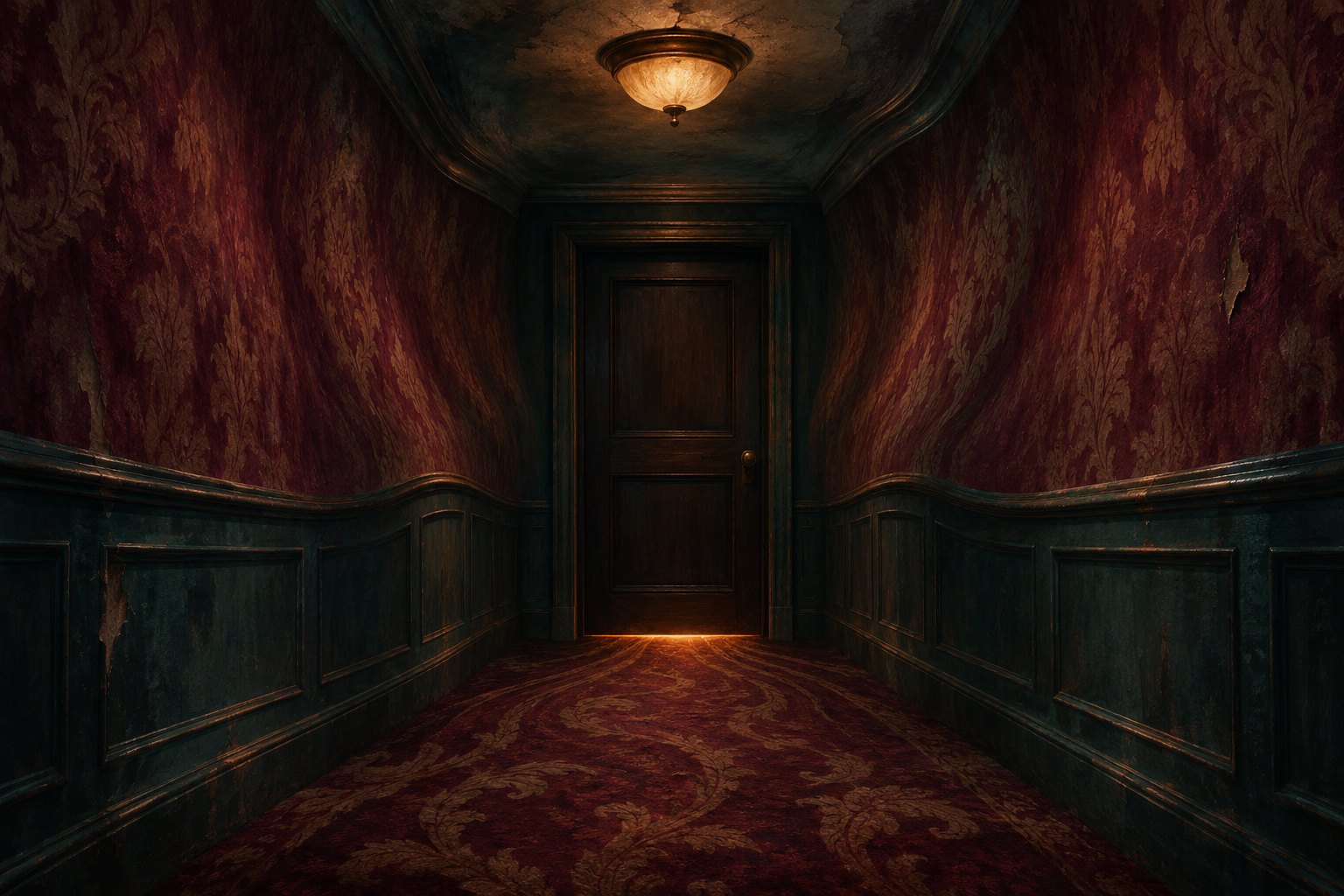
The proposed 1408 sequel is bringing Natalia Dyer and Elijah Wood into the orbit of one of horror’s least welcoming hotel rooms. There is an important qualification to the casting news: Variety reports that Samuel L. Jackson and John Cusack are negotiating their returns. Their participation should therefore be distinguished from Dyer and Wood’s reported casting. [Variety’s casting report](https://malaysia.news.yahoo.com/natalia-dyer-elijah-wood-join-233405931.html)
The announcement makes the original worth revisiting for a reason that goes beyond familiar faces. The 2007 Stephen King adaptation builds its most disturbing moments around a man who can investigate other people’s hauntings but cannot bear his own loss. A continuation has an imposing creative standard to meet: its supernatural cruelty needs to feel equally personal.
Spoilers follow for the original 1408, including its theatrical ending. This is a retrospective review and analysis, not a review of the forthcoming sequel.
Mike Enslin’s skepticism is also a defense
John Cusack plays Mike Enslin, a writer whose professional interest in haunted places exists alongside profound disbelief. At the Dolphin Hotel, he insists on entering the notorious room despite manager Gerald Olin’s efforts to dissuade him. Mike thinks he understands the transaction: a hotel cultivates a legend, a writer investigates, and everyone benefits from the attention.
That assumption gives the opening confrontation its bite. Mike is observant enough to recognize a sales pitch, but too committed to his explanation to recognize a sincere warning. His intelligence becomes a liability because he treats his conclusions as protection.
Cusack makes the sarcasm useful. Mike’s jokes establish the rhythm of someone who wants the last word, even when nobody is particularly interested in arguing. Once the room begins dismantling his confidence, the performance has somewhere to go. Every frightened pause feels like a breach in a personality built around commentary.
My reading is that Mike’s disbelief also protects him from wanting too much. His daughter Katie has died, and the possibility of contact with the dead carries an unbearable promise. A fraudulent haunting can be dismissed and written up. A real one might demand that he hope again.
Samuel L. Jackson makes the warning feel like work
Jackson’s Olin supplies the film with a different kind of exhaustion. He manages a building whose ordinary business continues around something he cannot control. His efforts to keep Mike out are practical, persistent, and increasingly stripped of hospitality.
“It’s an evil fucking room” is the essential diagnosis. The line refuses the comforting specificity of a conventional ghost story. Olin cannot hand Mike a tidy grievance to resolve or a restless spirit to appease. He can only describe a place that harms people. The film’s dialogue repeatedly contrasts Mike’s explanations with Olin’s blunt warnings. [The film’s dialogue transcript](https://transcripts.foreverdreaming.org/viewtopic.php?t=51004)
The performance works because Jackson allows authority and helplessness to coexist. Olin knows more than Mike, but knowledge has not made him powerful. He can offer alternatives, withhold encouragement, and explain the danger. He cannot make another adult listen.
This is why Jackson’s potential return matters artistically. Olin gives the impossible a believable institutional presence. A sequel would benefit from preserving that uneasy limitation: knowing the room’s history should not automatically mean knowing how to defeat it.
The room takes away Mike’s position as an observer
Inside, Mike initially treats the surroundings as material. Furnishings can be described, suspicious effects investigated, and his reactions recorded. “It’s just a room” expresses the confidence behind that approach: naming something should make it manageable.
The film then turns familiar amenities into sources of uncertainty. The clock radio, telephone, and temperature controls no longer reassure. Objects intended to support a guest’s comfort become ways of controlling his attention and body.
For me, these smaller violations are more effective than the largest bursts of spectacle. An ordinary object behaving incorrectly preserves the terrible possibility that you have misunderstood something. A spectacular assault makes the threat obvious. Both have their place, but 1408 is especially good when Mike is still trying to negotiate with normality.
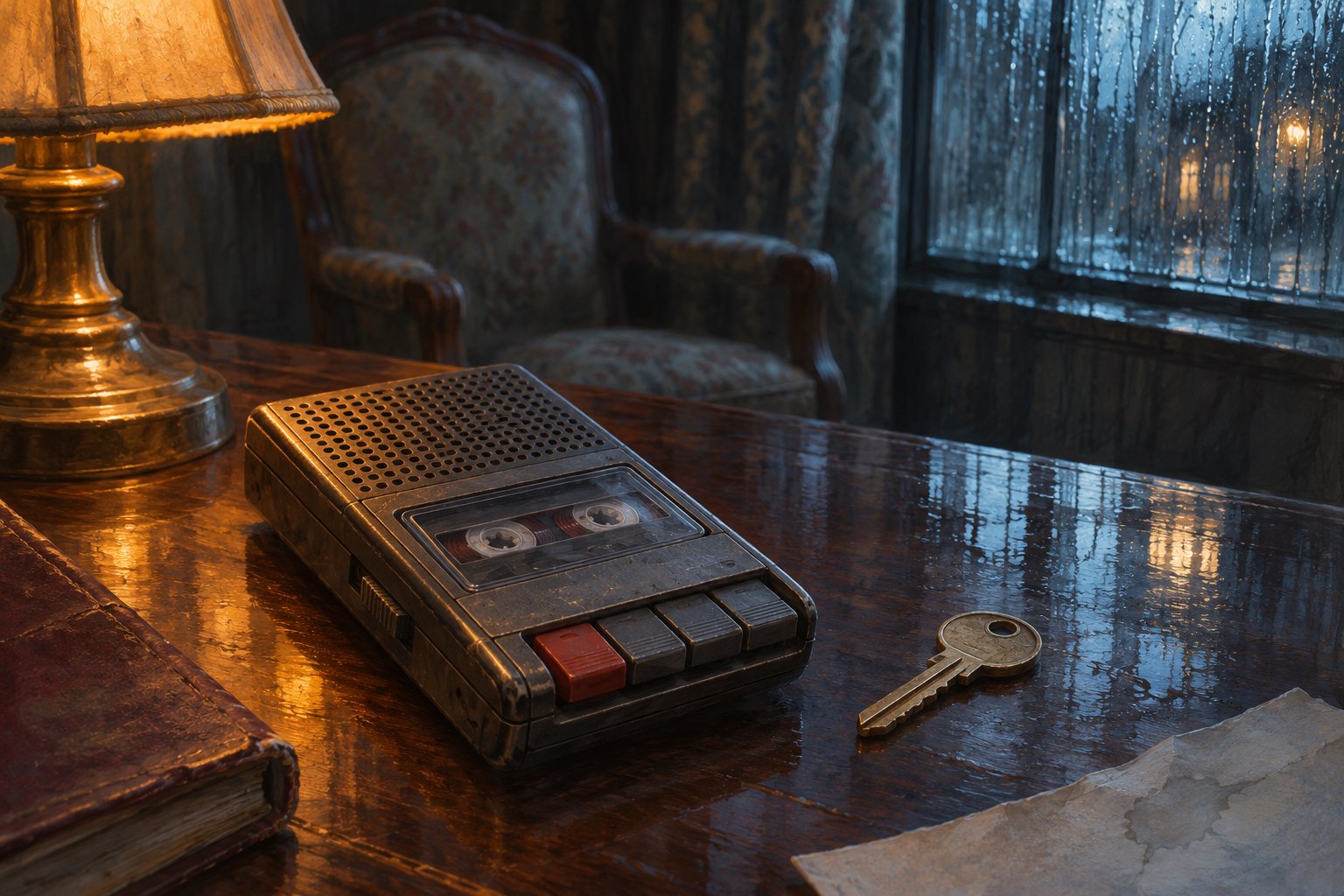
His recorder captures the shift in his role. He enters expecting to produce an account of the experience. Gradually, he loses the distance required to turn suffering into a neatly packaged story.
Katie’s appearance makes the haunting devastating
The room’s cruelest attack is emotional. Katie appears, and Mike is allowed an encounter with the child he has lost before she is taken from him again. The scene changes the meaning of survival: enduring the room means enduring an experience he had already struggled to survive outside it. [The original film’s plot account](https://themoviespoiler.com/movies/1408-2007/)
From Mike’s perspective, this is where argument becomes useless. Even if he suspects manipulation, suspicion cannot cancel his response to his daughter. Love does not wait for authentication. The room exploits that immediate recognition.
Cusack’s vulnerability gives the sequence its force. His earlier defensive humor has established how hard Mike works to keep feeling at a distance. Watching that distance disappear is more upsetting than watching him lose another escape route.
There is also a limitation worth acknowledging. Katie primarily exists within the story through her father’s grief. The film’s emotional power depends heavily on accepting Mike’s perspective; it gives less space to the person his daughter was beyond his loss. A continuation could learn from both the effectiveness and the narrowness of that choice.
The theatrical ending changes what the recorder means
The film exists in versions with different endings, so the distinction matters. In the theatrical conclusion discussed here, Mike survives the fire he starts in the room. Later, the recovered recorder plays Katie’s voice in the presence of his wife, Lily. [The film’s ending variations](https://en.wikipedia.org/wiki/1408_(film))
As a final supernatural sting, the recording confirms that the experience cannot simply be dismissed. Emotionally, though, it does something more interesting: it makes part of Mike’s private ordeal audible to another person.
The object he used to maintain professional distance becomes a means of connection. That does not erase the couple’s loss or repair their relationship by itself. It creates a moment in which Mike is no longer the sole witness to something impossible and intimate.
I find that ending more affecting when understood as a fragile opening toward shared grief. Proof is useful, but being heard matters more.
What the new cast needs from a continuation
Dyer and Wood’s involvement invites curiosity, but their names alone cannot tell us how the sequel will work. The useful question is what each new character stands to lose—and why that person would remain emotionally compelling within such a punishing premise.
The original offers a specific dramatic structure: professional confidence conceals vulnerability; an environment identifies that vulnerability; survival requires a different relationship to it. Repeating the physical hazards without developing an equally distinct inner life would reduce the room to an attraction.
That concern connects with our discussion of why continuing stories need meaningful character growth. A second visit should change the emotional terms. It also faces the challenge of making a continuation work for first-time viewers: the danger must register before recognition supplies any pleasure.
The deepest horror is having hope used against you
1408 remains an effective, sometimes excessive chamber horror film because its central ordeal attacks more than the body. Mike’s desire for reassurance becomes the room’s opportunity. It understands that a frightened person may resist pain yet reach instinctively toward comfort.
The most persuasive interpretation is not that grief makes Mike weak. His love for Katie is precisely what remains valuable when his practiced cynicism falls apart. The room’s evil lies in turning that love into a weapon.
That is the inheritance facing a sequel with Dyer, Wood, and a possible Jackson return. The door and the room number provide recognition. A character’s need to believe that something precious can still be recovered provides the fear.
Original content by this site's editorial team. Published: November 8, 2026 at 00:16:02 PST (Los Angeles time)