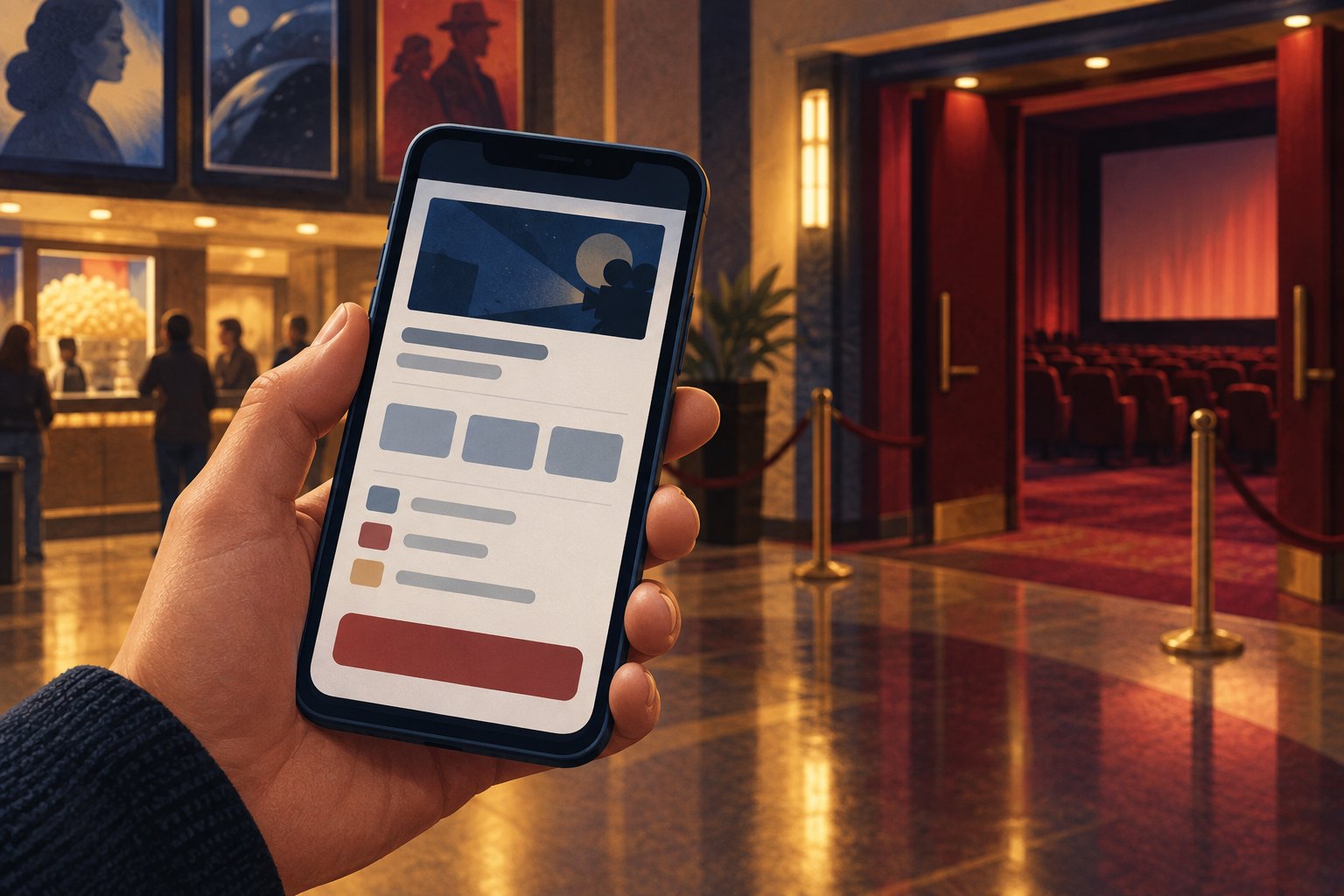
AMC faces a class action alleging that it charges junk fees for movie tickets purchased online, according to [Top Class Actions](https://topclassactions.com/lawsuit-settlements/lawsuit-news/class-action-alleges-amc-charges-junk-fees-for-online-movie-tickets/). For moviegoers, the immediate issue is straightforward: how clearly can someone understand the cost of a screening before committing to the purchase?
The allegation should not be mistaken for a finding that AMC broke the law. Nor does the existence of a lawsuit establish that ticket buyers can claim compensation. What the dispute does offer is a reason to examine an overlooked part of the theatrical experience: the transaction that gets an audience into the room.
What the AMC allegation establishes—and what it does not
The reported claim concerns online movie ticket fees. Describing those charges as “junk fees” conveys the challenge being made against them; it does not independently establish their legal status. Assessing a particular charge requires more than a label, including its disclosure, the transaction involved, and the rules applicable to that purchase.
This article does not establish a specific fee amount, the eligibility of any individual buyer, or an outcome in the case. Readers should therefore avoid treating the headline as evidence that every AMC online purchase carries an unlawful charge.
There is also an important difference between questioning a fee and questioning how a fee is presented. A buyer might accept a clearly explained charge while objecting to learning about it only after making other decisions. That distinction is central to the broader consumer issue, without resolving the allegations against AMC.
The meaningful ticket price is the amount you must pay
From an audience perspective, an advertised ticket price is useful because it helps answer a practical question: can I afford this screening? If additional required charges apply, the initial figure alone cannot answer that question.
Consider a hypothetical choice between two otherwise comparable screenings. One presents a higher initial price that includes required charges; the other starts lower but adds a charge later. The lower opening figure does not necessarily represent the cheaper outing. A useful comparison requires the complete payable amount for each option.
This is an illustration of the pricing problem, not a reconstruction of an AMC transaction. Its significance lies in the work it asks the customer to do. Comparing showtimes already involves location, travel, seat availability, and format. A transparent price lets someone weigh those tradeoffs while the choices are still open.
Our editorial view is that a required charge belongs in the price customers use to make their decision. An itemized breakdown can explain where the money goes, but the total deserves equal prominence. Clear accounting and clear comparison should work together.
Convenience has value, but the conditions matter
Online booking can be valuable to a viewer arranging an evening around a particular screening. Knowing that tickets are secured may make coordinating friends, transportation, or childcare easier. A fair discussion of ticketing should acknowledge that benefit.
However, the usefulness of a service does not answer every question about its price. Customers still need to understand what they are paying, whether a charge is required for their chosen purchase, and whether an alternative actually fits their circumstances.
Suggestions to use another booking method also deserve scrutiny. An option that requires an extra trip may save money at checkout while costing time and transportation. It should be evaluated as a complete alternative, with its availability checked, rather than assumed to solve the problem for everyone.
The same reasoning applies to any membership offer a buyer encounters. A possible fee reduction should be compared with the membership cost and expected use. Someone who sees movies occasionally may reach a different decision from someone who attends every week.
How to check your next movie ticket purchase
You do not need to predict the lawsuit’s outcome to make a more informed purchase. The useful habit is to inspect the transaction while you can still change your mind.

- Match the screening details. Confirm the location, date, time, format, and ticket categories. Otherwise, a price difference may reflect a different experience.
- Read the complete order total. Check the amount due immediately before payment, including any listed fees and taxes. Use that total when comparing options.
- Check how charges scale. Look at whether a listed charge applies to each ticket or the order. A group purchase can make that distinction consequential.
- Review optional additions. Separate the cost of admission from products or upgrades you actively choose. Remove unwanted selections before paying.
- Examine discount conditions. If a membership or promotion appears relevant, read its cost, renewal terms, and restrictions before counting it as a saving.
- Keep the transaction record. Save the confirmation and itemized receipt so you can explain a billing question accurately if one arises.
These steps help clarify what you are buying; they do not determine whether a charge is lawful or whether you qualify for any legal remedy. A confusing transaction and an actionable legal claim are separate questions.
Why ticket transparency belongs in film commentary
Film criticism considers whether a movie rewards an audience’s time and attention. The cost of accessing that movie belongs in the surrounding conversation, even though it cannot tell us whether the performances, writing, or direction succeed.
For a viewer with a fixed entertainment budget, the total price may influence which films feel worth trying. A familiar franchise can seem like a safer purchase than an unfamiliar drama. Unexpected costs could make that calculation more cautious, although this lawsuit alone cannot establish an effect on attendance or particular releases.
That is why thoughtful recommendations and understandable pricing complement each other. Our guide to reading film reviews beyond their verdicts explores how criticism can help viewers choose. A clear ticket total supplies another piece of the same decision: whether that choice fits the evening’s budget.
The attraction of theatrical viewing also varies by film. Our discussion of the big-screen possibilities of Paul Thomas Anderson’s Cameron Winter film considers what a shared screening might contribute to a performance. Audiences should be able to weigh that potential value against an understandable price.
A better welcome begins before the theater doors
The AMC allegations require evaluation on their own evidence. They should neither be dismissed because online booking is convenient nor treated as proven because additional fees frustrate customers.
For theaters, the broader editorial standard is simpler: make the full cost easy to understand when people are choosing what to see. Viewers can decide whether a screening is worth the expense when the terms are clear.
The deeper issue is trust. Going to the movies asks people to commit money, time, and attention to an experience they cannot fully evaluate in advance. A straightforward purchase gives that experience a better beginning—and leaves the surprises where audiences actually want them, on the screen.
Original content by this site's editorial team. Published: September 10, 2026 at 00:41:23 PDT (Los Angeles time)