Paul Thomas Anderson’s Cameron Winter film is joining the London Film Festival, bringing a solo musical performance into a setting built for close cinematic attention. For viewers drawn by Anderson’s name, the appeal is discovering how he approaches a performer through the camera. For Winter’s listeners, it is the possibility of encountering familiar artistry from a different distance.
The film is titled Cameron Winter at Carnegie Hall. The festival describes it as a record of the Geese frontman’s solo piano performance, filmed in December 2025 through Anderson’s collaboration with Benny Safdie. Its program notes identify multiple perspectives and recording formats, alongside attention to the audience inside the hall. Those details establish a concert film with an interest in the surrounding room as well as the musician. [BFI’s official festival listing](https://whatson.bfi.org.uk/lff/Online/default.asp?BOparam%3A%3AWScontent%3A%3AloadArticle%3A%3Aarticle_id=DC54AE36-BB73-476A-8094-6122168781F4&BOparam%3A%3AWScontent%3A%3AloadArticle%3A%3Acontext_id=E388260B-33FD-4F75-806C-1E6AC631FDC3&doWork%3A%3AWScontent%3A%3AloadArticle=Load)
This is a spoiler-free critical preview, not a review based on a screening. The announcement and festival description support an examination of the film’s premise. They do not establish how successfully its images, editing, and sound work together across the finished feature.
Cameron Winter Is the Center of Attention
Anderson’s involvement gives the announcement an immediate point of entry for film enthusiasts. Yet the most useful way to approach this project is through Winter’s position as the person performing. A solo piano setup puts unusual emphasis on the relationship between physical action and sound: hands produce accompaniment while breath, posture, and phrasing shape the vocal performance.
That configuration offers a clear dramatic situation without requiring a fictional plot. A performer makes decisions in real time while other people listen. The camera can reveal some of those decisions, obscure others, or invite us to assign meaning to gestures that might otherwise pass unnoticed.
There is an important limit to character analysis here. Winter is a real person, and a visible expression does not provide direct access to his private thoughts. A concentrated face need not signal anxiety; a pause need not conceal a confession. The strongest reading will connect an observable gesture to its musical context before attaching a psychological explanation.
From that perspective, the film’s potential lies in specificity. Does watching Winter alter how a phrase lands? Does the effort of playing become part of the experience? Those are more revealing questions than whether a famous director can make a musician look compelling.
What Anderson’s Camera Can Add to the Performance
A concert spectator usually chooses where to look from a fixed seat. A film relocates that attention. A close view can make a small movement prominent; a distant view can place the same movement within the scale of a room. Neither position is automatically more truthful. Each gives the viewer different information.
The festival’s description of multiple perspectives makes that relationship especially relevant to Cameron Winter at Carnegie Hall. The critical question will be how those perspectives interact. Changing the view can illuminate a musical transition, but it can also interrupt the concentration a performance has established.
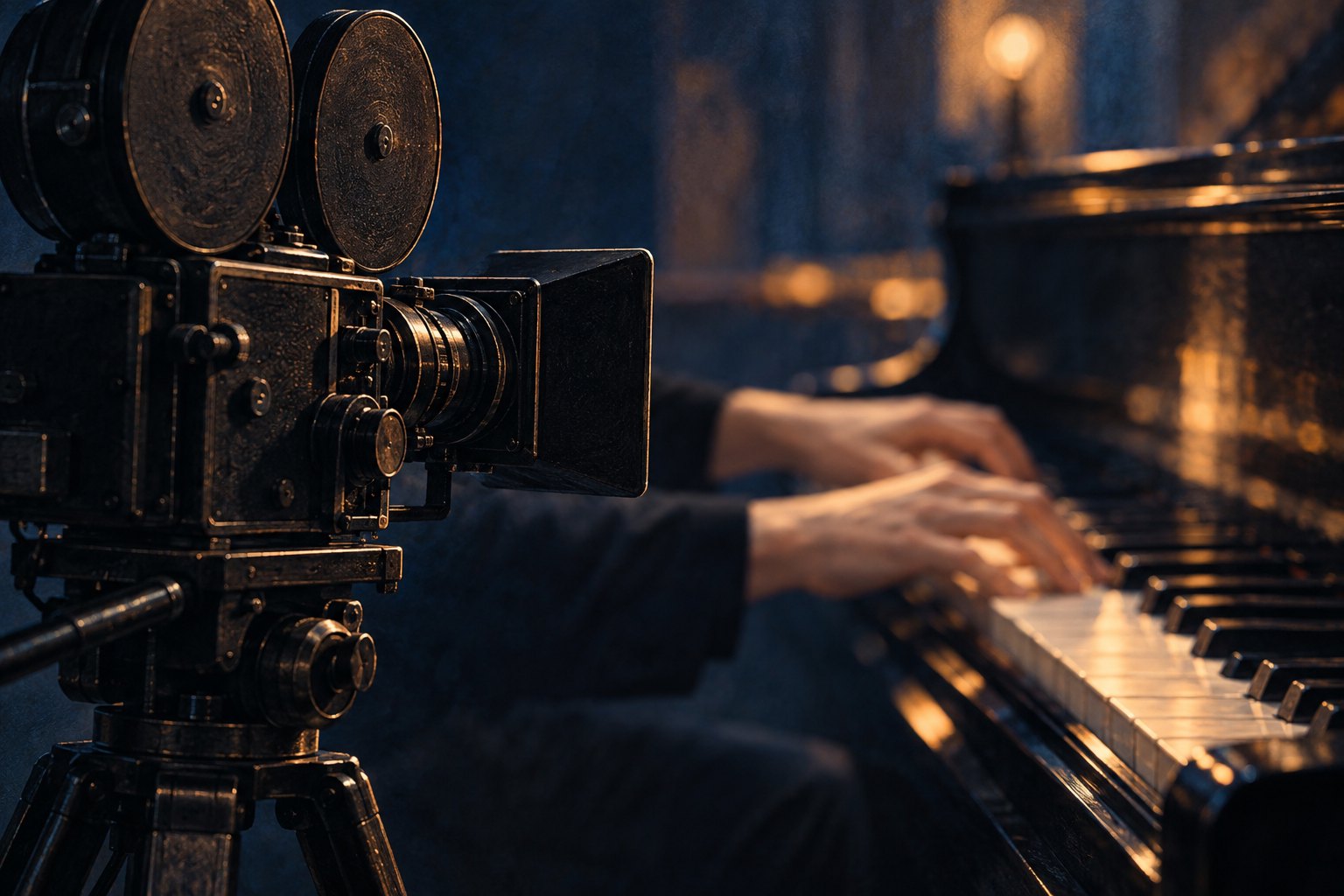
Consider the difference between watching a hand arrive at a chord and seeing a listener respond to it. The first emphasizes creation; the second emphasizes reception. Moving between them produces an interpretation, even when neither image contains an explanation. Editing gives the performance a second rhythm alongside the music.
My preference in this kind of filmmaking is for images that deepen the act of listening. Visual restraint can be expressive when a musical passage needs time to develop. A conspicuous change of angle can be equally effective when it reveals a relationship previously hidden. The measure is whether the choice makes the performance more legible or emotionally complex.
The Audience Is Part of the Subject
The inclusion of audience reactions introduces another dimension: Winter’s performance exists between a musician and the people receiving it. A concert film can preserve that exchange, allowing a cinema audience to observe an earlier audience listening.
Reaction shots deserve scrutiny because they carry persuasive force. A face absorbed in a song may help communicate the atmosphere of the hall. Repeated images of admiration, however, can begin to prescribe the response expected from us. The difference depends on timing, duration, and what the film allows us to hear before asking us to look elsewhere.
An attentive viewer can ask whether these images reveal distinct ways of listening. Do they make the room feel inhabited by individuals, or simply supply evidence of approval? That distinction matters especially for people arriving without a strong attachment to Winter’s music.
Our discussion of Feid’s concert-film event at Regal offers another entry into the relationship between musical fandom and cinema attendance. Here, the solo-performance premise places particular weight on sustained attention to one performer and the space around him.
A Useful Approach for Fans and First-Time Listeners
Existing fans and newcomers may notice different things. Familiarity can make a change in phrasing feel significant. A first-time listener may be more alert to whether the film establishes a compelling progression without that background knowledge. Both responses can help explain what the film achieves.
For a first viewing, three points offer a practical focus:
- Follow the relationship between gesture and sound. Notice when the image helps you understand how a musical effect is produced.
- Pay attention to transitions. The movement between passages can reveal how the film organizes time and maintains concentration.
- Watch how the room enters the performance. Changes in distance and audience imagery may alter the sense of intimacy.
There is no need to turn a screening into an assignment. These are ways to articulate a response afterward, especially if the film leaves you moved without an obvious narrative explanation.
Festival presentation also creates expectations of its own. Inclusion is a programming decision, not a critical verdict. As our guide to reading festival reviews beyond their verdicts explains, the useful part of criticism is the account of what a film does and how that shapes the viewing experience.
The Deeper Possibility: Making Listening Visible
The most interesting interpretive possibility in Cameron Winter at Carnegie Hall is that its subject may extend beyond the act of performance to the act of paying attention. Winter produces the music, the original audience receives it, and Anderson’s film selects how another audience encounters that exchange.
That is an interpretation of the premise, not a conclusion about the finished film. Its success will depend on concrete decisions: how long an image lasts, when the perspective shifts, and whether the relationship between musician and room develops over time.
London’s addition gives viewers a reason to consider the project as cinema as well as a musical document. The promise is precise and appealing: a film that might make a solo performance feel newly available to the eye, while leaving enough room for the ear to lead.
Original content by this site's editorial team. Published: September 9, 2026 at 23:42:29 PDT (Los Angeles time)