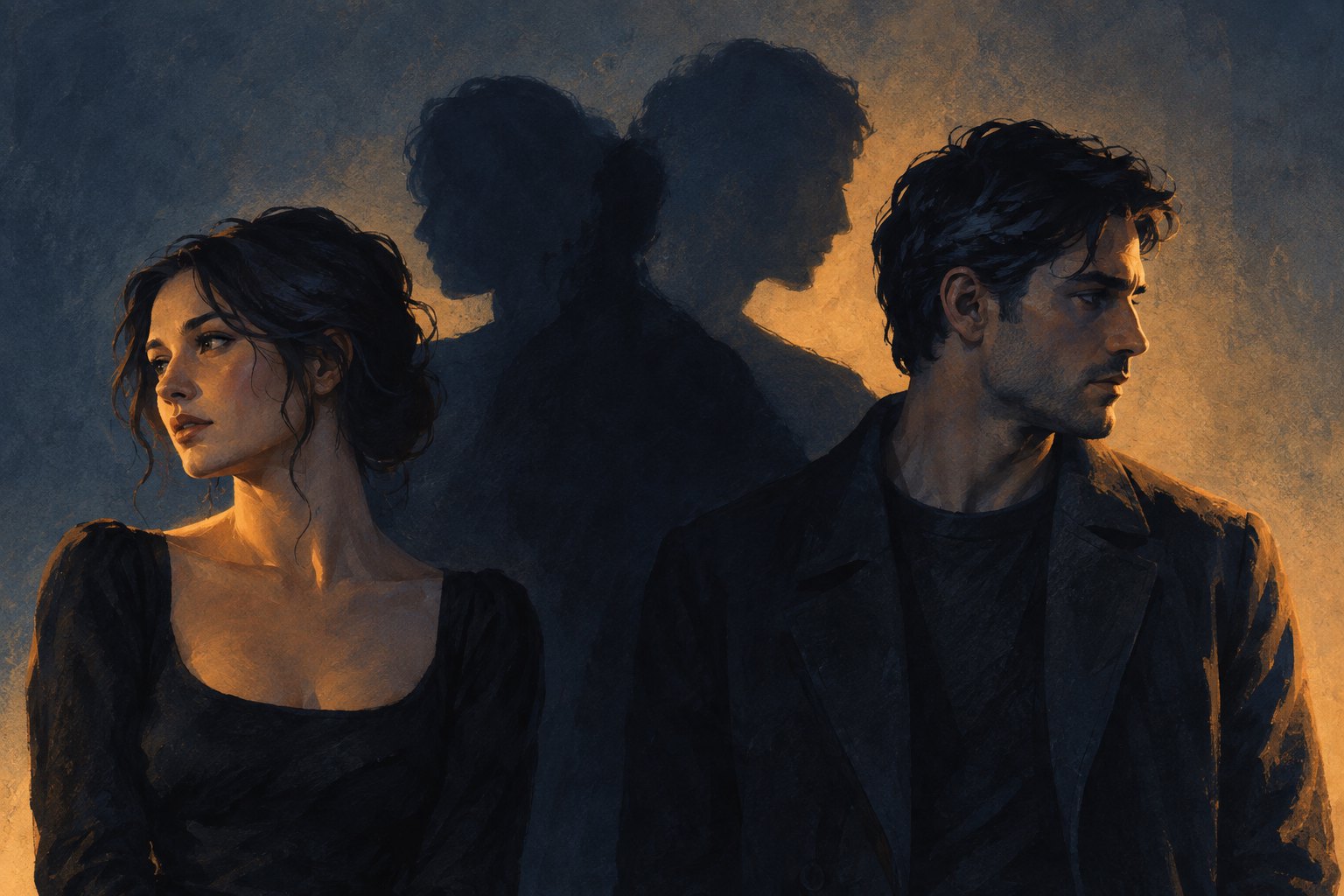
Danny Boyle has confirmed that AI was used in his new movie Ink, according to Deadline. That establishes a production fact. It also opens a critical question: how should knowledge of a filmmaking tool affect our judgment of the images, performances, and story it helps put on screen?
The confirmation alone cannot establish whether Ink uses that technology imaginatively, distractingly, or without a noticeable artistic benefit. Those judgments require evidence from the film. What the announcement does warrant is a closer look at creative responsibility—and at the difference between explaining how an image was made and explaining why it belongs in a movie.
This is spoiler-free commentary on the announcement, rather than a review based on a firsthand screening. It makes no claims about specific scenes, character arcs, dialogue, or the ending.
What Boyle’s confirmation actually establishes
The central reported fact is straightforward: Boyle acknowledged AI use in Ink. That statement should not expand, through repetition or assumption, into a claim that the movie was generated wholesale, that performances were replaced, or that its screenplay was created by a machine. Each would be a separate assertion requiring its own evidence.
Equally, the involvement of a recognizable filmmaker does not settle whether a production choice was appropriate. A director’s name supplies an author to question; it does not supply the answer. The useful discussion concerns the particular work performed, its effect on the finished scene, and the people responsible for approving it.
For readers deciding what this news means, three distinctions matter: confirmation is different from explanation; explanation is different from justification; and justification is different from artistic success. A filmmaker can describe a process clearly while leaving audiences unconvinced that the result improves the movie.
The critical test: what does the image contribute?
My view is that an unusual production method earns artistic interest when it produces a meaningful experience. An image might deepen a mood, establish a perspective, or create a productive conflict between what a character believes and what the audience understands. Technical novelty alone offers a weaker reason for its inclusion.
That standard gives the discussion around Ink a practical direction. Once a particular use is established, a critic should examine its place in the surrounding sequence. Does it sharpen attention? Does it interrupt an emotional exchange? Does its visual texture fit the movie’s language, or make the viewer suddenly aware of the machinery?
A conspicuous effect can be successful. So can an unobtrusive one. Visibility is not the decisive measure: a deliberately strange image may express something a seamless image cannot. The stronger question is whether the choice feels connected to the dramatic experience.
This is also the distinction explored in our commentary on Luc Besson’s promise of cinematic intensity: ambition becomes interesting through what it allows the audience to understand and feel.
Character perspective should guide the eventual review
A character-centered assessment of Ink needs to begin with actual behavior: what someone wants, what they misunderstand, and what their decisions cost. Without verified scenes, assigning those motives would amount to inventing a different movie. But character perspective remains a precise way to evaluate the film when the necessary evidence is available.
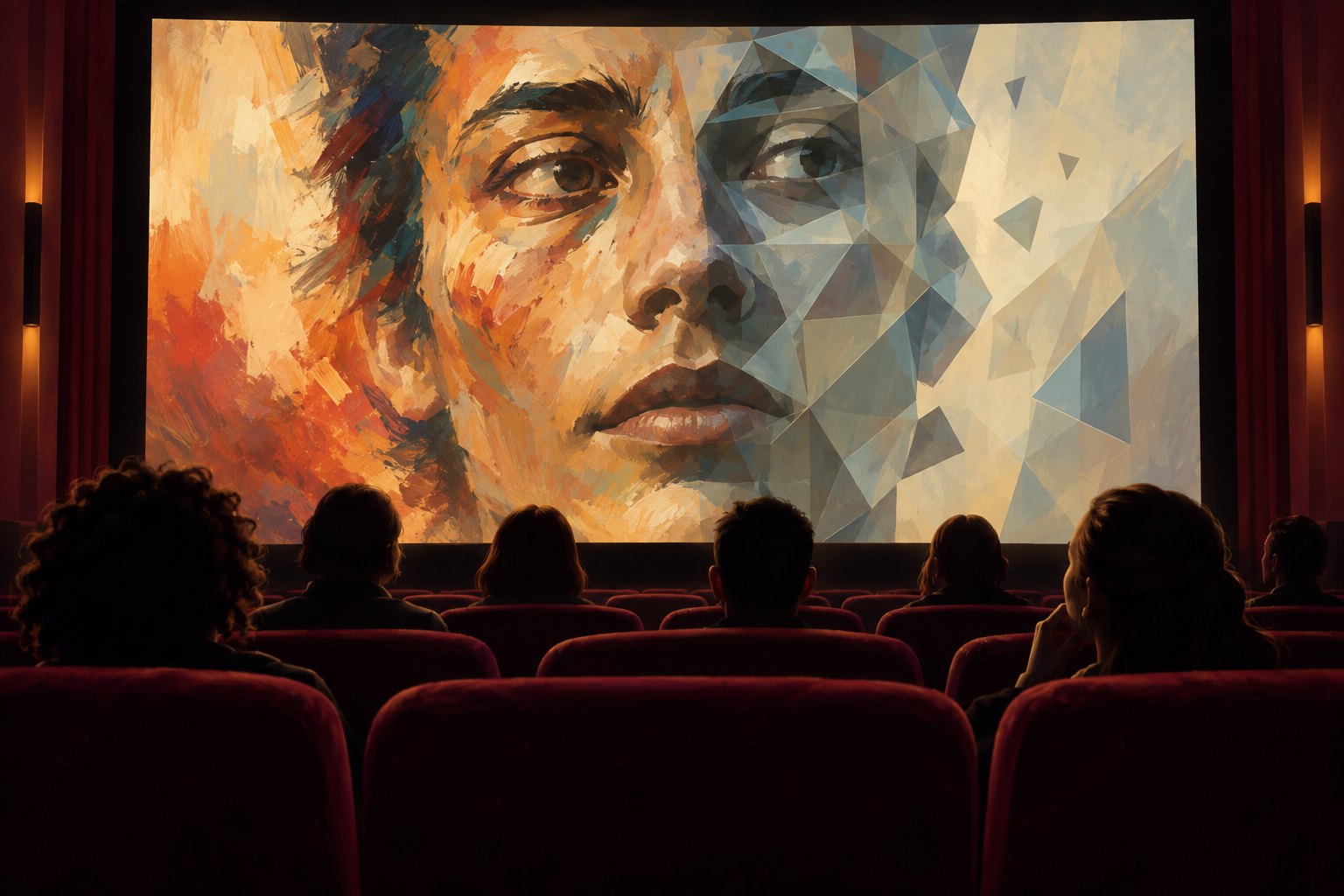
Consider the questions a reviewer should bring to any altered or constructed image. Whose experience organizes the moment? Is the audience seeing something presented as objective reality, a personal impression, or an openly stylized interruption? What changes in our understanding of the person at the center of the scene?
These distinctions matter because an image can be impressive while adding little to a character. It can also look deliberately artificial while revealing fear, vanity, uncertainty, or desire. Neither result can be inferred from the presence of AI in the production process.
Performance deserves the same attention. A held glance, an awkward pause, or a change in speaking rhythm may carry a scene’s meaning. An eventual review should ask whether the surrounding filmmaking gives those details room to register. Our character-focused preview of Remain approaches a related issue: an intriguing device needs emotionally credible people to make it matter.
Disclosure informs judgment without replacing it
Boyle’s acknowledgment matters because audiences can discuss an admitted production choice instead of treating visual suspicion as proof. An image looking unfamiliar is not, by itself, reliable evidence of how it was made. Clear disclosure makes the conversation more specific.
In my judgment, useful disclosure should explain the function of a tool in language a moviegoer can understand. A general label leaves important distinctions unresolved. Viewers may reasonably want to know whether a process affected something they understand as a performance, a constructed environment, or another element of the finished image.
Those are questions to investigate, not allegations about Ink. The same caution applies to claims about permissions, compensation, or displaced work. Acknowledging AI use does not independently establish the circumstances behind it.
Artistic and production judgments can also differ. Someone may find an image effective while objecting to a documented method behind it. Another viewer may accept the method and think the result looks poor. A serious review should explain which judgment it is making and the evidence supporting it.
How to approach Ink without letting the announcement decide everything
For prospective viewers, the most useful approach is to keep the production news in mind while allowing the movie to demonstrate its own priorities. That does not require setting aside concerns. It means making those concerns specific enough to evaluate.
- Separate the acknowledgment from assumptions. Do not assign unverified uses to the film.
- Follow the characters. Notice whether visual choices clarify their experiences or compete with them.
- Describe the result. Identify what a particular moment achieves before praising or criticizing its method.
- Keep process questions distinct. Evaluate documented production practices on their own evidence.
This approach also leaves room for disagreement that is more revealing than a blanket verdict. Two viewers may agree about how an effect was made and disagree about its emotional value. Explaining that difference is part of what makes film criticism useful.
The deeper issue is responsibility for the finished image
The most consequential question raised by Boyle’s confirmation concerns authorship: who stands behind what the audience sees? A tool can participate in producing an image, but the decision to select it, place it beside other images, and give it dramatic weight remains a creative responsibility.
For Ink, the acknowledgment begins that conversation. The eventual critical judgment must examine how the film turns its choices into meaning—through character, rhythm, performance, and perspective. My standard would be whether those choices make the people on screen more legible and their conflicts more compelling. The production method deserves scrutiny; the movie still needs a close reading.
Original content by this site's editorial team. Published: September 9, 2026 at 21:24:17 PDT (Los Angeles time)